
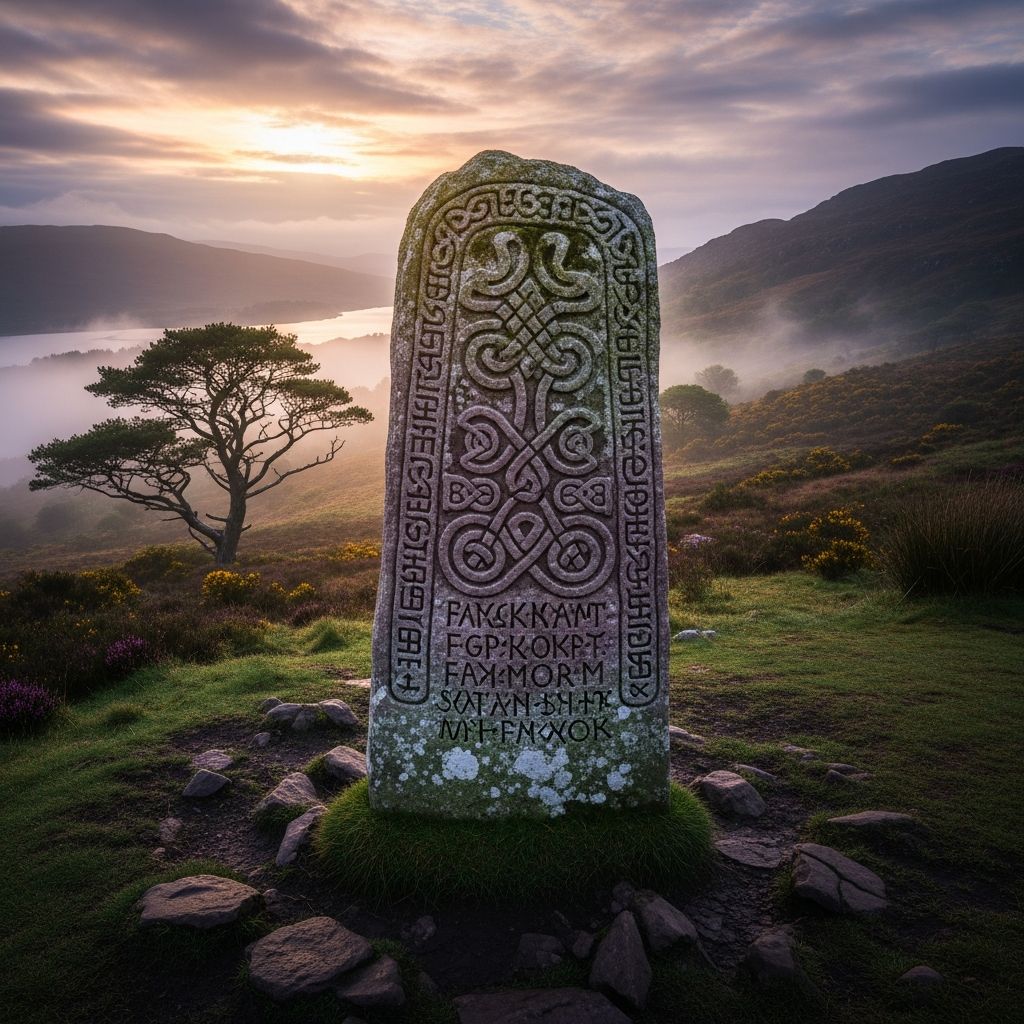
Gaelic refers to a group of Celtic languages spoken historically across Ireland, Scotland, and the Isle of Man, with **Scottish Gaelic** and **Irish Gaelic** as its primary modern forms. These tongues trace their roots to ancient migrations and have shaped the cultural identity of Celtic peoples for millennia.
Ancient Beginnings: The Celtic Migration
The story of Gaelic begins over 2,500 years ago when Celtic tribes from continental Europe, possibly the Rhineland area, migrated to the British Isles. These early settlers, known as Gaels, brought with them a branch of the Indo-European language family known as Goidelic or Q-Celtic languages. Irish Gaelic emerged first in Ireland around the 5th century, evidenced by Ogham inscriptions, one of the oldest written forms in Western Europe.
By the 4th to 5th centuries CE, Gaels from Ireland’s Dál Riata kingdom crossed to Scotland’s west coast, establishing Argyll—meaning ‘Coast of the Gaels.’ This migration fused Gaelic with local Pictish elements, making Gaelic Scotland’s dominant language by the medieval era. Latin texts referred to the entire Scottish region as *Scotia*, with Gaelic as the *lingua Scotica*.
Evolution Through the Ages
Gaelic’s development unfolded in distinct phases. Old Irish (c. 600-900 AD) transitioned to Middle Irish (900-1200 AD), incorporating Scandinavian loanwords like ‘pingin’ (penny) from Viking interactions, though core syntax remained intact. Manuscripts from this turbulent period preserve a thriving literary tradition.
In Scotland, Gaelic solidified as the language of the Kingdom of Alba by the 9th-11th centuries, used in poetry, law, and administration. Poets like those from the medieval bardic schools elevated it to an art form, blending myth, genealogy, and heroism.
| Period | Key Developments | Regions Affected |
|---|---|---|
| Pre-5th Century | Celtic arrival; Ogham script | Ireland |
| 5th-9th Century | Dál Riata migration; Old Irish | Scotland’s Argyll, Isles |
| 900-1200 AD | Middle Irish; Viking influences | Ireland, Scotland |
| Medieval | Literary flourishing; Kingdom of Alba | Highlands, Hebrides |
Challenges and Suppression
From the 17th century, Gaelic faced systematic decline. In Scotland, James VI’s Statutes of Iona (1609) mandated English education for clan chiefs, eroding Gaelic authority. The Highland Clearances (18th-19th centuries) displaced communities, accelerating Anglicization. Jacobite defeats post-1745 led to bans on tartans, bagpipes, and Gaelic schools.
In Ireland, Norman invasions from 1171 introduced English dominance, compounded by the Great Famine (1845-1852), which spurred mass emigration. By the 19th century, Gaelic retreated to western strongholds like the Gaeltacht regions and Scotland’s northwest.
- Statutes of Iona (1609): Required Gaelic lords to send heirs to English schools.
- Highland Clearances: Forced evictions for sheep farming, diaspora to Canada (Cape Breton).
- Great Famine: Reduced Irish speakers from millions to tens of thousands.
Distinct Dialects and Linguistic Features
Modern Gaelic splits into three main varieties: Irish (Gaeilge), Scottish Gaelic (Gàidhlig), and Manx (Gaelg), all mutually intelligible to varying degrees but with unique phonetics and vocabulary.
Scottish Gaelic, spoken by about 70,000 today, thrives in the Outer Hebrides and Skye. It features slender vowels and aspirations absent in Irish. Irish Gaelic, official in Ireland, dominates Gaeltacht areas like Connemara. Manx, revived from near-extinction, persists on the Isle of Man.
Shared traits include VSO word order, initial mutations (e.g., ‘c’ becomes ‘ch’), and a rich verb system. Unlike P-Celtic (Welsh), Goidelic preserves ‘q’ sounds evolved to ‘k’.
Cultural Tapestry Woven by Gaelic
Gaelic is inseparable from Scotland and Ireland’s heritage. It birthed icons like the kilt, bagpipes, ceilidhs, and Highland games. Oral traditions—epic tales of Cú Chulainn, Fenian Cycle—passed through seanchaidh (storytellers). Poets like Sorley MacLean (1911-1996) modernized the form, addressing war and identity.
Music, from puirt à beul (mouth music) to laments, encodes history. Place names like Ben Nevis (Beinn Nibheis) dot landscapes. Whisky lore and clans trace to Gaelic roots.
Revival and Modern Vitality
The 19th-century Gaelic revival birthed groups like An Comunn Gàidhealach (Scotland, 1891) and Conradh na Gaeilge (Ireland, 1893). Ireland’s Free State (1922) mandated Gaelic in schools; Scotland followed with immersion programs.
Today, BBC Alba and TG4 broadcast in Gaelic. Education via Gaelic-medium schools grows: over 2,000 Scottish pupils enrolled in 2023. Apps, online courses attract global learners. The Outer Hebrides remain strongholds, with 50%+ fluency.
- Media: BBC Alba (launched 2008), RTÉ raids for Irish content.
- Education: Sabhal Mòr Ostaig college on Skye; 60+ Gaelic schools in Scotland.
- Global Diaspora: Cape Breton festivals preserve emigrant traditions.
Learning Gaelic: A Gateway to Heritage
Beginners find Gaelic accessible via resources like Duolingo (Irish/Scottish courses), SpeakGaelic, or Learngaelic.net. Pronunciation emphasizes lenition; vocabulary overlaps with English loans. Communities host cèilidhs for immersion.
Benefits include cultural connection, cognitive boosts from bilingualism, and tourism appeal—Skye signs are bilingual.
Frequently Asked Questions (FAQs)
Is Scottish Gaelic the same as Irish Gaelic?
They are closely related Goidelic languages but differ in pronunciation, spelling, and some vocabulary. Mutual intelligibility varies.
How many people speak Gaelic today?
About 70,000 in Scotland, 1.7 million claim Irish proficiency (many passive), fewer fluent daily.
Where is Gaelic strongest?
Outer Hebrides (e.g., Lewis), Gaeltacht (Donegal, Galway, Kerry), Isle of Man.
Can I learn Gaelic online?
Yes—free resources: Duolingo, BBC languages, university courses.
Why was Gaelic suppressed?
Political centralization favored English/Scots; Clearances and famines accelerated decline.
Future Prospects for Gaelic
Despite challenges, Gaelic enjoys a renaissance. Youth uptake rises via media and schools; EU minority language status aids funding. Digital tools combat fragmentation. As climate and identity concerns grow, Gaelic symbolizes resilience.
In Nova Scotia’s Cape Breton, descendants maintain traditions, linking old world to new. Global interest, fueled by shows like Outlander, boosts learners. Gaelic’s survival hinges on transmission—parents teaching children.
Scholars note grammar’s complexity deters some, but passion endures. Governments invest: Scotland’s £25M+ for Gaelic plan (2023-2033). Ireland mandates broadcasting quotas.
References
- The Deep Roots and Cultural Significance of Scottish Gaelic — LoveGaelic. 2023. https://www.lovegaelic.com/post/the-deep-roots-and-cultural-significance-of-scottish-gaelic
- Scottish Gaelic — Wikipedia. 2026-04-01. https://en.wikipedia.org/wiki/Scottish_Gaelic
- Gaelic | History & Culture – Isle of Skye — Isle of Skye. 2023. https://www.isleofskye.com/skye-guide/island-life/gaelic
- Gaels — Wikipedia. 2026-04-01. https://en.wikipedia.org/wiki/Gaels
- History of the Irish Language — Údarás na Gaeltachta. 2023. https://udaras.ie/en/our-language-the-gaeltacht/history-of-the-irish-language/
- The History of Scottish Gaelic — VisitScotland. 2024. https://www.visitscotland.com/things-to-do/attractions/arts-culture/scottish-languages/gaelic

- Integrated M.A. in Applied Linguistics, University of Hyderabad
- 5+ years in editorial, instructional, SEO, and research-based writing
Sneha is a relationships and lifestyle writer with a strong foundation in applied linguistics and certified training in relationship coaching. She brings over five years of writing experience to theskillvault, crafting thoughtful, research-driven content that empowers readers to build healthier relationships, boost emotional well-being, and embrace holistic living. Her writing and insights reflect the belief that beauty, happiness, and wellness…