
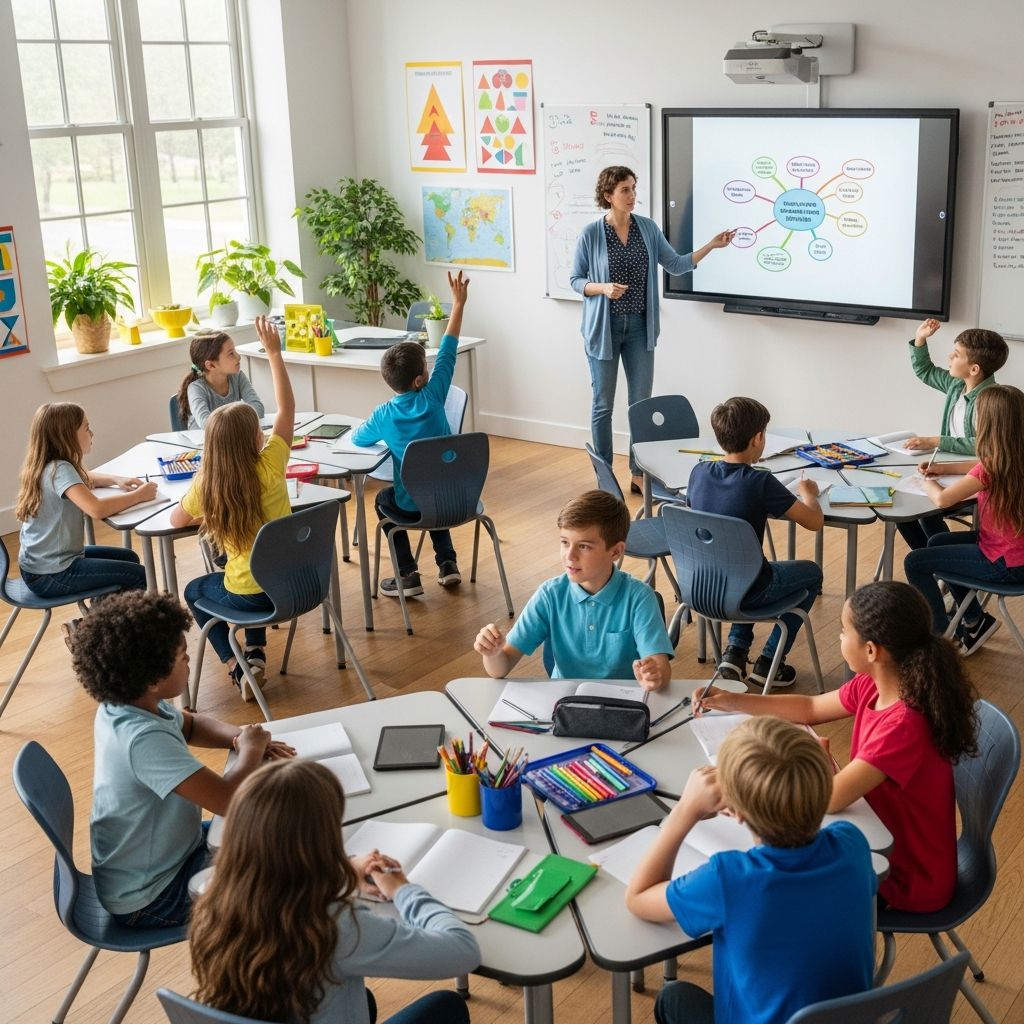
In today’s fast-paced educational landscape, maintaining student focus amid distractions like digital devices and short attention spans is a core challenge for educators. Effective attention-grabbing techniques not only quiet the room but also ignite curiosity and participation, leading to deeper learning. This article delves into actionable strategies drawn from educational research and practitioner insights, offering a roadmap to create vibrant, attentive classrooms.
Building Personal Connections for Instant Rapport
One foundational approach to securing student attention begins with genuine relationships. When teachers demonstrate interest in students’ lives, backgrounds, and passions, learners feel valued and are more inclined to tune in. Start lessons by weaving in elements from students’ cultural heritages, hobbies, or current events they care about. For instance, adapt reading materials or discussion prompts to reflect diverse family traditions or popular trends, making content immediately relatable.
Research from educational psychology underscores that emotional connections enhance cognitive engagement. Knowing students’ names and personalities fosters a safe space where they freely contribute ideas. Implement quick daily check-ins, such as sharing ‘rose and thorn’ moments from their day, to build this bond. Over time, this personal touch reduces off-task behavior and elevates participation rates.
Interactive Signals: Non-Verbal Cues That Command Focus
Verbal commands often compete with classroom noise, but silent signals cut through the din effectively. Position yourself centrally where all eyes can reach you, then deploy a visual or auditory cue. Common tactics include the ‘Give Me Five’ method: raise your hand high, and students mirror it until the entire class is silent and oriented toward you.
Visual prompts like countdown fingers—holding up five and lowering one by one—pair well with verbal pauses, allowing stragglers to self-correct. In boisterous settings, flicking lights briefly signals an imminent announcement, mimicking a theater’s ‘house lights down’ cue. These methods minimize instructional time loss and teach self-regulation.
- Strategic Placement: Stand at the front to limit students turning around.
- Scan and Pause: After the cue, survey the room and wait for 100% compliance.
- Consistency: Practice daily to make responses automatic.
Call-and-Response Rituals: Fun, Memorable Attention Grabbers
Call-and-response transforms attention-getting into a playful routine. Say a phrase like ‘Eyes on me!’ and students reply ‘Eyes on you!’ Vary tones, volumes, or rhythms to keep it fresh—whisper it one day, shout playfully the next. Clapping patterns or snaps work similarly: teacher claps a sequence (e.g., two quick, one long), class echoes back.
Customize with student input for ownership. Reference school mottos, like ‘Ready to learn… Let’s go earn!’ or character-building chants: ‘Work hard… Stay smart!’ Songs from popular tunes or nursery rhymes add musical flair; teacher sings the verse, class the chorus. These embed positive habits subconsciously while demanding active listening.
| Call | Response | Best For |
|---|---|---|
| Class, class! | Yes, yes! | Quick transitions |
| Ready to rock? | Let’s roll! | High-energy starts |
| 1-2-3 | Eyes on me! | End-of-group work |
| Macaroni and cheese | Everybody freeze! | Noisy playtime |
Movement and Variety: Energizing the Classroom Dynamic
Static lectures breed disinterest; inject movement to rekindle focus. Brain breaks—short, 1-2 minute physical bursts like stretches or dances—reset attention spans, especially for younger learners. Collaborative stations rotate groups through varied tasks: one for hands-on experiments, another for digital research, promoting teamwork and multi-sensory input.
Switch delivery styles mid-lesson: alternate lecturing with pair discussions or role-plays. A ‘Present-Process-Practice’ cycle—introduce concepts, facilitate group processing, then apply via activities—sustains engagement over 50-minute blocks. Outside-the-box games, like turning quizzes into team relays, connect material playfully while reinforcing skills.
Leveraging Technology and Multisensory Tools
Timers build anticipation: set a visible countdown for activities, signaling shift times without words. Embed polls via tools like Slido for real-time word clouds, where students vote keywords, visibly shaping class direction. Songs or rhymes as transitions—singing a cleanup tune—harness auditory hooks proven in early education.
For immediate resets, a class-wide countdown cascades as peers join in, creating peer accountability. These tech-light innovations maximize participation without overwhelming resources.
Fostering Long-Term Engagement Habits
Beyond quick grabs, cultivate sustained attention through charisma and creation. Infuse lessons with enthusiasm—use expressive gestures, stories, and humor to model passion. Encourage student-led activities: have them design clap patterns or calls, boosting investment.
Charismatic teaching, paired with collaborative projects like mural brainstorming on giant sticky notes, keeps energy high. Track progress with class challenges, like beating ‘hand-raise times,’ turning focus into a game.
Adapting Strategies Across Grade Levels
Tailor tactics to developmental stages. Elementary students thrive on songs, claps, and Simon Says variants for gross motor fun. Middle schoolers respond to pop culture references and competitive elements, like timed group challenges. High schoolers appreciate autonomy—let them co-create signals tied to relevant themes like career skills.
Monitor efficacy: if a signal loses punch, rotate it. Inclusive design ensures diverse learners, including those with ADHD, benefit via multi-modal cues.
Frequently Asked Questions (FAQs)
What if a strategy doesn’t work with my rowdy class?
Rehearse consistently and involve students in creation. Start small, praise compliance, and pair with positive reinforcement like group points.
How often should I use attention getters?
Multiple times daily, especially transitions. Vary to prevent habituation, aiming for seamless integration.
Are these suitable for virtual classrooms?
Yes—use chat responses, emoji signals, or screen shares for claps. Visual timers and polls excel online.
Can parents help reinforce these at home?
Absolutely. Share calls/responses via newsletters for homework synergy, strengthening routines.
Do these improve academic outcomes?
Yes, by maximizing instructional time and engagement, leading to better retention and behavior.
Implementing these tactics revolutionizes classroom dynamics, turning potential chaos into collaborative havens. Experiment, observe, and refine to suit your group’s unique vibe.
References
- 6 Unique Ways to Capture Student Attention — BrainPOP. 2023. https://www.brainpop.com/discover/post/unique-ways-to-capture-student-attention
- 50 Fun Call and Response Ideas to Get Students’ Attention — Truth for Teachers. 2022. https://truthforteachers.com/50-fun-call-and-response-ideas-to-get-students-attention/
- Gaining All Students’ Attention — Australian Education Research. 2023-12. https://www.edresearch.edu.au/sites/default/files/2023-12/gaining-all-students-attention-aa.pdf
- 7 Attention-Getters to Use Instead of Raising Your Voice — Edutopia. 2023. https://www.edutopia.org/article/7-attention-getters-use-instead-raising-your-voice/
- Six Powerful Ways to Cultivate Student Attention — Faculty Focus. 2023. https://www.facultyfocus.com/articles/teaching-and-learning/six-powerful-ways-to-cultivate-student-attention-and-promote-student-success/

- Integrated M.A. in Applied Linguistics, University of Hyderabad
- 5+ years in editorial, instructional, SEO, and research-based writing
Sneha is a relationships and lifestyle writer with a strong foundation in applied linguistics and certified training in relationship coaching. She brings over five years of writing experience to theskillvault, crafting thoughtful, research-driven content that empowers readers to build healthier relationships, boost emotional well-being, and embrace holistic living. Her writing and insights reflect the belief that beauty, happiness, and wellness…