
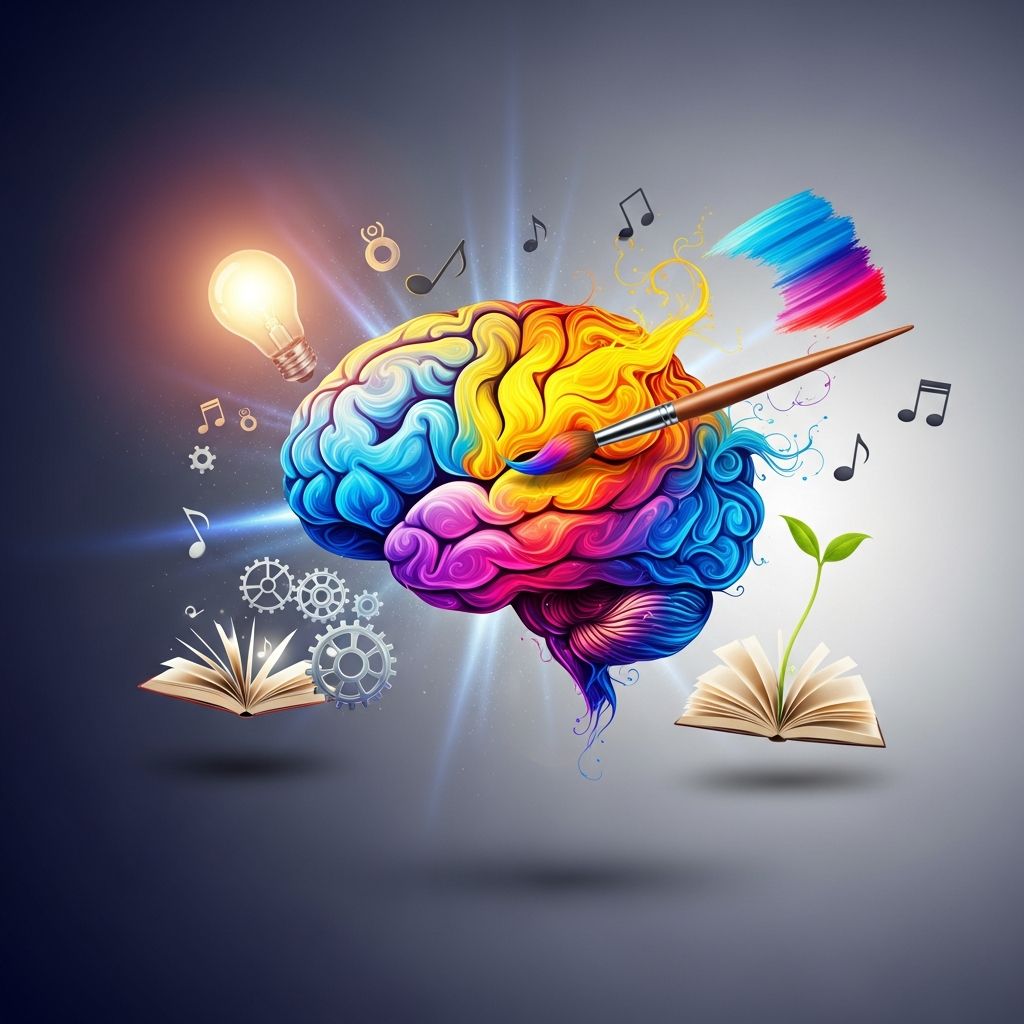
Creativity stands as one of humanity’s most powerful forces, driving innovation, art, and problem-solving across all fields. Highly creative individuals possess distinct traits that set them apart, enabling them to generate novel ideas and navigate complex challenges with ease. These characteristics, often paradoxical, blend curiosity, resilience, and unconventional thinking. Drawing from psychological insights, this article delves into the key attributes that define creative minds, offering practical ways to cultivate them.
The Spark of Endless Curiosity
At the heart of creativity lies an insatiable curiosity. Highly creative people constantly question the world around them, exploring unrelated topics and collecting unusual insights. This trait fuels idea generation by connecting disparate concepts.
- They ask probing questions about everyday phenomena, turning ordinary observations into profound inquiries.
- Broad interests span science, art, history, and nature, providing a rich mental library for innovation.
- Collections of oddities or niche knowledge often inspire breakthroughs.
Research shows that curiosity activates brain networks involved in learning and pattern recognition, enhancing creative output. For instance, a curious mind might ponder how a horse perceives its environment, sparking ideas beyond surface-level views.
Divergent Thinking and Idea Flood
Creative individuals excel at divergent thinking, producing a multitude of solutions to any problem. Unlike linear thinkers, they generate wild, unconventional responses that others might dismiss.
- Fluency in ideas: Rapidly listing numerous options without judgment.
- Flexibility: Shifting perspectives to view challenges from multiple angles.
- Originality: Crafting unique connections that surprise and delight.
Studies on creative ability, such as the Torrance Tests, highlight these skills, where high scorers elaborate intricately on concepts. This mental agility allows creatives to manipulate ideas—adapting, improving, or combining them fluidly.
Embracing Risk and Adventure
Willingness to take risks defines the creative spirit. These individuals thrive on uncertainty, viewing failure as a stepping stone rather than a setback.
- High risk-takers pursue speculative ventures with enthusiasm.
- Tenacity keeps them persistent, fixating on ideas until realized.
- Adventurous spirits lead to real-world experimentation.
Psychological profiles note that creatives often appear radical in debates, uninhibited in opinions, which fosters bold innovation.
Playful Imagination and Daydreaming
Imagination serves as the playground of the creative mind. Daydreaming and fantasizing are not distractions but essential for incubating ideas.
- Frequent “what if” scenarios spark hypothetical explorations.
- Intellectual playfulness involves toying with concepts like building blocks.
- Strong imagery abilities allow vivid mental simulations.
Brain scans reveal that creative daydreamers engage imagination networks alongside motivation centers, toggling between focused and freewheeling states. This habit unlocks unconventional solutions.
Paradoxical Personalities: Balancing Opposites
Creative people embody paradoxes, blending traits that seem contradictory yet synergize powerfully. Psychologist Mihaly Csikszentmihalyi identified ten such dualities.
| Paradox | Description |
|---|---|
| Playful yet Disciplined | They revel in fun ideation but maintain rigorous focus to execute. |
| Extroverted and Introverted | Ambiverts who energize in social settings yet need solitude for deep work. |
| Humble and Proud | Confident in visions but open to critique. |
| Rebellious and Conservative | Challenge norms while grounding ideas in reality. |
| Passionate yet Objective | Deeply invested but able to detach for evaluation. |
These tensions create cognitive flexibility, allowing creatives to navigate messy, multifaceted problems. Neuroimaging confirms their brains flexibly couple disparate networks.
Openness to Experience and New Ideas
Openness ranks as the strongest predictor of creative achievement. It encompasses intellectual curiosity, aesthetic appreciation, and emotional depth.
- Embracing novelty without preconceptions.
- Sensitivity to beauty moves them profoundly.
- Nonconformity rejects rigid structures.
This trait correlates with right-hemisphere dominance, aiding synthesis like tasting colors or seeing sounds. Creatives tolerate chaos, thriving in disorder where others falter.
Sensitivity, Humor, and Emotional Depth
Heightened sensitivity amplifies creativity. They perceive nuances others miss, finding humor in the absurd and beauty in the overlooked.
- Keen humor senses comedy in unconventional situations.
- Emotional openness embraces irrational impulses.
- Androgynous traits free them from stereotypes.
Passion fuels pursuits, blending joy with suffering for rich expression.
Independence and Nonconformity
Creatives prize autonomy, resisting peer pressure and authority. They think independently, valuing their unique perspectives.
- Anti-authoritarian, questioning dogmas critically.
- Straightforward and candid in interactions.
- High self-aspiration drives personal excellence.
This individualism fosters originality, as seen in their unconventional associations.
Cultivating Creativity in Daily Life
While innate, these traits can be nurtured. Habits like imaginative play, solitude, and intuition build creative muscles.
- Schedule daydream breaks to wander mentally.
- Seek solitude for uninterrupted reflection.
- Pursue passions intrinsically for sustained motivation.
- Practice openness by exploring new experiences weekly.
Creative brains use more mental resources during tasks, providing abundant raw material. Adopt these to amplify your potential.
Frequently Asked Questions (FAQs)
Can anyone become highly creative?
Yes, while some traits are innate, habits like curiosity and openness can be developed through practice, enhancing creative capacity for most people.
Why do creative people seem disorganized?
They tolerate chaos and focus on big-picture ideas over details, prioritizing innovation over convention.
Is daydreaming productive for creatives?
Absolutely; it engages key brain networks for idea generation, essential for breakthroughs.
How does openness predict creativity?
As the top personality trait, it drives exploration of inner and outer worlds, leading to novel insights.
Do creatives suffer more emotionally?
Their sensitivity exposes them to deeper pain and joy, fueling authentic expression.
Harnessing Traits for Innovation
Understanding these traits empowers individuals and teams. In workplaces, fostering curiosity and risk-taking boosts innovation. Personally, embracing paradoxes unlocks fulfillment. Highly creative minds remind us that innovation arises from bold, flexible thinking amid complexity.
References
- Characteristics of Highly Creative People — The Second Principle. Accessed 2026. https://thesecondprinciple.com/understanding-creativity/creativetraits/
- 10 Common Behaviors of Highly Creative People — Psychology Today. 2024-03-01. https://www.psychologytoday.com/us/blog/creative-insights/202403/10-common-behaviors-of-highly-creative-people
- Traits of Highly Creative People — Susan Elizabeth Jones. Accessed 2026. https://www.susanejones.com/post/traits-of-highly-creative-people
- Characteristics of Highly Creative People — Jeffrey Baumgartner. Accessed 2026. https://www.creativejeffrey.com/creative/creative_people.php?topic=creative
- Ten Habits of Highly Creative People — Greater Good Science Center, UC Berkeley. Accessed 2026. https://greatergood.berkeley.edu/article/item/ten_habits_of_highly_creative_people
- The 10 Paradoxical Traits of Creative People — Open Culture. 2021-11-01. https://www.openculture.com/2021/11/the-10-paradoxical-traits-of-creative-people-according-to-psychologist-mihaly-csikszentmihalyi-rip.html

Medha Deb is an editor with a master's degree in Applied Linguistics from the University of Hyderabad. She believes that her qualification has helped her develop a deep understanding of language and its application in various contexts. Medha specializes in the areas of beauty, health, sports, and wellness and is committed to ensuring that the content on the website is…