
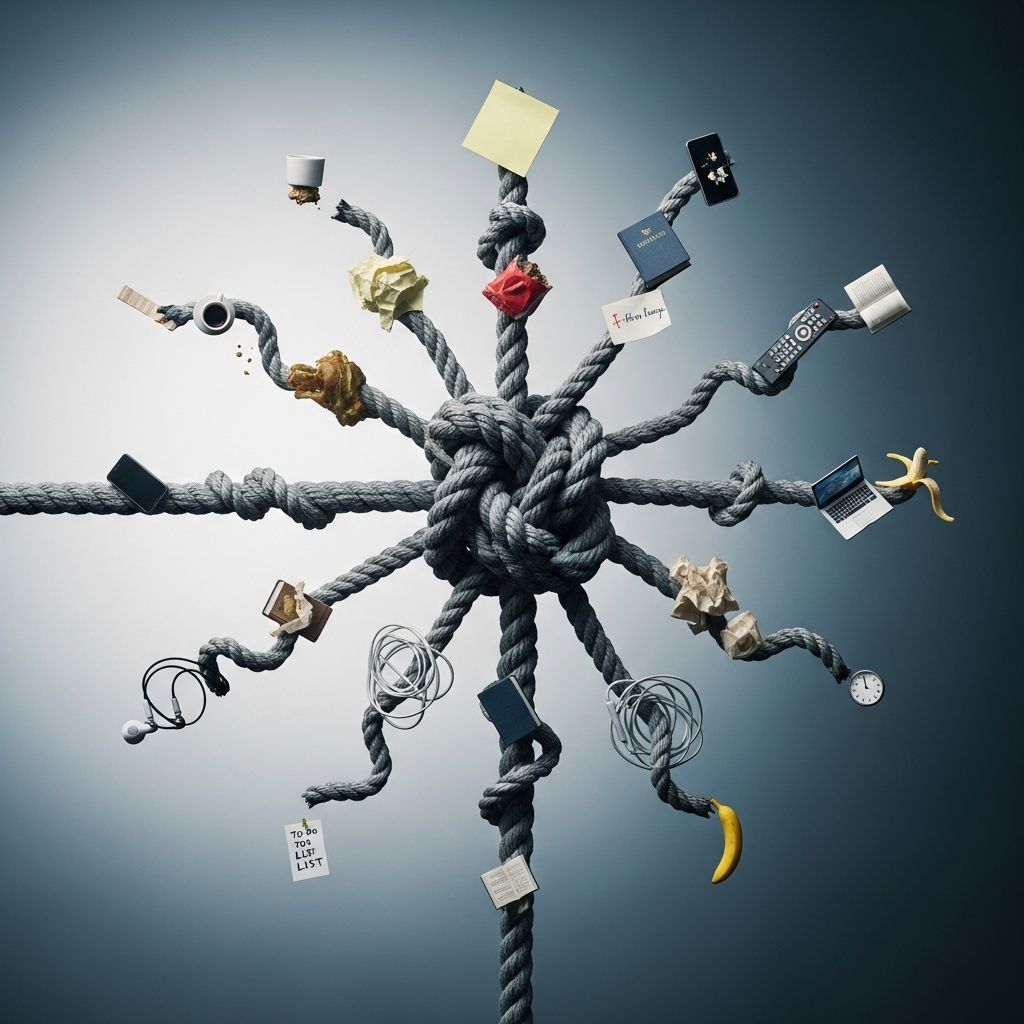
Productivity isn’t just about working harder; it’s about eliminating the invisible barriers that drain your time and mental energy. Many everyday routines, mistaken for efficiency boosters, actually hinder progress. This article reveals 12 such habits, drawing from psychological studies and workplace data, and offers straightforward solutions to restore your focus and output.
Understanding Productivity Killers
In a fast-paced world, small behaviors accumulate into major roadblocks. Research from Stanford University shows multitasking, for instance, increases task completion time by up to 40% due to cognitive switching costs. Similarly, constant email checks elevate stress levels, as found in a University of British Columbia study. Recognizing these patterns is the first step to breaking free.
1. Endless Non-Stop Work Sessions
Committing to work until your task list is cleared sounds dedicated, but it leads to burnout and diminished returns. DeskTime analysis reveals that prolonged desk chaining reduces efficiency as mental fatigue sets in after 52 minutes of focus.
- Impact: Cognitive decline after intense periods without recovery.
- Solution: Adopt the Pomodoro Technique: 25 minutes work, 5-minute break. This sustains attention and prevents exhaustion.
2. Instant Email Replies
The urge to clear your inbox immediately creates a reactive workflow. A University of British Columbia study linked frequent email checks to higher stress and lower performance over two weeks.
Batch processing emails twice daily—morning and late afternoon—frees mental space for deep work, cutting distraction interruptions by 80% according to productivity experts.
3. Multitasking Overload
Handling multiple tasks simultaneously feels productive but fragments attention. The American Psychological Association notes the brain handles one cognitive task at a time; switching incurs a 40% time penalty.
| Single Tasking | Multitasking |
|---|---|
| Focused output | Increased errors |
| 40% faster completion | Memory lapses |
| Lower stress | Higher fatigue |
Prioritize one task using the Eisenhower Matrix to categorize by urgency and importance.
4. Prioritizing Simple Tasks First
Tackling easy items builds momentum but delays critical work. This ‘frog-eating’ reversal leaves high-impact tasks unfinished, perpetuating cycles of low achievement.
- Start with your ‘frog’: the most challenging priority.
- Use time-blocking to allocate slots for tough tasks early.
5. Negative Inner Dialogue
Self-criticism like ‘I can’t do this’ erodes confidence and motivation. Psychological research ties negative self-talk to reduced persistence and performance.
Counter it with affirmations: Replace ‘I’ll fail’ with ‘I’m capable and learning.’ Track wins daily to rewire mindset.
6. Smartphone and Social Media Checks
Personal notifications during work steal minutes that add up. OfficeTeam surveys indicate workers lose 56 minutes daily to calls and texts.
Implement ‘Do Not Disturb’ modes and app blockers during focus hours to reclaim time.
7. Skipping Scheduled Breaks
Powering through without pauses leads to fatigue. Studies confirm regular breaks maintain peak cognitive function, countering the myth of nonstop grinding.
- Short walks or stretches every hour boost circulation and clarity.
- Avoid marathon sessions; quality trumps quantity.
8. Prolonged Break Times
Conversely, lingering in break areas wastes hours. Three 30-minute breaks equate to 90 lost minutes daily.
Set timers: 5-10 minutes max per break. Use them for rejuvenation, not scrolling.
9. Over-Reliance on Productivity Apps
App overload introduces learning curves and decision fatigue. Instead of streamlining, they fragment attention.
Audit tools: Keep only 3-5 essentials. Focus on habits over hacks.
10. Forced Early Rising Without Enough Sleep
Waking prematurely at sleep’s expense impairs focus and decision-making. Sleep deprivation reduces cognitive speed and memory.
Aim for 7-9 hours nightly. Align wake times with natural rhythms via consistent bedtimes.
11. Late-Night Phone Use
Screen blue light delays melatonin, fragmenting sleep. This habit turns quick checks into hour-long distractions.
- Establish a 1-hour pre-bed digital curfew.
- Use night mode or read physical books.
12. Excessive Planning and Rationalizing
Overplanning causes analysis paralysis; rationalizing excuses avoidance.
Limit planning to 10% of task time. Act decisively after outlining key steps.
Building Better Routines: A Step-by-Step Plan
To counteract these habits:
- Audit Your Day: Log activities for a week to spot thieves.
- Set Boundaries: Define work hours and notification rules.
- Track Progress: Use simple journals, not apps, for wins.
- Review Weekly: Adjust based on what boosts output.
The Centers for Disease Control and Prevention (CDC) emphasizes sleep’s role in productivity, recommending 7+ hours to avoid impairment equivalent to blood alcohol over 0.05%. Harvard Business Review reports stressed workers lose 41% productivity, underscoring stress management’s importance.
Frequently Asked Questions (FAQs)
Why does multitasking feel productive but isn’t?
Multitasking creates an illusion of progress via frequent switches, but Stanford research proves it slows you by 40% and raises error rates.
How many breaks should I take daily?
Every 25-90 minutes, per ultradian rhythms, for 5-15 minutes to sustain focus without fatigue.
Can apps really hurt productivity?
Yes, when excessive; they add setup time outweighing benefits. Stick to proven basics.
What’s the best time for tough tasks?
Mornings, when willpower peaks, following the ‘eat the frog’ principle.
How does sleep affect work output?
Insufficient sleep mimics intoxication, slashing cognition per CDC guidelines.
Transform Your Habits Today
Eliminating these 12 habits can double your effective output. Start small: Pick two to fix this week. Consistency compounds, turning average days into high-achieving ones. Reclaim control over your time and energy for lasting results.
References
- 5 “Efficiency” Habits That Are Actually Killing Your Productivity — The Muse. 2016-approx. https://www.themuse.com/advice/5-efficiency-habits-that-are-actually-killing-your-productivity
- 7 Bad Habits That Are Killing Your Productivity — BestSelf Co. 2020-approx. https://bestself.co/blogs/articles/7-bad-habits-that-are-killing-your-productivity
- 12 Bad Habits That Can Kill Your Productivity in the Office — Office Chairs Unlimited. 2022-approx. https://blog.officechairsunlimited.com/12-bad-habits-productivity/
- These 11 Time-Wasting Habits Are Killing Your Productivity — WeekPlan. 2023-approx. https://weekplan.net/time-wasting-habits-hurting-productivity
- Sleep and Sleep Disorders — Centers for Disease Control and Prevention (CDC). 2024-01-04. https://www.cdc.gov/sleep/index.html
- The Cost of Stress: Productivity Losses — Harvard Business Review (via referenced studies). 2022-05-15. https://hbr.org/2022/05/research-the-cost-of-stress

Medha Deb is an editor with a master's degree in Applied Linguistics from the University of Hyderabad. She believes that her qualification has helped her develop a deep understanding of language and its application in various contexts. Medha specializes in the areas of beauty, health, sports, and wellness and is committed to ensuring that the content on the website is…