
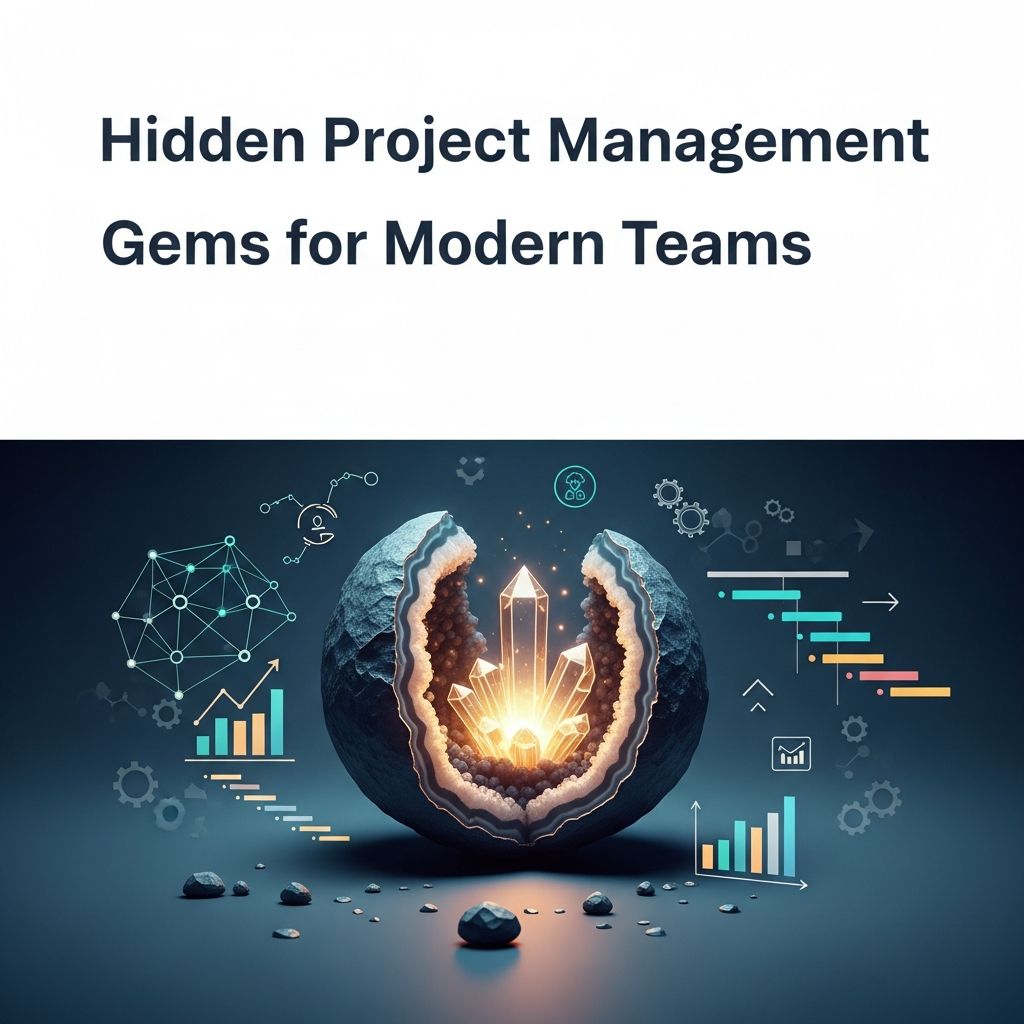
Beyond the Obvious: Discovering Overlooked Project Management Solutions
The project management landscape has become increasingly crowded, with household names dominating conversations about team coordination and workflow optimization. However, numerous platforms exist that deliver exceptional functionality without the widespread recognition of industry giants. These lesser-known solutions often provide specialized features, superior user experiences, or innovative approaches that perfectly align with specific team needs. Understanding these alternatives can help organizations find the right fit for their unique operational requirements and budget constraints.
Teams frequently default to familiar options without exploring whether better-suited alternatives exist. The proliferation of project management tools means that smaller, more specialized platforms often go unnoticed despite offering advantages in niche areas. These hidden gems frequently provide better pricing, more intuitive interfaces, or specialized capabilities that address particular industry requirements or team sizes.
Specialized Platforms for Financial-Centric Teams
Enterprise Resource Planning Integration
Organizations managing complex portfolios alongside financial accountability requirements often struggle with fragmented tool ecosystems. Celoxis represents a comprehensive solution trusted by major organizations including NASA, Rolex, Deloitte, and HBO. Unlike general-purpose platforms that require supplementary financial tools, Celoxis consolidates project execution, resource planning, time tracking, and financial management into a unified system. This integration eliminates data silos and enables leadership visibility across both project performance and budgetary status simultaneously.
The platform excels in environments where multiple concurrent projects compete for shared resources. Teams can allocate personnel across initiatives while maintaining accurate cost tracking and resource utilization metrics. Portfolio managers gain the transparency needed to make informed decisions about resource distribution and project prioritization based on financial constraints and strategic objectives.
Dynamic Scheduling for Uncertain Environments
Adaptive Project Planning
Traditional project management approaches rely on fixed schedules established during planning phases. However, many projects encounter changing requirements, shifting priorities, and unpredictable resource availability. LiquidPlanner addresses these realities through predictive project management capabilities. The platform automatically adjusts timelines based on task priorities, effort estimates, and resource availability, enabling teams to maintain realistic forecasts despite uncertainty.
This dynamic approach proves particularly valuable in research, product development, and consulting environments where requirements frequently evolve. Rather than treating schedule modifications as failures, LiquidPlanner treats them as normal project dynamics and recalculates realistic delivery dates accordingly. Teams practicing scenario planning can evaluate how different priority shifts affect overall timelines without manual recalculation.
Key advantages include:
- Automatic timeline adjustment based on changing priorities
- Workload balancing across team members
- Scenario planning capabilities for contingency preparation
- Realistic forecasting despite uncertain requirements
Flexibility Across Multiple Work Methodologies
Unified Data, Diverse Visualization
Different team members often prefer different ways of viewing project information. Zenkit addresses this preference diversity by enabling teams to manage identical data through multiple perspectives simultaneously. The same project information appears as Kanban boards, list views, calendar schedules, tables, or mind maps depending on user preference. This flexibility eliminates the need for different tools or complex workarounds when team members work in different styles.
Real-time collaboration features ensure that updates made in one view instantly reflect across all others. File attachments, comments, and advanced search capabilities provide the infrastructure needed for comprehensive project collaboration without context switching between applications. Teams can standardize on a single platform while accommodating diverse working preferences.
Built-In Communication for Reduced Tool Sprawl
Eliminating Platform Fragmentation
Modern teams often juggle multiple communication channels, file storage systems, and task management platforms simultaneously. Basecamp consolidates these functions within project-specific environments. Each project includes message boards, to-do lists, file storage, and group chat capabilities, reducing the need for constant meetings and lengthy email threads.
This consolidation proves particularly effective for organizations seeking simplicity and transparency over advanced scheduling capabilities. Teams can see all project-related discussions, decisions, and documentation in a single location. The straightforward approach reduces onboarding friction and accelerates team familiarity with the system.
Timeline-Focused Solutions for Scheduling-Intensive Work
Gantt Chart Excellence
Organizations managing projects with complex dependencies and multiple sequential phases benefit from dedicated timeline visualization tools. TeamGantt specializes in making schedule management intuitive and collaborative. Teams can visualize project progression, identify critical path elements, and easily adjust schedules as circumstances change. Real-time collaboration features allow team members to comment on timeline elements, share progress updates, and track changes without leaving the planning interface.
This approach particularly suits construction, manufacturing, and event management environments where timeline precision directly impacts project success. Stakeholders can see how schedule modifications cascade through dependent activities, understanding the implications of proposed changes before implementation.
Resource and Time Management Emphasis
Structured Project Tracking
Organizations prioritizing resource allocation accuracy and billable hour tracking benefit from platforms emphasizing these capabilities. ProWorkflow provides structured approaches to managing projects from initiation through completion. Teams can customize workflows to match organizational processes, track both billable and non-billable time, and monitor team performance through detailed analytics.
This approach suits professional services organizations, consulting firms, and agencies where accurate time tracking directly affects client billing and project profitability. Resource allocation tools prevent overbooking while performance monitoring identifies bottlenecks and capacity constraints.
Real-Time Analytics for Visibility and Performance
Data-Driven Project Insights
Hive combines project management capabilities with advanced analytics and reporting tools for monitoring performance metrics. The platform emphasizes flexibility and real-time collaboration, enabling teams to access current project status without waiting for report generation. Analytics dashboards reveal performance trends, identifying areas requiring attention before issues escalate.
Creative and marketing teams particularly value Hive’s native proofing and communication tools, which streamline feedback and approval workflows. The combination of project management and analytics creates a comprehensive platform for teams seeking data-driven decision-making capabilities.
Cloud-Based Execution with Real-Time Dashboards
Comprehensive Visibility Platform
ProjectManager.com offers cloud-based project management supporting planning, execution, and tracking across distributed teams. Gantt charts, task management, resource allocation, and real-time dashboards provide comprehensive visibility into project progress and resource utilization. Managers can monitor workloads, timelines, and bottlenecks through up-to-date dashboards, enabling rapid identification and resolution of emerging issues.
The platform’s real-time nature ensures that leadership has current information for decision-making rather than historical reports that may not reflect current conditions. This real-time orientation proves particularly valuable in fast-moving environments where conditions change frequently.
Customizable Workflows for Diverse Methodologies
Agile, Traditional, and Hybrid Approaches
ProofHub enables teams to adapt platform workflows to match their specific project approaches and organizational processes. Customizable configurations support Agile methodologies, traditional waterfall approaches, and hybrid models combining elements of both. Real-time updates ensure all team members see current information, while reporting capabilities provide the visibility leaders need for oversight and decision-making.
This flexibility proves valuable for organizations supporting multiple project types simultaneously or those transitioning between methodologies. Teams can implement changes without replacing tools or implementing parallel systems.
Enterprise Portfolio Management
Complex Initiative Coordination
Clarizen addresses enterprise-scale project portfolio management, helping organizations manage tasks, resources, and timelines across multiple concurrent projects. Real-time dashboards and Gantt charts provide leadership visibility into project progress, while collaboration tools keep distributed teams aligned. The platform particularly suits organizations managing complex, cross-functional initiatives where coordination across multiple teams is essential.
Advanced reporting capabilities deliver the insights leadership needs for strategic decision-making, portfolio optimization, and resource allocation across competing priorities. The platform scales to organizational complexity while maintaining usability for individual contributors.
Transparent Execution for Software Teams
Agile and Issue Tracking
Planio, built on the Redmine foundation, specializes in supporting Agile and traditional software development teams. The platform supports Scrum and Kanban methodologies alongside comprehensive issue tracking for bug management and feature development. Teams can manage tasks, track software defects, share technical documentation, and collaborate through discussions and notifications.
Customizable workflows and detailed reporting provide the structure software organizations need while maintaining transparency about development progress. The platform works well for teams valuing structured execution and clear visibility into development backlogs.
Clear Oversight for Complex Work
Visibility and Control
Easy Projects improves visibility and control over complex work through Gantt chart planning, resource assignment, and customizable progress dashboards. Collaboration features including discussions and document sharing keep teams informed without requiring constant synchronous meetings. Advanced reporting and analytics track performance metrics, helping teams understand what works and where improvements are needed.
The platform suits organizations managing work with multiple dependencies, resource constraints, and the need for clear visibility into progress. Structured planning combined with real-time tracking creates the oversight needed for complex initiative management.
Comparison of Lesser-Known Solutions
| Platform | Primary Strength | Best For | Key Feature |
|---|---|---|---|
| Celoxis | Financial Integration | Enterprise Portfolio Management | Unified Financial & Project Tracking |
| LiquidPlanner | Dynamic Scheduling | Uncertain Environments | Automatic Timeline Adjustment |
| Zenkit | Methodology Flexibility | Diverse Work Styles | Multiple View Options |
| Basecamp | Communication Integration | Simple Workflows | Built-In Messaging & Chat |
| TeamGantt | Timeline Visualization | Complex Dependencies | Collaborative Gantt Charts |
| ProWorkflow | Resource Tracking | Professional Services | Billable Hour Tracking |
| Hive | Real-Time Analytics | Creative Teams | Native Proofing Tools |
| ProjectManager.com | Real-Time Dashboards | Fast-Moving Environments | Live Progress Monitoring |
| ProofHub | Customizable Workflows | Multiple Methodologies | Workflow Customization |
| Clarizen | Enterprise Portfolio | Complex Organizations | Cross-Functional Coordination |
| Planio | Agile Support | Software Teams | Issue Tracking & Scrum |
| Easy Projects | Visibility & Control | Complex Work | Advanced Reporting |
Evaluating Hidden Gems for Your Organization
Assessment Framework
Selecting among lesser-known platforms requires systematic evaluation against organizational priorities. Begin by identifying which capabilities matter most: financial tracking, timeline visualization, communication integration, or analytics. Assess whether your team requires flexibility across methodologies or specialization in a particular approach. Consider whether scaling to enterprise complexity is a future requirement or whether your organization will remain stable in size.
Evaluate integration capabilities with existing tools, ensuring that adopting a new platform doesn’t create additional fragmentation. Pricing models vary significantly among platforms, from per-user subscriptions to unlimited-user options. Calculate total cost of ownership including implementation time, training requirements, and potential productivity impacts during transition periods.
Frequently Asked Questions
Q: Why should we consider lesser-known project management tools instead of established platforms?
A: Lesser-known platforms often provide specialized features perfectly suited to specific industries or team types, potentially delivering better value and functionality than generic solutions. They may offer superior user experiences, more intuitive interfaces, or better pricing without compromising capability. Many organizations discover that a smaller, focused platform serves their needs better than attempting to adapt a broader solution.
Q: How do hidden gems compare in terms of customer support and reliability?
A: Lesser-known platforms often prioritize customer support as a competitive advantage, providing more personalized assistance than massive corporations. Reliability depends on specific vendors, but many hidden gems are used by Fortune 500 companies and government agencies, indicating production-grade dependability. Evaluating customer reviews and requesting references from current users helps assess support quality and platform stability.
Q: Can lesser-known platforms scale as our organization grows?
A: Many hidden gems support enterprise-scale deployments. Solutions like Celoxis and Clarizen explicitly target large organizations managing complex portfolios. Evaluating a platform’s roadmap, customer base, and technical architecture helps determine whether it can grow with your organization or whether you’ll eventually need to migrate.
Q: What’s the typical implementation timeline for lesser-known platforms?
A: Implementation timelines vary by platform complexity and organizational size. Simpler solutions like Basecamp and Zenkit can be operational within days, while enterprise platforms may require weeks or months for configuration, integration, and team training. Vendors typically provide guidance on expected timelines based on organizational complexity.
Q: How do we migrate from our current platform to a lesser-known alternative?
A: Most platforms support data import from competitors, though migration complexity depends on your current system’s structure. Planning a phased rollout, running parallel systems during transition, and allocating time for team training helps minimize disruption. Vendors often provide migration assistance or can recommend migration specialists.
References
- 55+ Best Project Management Tools of 2026 — Celoxis. 2026. https://www.celoxis.com/article/best-project-management-tools-list
- Best Project Management Tools for Engineering Teams in 2026 — Shortcut. 2026. https://www.shortcut.com/blog/best-project-management-tools-for-engineering-teams-in-2026
- 13 Top Project Management Apps for Growing Teams in 2026 — Monday.com. 2026. https://monday.com/blog/project-management/project-management-apps/
- Best 21 Project Management Software to Compare in 2026 — Wrike. 2026. https://www.wrike.com/project-management-guide/faq/what-are-project-management-tools/
- The Best Project Management Software in 2026 — MediaValet. 2026. https://www.mediavalet.com/blog/best-project-management-software
- 40 Best Project Management Software Picked For 2026 — The Digital Project Manager. 2026. https://thedigitalprojectmanager.com/tools/best-project-management-software/
- Project Management Software for Teams — Microsoft. https://www.microsoft.com/en-us/microsoft-365/planner/project-management

- Integrated M.A. in Applied Linguistics, University of Hyderabad
- 5+ years in editorial, instructional, SEO, and research-based writing
Sneha is a relationships and lifestyle writer with a strong foundation in applied linguistics and certified training in relationship coaching. She brings over five years of writing experience to theskillvault, crafting thoughtful, research-driven content that empowers readers to build healthier relationships, boost emotional well-being, and embrace holistic living. Her writing and insights reflect the belief that beauty, happiness, and wellness…