
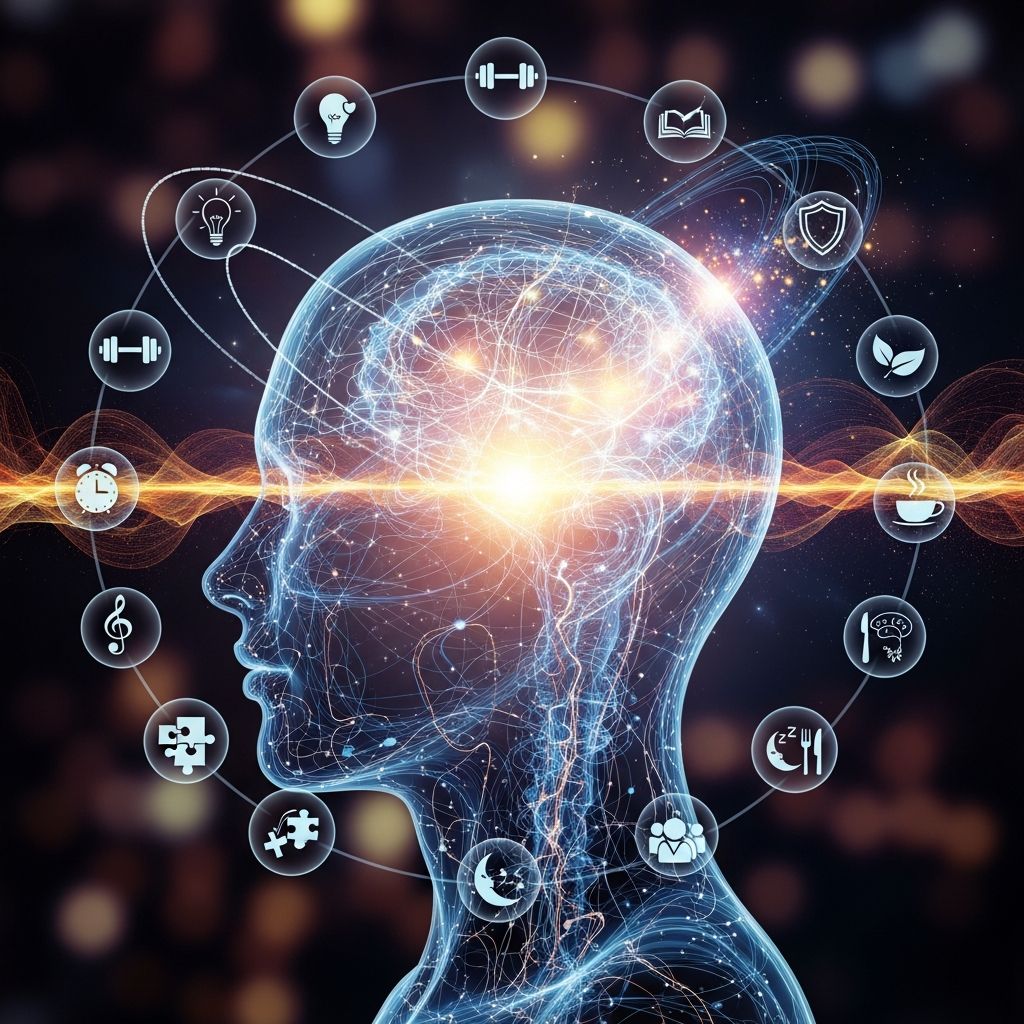
Enhancing cognitive abilities is essential for thriving in a fast-paced world where mental agility drives success. This guide explores 12 effective strategies grounded in scientific research, ranging from simple lifestyle adjustments to cutting-edge interventions. These methods target key brain functions like memory, attention, and executive control, helping individuals achieve sustained mental sharpness without relying on unproven shortcuts.
Understanding Cognitive Enhancement Basics
Cognitive enhancement involves interventions that improve mental processes such as perception, attention, memory, and decision-making. Research categorizes these into biochemical, physical, and behavioral approaches, each with distinct mechanisms and outcomes. Behavioral strategies, like exercise and sleep, often yield the most accessible and safest benefits, while physical methods such as brain stimulation show promise for targeted gains. Personal factors like age, baseline cognition, and health status influence effectiveness, with higher-performing individuals sometimes seeing amplified results.
Noninvasive techniques, including transcranial stimulation, are advancing through refined protocols that align with natural brain patterns, potentially revolutionizing how we boost focus and learning. However, evidence varies; while lifestyle changes consistently support broad improvements, tech-based options require more validation.
Foundational Lifestyle Habits for Mental Strength
Daily routines form the bedrock of brain health. Prioritizing these habits creates a resilient foundation for higher-level enhancements.
Prioritize Quality Sleep for Memory Consolidation
Sleep is a cornerstone of cognitive function, enabling memory consolidation and neural repair. During deep sleep stages, the brain processes daily experiences, strengthening neural connections. Studies show sleep enhances memory performance, particularly in tasks requiring recall, with effects modulated by age and health. Aim for 7-9 hours nightly; establish a consistent schedule, dim lights an hour before bed, and avoid screens to optimize slow-wave sleep.
Incorporate Regular Aerobic Exercise
Physical activity boosts brain-derived neurotrophic factor (BDNF), promoting neuron growth and synaptic plasticity. Aerobic exercises like running or swimming improve executive function, working memory, and visuospatial skills. Research confirms exercise enhances cognition beyond trained skills, with benefits accumulating over weeks. Start with 30 minutes daily, five days a week, combining cardio with strength training for optimal results.
Adopt a Nutrient-Rich Diet
Brain health thrives on omega-3s, antioxidants, and B vitamins found in fatty fish, berries, nuts, and leafy greens. These nutrients reduce inflammation and support neurotransmitter function. Hydration is equally vital; even mild dehydration impairs attention. A Mediterranean-style diet correlates with better cognitive scores across ages.
Mindfulness and Mental Training Techniques
Targeted practices sharpen attention and emotional regulation, key to advanced thinking.
Practice Daily Meditation
Meditation trains sustained attention and mindfulness, with long-term practitioners showing structural brain changes in attention networks. Techniques like focused-breathing or body scans reduce mind-wandering, enhancing working memory. Beginners can start with 10 minutes daily, building to 20-30 for noticeable gains; effects may take weeks but persist with consistency.
Engage in Lifelong Learning
Learning new skills, such as a language or instrument, builds cognitive reserve. Musical training and bilingualism enhance executive control and memory transfer. Dedicate time weekly to novel challenges; apps or classes make this accessible, fostering neuroplasticity.
Nutrition and Supplementation Essentials
| Nutrient | Brain Benefit | Food Sources |
|---|---|---|
| Omega-3 Fatty Acids | Supports synaptic health and mood | Salmon, walnuts, flaxseeds |
| Antioxidants | Protects against oxidative stress | Blueberries, spinach, dark chocolate |
| Caffeine (moderate) | Boosts alertness and working memory | Coffee, green tea |
| B Vitamins | Aids neurotransmitter production | Eggs, avocados, legumes |
This table highlights core nutrients; consult professionals before supplements, as individual needs vary.
Physical and Sensory Stimulation Methods
Leverage Aerobic and Balance Workouts
Beyond cardio, activities like yoga or tai chi improve balance and cognitive-motor integration. Dancing combines rhythm with memory, enhancing multiple domains. Whole-body vibrations and stochastic resonance also indirectly boost motor control and cognition.
Explore Binaural Beats and Auditory Training
Auditory stimulation, such as binaural beats or theta rhythm entrainment, modulates brain waves for better focus. Listening during tasks can enhance memory activation; use apps for guided sessions.
Advanced Neurotechnology Options
Emerging tools offer precise enhancements but require caution.
Noninvasive Brain Stimulation
Techniques like transcranial electrical stimulation (tES) and magnetic stimulation (TMS) generate fields to influence neural activity. Protocols targeting working memory show dosage-specific effects, stronger during learning. Personalized imaging-guided sessions improve focality. Access via clinics; home devices need expert oversight due to mixed evidence.
Neurofeedback Training
Neurofeedback uses real-time EEG feedback to train brain patterns. Upper alpha band training enhances memory and visuospatial skills; fMRI variants boost attention. Sessions last 20-40 minutes, with effects building over 10-20 uses. Passive versions allow effortless training.
Cognitive Exercises and Games
Dual N-Back and Memory Drills
Working memory training like dual n-back challenges simultaneous tracking, potentially transferring to fluid intelligence. Mnemonic techniques, from ancient loci methods to modern apps, amplify recall. Practice 20 minutes daily for synergistic gains in high-baseline users.
Brain Games with Transfer Effects
Customized games target attention and speed; evidence supports modest broad improvements. Combine with real-world application for best results.
Environmental and Social Boosters
- Nature Exposure: Walks in green spaces reduce cognitive fatigue, enhancing creativity.
- Social Interaction: Discussions stimulate reasoning; socioenvironmental factors modulate training efficacy.
- Declutter Workspace: Minimalist environments sharpen focus.
Potential Risks and Best Practices
Passive methods like stimulants carry side effects and ethical concerns, with limited general enhancement evidence. Active strategies demand effort but pose fewer risks. Track progress with journals; combine methods synergistically. Consult healthcare providers, especially for stimulation.
Implementing a Personalized Brain Boost Plan
Create a weekly schedule: mornings for exercise and meditation, evenings for learning and reflection. Monitor via apps tracking mood and productivity. Adjust based on personal factors like extraversion, which influences caffeine response.
Frequently Asked Questions (FAQs)
Can anyone improve their brain power?
Yes, most people benefit from behavioral strategies; genetics play a role, but lifestyle overrides much variance.
How quickly do these strategies work?
Lifestyle changes show effects in days to weeks; neurotech may offer immediate boosts but needs repetition.
Are brain stimulation devices safe for home use?
Under professional guidance, yes; self-use risks suboptimal results or side effects. Evidence is promising but not conclusive.
Do supplements really enhance cognition?
Only if addressing deficiencies; whole foods are superior. No magic pills exist.
What’s the most effective strategy?
Sleep and exercise top lists for broad, sustained benefits.
References
- Hacking the Brain: Dimensions of Cognitive Enhancement — PMC. 2019-03-20. https://pmc.ncbi.nlm.nih.gov/articles/PMC6429408/
- Can neurotechnology revolutionize cognitive enhancement? — PLOS Biology. 2024-10-02. https://journals.plos.org/plosbiology/article?id=10.1371/journal.pbio.3002831
- Who Wants to Enhance Their Cognitive Abilities? Potential … — PMC. 2023-06-15. https://pmc.ncbi.nlm.nih.gov/articles/PMC10299699/
- Cognitive enhancement by brain stimulation techniques — Frontiers. 2023-01-01. https://www.frontiersin.org/research-topics/69024/cognitive-enhancement-by-brain-stimulation-techniques
- To enhance or not to enhance: A debate about cognitive … — Harvard ADS. 2025-01-01. https://ui.adsabs.harvard.edu/abs/2025PhLRv..54…58G/abstract
- Cognitive enhancement | Research Starters — EBSCO. 2023-01-01. https://www.ebsco.com/research-starters/health-and-medicine/cognitive-enhancement
- Cognitive Enhancement – Lifestyle Medicine — Stanford Lifestyle Medicine. 2024-01-01. https://lifestylemedicine.stanford.edu/lifestyle-pillars/cognitive-enhancement/

Medha Deb is an editor with a master's degree in Applied Linguistics from the University of Hyderabad. She believes that her qualification has helped her develop a deep understanding of language and its application in various contexts. Medha specializes in the areas of beauty, health, sports, and wellness and is committed to ensuring that the content on the website is…