
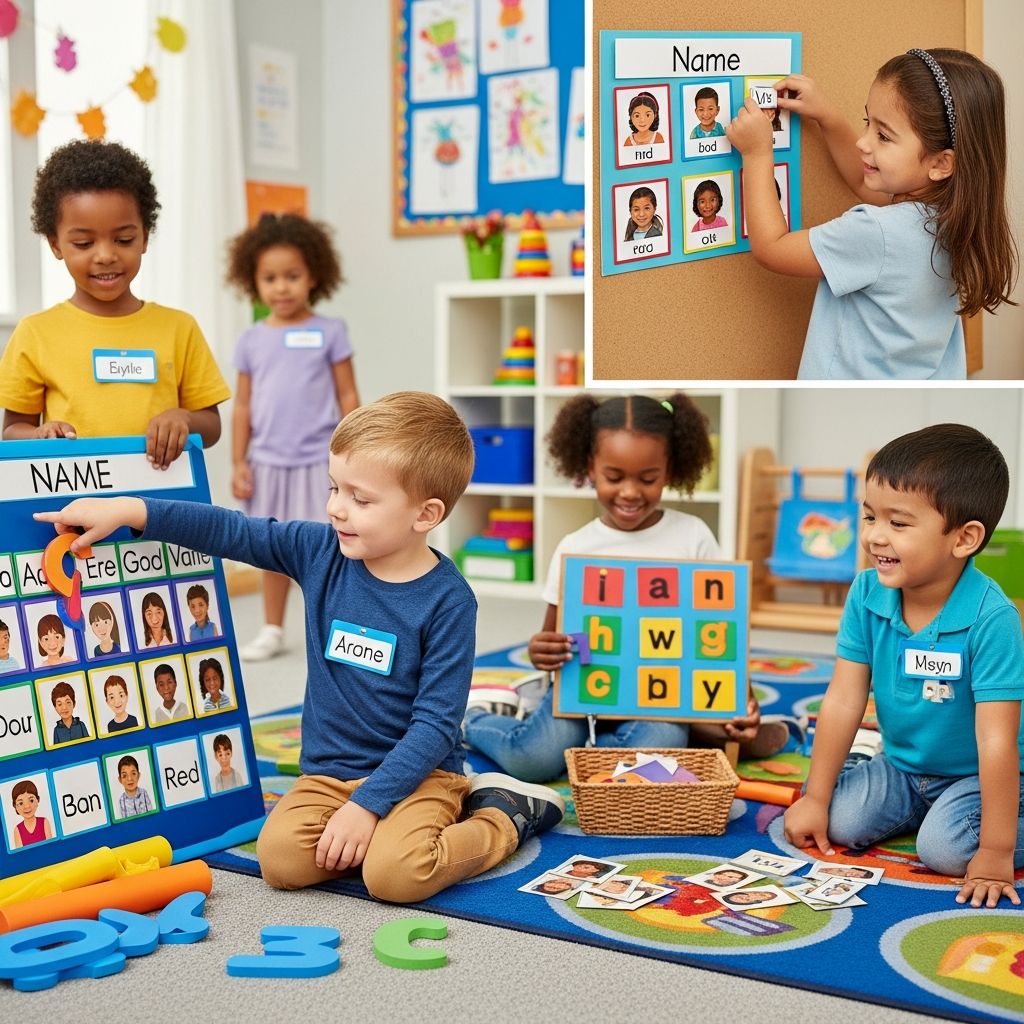
Preschoolers thrive when learning feels like play, and name recognition activities are a perfect gateway to early literacy. These games not only help children identify their own names and those of classmates but also foster fine motor skills, letter awareness, and social bonds. By integrating movement, sensory elements, and creativity, educators and parents can transform routine practice into exciting adventures that build lasting confidence.
Why Name Activities Matter in Early Learning
Recognizing one’s name is often a child’s first reading milestone. It introduces letters in a meaningful context, sparking curiosity about print. Research from the National Association for the Education of Young Children emphasizes that such activities enhance phonological awareness and self-esteem, setting a strong foundation for kindergarten readiness. Hands-on name games make abstract concepts tangible, encouraging repetition without frustration.
These activities align with developmental stages: 3-year-olds focus on initial letters, while 4-5-year-olds tackle full spelling. They also promote inclusivity by celebrating diverse names, strengthening classroom community from day one.
Simple Sensory Builds for Individual Practice
Sensory experiences engage multiple senses, aiding memory retention. Set up stations with everyday materials to let children explore their names tactilely.
- Sand Tray Tracing: Fill shallow trays with kinetic sand or flour. Provide alphabet stamps or pointers for kids to form letters. Add themed accents like glitter for sparkle.
- Bead Stringing Names: Use pipe cleaners and colorful letter beads. Children thread beads in sequence, twisting ends to secure. This refines pincer grasp while reinforcing order.
- Foam Letter Stacks: Cut pool noodles or foam sheets into letter shapes. Kids stack or connect them, creating 3D name sculptures.
Rotate materials weekly to maintain interest. For group settings, label trays with photos to match names visually.
DIY Puzzles and Matching Challenges
Puzzles sharpen problem-solving and sequencing skills. Customize them for instant relevance.
| Activity | Materials Needed | Skill Focus | Prep Time |
|---|---|---|---|
| Bottle Cap Spells | Bottle caps, marker, bags | Letter ID, sequencing | 15 mins |
| Popsicle Stick Puzzles | Sticks, marker, colors | Fine motor, matching | 10 mins |
| Rock Letter Builds | Smooth rocks, marker | Tactile recognition | 20 mins |
| Cardboard Car Parks | Cardboard, toy cars, tape | Spatial awareness | 25 mins |
Label each puzzle with a photo for self-correction. Extend by challenging kids to build friends’ names, promoting peer recognition.
Group Games to Energize Circle Time
Movement-based games turn learning communal, ideal for 10-15 minute sessions.
- Beach Ball Name Toss: Write names on a ball. Toss and read aloud where your thumb lands, waving to that friend.
- Name Bingo Boards: Create cards with classmate names or initials. Call clues like “Starts with S” or “Has four letters.”
- Rhyme Chain Circle: Start with “Willa Walla Woo,” substituting names for silly rhymes. Builds phonemic fun.
- Photo Hunt Relay: Hide name cards with photos. Teams race to match and shout the name.
These foster listening and turn-taking, reducing shyness in new groups.
Crafts That Personalize Learning Spaces
Crafts create keepsakes while practicing scissor skills and gluing.
- Cut-and-Paste Themes: Editable sheets with seasonal motifs like buses or apples. Kids trace, cut, and assemble letters.
- Clothespin Clips: Write letters on pins; clip to sticks in order. Dual-purpose for motor strength.
- Block Letter Towers: Sticker letters on linking cubes. Build vertically or link horizontally.
Display finished pieces on walls, rotating monthly for a dynamic name gallery.
Book-Based Extensions for Storytime
DIY books invite repeated interaction, blending reading with personalization.
- Classmate Photo Albums: Laminate photos with names in mini binders. Flip for matching practice.
- Lift-the-Flap ABC: Cover letters with flaps revealing name starts. Ties to phonics.
- Rhyming Flip Books: Pair names with rhymes under flaps for giggles and sound play.
Store in libraries; kids “read” independently, boosting ownership.
Tech-Free Center Rotations for Full-Class Engagement
Design centers for 4-6 kids, with timers for smooth transitions.
- Magnetic Wall: Fridge letters and laminated strips. Build own or sort by length.
- Parking Lot Mats: Draw lots labeled with names; park lettered cars correctly.
- Cookie Jar Sort: Draw names on jars; drop magnetic letters inside matching ones.
Include differentiated tasks: visuals for beginners, spelling recall for advanced.
Adapting for Home and Inclusive Settings
Parents replicate with household items: yarn for stringing, magnets on fridges. For diverse needs, use larger manipulatives or verbal cues. Short names first, building to longer ones. Track progress with photo journals.
Benefits extend to emotional growth: seeing one’s name affirmed builds identity. Studies from the U.S. Department of Education highlight how such routines predict later reading success.
Frequently Asked Questions (FAQs)
Q: How often should we do name activities?
A: Daily 10-15 minute bursts work best, integrated into routines like morning meetings or centers.
Q: What if a child struggles with their name?
A: Start with first letter only, using multisensory aids. Celebrate efforts to build confidence.
Q: Can these work for non-English names?
A: Absolutely—focus on unique letter combos, adapting rhymes sensitively.
Q: Are editable templates necessary?
A: Not at all; handwritten cards personalize just as well and model writing.
Q: How to store materials?
A: Zipper bags per child or photo-labeled bins prevent mix-ups.
Q: Do these help with writing names?
A: Yes, transitioning from builds to tracing sheets naturally leads to independent writing.
References
- Developmentally Appropriate Practice in Early Childhood Programs — National Association for the Education of Young Children. 2020-04-15. https://www.naeyc.org/resources/position-statements/dap
- Early Beginnings: Early Literacy Development — U.S. Department of Education, Office of Early Learning. 2022-09-01. https://www2.ed.gov/about/offices/list/earlylearning/earlylearning.html
- Phonological Awareness and Early Reading Success — National Institute for Literacy. 2019-06-12. https://lincs.ed.gov/publications/html/megaskills/chapter3.html
- Handbook of Early Literacy Research — Guilford Press (peer-reviewed). 2021-03-22. https://www.guilford.com/books/Handbook-of-Early-Literacy-Research/Neuman/Dickinson/9781462535960
- Early Childhood Literacy Guidelines — Head Start Early Childhood Learning & Knowledge Center. 2023-11-08. https://eclkc.ohs.acf.hhs.gov/child-screening-assessment/early-childhood-development/learning-domains/literacy-knowledge

- Integrated M.A. in Applied Linguistics, University of Hyderabad
- 5+ years in editorial, instructional, SEO, and research-based writing
Sneha is a relationships and lifestyle writer with a strong foundation in applied linguistics and certified training in relationship coaching. She brings over five years of writing experience to theskillvault, crafting thoughtful, research-driven content that empowers readers to build healthier relationships, boost emotional well-being, and embrace holistic living. Her writing and insights reflect the belief that beauty, happiness, and wellness…