
The ocean hides some of the most awe-inspiring creatures on Earth, and among them are fish that dwarf human imagination. Unlike marine mammals like blue whales, these are true fish—either bony or cartilaginous—reaching sizes that challenge our understanding of aquatic life. This article delves into the biggest fish alive today and those from prehistoric times, examining their biology, habitats, feeding habits, and the mysteries surrounding their existence.
The Current Champion: Whale Shark Majesty
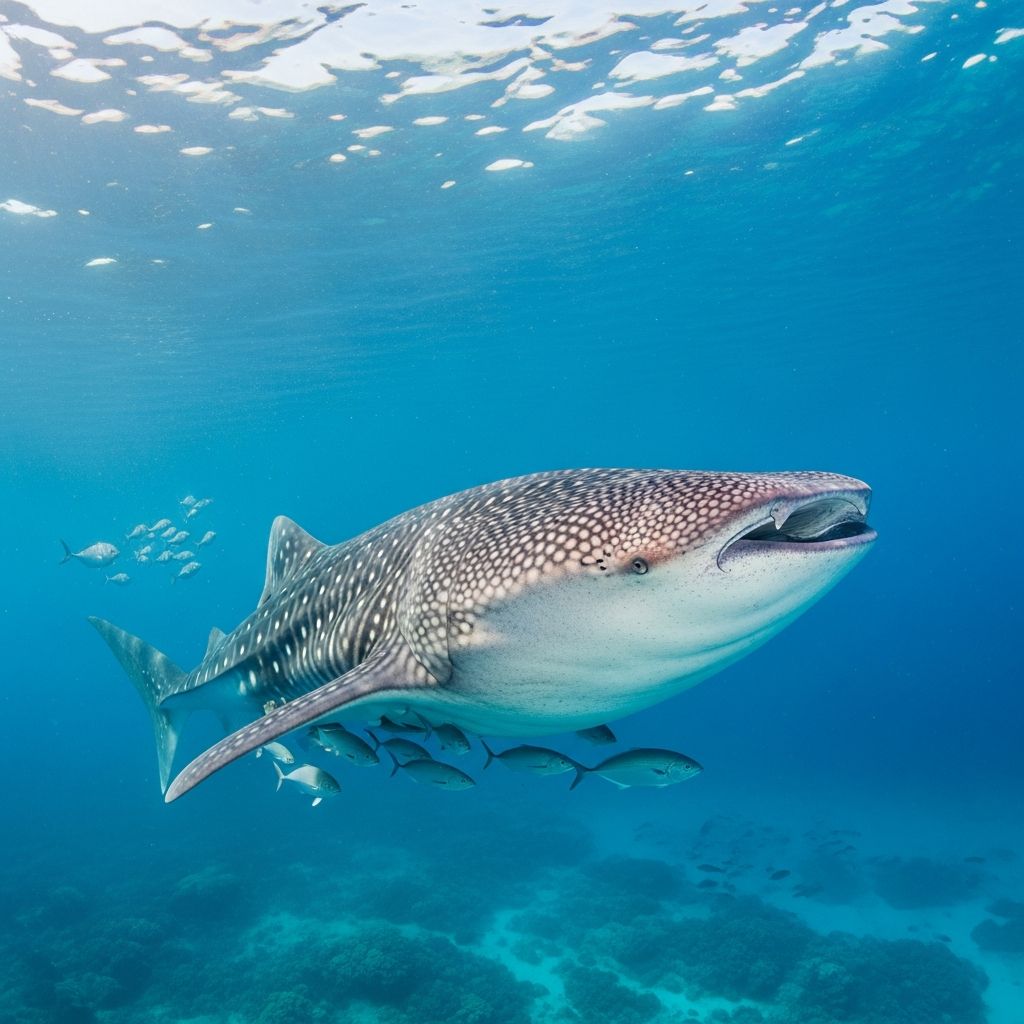
Topping the list of living fish is the whale shark (Rhincodon typus), a cartilaginous giant from the Chondrichthyes class. These behemoths can stretch up to 18.8 meters (61.7 feet) and weigh as much as 21.5 tonnes (47,000 pounds), making them the undisputed largest fish species today. Found in tropical and warm-temperate waters worldwide, whale sharks prefer temperatures between 20-25°C (68-77°F). Their distinctive checkerboard pattern of white, yellow, and grey spots on a dark background aids in camouflage among plankton-rich waters.
Despite their enormous mouths—up to a meter wide—these gentle filter-feeders pose no threat to humans. They sieve plankton, small fish, and squid through specialized gill rakers, swimming slowly with jaws agape near the surface. Lifespans are estimated at 60-100 years, though exact figures remain elusive due to their elusive nature. Recent discoveries, like secret nursery habitats, highlight ongoing research into their reproduction, a puzzle scientists are only beginning to solve.
Runner-Up: The Enigmatic Basking Shark
Claiming second place is the basking shark (Cetorhinus maximus), another filter-feeding shark reaching 14 meters (46 feet) and 16 tonnes (35,000 pounds). Native to northern temperate oceans, these sharks were once harpooned in large numbers for their liver oil, leading to population declines. Today, they are protected in many regions.
Basking sharks migrate vast distances, often seen basking at the surface with mouths open to engulf plankton. Their massive livers, comprising up to 25% of body weight, provide exceptional buoyancy. Unlike whale sharks, they enter colder waters and can dive to depths over 1,000 meters.
Other Contemporary Ocean Titans
Beyond the top two, several other fish impress with their scale:
- Great White Shark (Carcharodon carcharias): Up to 7 meters (23 feet) and 3.3 tonnes, apex predators of coastal waters.
- Giant Oceanic Manta Ray (Mobula birostris): Wingspan of 5 meters (16 feet) and 3 tonnes, graceful filter-feeders.
- Ocean Sunfish (Mola mola): Heaviest bony fish at 2.3 tonnes (5,100 pounds), with a bizarre, flattened body up to 3.1 meters.
- Beluga Sturgeon (Huso huso): Ancient bony fish reaching 7.2 meters (24 feet) and 2 tonnes, critically endangered due to overfishing.
These species showcase the diversity of large fish, from predatory sharks to odd-shaped bony wonders like the sunfish family, including the giant sunfish (Mola alexandrini) at 2.7 tonnes.
Comparing the Giants: Size Breakdown
To visualize their enormity, consider this comparison table of top living fish:
| Species | Max Length (m/ft) | Max Weight (tonnes/lb) | Type | Habitat |
|---|---|---|---|---|
| Whale Shark | 18.8 / 61.7 | 21.5 / 47,000 | Cartilaginous | Tropical oceans |
| Basking Shark | 14 / 46 | 16 / 35,000 | Cartilaginous | Temperate oceans |
| Great White Shark | 7 / 23 | 3.3 / 7,330 | Cartilaginous | Coastal worldwide |
| Ocean Sunfish | 3.1 / 10 | 2.3 / 5,100 | Bony | Open ocean |
| Beluga Sturgeon | 7.2 / 24 | 2.1 / 4,570 | Bony | Caspian/Black Sea |
This table underscores how cartilaginous fish dominate the size rankings, with whale and basking sharks far ahead.
Prehistoric Behemoths: Giants of the Past
While modern fish are colossal, prehistoric species eclipsed them. The Leedsichthys problematicus, a Jurassic bony fish from 165 million years ago, is estimated at over 16 meters (54 feet), possibly up to 22 meters (70+ feet), surpassing most whales. Fragmentary fossils, like the ‘Big Meg’ specimen with thousands of bones, fuel debates on exact dimensions—ranging from 11 to 30 meters.
Another monster was the megalodon (Otodus megalodon), a Neogene shark up to 24 meters (80 feet) and 100+ tonnes, the largest shark ever. These predators ruled ancient seas until about 3.6 million years ago, their extinction linked to cooling oceans and prey scarcity.
Biology and Adaptations of Mega-Fish
What enables such sizes? Cartilaginous fish like sharks have lightweight skeletons, reducing energy needs for support in water. Bony fish like sunfish evolved buoyant bodies with minimal bone mass. Filter-feeding reduces hunting energy; whale sharks process thousands of liters of water hourly.
Reproduction poses challenges: Whale sharks are ovoviviparous, birthing live young after internal development, but nurseries were only recently pinpointed. Long lifespans and slow growth make them vulnerable to human impacts like bycatch and habitat loss.
Habitats and Global Distribution
Large fish roam specific niches:
- Whale sharks aggregate at plankton hotspots like Ningaloo Reef, Australia.
- Basking sharks favor North Atlantic filter-feeding grounds.
- Sunfish drift in gyres, jellyfish feasts propelling their wanderings.
- Sturgeons inhabit river mouths, migrating for spawning.
Climate change disrupts these patterns, altering plankton distributions and threatening populations.
Conservation Challenges for Ocean Giants
Many large fish face peril. Whale sharks are Vulnerable per IUCN, impacted by shipping strikes and fins trade. Basking sharks are Endangered, recovering slowly from historical slaughter. Sturgeon species are Critically Endangered from dams and poaching for caviar.
Protected areas, like marine sanctuaries, aid recovery. Ecotourism with whale sharks generates revenue for conservation, emphasizing non-invasive viewing. Global efforts focus on reducing bycatch and pollution.
Human Encounters and Cultural Impact
Swimming with whale sharks offers thrilling, safe encounters, boosting awareness. Myths once portrayed them as monsters, but science reveals docile natures. Fossil finds inspire awe, connecting us to deep time.
Frequently Asked Questions (FAQs)
Is the whale shark dangerous to humans?
No, whale sharks are harmless filter-feeders that ignore swimmers.
How do whale sharks compare to blue whales?
Blue whales are larger mammals (30m+), but whale sharks are the biggest fish.
What’s the heaviest bony fish?
The ocean sunfish (Mola mola) at 2.3 tonnes.
Are there bigger fish today than in the past?
No, prehistoric fish like Leedsichthys were larger.
How long do whale sharks live?
Estimates suggest 60-100 years.
Why are basking sharks called ‘basking’?
They surface-feed leisurely, appearing to bask in sunlight.
References
- List of largest fish — Wikipedia. 2023-10-01. https://en.wikipedia.org/wiki/List_of_largest_fish
- What is the biggest fish in the ocean? — NOAA Ocean Service. 2024-02-15. https://oceanservice.noaa.gov/facts/bigfish.html
- 5 of the Biggest Fish in the World — Scuba.com. 2023-05-20. https://www.scuba.com/blog/5-oceans-biggest-fish/
- Bar Room Banter: The Biggest Fish in the World — MeatEater. 2022-11-10. https://www.themeateater.com/fish/saltwater/bar-room-banter-the-biggest-fish-in-the-world

Medha Deb is an editor with a master's degree in Applied Linguistics from the University of Hyderabad. She believes that her qualification has helped her develop a deep understanding of language and its application in various contexts. Medha specializes in the areas of beauty, health, sports, and wellness and is committed to ensuring that the content on the website is…