
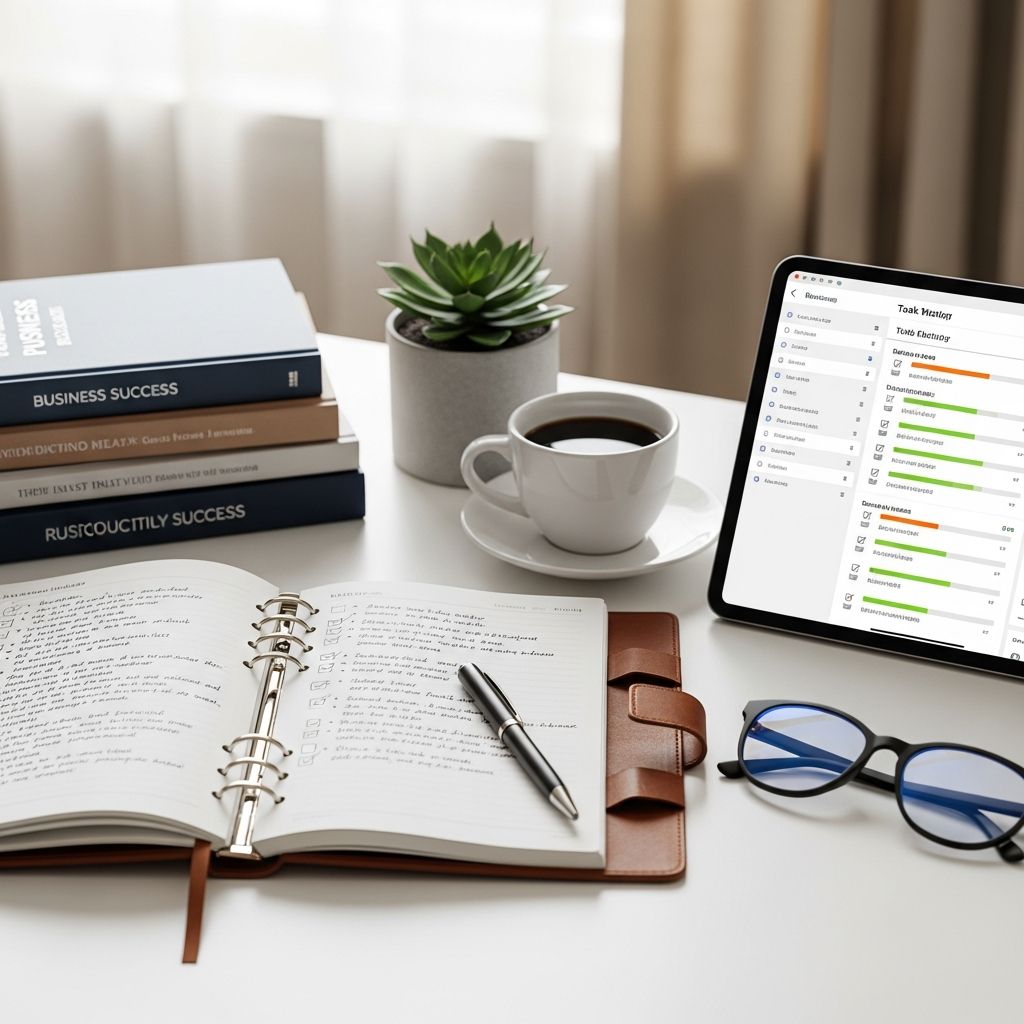
Checklists serve as powerful tools for high achievers, turning overwhelming tasks into manageable steps and ensuring consistent progress toward ambitious goals. By systematizing routines and priorities, they minimize errors, reduce mental load, and amplify output.
Building a Bulletproof Morning Routine
Successful individuals start their day with intention, using checklists to anchor their mornings in high-impact activities. This sets a productive tone that carries through the entire day. A typical morning checklist might include waking at a consistent time, hydrating, exercising, and planning the day’s priorities.
For instance, many executives rise early—often between 4 a.m. and 6 a.m.—to claim uninterrupted time for personal growth. Tim Cook, Apple’s CEO, begins around 4-5 a.m. with email review and an hour-long workout, followed by breakfast. Elon Musk incorporates a morning shower to enhance critical thinking, aligning with research on how morning hygiene boosts cognitive function.
- Wake up at predetermined time (e.g., 5 a.m.)
- Hydrate with water and light stretch
- Complete 30-60 minutes of exercise (walk, yoga, or gym)
- Review and respond to priority emails (limit to 30 minutes)
- Prepare a nutrient-dense breakfast
- Meditate or journal for 10 minutes
These steps protect the morning from distractions, fostering mental clarity. Protecting this window—even with a quick phone check—allows leaders like Stacey Kennedy to incorporate mindful walks and yoga before work.
Harnessing Time Blocking for Laser Focus
Time blocking elevates checklists by assigning specific slots to tasks, preventing schedule creep. High performers divide their days into themed blocks, dedicating focus to one area at a time. Elon Musk allocates days to different companies, working in short bursts. Jack Dorsey themes days by function, such as product or partnership focus.
Create a daily time block checklist:
| Time Block | Activity | Duration |
|---|---|---|
| 6:00-8:00 AM | Deep work on top priority | 2 hours |
| 8:00-9:00 AM | Meetings/Collaboration | 1 hour |
| 12:00-1:00 PM | Lunch and recharge | 1 hour |
| 2:00-5:00 PM | Administrative tasks | 3 hours |
| 5:00-6:00 PM | Review and plan tomorrow | 1 hour |
This structure mirrors Benjamin Franklin’s approach: work from 5 a.m.-noon, break, then resume until 6 p.m., followed by leisure. Time blocking combats burnout by scheduling breaks, as seen in Virginia Woolf’s mornings for writing and afternoons for revision.
Designing an Unbreakable Daily Task List
The core of productivity lies in a refined to-do list checklist, limited to 3-7 actionable items. Craft it the night before to bypass morning procrastination. Mental Game Coach emphasizes blasting out the list first thing, prioritizing high-impact tasks before lunch.
Key principles for your daily checklist:
- Limit to 3-5 major goals
- Phrase tasks specifically (e.g., ‘Draft Q1 report’ not ‘Work on report’)
- Estimate realistic time per task
- Tackle the hardest first (eat the frog)
- Roll over unfinished items
Track completion to build momentum. High achievers like those in Power Hours protect mornings for these priorities, saving afternoons for routine work.
Integrating Breaks and Self-Care Mandates
Checklists must include recovery periods to sustain energy. Successful people schedule short breaks, lunches away from desks, and evening wind-downs. Taking a lunch break prevents burnout, refocusing the mind. Periodic recesses—like walks or coffee—mirror school breaks for adults.
Sample self-care checklist:
- Every 90 minutes: 5-minute stretch or walk
- Midday: 30-minute meal off-screen
- Evening: 20 minutes reading or journaling
- Bedtime ritual: No screens 1 hour prior
Exercise is non-negotiable; many prioritize it daily for mental health benefits. Journaling, as in ‘morning pages,’ clears mental clutter.
Avoiding Multitasking Traps with Single-Task Focus
Checklists enforce mono-tasking, countering the myth of multitasking efficiency. It increases errors and scatter. Focus on one item until completion, then check it off. Break large tasks into micro-steps to defeat procrastination.
For complex projects:
- Identify end goal
- List 5-10 subtasks
- Assign time blocks
- Complete sequentially
This method ensures quality and progress.
Evening Review and Tomorrow’s Blueprint
End days with a reflection checklist to celebrate wins, adjust, and prep. Review accomplishments, note lessons, and build tomorrow’s list. Benjamin Franklin questioned daily: ‘What good have I done today?’.
Evening checklist:
- Log completed tasks
- Analyze time usage
- Draft next day’s top 3
- Prep workspace
- Unwind with non-digital activity
This closure prevents overnight anxiety.
Optimizing Your Environment for Checklist Success
A clutter-free space amplifies checklist adherence. Daily tidy-ups maintain focus. Organize digitally too: Use apps for dynamic checklists with timers.
Habits like consistent sleep and gratitude sustain long-term use.
Real-World Checklist Examples from Achievers
Adapt these from top performers:
- Musk’s Block: 5-minute sprints, company days, late reading
- Cook’s Start: Emails, workout, meetings
- Woolf’s Flow: Writing block, revision, journaling
Customize to your rhythm via tracking.
Frequently Asked Questions (FAQs)
What makes checklists essential for success?
They provide structure, reduce cognitive overload, and ensure follow-through on priorities.
How many tasks should a daily checklist have?
3-7 to avoid overwhelm while maintaining focus.
Can checklists prevent burnout?
Yes, by mandating breaks and realistic pacing.
What’s the best time to create a checklist?
The evening prior, to start fresh.
Do successful people use digital or paper checklists?
Both; apps for tracking, paper for quick capture.
Advanced Checklist Strategies for Scale
For teams, share checklists for alignment. Weekly reviews scale daily wins. Measure via completion rates and adjust quarterly.
Integrate gratitude: End checklists with three wins. This builds resilience.
Experiment: Track peak hours with timers, slot big tasks there.
References
- Explore the Habits and Daily Routines of Successful People — Clockify. 2023. https://clockify.me/daily-routines-habits-productive-people
- 10 Productivity-Boosting Habits of Successful People — Mental Game Coach. Accessed 2026. https://www.mentalgamecoach.com/ProductivityBoostingHabits.html
- 9 Daily Habits Highly Successful People Have in Common — Business Insider. 2026-01. https://www.businessinsider.com/daily-routines-successful-business-people-share-power-hours-2026-1
- 20 Daily Habits of Successful People To Take On Today — Wix. Accessed 2026. https://www.wix.com/blog/habits-of-successful-people
- Habits Of Highly Productive People — Sophilabs. Accessed 2026. https://sophilabs.com/blog/habits-of-highly-productive-people
- 8 Things Highly Successful People do Daily — University of Washington PCE. Accessed 2026. https://www.pce.uw.edu/news-features/articles/things-highly-successful-people-daily

- Integrated M.A. in Applied Linguistics, University of Hyderabad
- 5+ years in editorial, instructional, SEO, and research-based writing
Sneha is a relationships and lifestyle writer with a strong foundation in applied linguistics and certified training in relationship coaching. She brings over five years of writing experience to theskillvault, crafting thoughtful, research-driven content that empowers readers to build healthier relationships, boost emotional well-being, and embrace holistic living. Her writing and insights reflect the belief that beauty, happiness, and wellness…