
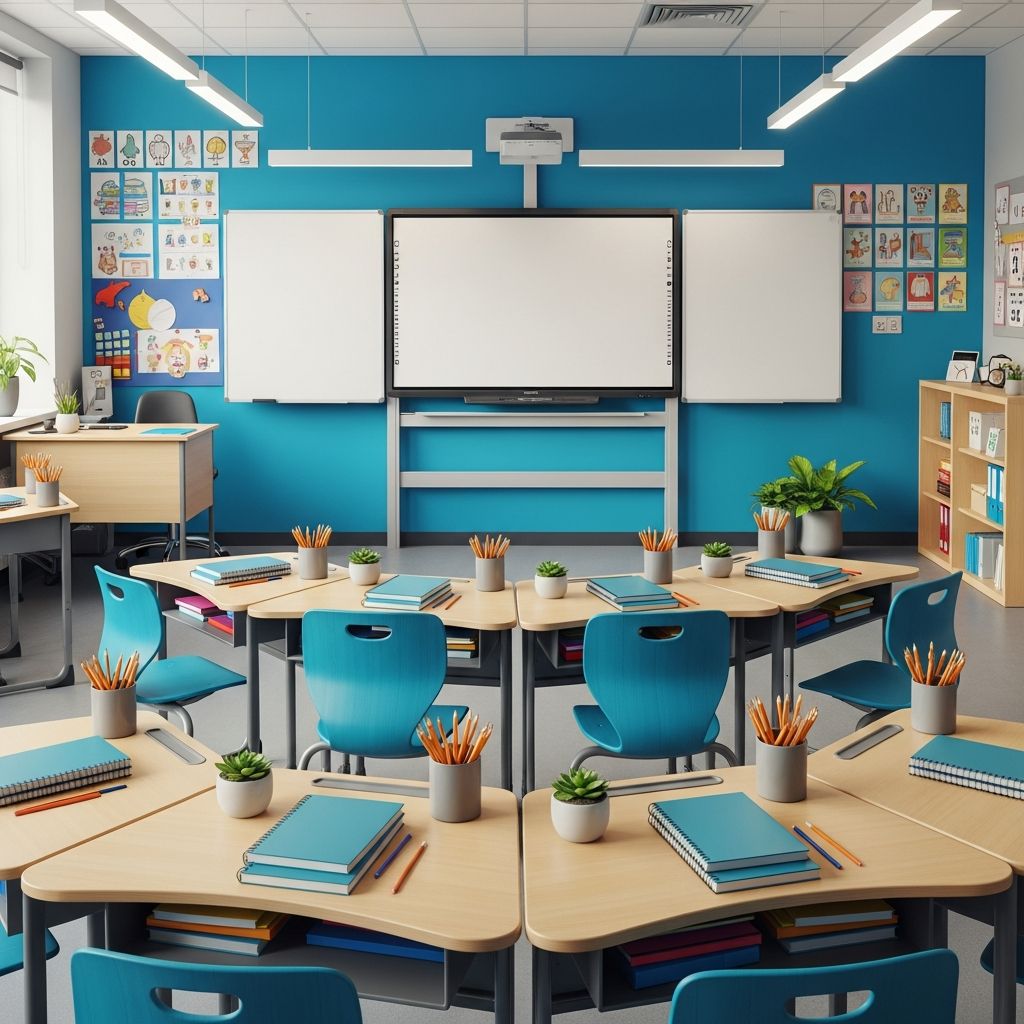
Creating an effective classroom environment sets the foundation for a successful school year. Thoughtful arrangements promote student engagement, facilitate smooth transitions between activities, and support diverse learning needs. This guide explores proven strategies for desk configurations, adaptable seating, storage systems, and welcoming features to optimize your space.
Planning Your Classroom Layout
Begin by mapping out your room’s dimensions and fixed elements like doors, windows, and whiteboards. Sketch multiple configurations on paper or digitally to visualize traffic flow and accessibility. Prioritize zones for whole-group instruction, small-group work, independent tasks, and teacher-directed activities. A well-planned layout minimizes disruptions and maximizes instructional time.
Consider the activities that dominate your day: lectures benefit from forward-facing setups, while collaborative projects thrive in clustered designs. Test arrangements by simulating student movement—ensure pathways allow easy circulation without bottlenecks. Flexible plans that adapt to daily needs prevent constant rearranging.
Essential Desk and Seating Configurations
Desk arrangements influence interaction levels and focus. Traditional rows suit direct teaching, while clusters encourage peer discussion. Experiment with these setups:
- Linear Rows: Align desks in straight lines facing the board. Ideal for lectures and tests, as it reduces distractions and orients everyone toward the instructor.
- U-Shaped Horseshoe: Form a semicircle with desks. Enhances visibility, promotes discussion, and allows teacher mobility. Leave space at the open end for demonstrations.
- Cluster Groups: Group four to six desks together. Perfect for partner work and projects, fostering teamwork without isolating students.
- L-Shaped Pods: Create L formations against walls. Balances individual space with group proximity, suitable for mixed activities.
- Stadium Style: Angle rows upward toward the front. Saves space in small rooms and improves sightlines for all.
Each configuration has trade-offs: rows limit collaboration but boost focus; clusters spark ideas but may increase noise. Rotate setups quarterly to refresh dynamics.
Incorporating Flexible Seating Choices
Modern classrooms benefit from varied seating to accommodate different preferences and energy levels. Flexible options like cushions, stools, and standing desks empower students to select spots that enhance comfort and concentration. Implement a daily rotation system using magnets on a seating chart board to track choices and ensure fairness.
- Low seating: Floor cushions and bean bags for reading or brainstorming.
- Dynamic options: Wobble stools and balance balls for fidgety learners.
- Collaborative spots: Half-round tables with stools for group tasks.
- Cozy corners: Couches or pillows for quiet reflection.
Introduce rules like one change per day and capacity limits per area. This approach boosts ownership and caters to kinesthetic needs, with studies showing improved engagement in choice-based environments.
Organizing Supplies and Storage
Efficient storage keeps materials accessible and clutter-free. Dedicate caddies to each group with labeled bins for pencils, markers, and paper. Use wall pockets, rolling carts, and over-door organizers for vertical space maximization.
| Zone | Storage Solution | Benefits |
|---|---|---|
| Desks/Groups | Lidded totes with labels | Quick access, spill-proof |
| Teacher Area | Mobile cart with drawers | Easy relocation |
| Library | Shelving with baskets | Genre organization |
| Group Work | Under-table bins | Space-saving |
Assign student jobs for restocking to build responsibility. Color-code supplies by category for intuitive use.
Designing Inviting Learning Zones
Divide your room into purposeful areas: a front anchor for instruction, perimeter stations for centers, and a cozy reading nook. Add plants, rugs, and soft lighting for a home-like feel. Personalize with student name tags and welcome banners.
- Reading Nook: Low shelves, pillows, and dim lamps for immersion.
- Group Workspace: Large tables for projects.
- Tech Corner: Charging stations and headphones.
- Display Walls: Calendars, schedules, and anchor charts.
Incorporate natural elements like picnic-style benches for variety. These zones support differentiated instruction and reduce transitions.
Enhancing the Front of the Room
The focal area should feature a clear board, projector screen, and teacher desk. Mount calendars, daily agendas, and behavior charts for visibility. Use magnetic strips for interchangeable resources. Keep this space minimal to avoid overload.
Classroom Management Through Design
Strategic layouts aid discipline: visible sightlines deter off-task behavior, while defined zones clarify expectations. Proximity control—placing challenging students near the teacher—works seamlessly in open designs. Integrate tech like timers on walls for transitions.
Back-to-School Setup Timeline
Day 1: Sketch and move heavy furniture.
Day 2: Install storage and labels.
Day 3: Add decor and test flow.
Day 4: Student input for final tweaks.
This phased approach prevents burnout and allows refinement.
Frequently Asked Questions
What is the best desk arrangement for small classrooms?
Opt for stadium seating or L-shaped clusters to conserve space while maintaining collaboration opportunities.
How do I introduce flexible seating?
Start with a model lesson demonstrating choices, then use magnets for daily selection with clear guidelines.
Can I mix traditional and flexible seats?
Yes, hybrid models work well—assign primary desks but allow optional flexible spots for breaks.
How often should I change the layout?
Every 6-8 weeks to align with units and reinvigorate the space.
What plants are classroom-safe?
Choose non-toxic varieties like pothos, snake plants, or succulents for air purification and aesthetics.
Final Thoughts on Transformative Spaces
A dynamic classroom evolves with your students, blending functionality, comfort, and inspiration. These designs not only streamline teaching but also cultivate a sense of belonging from day one.
References
- 11 Smart Student Desk Layouts — Edutopia. 2020-approx. https://www.edutopia.org/visual-essay/11-smart-student-desk-layouts/
- 55 Best Classroom Setup Ideas for Back to School — Chaylor & Mads. Recent. https://chaylorandmads.com/classroom-setup-ideas-for-back-to-school/
- 8 Classroom Seating Arrangements Teachers Love — Teach Starter. Recent. https://www.teachstarter.com/us/blog/inspiration-for-classroom-seating-arrangements-us/
- The Ultimate Back to School Classroom Setup and Organization Checklist — Twinkl. Recent. https://www.twinkl.com/blog/the-ultimate-back-to-school-classroom-setup-and-organization-checklist

Medha Deb is an editor with a master's degree in Applied Linguistics from the University of Hyderabad. She believes that her qualification has helped her develop a deep understanding of language and its application in various contexts. Medha specializes in the areas of beauty, health, sports, and wellness and is committed to ensuring that the content on the website is…