
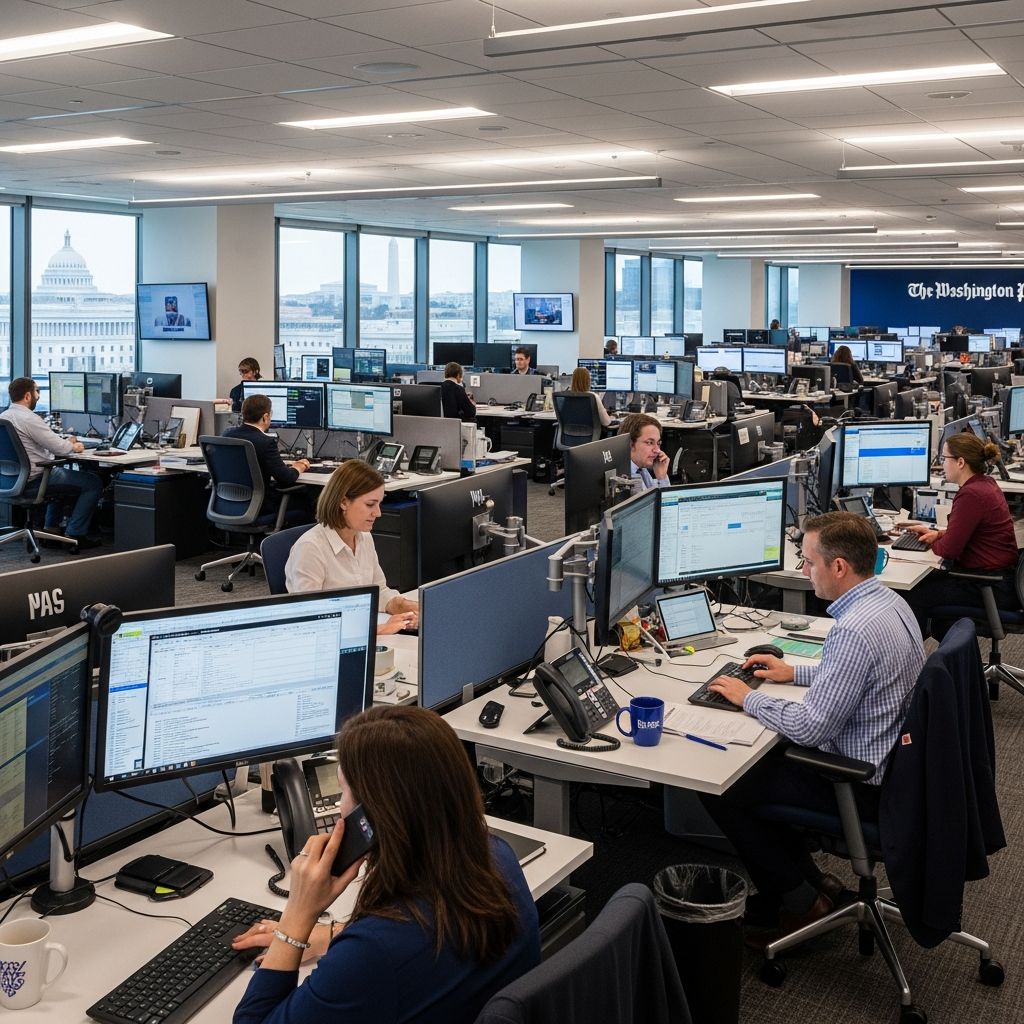
The Washington Post is one of the most influential news organizations in the United States, and its headquarters in Washington, DC offers a distinctive environment for people who want to build a meaningful career in journalism, technology, design, and business operations. This guide walks through what it is like to work at The Washington Post in DC—from the building and culture to growth, benefits, and life in the nation’s capital.
The Washington Post at a Glance
The Washington Post is a major daily newspaper founded in 1877 and based in Washington, DC. It is widely recognized for its political coverage, accountability journalism, and in-depth storytelling, and it has played key roles in historic investigations such as the Pentagon Papers and Watergate. In recent years, it has also become known for its investment in digital products and audience growth worldwide.
- Headquarters: Washington, DC
- Industry: News, media, and technology
- Reach: Local, national, and global coverage across print, web, audio, and video
- Legacy: Over a century of continuous publication and impact on U.S. public life
For professionals who want to be close to the center of U.S. politics, policy, and global affairs, few workplaces are as intertwined with the life of Washington, DC as The Washington Post.
The Washington, DC Headquarters Environment
Working at The Washington Post in DC means operating in a building that brings together journalists, editors, engineers, designers, product managers, and business teams under one roof. While the details of floor layouts change over time, most modern newsrooms share several features:
- Open newsroom areas that foster quick communication and collaboration
- Conference rooms and quiet spaces for interviews, editing sessions, and confidential meetings
- Technology-rich desks with multiple screens, collaboration tools, and access to research databases
- Shared lounges or break areas where people from different departments naturally cross paths
Because The Washington Post’s coverage is closely tied to the workings of the U.S. federal government, DC-based staff are within reach of Capitol Hill, federal agencies, embassies, think tanks, and major nonprofits. That proximity shapes both the rhythm of the day and the kinds of conversations that happen in the building.
Newsroom Culture and Values
The Washington Post’s culture is rooted in journalism ethics, public service, and rigorous reporting standards. Over its history, the organization has built a reputation for:
- Accountability journalism: Investigative reporting that scrutinizes those in power and brings critical information to the public.
- Editorial independence: A commitment to separating news coverage from political or commercial interests, guided by professional norms and internal standards.
- Accuracy and verification: Multiple layers of editing and fact-checking before publication, especially on sensitive topics.
- Context and depth: Emphasis on explanatory stories that help readers understand complex policy debates, court decisions, and global events.
For employees, this culture translates into a workplace where curiosity, skepticism, and fairness are encouraged. People are expected to ask hard questions, challenge assumptions, and share information across teams to make coverage stronger.
Roles and Teams in the DC Office
The DC headquarters is home to a broad range of roles beyond traditional reporting. Although exact job titles evolve, most positions fall into several major groups:
- News and Editorial: Reporters, editors, photojournalists, graphics journalists, audio and video producers, and newsroom leaders.
- Product and Technology: Software engineers, data scientists, product managers, UX and visual designers who build and maintain digital products and tools.
- Audience and Growth: Social media editors, SEO specialists, analytics teams, newsletter editors, and audience strategists.
- Business and Operations: Advertising, marketing, subscriptions, finance, HR, legal, and facilities.
Many projects bring together cross-functional groups—such as reporters, designers, and engineers—to develop immersive stories, data projects, or new product features. This collaborative structure offers opportunities to learn from colleagues with very different backgrounds, from coding to investigative reporting.
Daily Life: What a Typical Day Might Look Like
Because The Washington Post covers breaking news and long-form stories at the same time, daily routines can vary widely across teams. Still, there are common patterns:
- Morning: News meetings to prioritize coverage, review overnight developments, and assign stories or projects.
- Midday: Reporting, interviews, analysis, design work, coding, or strategy discussions; frequent communication via chat, email, and in-person conversations.
- Afternoon: Editing cycles, headline testing, multimedia development, and preparing stories for digital publication and print deadlines.
- Evening and Weekends: Rotating shifts or on-call duty for breaking news, depending on role and department.
People who thrive in this environment tend to be energized by fast-moving events, tight deadlines, and the need to make decisions under pressure—balanced with the patience required for slower, investigative work.
Working in the Capital: Location Advantages
Being headquartered in Washington, DC matters deeply to The Washington Post’s mission. The city is home to the federal government, major international organizations, and a dense network of policy experts, advocacy groups, and research institutions. This ecosystem shapes coverage and also creates career benefits for employees.
| Advantage | What It Means for Employees |
|---|---|
| Proximity to decision-makers | Greater access to sources, briefings, hearings, and public events that drive national and international stories. |
| Professional networks | Opportunities to build relationships with experts, academics, and public officials across many policy areas. |
| Vibrant local culture | Access to museums, theaters, restaurants, and neighborhoods that reflect diverse communities. |
| Public transit connectivity | The DC Metro and regional transit systems link the downtown core with surrounding suburbs. |
For people new to the city, The Washington Post’s DC location can be a gateway to understanding how government, diplomacy, and policy interact with daily life.
Innovation and Digital Transformation
Like many legacy newspapers, The Washington Post has invested heavily in digital transformation, experimenting with new formats and technologies while maintaining its core journalistic mission. Over time this has meant:
- Developing a robust website and mobile apps that deliver fast, adaptive news experiences.
- Using data and analytics to better understand reader behavior and improve storytelling.
- Experimenting with new forms such as interactives, podcasts, newsletters, and live online events.
- Building internal tools and platforms that help reporters, editors, and engineers collaborate.
For employees, this emphasis on innovation creates space to test ideas, learn new skills, and help shape how journalism is produced and consumed in the future. It also increases the need for strong communication between editorial, product, and technology teams.
Learning, Growth, and Career Development
The Washington Post’s long history illustrates continuous adaptation to new technologies and audience expectations—from early print expansion to digital publishing and multimedia storytelling. Inside the organization, that same spirit often translates into formal and informal learning opportunities, such as:
- On-the-job mentoring from experienced journalists, editors, and technical experts.
- Training sessions or workshops on tools, ethics, data analysis, and new formats.
- Chances to rotate across beats or projects, broadening subject-matter expertise.
- Cross-team collaborations that expose employees to different disciplines.
Ambitious professionals can grow by combining subject knowledge (for example, in politics, economics, climate, or technology) with strong technical or storytelling skills. Because the DC headquarters sits at the heart of coverage of U.S. institutions, it is a place where people can build deep expertise over time.
Work–Life Balance in a 24/7 News Environment
News does not stop, and major developments can reshape the day’s priorities at any time. This reality makes time management especially important for anyone working at The Washington Post. While specific schedules depend on team and role, employees often use several strategies to maintain balance:
- Planning ahead for big news cycles such as elections, legislative sessions, and court decisions.
- Coordinating with managers and colleagues about on-call expectations and weekend coverage.
- Using quieter periods for deeper work, skill-building, and long-term projects.
- Taking advantage of paid time off, wellness resources, and flexible arrangements when available.
Because The Washington Post operates in a highly competitive news landscape, it attracts people who care deeply about the work. That passion can be energizing but also requires intentional efforts to set boundaries and recharge.
Community, Inclusion, and Collaboration
News organizations serve increasingly diverse audiences, and many have made inclusion and representation key priorities. Across the industry, initiatives have aimed to support more inclusive hiring, promotion, and sourcing practices. Within a large newsroom environment like The Washington Post’s DC headquarters, this often means:
- Employee resource or affinity groups that provide community and mentorship.
- Conversations and training on inclusive storytelling and ethical reporting.
- Efforts to bring a wide range of perspectives into coverage decisions.
- Encouraging cross-cultural collaboration on domestic and international stories.
For employees, these efforts can make it easier to find peers with shared experiences, learn from colleagues with different backgrounds, and contribute to coverage that reflects the complexity of readers’ lives.
Why People Choose The Washington Post’s DC Office
People join The Washington Post in Washington, DC for many reasons, but several themes come up frequently:
- A desire to work on stories and products that shape public understanding of major issues.
- Interest in being close to political, legal, and policy institutions that influence global events.
- Opportunities to collaborate with respected journalists, editors, and technologists.
- A chance to grow at an organization that combines legacy and innovation.
For those who care about public service, accountability, and storytelling, the DC headquarters offers a front-row seat to history as it unfolds.
Frequently Asked Questions (FAQs)
Q: What kinds of roles are based in The Washington Post’s Washington, DC office?
A: The DC headquarters typically includes newsroom roles (reporters, editors, photographers, video teams), product and engineering positions, data and graphics specialists, audience and social media staff, and business and operations teams such as marketing, subscriptions, finance, HR, and legal.
Q: Is Washington, DC experience important for working at The Washington Post?
A: Prior DC experience can be helpful for certain beats, especially politics and policy, but it is not always required. Many employees come from other cities or countries and build their local knowledge over time by covering institutions, exploring neighborhoods, and developing sources.
Q: How fast-paced is the work environment at The Washington Post?
A: The pace can be intense, particularly during breaking news or major events such as elections or court rulings. Employees balance this by planning ahead, coordinating with their teams, and using slower periods for long-term projects, training, and rest.
Q: What skills are valuable for candidates interested in the DC newsroom?
A: Strong writing and reporting skills, sound news judgment, and a commitment to accuracy are essential for editorial roles. For product and technology positions, skills in software development, data analysis, UX design, and product strategy are important. Across all roles, curiosity, collaboration, adaptability, and ethical awareness are highly valued.
Q: How does working in DC influence the kind of stories The Washington Post produces?
A: Being based in Washington, DC allows The Washington Post to closely track federal policy, national security, the judiciary, and diplomatic issues. Reporters and editors can attend hearings, briefings, and events in person, build deep source networks, and provide context that connects local decisions to national and global consequences.
References
- The Washington Post — The Washington Post Company. Updated 2024-01-01 (approx., page updated periodically). https://www.washingtonpost.com
- The Washington Post — Wikipedia (summary of history; used only as a pointer to primary context). 2024-09-01. https://en.wikipedia.org/wiki/The_Washington_Post
- History of The Washington Post Company — FundingUniverse. 2002-01-01. https://www.fundinguniverse.com/company-histories/the-washington-post-company-history/
- Defining Moments of The Washington Post’s 140-Year History — WTTW. 2017-12-06. https://www.wttw.com/playlist/2017/12/06/defining-moments-washington-posts-140-year-history
- The Washington Post — Roper Center for Public Opinion Research, Cornell University. 2023-01-01. https://ropercenter.cornell.edu/washington-post

Medha Deb is an editor with a master's degree in Applied Linguistics from the University of Hyderabad. She believes that her qualification has helped her develop a deep understanding of language and its application in various contexts. Medha specializes in the areas of beauty, health, sports, and wellness and is committed to ensuring that the content on the website is…