
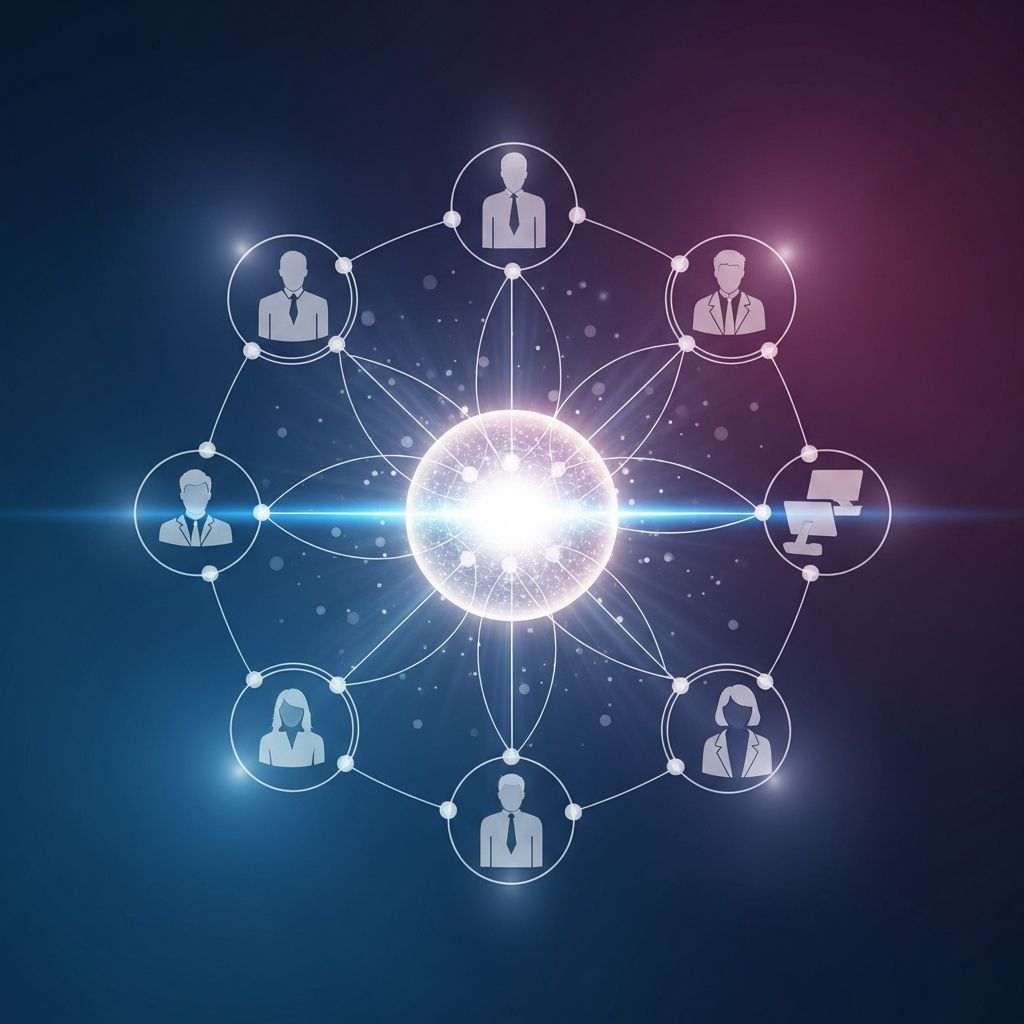
Organizations are shifting from isolated, one-to-one coaching toward more connected models of development. Collective coaching hubs bring people together around shared challenges, combining expert facilitation with peer learning to create faster, deeper, and more scalable growth for leaders and teams.
Instead of treating development as an individual journey, co-development hubs recognize that performance, culture, and change are inherently social. By working as a group, participants unlock perspectives they would never access alone, and organizations see broader impact for every dollar invested in coaching.
From Individual Coaching to Collective Intelligence
Traditional coaching focuses on the needs of a single person. That remains valuable, but many strategic challenges—like culture, cross-functional collaboration, and innovation—cannot be solved in isolation. Collective coaching reframes the unit of change from one person to the whole group, often a team, cohort, or community of leaders.
In co-development hubs, participants:
- Work on real, current challenges they are facing at work
- Rotate roles between presenting a case and coaching peers
- Build shared language and practices that can scale across the organization
- Practice new behaviors in a psychologically safe environment before applying them in the field
This model blends the depth of coaching with the reach of group-based learning, helping organizations achieve impact that is both personal and systemic at the same time.
What Is a Co-Development Hub?
A co-development hub is a structured collective coaching space where a small group of participants meets regularly, guided by a professional coach, to explore workplace challenges and experiment with solutions together. It is more than a workshop and more than a support group—it is an ongoing, practice-focused learning lab.
Core Elements of a Co-Development Hub
- Stable cohort: A consistent group (often 6–10 people) meets across multiple sessions to build trust and shared context.
- Professional coach: A trained coach facilitates the process, manages group dynamics, and ensures psychological safety.
- Structured method: Each session follows a clear arc—from case presentation to exploration, feedback, and commitments.
- Real-time application: Participants bring live situations and return with concrete experiments, not abstract theories.
- Collective accountability: The group follows up on commitments, amplifying motivation and follow-through.
How Co-Development Hubs Differ from Traditional Group Coaching
| Aspect | Traditional Group Coaching | Co-Development Hubs |
|---|---|---|
| Primary focus | Individual growth within a group setting | Collective problem-solving on real business challenges |
| Session structure | Topics chosen by coach or loosely by group | Formal process for presenting and working through cases |
| Role of peers | Support, share experiences | Act as co-coaches, challengers, and thought partners |
| Scope of impact | Primarily individual behavior change | Individual behavior and team/organizational practices |
| Link to strategy | Often personal or general development goals | Explicitly tied to business priorities, culture, and change |
Why Organizations Are Embracing Collective Coaching
Evidence from the coaching field shows that organizations investing in coaching report strong returns on performance, engagement, and goal attainment, with many studies citing positive ROI. Collective formats extend these benefits while addressing practical constraints like budget and scale.
Key Benefits for Organizations
- Scalability: One coach can support an entire cohort of leaders at once, making development accessible across levels and regions.
- Cultural alignment: Groups create shared norms around feedback, collaboration, and leadership that reinforce the desired culture.
- Faster learning transfer: Colleagues apply tools together, making it more likely that new behaviors stick in the workplace.
- Improved collaboration: Teams develop deeper trust and communication as they navigate real issues in a structured way.
- Cost-effectiveness: Group-based coaching can significantly reduce per-person costs versus one-to-one formats while maintaining depth.
Impact on Leaders and Teams
Participants in group and collective coaching report gains such as increased self-awareness, better communication, and improved confidence. Within co-development hubs, these outcomes are reinforced through practice and feedback across sessions.
Leaders in co-development hubs learn to:
- Coach peers using powerful questions rather than advice alone
- Listen across functions and seniority levels with greater curiosity
- See their own habits mirrored back by the group, accelerating insight
- Experiment with new approaches and return to reflect on results
The Mechanics of a Co-Development Session
While designs vary by provider, most co-development hubs follow a repeatable rhythm that helps participants feel safe and focused. A typical session may last 90–120 minutes and involve both plenary work and small-group dialogue.
Illustrative Session Flow
- Check-in: Members share quick updates, energy levels, or wins since the last meeting.
- Case selection: One or more participants volunteer to present a current challenge.
- Clarifying questions: Peers ask non-judgmental questions to fully understand context and constraints.
- Collective exploration: The group offers perspectives, patterns they notice, and alternative interpretations.
- Option generation: Coach and peers co-create possible paths forward, keeping ownership with the case presenter.
- Commitment and next steps: The presenter defines specific experiments or actions before the next session.
- Reflection: The group debriefs what they learned—about the case, themselves, and how they work together.
Over time, the structure becomes internalized. Teams often begin to use similar formats in their regular meetings, enhancing their internal coaching capability and collective problem-solving.
Psychological Safety: The Foundation of Effective Hubs
Collective coaching only works when participants feel safe enough to share real struggles, admit uncertainty, and experiment with new behaviors. Research on team effectiveness has repeatedly found that psychological safety—where people believe they will not be punished or humiliated for speaking up—is a critical predictor of learning and performance in groups.
Designing for Trust and Openness
Experienced coaches deliberately cultivate a climate of safety by:
- Co-creating group norms (for example, confidentiality, equal voice, curiosity before judgment)
- Modelling vulnerability themselves, including acknowledging not having all the answers
- Balancing challenge with support, so feedback stretches rather than shuts people down
- Managing airtime and power dynamics to ensure everyone is heard
When safety is strong, people are more willing to tackle sensitive topics: cross-functional tension, inclusion, underperformance, or resistance to change. This is where collective coaching has its greatest impact—surfacing systemic issues that rarely appear in formal reports.
Use Cases: Where Co-Development Hubs Add the Most Value
While any group facing complex challenges can benefit, certain situations particularly lend themselves to a co-development hub model.
1. Developing New and Emerging Leaders
First-time managers and emerging leaders often share similar questions: how to delegate, have difficult conversations, or influence without formal authority. Co-development hubs enable them to learn from one another’s experiments while being guided by an expert coach.
- Build a peer network across functions and geographies
- Normalize common leadership struggles and reduce imposter feelings
- Provide a structured space for testing new leadership behaviors
2. Supporting Teams Through Change and Transformation
Digital initiatives, restructuring, or strategic pivots generate uncertainty and complexity. Coaching the team as a collective helps align members on priorities, clarify roles, and manage emotional reactions to change.
- Clear shared understanding of goals and trade-offs
- Space to surface concerns that may not appear in formal status updates
- Faster resolution of conflicts and misalignments
3. Strengthening Cross-Functional Collaboration
Many of today’s toughest problems sit at the intersection of functions—product, operations, HR, finance, and more. Co-development hubs that intentionally mix disciplines create a powerful environment for systems thinking.
- Expose hidden assumptions between departments
- Build empathy for different constraints and success metrics
- Co-design solutions that work across boundaries
4. Building Inclusive and People-Centered Cultures
Inclusion, equity, and wellbeing are not solved by a single training session. They require ongoing dialogue and experimentation. Collective coaching offers a rhythm for reflecting on inclusive behaviors, amplifying underrepresented voices, and embedding new norms in day-to-day practices.
Designing and Launching a Co-Development Hub Program
For organizations inspired to introduce collective coaching, success depends on thoughtful design, clear sponsorship, and strong facilitation.
Step 1: Clarify Strategic Objectives
Before selecting formats or tools, leaders should define what success looks like. Common objectives include:
- Accelerating leadership readiness for a new strategic phase
- Improving collaboration across regions or business units
- Embedding coaching-based leadership behaviors at scale
- Supporting teams as they navigate complex transformation
Step 2: Choose the Right Participants
Co-development hubs work best when groups share enough common ground to relate to one another’s challenges, yet are diverse enough to offer fresh perspectives.
- Mix of experience levels that still allows for peer-to-peer exchange
- Diversity of gender, culture, and background to avoid echo chambers
- Consideration of whether to group intact teams or cross-functional cohorts
Step 3: Select Skilled Coaches
Group and collective coaching require specific competencies beyond one-to-one coaching, including facilitation skills, systems thinking, and the ability to manage complex dynamics. Partnering with trained and credentialed professionals helps maintain quality and safety.
Step 4: Integrate with Existing Development Ecosystems
Co-development hubs are most effective when they connect to broader talent and learning strategies.
- Link to leadership frameworks, values, and performance expectations
- Coordinate with workshops, mentoring, and e-learning for reinforcement
- Share anonymized insights with HR and executives to inform culture and change initiatives
Step 5: Measure Outcomes and Iterate
Organizations increasingly measure coaching success not only through satisfaction scores but also through behavioral and business outcomes. For co-development hubs, indicators may include:
- Self-reported growth in skills such as feedback, coaching, and collaboration
- Improvements in team climate, trust, or psychological safety
- Progress on strategic metrics linked to the focus of the hubs
Common Pitfalls and How to Avoid Them
Like any development initiative, co-development hubs can underperform if certain risks are not managed proactively.
- Lack of clarity: If the purpose is vague, sessions may drift. Address this with clear intent and well-communicated goals.
- Inconsistent participation: Frequent absences weaken trust. Protect time in calendars and secure sponsorship from leaders.
- Insufficient facilitation: Without a skilled coach, discussions can become advice-giving or problem-fixing rather than true learning. Ensure coaches are trained in group methods.
- No link to reality: Theory-heavy sessions lose relevance. Always anchor in live, concrete challenges.
- Limited follow-through: Insight without action erodes motivation. Build in accountability, check-ins, and behavioral commitments.
Future Directions: Collective Coaching in a Hybrid World
Hybrid and remote work have made it harder for employees to learn informally from one another, yet they have also expanded the potential for virtual, global cohorts. Many co-development hubs now run fully online, using digital platforms to create breakout spaces, live whiteboards, and asynchronous reflection.
Emerging trends include:
- Blended experiences that combine live group coaching, digital nudges, and on-the-job micro-experiments
- Data-informed design, where engagement and feedback metrics shape future cohorts
- Greater inclusion, enabling participation across time zones and roles previously left out of coaching
As organizations continue to navigate complexity, collective coaching hubs offer an agile, human-centered way to build capabilities and culture together, rather than in isolation.
Frequently Asked Questions (FAQs)
Q1: How many people should be in a co-development hub?
Most effective hubs include 6–10 participants. This size allows for diverse perspectives while giving everyone enough airtime to engage meaningfully.
Q2: How is collective coaching different from training?
Training typically focuses on transferring knowledge from an expert to a group. Collective coaching, by contrast, centers on peer learning, reflection, and experimentation around real challenges, with the coach facilitating rather than lecturing.
Q3: How often should co-development hubs meet?
Many programs meet every two to four weeks over several months. This cadence balances continuity with time to apply new insights between sessions.
Q4: Can co-development hubs replace one-to-one coaching?
They are best seen as a complement, not always a replacement. For some leaders, combining individual coaching with collective hubs provides both deep personal work and broader system impact.
Q5: What makes a co-development hub successful?
Success depends on clear purpose, psychological safety, skilled facilitation, committed participants, and a strong connection to business priorities and real work.
References
- Group Coaching: The Importance of Developing These Skills — International Coaching Federation. 2022-05-10. https://coachingfederation.org/blog/group-coaching-the-hidden-gem-in-a-coachs-toolkit/
- The Benefits of Group Coaching for Personal Growth — Coachello. 2023-06-01. https://coachello.ai/blog/group-coaching/
- Power of Collaborative Coaching: Transforming Teams for Success — CoachHub. 2023-03-20. https://www.coachhub.com/en/blog/collaborative-coaching
- Coaching Your Team as a Collective Makes It Stronger — Harvard Business Review. 2023-02-06. https://hbr.org/2023/02/coaching-your-team-as-a-collective-makes-it-stronger
- What Is the Group Coaching Model? — PositivePsychology.com. 2020-09-15. https://positivepsychology.com/group-coaching-model/
- Collective Coaching: The Next Level of Group Coaching — Coacharya. 2022-11-18. https://coacharya.com/blog/collective-coaching-next-level-group-coaching/

- Integrated M.A. in Applied Linguistics, University of Hyderabad
- 5+ years in editorial, instructional, SEO, and research-based writing
Sneha is a relationships and lifestyle writer with a strong foundation in applied linguistics and certified training in relationship coaching. She brings over five years of writing experience to theskillvault, crafting thoughtful, research-driven content that empowers readers to build healthier relationships, boost emotional well-being, and embrace holistic living. Her writing and insights reflect the belief that beauty, happiness, and wellness…