
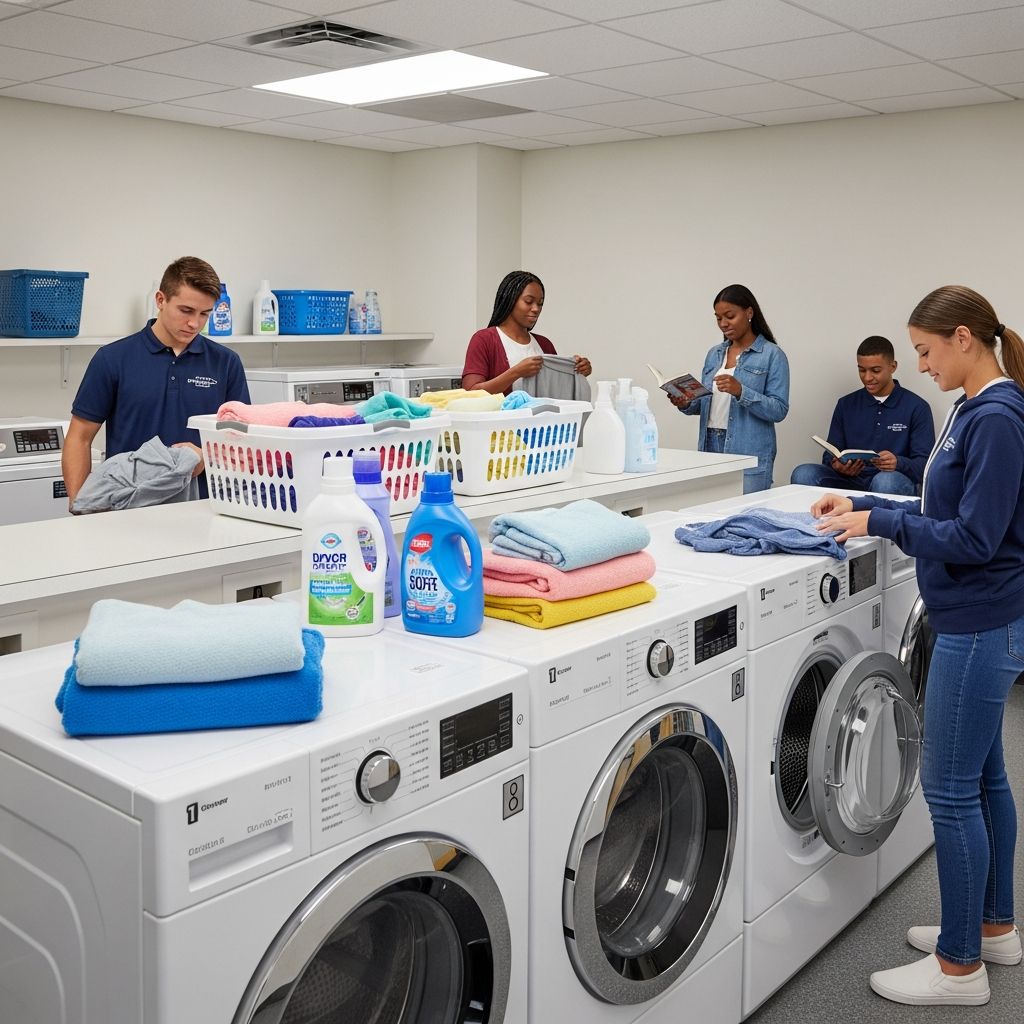
Transitioning to college life brings many new responsibilities, and managing your own laundry tops the list for independence. Shared dorm facilities, tight budgets, and busy schedules make it essential to develop smart habits early. This guide equips you with step-by-step strategies to handle laundry like a pro, ensuring your clothes stay clean, last longer, and don’t become a source of stress.
Gearing Up: Essential Supplies for Dorm Laundry
Before tackling your first load, assemble a kit of must-have items. Dorm washers and dryers differ from home machines, often requiring coins or card payments, so preparation prevents mid-process disruptions.
- Detergent: Opt for concentrated, plant-based formulas in small bottles for easy transport. Powder versions are budget-friendly and leak-proof.
- Pre-measured pods: Convenient for quick loads; place one directly in the drum for detergent, stain removal, and brightening.
- Stain remover: A stick or spray targets tough spots like food or ink before washing.
- Fabric softener or dryer sheets: Reduces static and adds softness; use sparingly to avoid buildup.
- Laundry bag or hamper: Mesh bags wash with clothes for hygiene; waterproof ones protect against spills during transport.
- Quarters or laundry card: Many dorms charge $1.50–$3 per load; check your residence hall app.
- Drying rack and steamer: For delicates and quick wrinkle removal in small spaces.
Store everything in a dedicated caddy, similar to a shower kit, for grab-and-go convenience. Total startup cost: under $50, lasting a semester.
Smart Sorting: Protect Your Wardrobe from Damage
Sorting prevents color bleeding, shrinkage, and fabric wear—critical in high-use commercial machines. Divide into three main categories for most loads.
| Category | Examples | Water Temp | Cycle |
|---|---|---|---|
| Lights/Whites | T-shirts, socks, underwear, khakis | Warm/Hot | Normal |
| Darks/Colors | Jeans, sweatshirts, hoodies | Cold | Normal or Permanent Press |
| Delicates/Towels | Bedding, towels, wool, silk | Cold | Gentle |
Additional prep: Empty pockets, zip zippers, unroll cuffs, and bunch socks to avoid tangling. Place lingerie in mesh bags. Sorting by fabric type (cotton vs. synthetics) extends clothing life. Pro tip: Wash towels and sheets separately to avoid lint transfer.
Navigating Dorm Machines: Step-by-Step Washing
Locate your building’s laundry room via hall maps or apps—peak times are evenings and weekends. Scout for available machines and clean lint traps.
- Check labels: Follow care symbols for temp and cycle.
- Load evenly: Fill loosely (3/4 full) to allow agitation; overloads lead to poor cleaning.
- Select settings: Cold for colors prevents fading; warm for lights tackles stains. Use ‘permanent press’ for synthetics.
- Add products: Detergent to marked lines (small/medium/large loads); never overdo it, as residue traps odors.
- Start cycle: Washing takes 20–40 minutes. Set phone timers to switch promptly—abandoned loads get removed.
Commercial machines run hotter and faster than home ones, so always err on cold for unknowns.
Drying Done Right: Speed and Fabric Care
Transfer wet clothes immediately to dryers to prevent mildew. Empty lint traps fully for safety and efficiency—clogged ones cause fires and hike costs.
- High heat: Towels, sheets, cottons (30–45 min).
Permanent press, jeans (avoid shrinking). - Low/Air Fluff: Delicates, wool—pair with rack for air drying.
Enhance with dryer balls: they shorten cycles by 25%, soften fabrics, and cut static without chemicals. Overdryers ruin elastic; remove midway for fluffing. Expect $1–2 per cycle; partial loads waste money.
Folding, Storage, and Maintenance Hacks
Fresh from the dryer, fold promptly on a table or bed to beat wrinkles. Hang delicates immediately.
- Storage: Use dorm drawers or under-bed bins; separate clean from dirty with bags.
- Ironing alternative: Steamers de-wrinkle fast for interviews.
- Weekly routine: Laundry Sunday nights; small loads mid-week for underwear.
Air out gym clothes; spot-clean stains daily. This keeps piles manageable.
Budgeting and Time-Saving Strategies
Laundry costs add up: $5–10 weekly. Save by:
- Washing full loads only.
- Air-drying delicates.
- Buying bulk detergent/pods.
- Using apps like LaundryView for machine status.
Batch loads: lights one day, darks another. Total time per load: 90 minutes. Schedule around study blocks.
Common Mistakes and How to Avoid Them
Avoid these pitfalls for frustration-free laundry:
- Overloading: Causes uneven cleaning and wear.
- Too much detergent: Leads to buildup, odors, machine issues.
- Forgetting loads: Theft or fees result; use timers.
- Hot water on darks: Fading occurs.
- Ignoring lint traps: Risks fires, longer dries.
Shared spaces mean courtesy: remove loads promptly, report broken machines.
Laundry for Special Items: Beyond Basics
Athletic wear: Cold water, air dry to preserve stretch.
Down jackets: Low heat or tennis balls in dryer for loft.
Shoes/sneakers: Mesh bags, no dryer.
Suits: Dry clean or gentle hand wash.
For eco-friendliness, choose biodegradable detergents.
Frequently Asked Questions (FAQs)
What if machines eat my money?
Contact RA or facilities; many have refunds. Test with small amounts first.
How often should I do laundry?
Weekly for clothes; bi-weekly for bedding. Gym gear mid-week.
Can I wash shoes or pillows?
Shoes in mesh bags on gentle; pillows if labeled machine-safe.
What’s the best detergent for dorms?
Pods for ease; powder for savings and no leaks.
How to handle lost socks?
Use matching bags or pin pairs before washing.
References
- How to Do Your Laundry in College: 6 Steps — Instructables. 2023-05-15. https://www.instructables.com/How-to-Do-Your-Laundry-in-College/
- How to Do Laundry in College — Seventh Generation. 2024-08-22. https://www.seventhgeneration.com/blog/how-to-do-laundry-in-college
- Laundry Tips for College Students — Tide. 2025-01-10. https://tide.com/en-us/how-to-wash-clothes/how-to-do-laundry/laundry-tips-for-college-students
- 10 Things to Know About Laundry at College — Celsious. 2024-09-05. https://celsious.com/blogs/the-cleaner-clean/laundry-tips-for-college-students

Medha Deb is an editor with a master's degree in Applied Linguistics from the University of Hyderabad. She believes that her qualification has helped her develop a deep understanding of language and its application in various contexts. Medha specializes in the areas of beauty, health, sports, and wellness and is committed to ensuring that the content on the website is…