
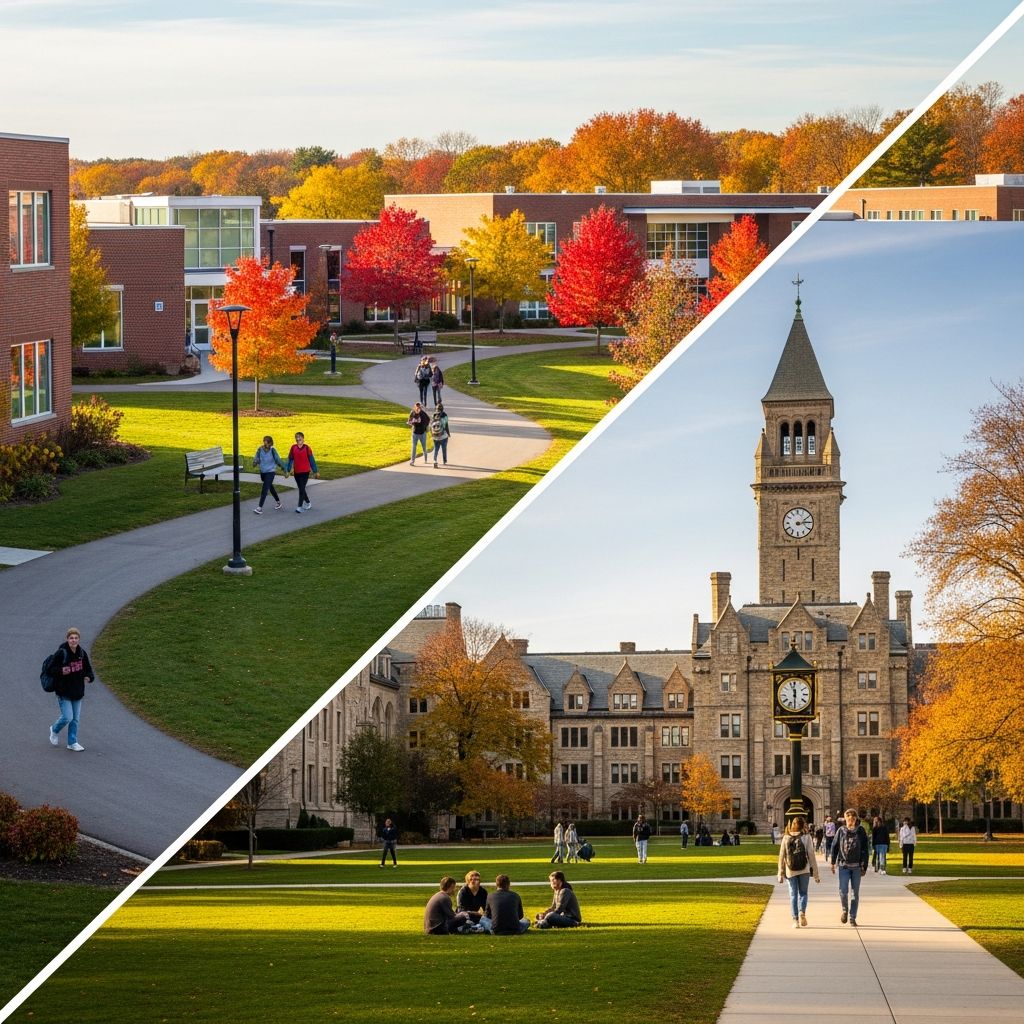
Choosing between a community college and a university shapes your educational journey, career prospects, and financial future. Community colleges provide accessible entry points with associate degrees and certificates, while universities deliver bachelor’s and advanced programs with broader resources. This guide breaks down critical factors to help you decide.
Financial Considerations: Affordability at the Forefront
The most striking difference lies in costs. Community colleges charge an average of $3,600 annually for tuition and fees, compared to over $10,000 at public four-year universities. This gap allows substantial savings; completing two years at a community college can save $12,800 to $42,800 before transferring.
Both institutions qualify for federal aid, including Pell Grants—33% of community college students receive them versus varying rates at universities. However, universities often provide more scholarships due to larger endowments. Community colleges appeal to budget-conscious students, first-generation attendees (45% of enrollment), and those over 21 (51% under that age, average 28).
| Cost Element | Community College | Public University |
|---|---|---|
| Annual Tuition & Fees | $3,600 | $10,000+ |
| 2-Year Total Savings Potential | $12,800–$42,800 | N/A |
| % Receiving Pell Grants | 33% | Varies (often lower) |
This table underscores community colleges’ edge for minimizing debt, especially for in-district students paying as low as $3,860 yearly.
Academic Programs and Duration: Building Foundations vs. Full Degrees
Community colleges focus on two-year associate degrees and certificates, ideal for quick workforce entry or as prerequisites. Universities offer four-year bachelor’s, master’s, and doctoral paths with specialized majors and research opportunities.
General education courses like chemistry or history align across both, facilitating transfers. Many community college programs match university requirements, enabling seamless credit movement after associate completion.
- Short-term focus: Certificates in trades or healthcare for immediate jobs.
- Transfer prep: Associate of Arts/Science degrees designed for university continuation.
- Advanced study: Universities provide depth in fields like engineering or medicine.
This structure suits students testing majors affordably before committing to longer programs.
Classroom Dynamics: Personalized vs. Expansive Learning
Community colleges feature smaller classes (25-35 students) and lower student-teacher ratios, fostering interaction. Professors, often industry-experienced and part-time, prioritize teaching over research.
Universities vary: large lectures hold 300+, but smaller seminars exist in upper years. Full-time PhD-holding faculty balance teaching and research, sometimes reducing availability. Community settings offer easier professor access, boosting success for those needing support.
| Learning Aspect | Community College | University |
|---|---|---|
| Average Class Size | 25-35 | Up to 300+ (intros) |
| Student-Teacher Ratio | Lower | Higher |
| Professor Focus | Teaching-heavy | Research + teaching |
These dynamics make community colleges ideal for hands-on learners, while universities suit independent students.
Admissions and Accessibility: Open Doors vs. Selective Gates
Community colleges maintain open admissions, skipping SAT/ACT requirements. Placement tests guide course levels, welcoming diverse ages and backgrounds—57% female, many working adults.
Universities demand GPAs, test scores, essays, and recommendations, creating competition. This selectivity ensures peer quality but barriers for some.
- Easier entry reduces stress.
- Flexible scheduling for part-timers (55.6% retention).
- Universities build prestige via rigorous selection.
Campus Life and Resources: Local Convenience vs. Immersive Experience
Community colleges, often commuter-based, limit dorms, clubs, and athletics. Enrollment ranges from hundreds to thousands, emphasizing practicality over vibrancy.
Universities boast expansive campuses with housing, sports, Greek life, and facilities like labs/gyms for 100,000+ students. This fosters networks and holistic growth.
Trade-offs: Community saves time/money for locals; universities enrich socially but demand relocation.
Transfer Pathways and Success Metrics: From Start to Finish
Articulation agreements guarantee credit transfers to partner universities, with 62% overall retention (70.6% full-time). Success hinges on planning GPA and course selection.
Universities report 81% retention, reflecting resources and motivation. Graduates access advanced aid and prestige.
| Retention Rate | Community College | University |
|---|---|---|
| Overall | 62% | 81% |
| Full-Time | 70.6% | 86% |
| Part-Time | 55.6% | 67% |
Strategic transfers yield university diplomas at lower net cost.
Career Outcomes: Practical Skills vs. Broad Opportunities
Community credentials lead to technician or paraprofessional roles quickly. Transfers enhance prospects with bachelor’s backing universities’ career centers and alumni networks.
Both paths work; choice aligns with timelines and finances.
Frequently Asked Questions
Are community college credits transferable to universities?
Yes, most align via agreements; verify with advisors for smooth transitions.
Do community colleges offer bachelor’s degrees?
Some now do, but primarily associates; universities specialize in them.
Is the academic rigor similar?
Yes, courses match university standards, often with more teaching focus.
Which is better for saving money?
Community colleges, with far lower tuition and aid access.
Can I live on campus at community college?
Limited; most are commuter-focused unlike universities.
References
- Community College vs College: Pros and Cons — SoFi. 2023. https://www.sofi.com/learn/content/community-college-vs-university/
- Difference Between a University and Community College — University of Bridgeport. 2023-10-12. https://www.bridgeport.edu/news/difference-between-university-and-community-college/
- Community College vs University Statistics: A Factual Look — Crown Counseling. 2024. https://crowncounseling.com/statistics/community-college-vs-university/
- Community College vs. University: 11 Key Differences — Indeed. 2024-01-15. https://www.indeed.com/career-advice/career-development/community-college-vs-university
- Community College vs University: 10 Important Differences — Kings Education. 2023. https://www.kingseducation.com/us-uni/kings-life/community-college-vs-university

- Integrated M.A. in Applied Linguistics, University of Hyderabad
- 5+ years in editorial, instructional, SEO, and research-based writing
Sneha is a relationships and lifestyle writer with a strong foundation in applied linguistics and certified training in relationship coaching. She brings over five years of writing experience to theskillvault, crafting thoughtful, research-driven content that empowers readers to build healthier relationships, boost emotional well-being, and embrace holistic living. Her writing and insights reflect the belief that beauty, happiness, and wellness…