
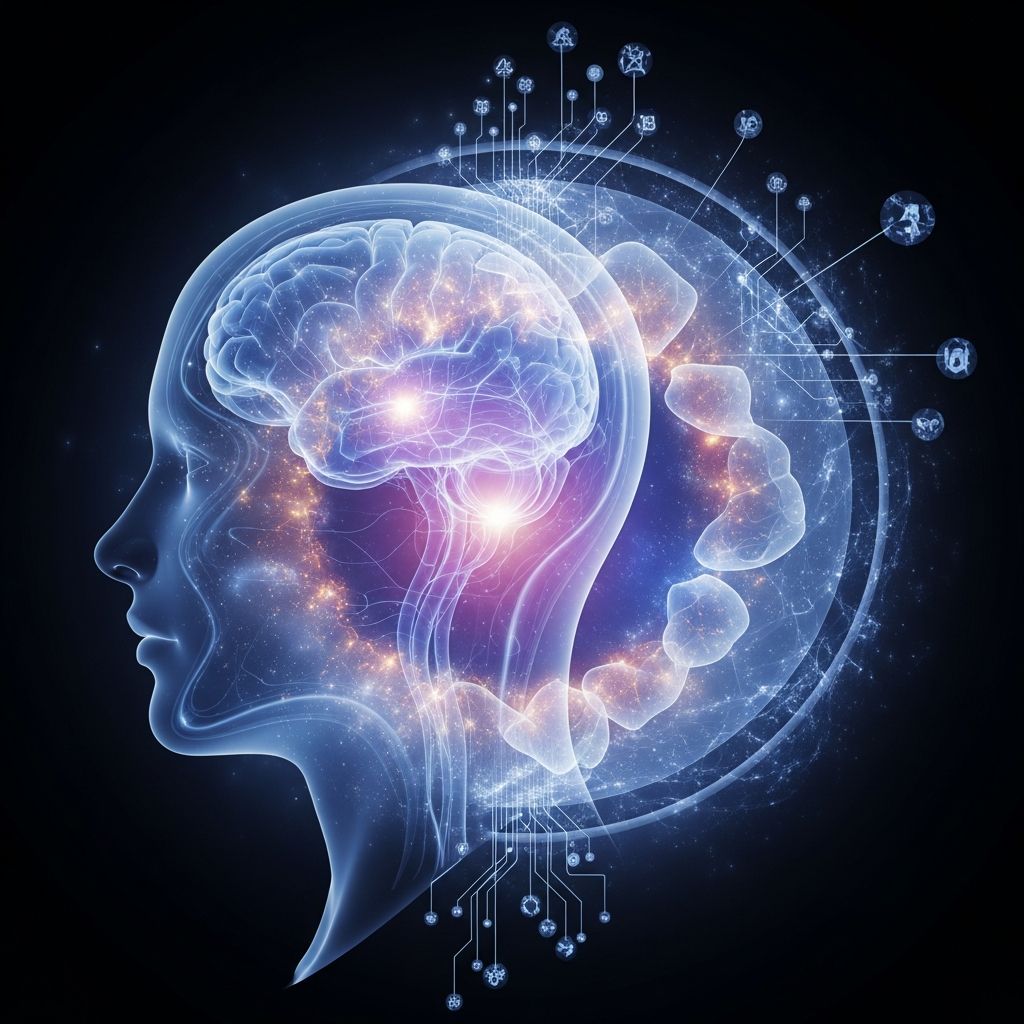
Understanding the Contemporary Landscape of Consciousness Philosophy
The question of what consciousness truly is represents one of the most profound challenges in contemporary philosophy and cognitive science. For decades, this inquiry existed on the periphery of academic discourse, overshadowed by materialist approaches that attempted to reduce mental phenomena to purely physical processes. However, a paradigm shift occurred when philosophical examination brought consciousness back to the center of intellectual inquiry, forcing philosophers and scientists alike to grapple with questions that had long been dismissed as unanswerable.
The modern exploration of consciousness encompasses a spectrum of competing theories, each attempting to explain how subjective experience arises from physical matter. These frameworks range from positions that deny consciousness has genuine reality to those proposing it as a fundamental feature of the universe itself. Understanding these diverse perspectives is essential for comprehending not only the nature of human experience but also the ethical implications that flow from each theoretical position.
The Philosophical Zombie Thought Experiment
One of the most provocative tools in consciousness philosophy is the concept of the philosophical zombie—a hypothetical being that behaves identically to a conscious human but lacks any subjective inner experience. This thought experiment serves as a conceptual bridge between theory and intuition, helping philosophers and scientists test the boundaries of their consciousness theories.
The zombie concept becomes particularly illuminating when applied to moral reasoning. Consider a scenario where a conscious human being occupies one path and several non-conscious humanoid entities occupy another. If forced to choose whose continued existence takes priority, most people instinctively choose to preserve the conscious being. This intuitive response reveals something fundamental about how consciousness relates to moral worth.
The philosophical zombie raises a critical question: what precisely about consciousness grants an entity moral status? Is it the capacity for suffering? The ability to engage in complex cognition? The mere presence of subjective experience? Different answers to this question lead to radically different conclusions about our moral obligations toward various entities—including artificial intelligences, non-human animals, and hypothetical future beings.
Competing Theories of Consciousness Explained
Contemporary philosophy of consciousness presents multiple competing frameworks, each with distinct implications for understanding the nature of subjective experience.
Illusionism: Consciousness as Appearance Without Reality
Illusionism proposes that consciousness, as typically understood, does not genuinely exist. Rather, consciousness represents an illusion produced by the brain—a trick of perception that makes us believe our subjective experiences are real fundamental features of the universe. Proponents of this view argue that what we call consciousness is actually just information processing and functional organization that merely appears to have subjective qualities. Under this interpretation, the seeming gap between physical brain states and conscious experience dissolves because consciousness itself is the illusion, not the explanation.
Materialism and Its Variants
Materialist approaches maintain that consciousness is ultimately explicable through physical processes alone. However, materialism encompasses various positions. Some materialists argue that consciousness simply is certain types of brain activity, while others propose that consciousness emerges from but cannot be fully reduced to physical components. These theories attempt to explain subjective experience through increasingly sophisticated accounts of neural function, information integration, and computational processes occurring in the brain.
Panpsychism: The Ubiquity of Experience
At the opposite extreme from illusionism stands panpsychism—the view that consciousness represents a fundamental and universal feature of the physical world. According to panpsychism, consciousness is as fundamental to nature as space, time, and mass. Rather than consciousness mysteriously emerging from wholly non-conscious matter, panpsychism suggests that conscious properties exist throughout the universe, potentially in all matter at various levels of complexity.
This perspective fundamentally transforms our relationship with nature. If consciousness genuinely permeates physical reality, our understanding of environmental ethics, animal welfare, and even the moral status of ecosystems must be reconsidered. The implications extend far beyond traditional moral philosophy into the realm of environmental stewardship and our place within a cosmos saturated with experience.
The Moral Architecture Built on Consciousness
The theoretical framework one adopts regarding consciousness carries profound consequences for ethical theory and practical moral decision-making.
Consciousness as the Foundation of Moral Status
A prevailing intuition in moral philosophy holds that consciousness provides the basis for moral consideration. Entities that lack conscious experience appear to have no intrinsic moral worth—they cannot be harmed in any morally relevant sense because there is no subjective “what it is like” for them to experience wrongdoing. This principle seems straightforward until we examine which features of consciousness actually ground moral status.
One common framework emphasizes valenced states—experiences with positive or negative quality, such as pleasure and suffering. According to this view, a being deserves moral consideration primarily because it can suffer. However, this framework faces challenges when we consider conscious entities with radically different phenomenological landscapes. Imagine a hypothetical alien species—Vulcans, to use a recognizable example—that possesses genuine consciousness but does not experience suffering in any meaningful sense. Would their conscious experience, absent suffering, grant them moral status? Many philosophers and ordinary people intuitively believe it would, suggesting that moral status cannot depend solely on the capacity for pleasure and pain.
Expanding the Boundaries of Moral Consideration
If consciousness encompasses more than valenced experience, our ethical obligations expand correspondingly. Entities might deserve moral consideration for possessing awareness, intentionality, self-perception, or the capacity for complex subjective experience—even if these capacities are not accompanied by suffering. This expansive approach has practical implications for how we treat non-human animals, potential artificial intelligences, and the natural world itself.
The Question of Moral Responsibility in a Deterministic Universe
The philosophy of consciousness intersects with free will and moral responsibility, creating a complex terrain where metaphysics meets practical ethics.
Compatibilism and Its Appeal
Many philosophers have moved toward compatibilism—the position that free will and moral responsibility can exist even in a deterministic universe. This view has gained significant traction among professional philosophers, though it remains counterintuitive to many ordinary people. The appeal of compatibilism lies in its attempt to preserve our deeply held convictions about human responsibility while acknowledging the apparent determinism of physical law.
Why does compatibilism attract such broad philosophical support? It is not primarily that philosophers wish to rescue moral responsibility from the threat of determinism, though that motivation exists. Rather, philosophers recognize that moral responsibility serves important functions beyond assigning desert or punishment. Moral responsibility helps us distinguish between actions that flow from a person’s character, values, and rational deliberation versus actions performed under coercion, intoxication, or genuine compulsion.
Responsibility Without Desert
A crucial distinction emerges between moral responsibility and what philosophers call desert or deservingness. A person might be responsible for an action in the sense that it genuinely reflects their character and choices, yet we might not believe they deserve extreme punishment for that action. This distinction allows for a conception of moral responsibility that operates even in a deterministic universe—we can maintain that individuals are responsible for being the persons they are, with their particular traits and inclinations, without requiring that they could have acted otherwise in some metaphysically deep sense.
This framework preserves important moral distinctions: between actions freely chosen and those performed under duress or intoxication, between individuals acting from their authentic values and those behaving contrary to their considered judgment. Even in a deterministic cosmos, these distinctions remain meaningful and morally relevant.
Consciousness and the Fabric of Meaning
Beyond formal ethics and moral responsibility, consciousness serves a more fundamental role in human life: it is the ground of meaning itself. Consciousness transforms the mere physical activity occurring in brains and bodies into significance. Without consciousness, the universe might contain intricate physical processes and complex systems, but it would lack meaning—there would be no perspective from which anything matters.
This connection between consciousness and meaning has profound implications. If consciousness is essential to value, then the preservation and flourishing of conscious beings becomes paramount. The expansion of consciousness—whether through the development of artificial intelligences, contact with extraterrestrial minds, or the maturation of human moral understanding—potentially expands the sphere of meaning and value in the universe.
Reconciling Competing Perspectives
| Theory | Core Position | Ethical Implication | Primary Challenge ||——–|————–|——————-|——————-|| Illusionism | Consciousness is an illusion | Unclear moral obligations if consciousness lacks reality | Contradicts our deepest intuitions about experience || Materialism | Consciousness reduces to physical processes | Moral status depends on physical properties and functional roles | Explains subjective quality poorly || Panpsychism | Consciousness is fundamental and universal | All entities possess some moral consideration | Difficult to explain variation in consciousness complexity || Dualism | Mind and body are distinct substances | Consciousness grants unique moral status | Raises questions about causal interaction |
The Future of Consciousness Studies
The field of consciousness studies continues to evolve as neuroscience, psychology, and philosophy collaborate to understand this fundamental phenomenon. Emerging technologies and theoretical frameworks offer new avenues for investigation, while artificial intelligence raises pressing questions about whether machines might one day possess genuine consciousness and what obligations we would have toward conscious machines.
The resolution of consciousness theories remains distant. Scientists and philosophers generally agree that consciousness can eventually be understood scientifically, yet substantial uncertainty persists about whether a complete theory would resolve all philosophical puzzles. Even with comprehensive scientific knowledge of how consciousness functions, consciousness might retain an element of philosophical perplexity—similar to how quantum mechanics remains scientifically productive despite enduring conceptual puzzles.
Frequently Asked Questions
Q: What is the “hard problem” of consciousness?
A: The hard problem refers to explaining why and how physical processes in the brain produce subjective conscious experience—why brain activity feels like something from the inside rather than merely processing information without any inner perspective.
Q: Can artificial intelligence become conscious?
A: This remains an open question. Whether artificial systems could develop genuine consciousness depends on which theory of consciousness proves correct and whether consciousness requires specific biological substrates or can emerge from other types of complex information processing.
Q: How does consciousness relate to moral status?
A: Most philosophers believe consciousness is essential for moral status, though significant debate exists about which features of consciousness matter morally—whether it is merely the capacity for suffering, or whether other aspects of conscious experience ground moral consideration.
Q: Is free will compatible with a deterministic universe?
A: Compatibilism suggests yes—that free will and moral responsibility can coexist with determinism by reconceiving what free will means. Rather than requiring the ability to act otherwise in some metaphysical sense, compatibilism emphasizes whether actions flow from an agent’s character and values.
Q: What is panpsychism and why is it taken seriously?
A: Panpsychism proposes that consciousness is a fundamental feature of the universe present in all matter. Philosophers take it seriously because it potentially solves the problem of consciousness arising from wholly non-conscious matter and treats consciousness as basic rather than mysteriously emergent.
Q: How might panpsychism affect environmental ethics?
A: If consciousness pervades nature, our ethical obligations to the natural world would expand significantly. Ecosystems, organisms, and potentially even elemental particles might deserve moral consideration, transforming environmental philosophy and our relationship with nature.
References
- Facing Up to the Problem of Consciousness — David Chalmers. 1995. https://consc.net/papers/facing.pdf
- The Conscious Mind: In Search of a Fundamental Theory — David Chalmers. Oxford University Press. 1996.
- How Dave Chalmers Invented the “Hard Problem” — John Horgan, Cross-check Column. 2015. https://johnhorgan.org/cross-check/how-dave-chalmers-invented-the-hard-problem
- David Chalmers on the Nature and Ethics of Consciousness — 80,000 Hours Podcast. 2019. https://80000hours.org/podcast/episodes/david-chalmers-nature-ethics-consciousness/
- Much Ado About Consciousness — Philosophy Now Magazine, Issue 21. https://philosophynow.org/issues/21/Much_Ado_About_Consciousness

Medha Deb is an editor with a master's degree in Applied Linguistics from the University of Hyderabad. She believes that her qualification has helped her develop a deep understanding of language and its application in various contexts. Medha specializes in the areas of beauty, health, sports, and wellness and is committed to ensuring that the content on the website is…