
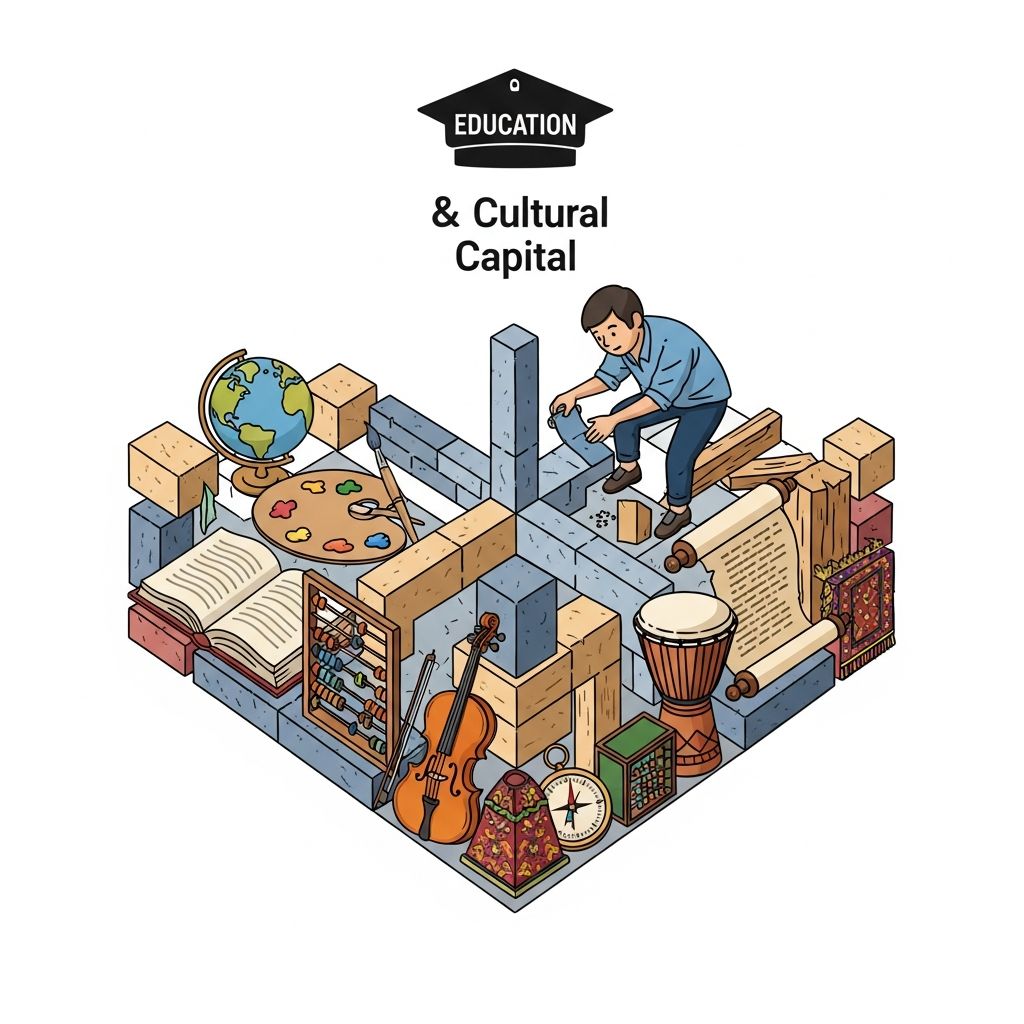
Understanding Cultural Capital in Educational Settings
Cultural capital represents the accumulation of knowledge, experiences, skills, and cultural understanding that individuals develop through their family background, community involvement, and social interactions. In educational contexts, this concept extends far beyond simple book knowledge or academic credentials. Rather, it encompasses the broader array of cultural competencies, linguistic abilities, social codes, and familiarity with dominant cultural practices that enable students to navigate educational systems effectively and achieve academic success.
The term has gained significant prominence in education policy and practice, particularly following the 2019 Ofsted framework revision, which now requires schools to demonstrate how their curricula provide students with the cultural capital necessary to succeed throughout their lives. This shift reflects a growing recognition among educational leaders that students entering school already possess varied levels of cultural knowledge from their home environments, and schools must build upon these foundations while simultaneously addressing gaps that may disadvantage certain learners.
Cultural capital functions as a form of social currency that facilitates academic progress and personal development. Students who possess broader cultural exposure—through access to literature, arts, historical knowledge, and understanding of social conventions—typically navigate educational systems with greater ease. However, the distribution of cultural capital remains unequal across socioeconomic and ethnic groups, creating inherent advantages for some students while placing others at disadvantage from the outset of their educational journeys.
The Theoretical Foundations of Cultural Capital
The concept of cultural capital emerged from sociological research examining inequalities in educational outcomes. Scholars studying educational disparities recognized that achievement gaps persisted even when students had theoretically equal access to educational resources. This observation prompted deeper investigation into what invisible factors might explain differential success rates among student populations.
Bourdieu’s influential framework identified three distinct manifestations of cultural capital:
- Embodied cultural capital comprises internalized dispositions, communication styles, aesthetic preferences, and intellectual orientations that individuals develop through prolonged exposure within their family and social circles. These embodied qualities feel natural and automatic to those who possess them, yet they frequently align with dominant institutional expectations.
- Objectified cultural capital refers to material possessions that carry cultural significance—such as books, artwork, musical instruments, or educational materials. These tangible items can facilitate cultural engagement and demonstrate cultural sophistication within particular social contexts.
- Institutionalized cultural capital encompasses officially recognized credentials and qualifications, including GCSEs, A-levels, degrees, and other formal educational certifications. These credentials serve as external validations of cultural and intellectual status, operating as markers of achievement within formal systems.
Subsequent researchers have extended these theoretical frameworks to examine how cultural capital operates specifically within educational systems. Their work demonstrates that schools often implicitly expect students to arrive possessing particular cultural knowledge and communication styles, yet they frequently fail to explicitly teach or acknowledge these expectations. This creates a situation where some students benefit from family-transmitted cultural competence while others lack access to the same cultural resources.
How Cultural Capital Shapes Academic Achievement
Research consistently demonstrates that students possessing greater cultural capital achieve higher academic performance across various educational measures. This relationship operates through multiple mechanisms. First, students familiar with academic vocabulary and intellectual concepts progress more rapidly through curriculum content because foundational knowledge already exists. A student who has encountered discussions about historical events, scientific concepts, or literary themes within their family environment requires less foundational explanation from teachers compared to peers encountering these concepts for the first time.
Second, cultural capital influences student performance on standardized assessments. Test questions frequently reference particular cultural experiences, historical events, social conventions, or vocabulary choices that may be more familiar to students from certain backgrounds. For instance, examination questions referencing specific leisure activities, cultural traditions, or social practices may prove more accessible to students whose home environments have exposed them to these references, creating unequal advantages within supposedly neutral assessment frameworks.
Third, cultural capital affects student engagement with academic learning. Students who recognize connections between classroom content and their existing knowledge frameworks demonstrate greater engagement and investment in learning. When curricula acknowledge and validate diverse forms of cultural knowledge, students experience greater sense of belonging within educational institutions and develop stronger academic identities.
Sullivan’s longitudinal research examining GCSE examination outcomes found significant correlation between family-transmitted cultural capital and student examination performance. Her findings supported Bourdieu’s assertion that educational systems demand cultural competencies they frequently fail to explicitly teach, thereby systematically advantaging students whose families already possess and transmit these competencies.
Cultural Capital and Educational Equity
Disparities in cultural capital represent one of the most significant contributors to educational inequality. Students from lower socioeconomic backgrounds often have restricted access to cultural experiences, specialized vocabularies, and exposure to institutions like museums, theaters, and libraries. They may attend schools with fewer resources for enrichment activities and possess fewer books within their home environments. These environmental factors accumulate over time, creating compounding disadvantages in educational settings.
Addressing cultural capital inequalities requires intentional, systemic approaches throughout schools. Rather than assuming all students arrive with equivalent cultural preparation, educators must recognize and explicitly teach cultural knowledge that enables success within academic institutions. This includes instruction in academic communication conventions, explanation of cultural references embedded within curriculum content, and conscious incorporation of diverse cultural perspectives throughout instruction.
Modern educational policy increasingly emphasizes cultural capital development as an equity strategy. By deliberately exposing all students to rich cultural experiences, diverse literary traditions, historical perspectives from marginalized communities, and arts and humanities instruction, schools can narrow achievement gaps and provide all learners with resources necessary for success. This approach particularly benefits first-generation college students, students from ethnic minority backgrounds, and learners from economically disadvantaged households who may have limited informal access to dominant cultural resources.
Curriculum Design and Cultural Exposure
Effective curriculum design incorporates strategies for building cultural capital across all student populations. Contemporary educational frameworks recommend moving beyond narrow subject coverage toward deliberately structured exposure to diverse cultural knowledge. This includes literature from various cultural traditions and time periods, historical perspectives examining different communities and experiences, arts and music representing global traditions, and explicit instruction in academic and social communication conventions.
Schools employing culturally responsive pedagogical approaches recognize that students bring valuable cultural knowledge from their own communities that deserves acknowledgment and integration within classroom learning. Rather than positioning dominant cultural knowledge as the only legitimate form of cultural capital, responsive educators create spaces where students’ home cultural knowledge interacts with broader cultural perspectives. This approach validates student identities while simultaneously expanding cultural horizons.
Digital learning environments present particular opportunities for cultural capital development. Multimodal composition approaches encourage students to express understanding through diverse media forms reflecting varied communication traditions. Digital collaborative tools enable students to engage with peers from different cultural backgrounds, building both academic knowledge and cross-cultural competence. Adaptive learning platforms can tailor content exposure to individual student needs while maintaining curriculum breadth across cultural domains.
The Role of Families and Communities
Family engagement remains central to cultural capital transmission and development. Parents and guardians play primary roles in exposing children to cultural experiences, modeling engagement with cultural institutions, and demonstrating value assigned to cultural knowledge. However, significant barriers prevent many families from providing equivalent cultural experiences. Economic constraints limit access to cultural institutions; limited personal familiarity with dominant cultural institutions may discourage family participation; and language differences sometimes create barriers to full engagement with cultural experiences designed for native speakers.
Schools addressing cultural capital equity recognize family assets and existing cultural knowledge while simultaneously providing direct access to cultural experiences and resources. Partnerships with community cultural institutions can extend educational reach beyond school walls. Family-friendly cultural events within school settings can introduce families to resources and institutions. Programs explicitly introducing families to academic conventions and cultural expectations can reduce information asymmetries that disadvantage some families.
Cultural Capital Beyond Academic Achievement
While academic performance represents one significant outcome, cultural capital influences educational trajectories and post-school success more broadly. Students possessing greater cultural capital make more informed educational choices, understand career pathways, recognize connections between present learning and future opportunities, and develop networks facilitating educational and career advancement. Cultural capital influences whether students pursue higher education, which institutions they consider, and which career fields seem accessible and appropriate.
Research demonstrates that middle-class students frequently leverage cultural capital in making educational decisions, selecting academic pathways aligned with career aspirations, and accessing information about prestigious institutions. Working-class and first-generation students, possessing less familiarity with educational systems and professional pathways, sometimes make educational decisions less strategically aligned with long-term goals. Closing information gaps represents one mechanism through which schools can promote more equitable educational outcomes.
Cultural capital also influences student wellbeing and sense of belonging within educational institutions. When schools validate diverse forms of knowledge and create inclusive environments acknowledging varied cultural perspectives, all students experience greater belonging and engagement. Conversely, educational environments that privilege particular cultural forms and treat certain knowledge as inferior to dominant cultural forms communicate exclusionary messages to students whose cultural backgrounds differ from institutional norms.
Practical Implementation Strategies
Schools committed to cultural capital development implement multifaceted approaches across curriculum, instruction, and institutional culture. Effective implementation strategies include:
- Deliberate curriculum sequencing ensuring exposure to diverse cultural knowledge across subjects and grade levels rather than limiting cultural content to specific units
- Explicit instruction in academic conventions, communication styles, and cultural references rather than assuming students possess implicit knowledge of these expectations
- Integration of literature, historical perspectives, and artistic traditions representing diverse cultural groups throughout curriculum content
- Professional development enabling teachers to understand cultural capital theory and implement culturally responsive instructional practices
- School-community partnerships extending cultural experiences beyond classroom settings through field experiences, guest speakers, and access to community cultural institutions
- Assessment approaches valuing diverse forms of knowledge and multiple ways of demonstrating understanding rather than privileging narrow academic measures
- Family engagement initiatives providing information about cultural expectations and educational pathways while acknowledging family cultural assets
Challenges and Considerations
Implementing cultural capital development initiatives presents challenges requiring careful consideration. First, defining which cultural knowledge schools should prioritize remains contested. While dominant cultural knowledge facilitates navigation of existing institutions, exclusively emphasizing dominant culture potentially marginalizes other cultural traditions. Effective approaches balance helping students navigate dominant systems while validating and incorporating diverse cultural perspectives.
Second, ensuring equitable implementation requires attention to how teachers and institutions interact with students from different backgrounds. Research demonstrates that even when curricula incorporate diverse content, classroom interactions sometimes privilege certain students while marginalizing others. Professional development must address implicit biases and help educators provide equitable support and encouragement to all learners.
Third, limiting cultural capital development solely to enrichment activities risks perpetuating inequalities if enrichment remains optional or available only to advantaged student populations. Systemic integration within core curriculum ensures all students access cultural capital development rather than reserving it for particular groups.
Frequently Asked Questions
Q: Can students develop cultural capital outside school environments?
A: Yes, students develop cultural capital through family experiences, community participation, cultural institutions, peer relationships, and media consumption. However, students from lower-income backgrounds often have restricted access to enriching experiences, making school-based cultural capital development particularly important for promoting equity.
Q: Does emphasizing cultural capital disadvantage students from non-dominant cultural backgrounds?
A: Properly implemented cultural capital development validates diverse cultural knowledge while helping students navigate dominant institutions. The goal involves expanding cultural horizons for all students rather than replacing students’ home cultural knowledge with dominant culture exclusively.
Q: How do teachers know whether students possess particular cultural capital?
A: Teachers can identify cultural capital gaps through formative assessment, classroom observations, student conversations, and understanding community demographics. This information guides curriculum design and instructional planning to address gaps systematically.
Q: What role do academic credentials play in cultural capital?
A: Institutionalized cultural capital in the form of degrees, certifications, and qualifications serves as official recognition of achievement and cultural competence. These credentials influence employment prospects and access to further educational opportunities.
Q: How can schools extend cultural capital development to families with limited formal education?
A: Schools can partner with community institutions, provide accessible cultural events, explain academic expectations explicitly, and recognize family cultural assets while gradually introducing families to dominant educational and cultural institutions.
References
- Ofsted’s Definition of ‘Cultural Capital’: A Comprehensive Guide — National College. 2024. https://nationalcollege.com/news/ofsted-cultural-capital-guide
- Cultural Capital in Education: Understanding and Implementation — Structural Learning. 2024. https://www.structural-learning.com/post/cultural-capital
- The Theory of Cultural Capital in Higher Education and Its Influence on Equity — Every Learner Everywhere. 2024. https://www.everylearnereverywhere.org/blog/the-theory-of-cultural-capital-in-higher-education-and-its-influence-on-equity/
- Cultural Capital Theory of Pierre Bourdieu — Simply Psychology. 2024. https://www.simplypsychology.org/cultural-capital-theory-of-pierre-bourdieu.html
- Cultural Capital and U.S. Education — EBSCO Research Starters. 2024. https://www.ebsco.com/research-starters/education/cultural-capital-and-us-education
- The Impact of Cultural Capital on School Performance — Frontiers in Education. 2024. https://www.frontiersin.org/journals/education/articles/10.3389/feduc.2024.1389574/full

Medha Deb is an editor with a master's degree in Applied Linguistics from the University of Hyderabad. She believes that her qualification has helped her develop a deep understanding of language and its application in various contexts. Medha specializes in the areas of beauty, health, sports, and wellness and is committed to ensuring that the content on the website is…