
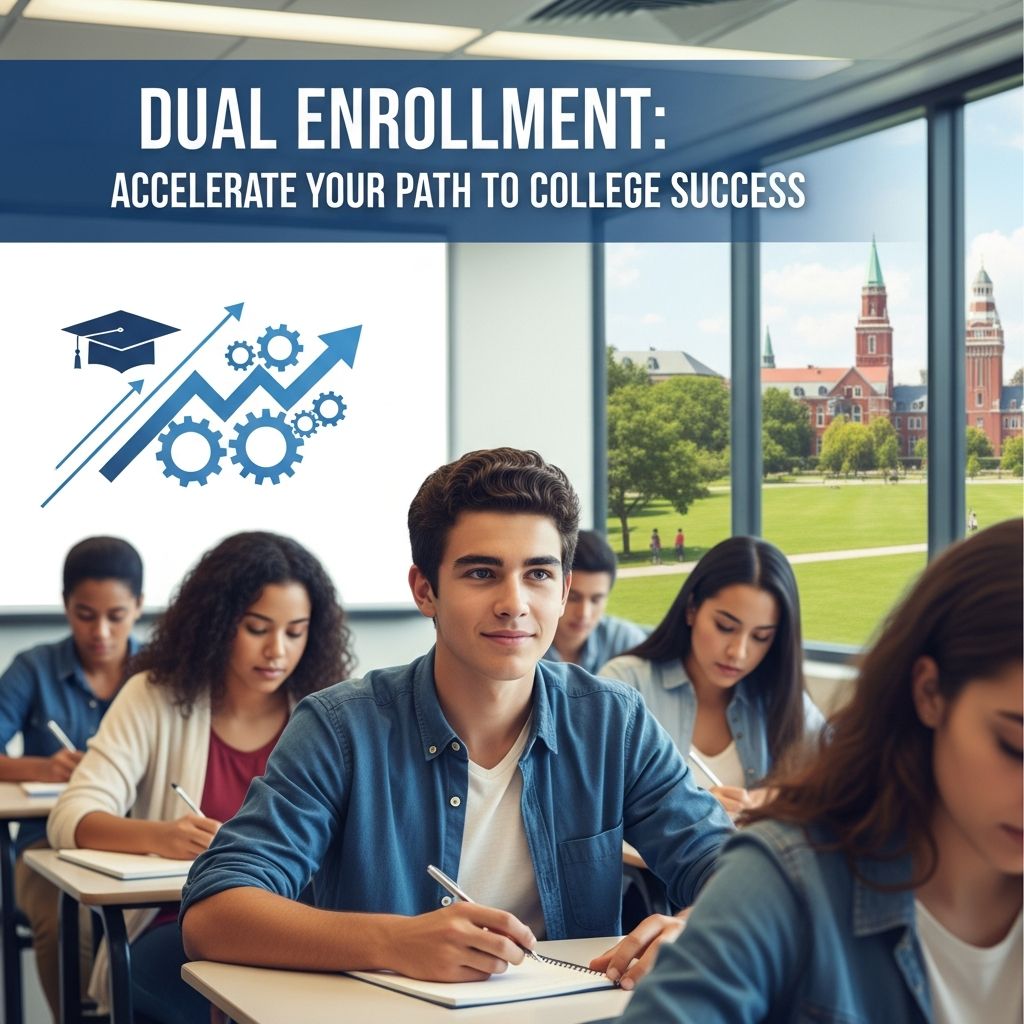
High school students today have unprecedented opportunities to dive into college-level academics before graduation. Dual enrollment programs enable motivated learners to take university courses while fulfilling high school requirements, earning credits that count toward both diplomas and future degrees. This approach not only trims time and expenses in postsecondary education but also equips young scholars with essential skills for higher learning.
Understanding the Essentials of Dual Enrollment
Dual enrollment, sometimes called concurrent enrollment, bridges secondary and higher education by allowing high schoolers to register for college classes. These are typically offered through partnerships with community colleges or universities, where courses meet rigorous standards equivalent to those on campus. Students receive dual credit: one set fulfilling high school graduation needs and another transferable to college transcripts.
Participation often occurs on high school campuses, at the partnering college, or online, providing flexibility for diverse schedules. Programs vary by state and district, but the core goal remains consistent—preparing students for postsecondary success while accelerating their academic progress. Research indicates that participants experience smoother transitions to college life, with higher persistence rates and faster degree completion.
Key Advantages That Set Dual Enrollment Apart
The appeal of dual enrollment lies in its multifaceted benefits, transforming high school into a launchpad for advanced achievement.
- Financial Efficiency: Courses come at little to no cost, often subsidized by high schools or states, saving families thousands per credit compared to full college tuition. This reduces overall debt and allows lighter course loads later.
- Time Acceleration: Credits earned early shorten college timelines; diligent students might enter with a semester or even an associate degree completed, enabling earlier workforce entry or graduate pursuits.
- Academic Preparedness: Exposure to college rigor hones time management, independent study, and critical analysis—skills vital for university success. Early challenges build resilience.
- Exploration Opportunities: Access courses beyond high school offerings, like specialized sciences or niche humanities, aiding major selection and career clarity amid diverse peers.
- Boosted Outcomes: Data shows higher high school graduation, college enrollment, and degree attainment rates, especially for underrepresented groups.
These perks create a high return on investment, benefiting students, families, and even states through reduced educational spending.
Navigating Potential Drawbacks
While rewarding, dual enrollment demands careful consideration of challenges to ensure it aligns with a student’s capacity.
| Challenge | Impact | Mitigation Strategy |
|---|---|---|
| Intense Workload | May strain schedules, limiting extracurriculars or rest | Prioritize courses; seek advisor input |
| Credit Transfer Uncertainty | Not all colleges accept credits, especially elites | Verify with target schools early |
| Academic Pressure | College pace can overwhelm unprepared learners | Start with one course; build skills gradually |
| Logistical Hurdles | Travel or online access issues | Opt for on-campus or virtual options |
Balancing these factors prevents burnout and maximizes gains.
Who Qualifies and How to Get Started
Eligibility typically requires junior or senior standing, a minimum GPA (often 3.0+), and standardized test scores or placement exams. Some programs welcome sophomores with strong records. Parents and counselors play key roles in guiding applications.
- Research Local Options: Contact your high school counselor for partnerships; explore state education department sites.
- Meet Prerequisites: Achieve required grades and test scores (e.g., SAT/ACT subsets or ACCUPLACER).
- Apply Jointly: Submit high school and college applications; obtain approvals.
- Select Wisely: Choose transferable gen-ed courses aligning with planned majors.
- Plan Logistics: Arrange transport or tech for off-site/online classes.
Early planning, ideally in freshman year, positions students for seamless participation.
Real-World Success Strategies
Thriving in dual enrollment hinges on proactive habits. Effective students treat these classes as full college equivalents: attending every session, dedicating 2-3 hours weekly per credit to homework, and leveraging office hours. Forming study groups with college peers fosters accountability and networking.
Parents can support by monitoring progress without micromanaging, while schools provide orientation to demystify expectations. Tracking credits via tools like transcripts ensures proper application toward degrees.
State Variations and Expanding Access
Programs differ nationwide: some states fund fully (e.g., Florida’s model), others charge nominal fees. Rural areas increasingly offer online dual enrollment to bridge gaps, enhancing equity for underserved students. Federal initiatives promote expansion, recognizing broad socioeconomic benefits.
Frequently Asked Questions About Dual Enrollment
Can freshmen participate in dual enrollment?
Most programs target juniors/seniors, but gifted freshmen may qualify via exceptions or advanced tracks. Check district policies.
Do all colleges accept dual enrollment credits?
Community colleges usually do; selective universities vary. Confirm transferability with admissions offices beforehand.
Is dual enrollment free?
Often yes, via subsidies, but fees may apply for books or out-of-district courses. State funding models differ.
How many credits can I earn?
Limits range from 6-30+ per year, capped by high school rules. Ambitious students aim for 12-24 annually.
Does dual enrollment affect high school GPA?
Yes, college grades typically convert and factor into weighted GPAs, boosting competitiveness.
Can I take dual enrollment online?
Absolutely—virtual options expand access, especially post-pandemic, with asynchronous flexibility.
Why Dual Enrollment Shapes Future Leaders
Beyond credits, dual enrollment cultivates maturity, ambition, and real-world readiness. It signals to admissions officers a student’s drive, often strengthening applications. Graduates enter college confident, debt-light, and ahead—poised for internships, advanced studies, or immediate careers. As education evolves, these programs democratize opportunity, empowering diverse learners to claim their futures.
References
- Dual Enrollment Programs: Pros, Cons & How it Works — Collegewise. 2023. https://collegewise.com/blog/dual-enrollment-programs
- Top 5 Benefits of Dual Enrollment — EO Schools. 2023. https://eoschools.org/top-5-benefits-of-dual-enrollment/
- What Is Dual Enrollment: Benefits — Sallie. 2024. https://www.sallie.com/resources/colleges/what-is-dual-enrollment
- Pros and Cons of Dual Enrollment in High School — BestColleges. 2024. https://www.bestcolleges.com/blog/pros-cons-dual-enrollment-high-school/
- Benefits of Dual Enrollment Classes for High School Students — Laurel Ridge Community College. 2023. https://laurelridge.edu/student-spotlight/the-benefits-of-dual-enrollment-classes-for-high-school-students/
- Online Dual Enrollment and Dual Credit Courses — Savvas Learning Company. 2024. https://www.savvas.com/resource-center/blogs-and-podcasts/college-and-career-readiness/college-prep/online-dual-enrollment-and-dual-credit-courses
- Unpacking Dual Enrollment: Benefits, Barriers — New America. 2023. https://www.newamerica.org/insights/unpacking-dual-enrollment-benefits-barriers-and-opportunities-for-expansion/
- The Benefits of Dual Enrollment 2025 Update — College in High School Alliance. 2025-05. https://collegeinhighschool.org/wp-content/uploads/2025/05/The-Benefits-of-Dual-Enrollment-2025-Update.pdf

- Integrated M.A. in Applied Linguistics, University of Hyderabad
- 5+ years in editorial, instructional, SEO, and research-based writing
Sneha is a relationships and lifestyle writer with a strong foundation in applied linguistics and certified training in relationship coaching. She brings over five years of writing experience to theskillvault, crafting thoughtful, research-driven content that empowers readers to build healthier relationships, boost emotional well-being, and embrace holistic living. Her writing and insights reflect the belief that beauty, happiness, and wellness…