
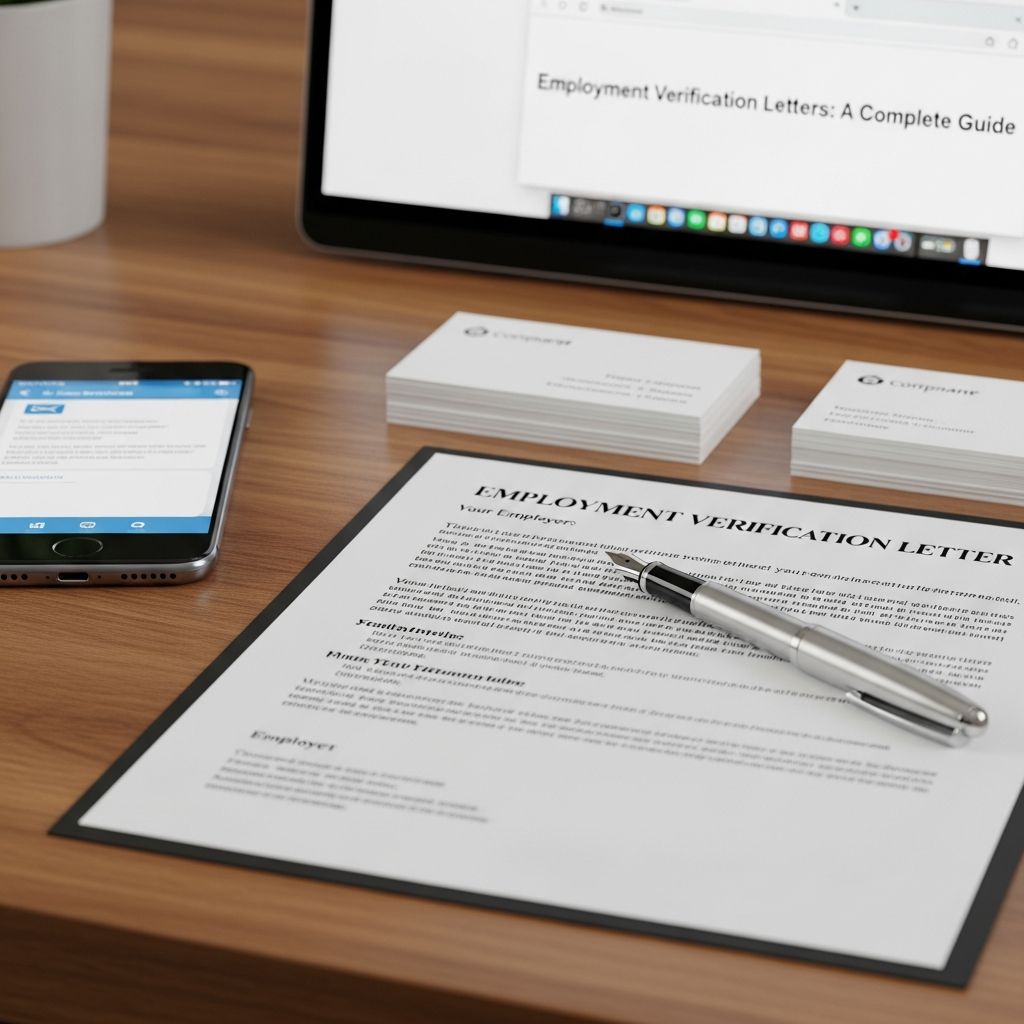
Understanding Employment Verification Letters
An employment verification letter is a formal document issued by an employer that confirms an individual’s current or past employment with the organization. It serves as an official record that a person has worked, or is working, in a specific role, and is often used to support applications for loans, housing, immigration, or new jobs. Unlike a reference letter, which focuses on performance and character, an employment verification letter is strictly factual and limited to basic employment details.
These letters are typically brief and standardized, designed to provide third parties—such as banks, landlords, government agencies, or prospective employers—with reliable, verifiable information. Because they can impact major life decisions like home ownership or visa approval, accuracy and timeliness are critical.
Common Situations Requiring Employment Verification
Employment verification letters are not routine HR paperwork; they are usually requested for specific, high-stakes purposes. Understanding when and why they are needed helps both employees and employers respond appropriately.
- Loan and mortgage applications: Lenders require proof of stable income and ongoing employment to assess creditworthiness and repayment ability.
- Rental and housing applications: Landlords and property managers use these letters to verify that a tenant has a reliable income source to cover rent.
- Immigration and visa processes: Government immigration authorities often require detailed employment letters to support work visas, permanent residency, or spousal sponsorship applications.
- Government benefits and assistance: Some public programs require employment verification to determine eligibility for unemployment, housing, or social support benefits.
- New job onboarding: Future employers may request verification of past employment as part of background checks or to confirm work history.
- Legal and court proceedings: Employment status may be relevant in cases involving child support, alimony, or other financial obligations.
Key Information to Include in the Letter
While there is no universal template, most employment verification letters should contain a consistent set of core details to be considered valid and useful. The exact content can vary depending on the requesting party’s requirements, but the following elements are generally expected.
Employer Information
The letter should be printed on official company letterhead, which includes:
- Company name and legal entity
- Full business address
- Phone number and email address
- Website (optional but helpful)
Employee Details
Accurate identification of the employee is essential. Include:
- Full legal name as it appears on official documents
- Employee ID or other internal identifier (optional)
- Current job title and department
- Employment classification (e.g., full-time, part-time, contract, temporary)
Employment Timeline
Clear dates help establish the duration and continuity of employment:
- Start date of employment
- End date, if the employee is no longer with the company
- Current employment status (active, on leave, terminated, etc.)
Compensation and Pay Details
Many requests, especially from lenders and immigration authorities, require salary information:
- Annual salary or hourly wage
- Pay frequency (e.g., monthly, biweekly)
- Any regular bonuses or commissions, if relevant and permitted by policy
Role and Responsibilities (When Required)
For immigration or specialized visa applications, a brief description of the employee’s duties may be necessary:
- Primary responsibilities and key tasks
- Hours worked per week
- Specialized skills or qualifications required for the role
Signature and Authorization
The letter must be signed by an authorized representative, typically from HR or a senior manager. Include:
- Signatory’s full name
- Job title (e.g., HR Manager, Director of People Operations)
- Signature (wet or digital, depending on company policy)
- Date the letter was issued
How to Handle Requests: A Practical Approach
Employers receive employment verification requests from employees, third parties, or both. Having a clear internal process ensures consistency, compliance, and efficiency.
1. Confirm the Requester and Purpose
Before drafting a letter, determine who is requesting the information and why. This helps tailor the content appropriately:
- A mortgage lender may need salary and employment stability details.
- A landlord may only need confirmation of current employment and job title.
- An immigration authority may require a detailed job description and SOC code (in some countries).
2. Obtain Employee Consent
Privacy laws in many jurisdictions require explicit consent before sharing employment information with third parties. Best practices include:
- Having the employee sign a consent form specifying what information can be disclosed and to whom.
- Keeping a record of consent for compliance and audit purposes.
- Noting that some government-mandated verifications (e.g., for certain visas) may have different consent requirements.
3. Use a Standard Template
Creating a company-wide template ensures consistency and reduces the risk of errors. The template should:
- Be on official letterhead.
- Include placeholders for employee and employment details.
- Be flexible enough to add or remove sections based on the request.
- Be reviewed by legal or compliance teams to align with local labor and data protection laws.
4. Verify Accuracy Before Sending
Even small errors can delay or invalidate an application. Always:
- Cross-check dates, titles, and salary figures with HR records.
- Ensure the employee’s legal name matches official documents.
- Confirm that the employment status is up to date (e.g., not listing someone as active if they have resigned).
5. Set a Reasonable Turnaround Time
Employees often need these letters urgently. Establish a standard processing time (e.g., 1–3 business days) and communicate it clearly. For time-sensitive cases (e.g., visa deadlines), prioritize accordingly.
Legal and Privacy Considerations
Employment verification involves sharing personal data, so it must be handled in compliance with applicable laws and regulations.
Data Protection and Consent
In regions with strong data protection laws (such as under GDPR in the EU or similar frameworks elsewhere), employers must:
- Have a lawful basis for processing and sharing employee data.
- Limit data sharing to what is necessary for the stated purpose.
- Ensure that employees understand what information is being shared and with whom.
What Not to Include
To avoid legal risk and protect employee privacy, avoid including:
- Performance evaluations or subjective opinions.
- Disciplinary history or reasons for termination (unless specifically required by law).
- Health information, religious beliefs, or other sensitive personal data.
- Speculative or future-oriented statements (e.g., “expected to remain employed for X years”).
Consistency and Non-Discrimination
Employers should apply the same verification policy to all employees to avoid claims of bias or discrimination. For example:
- Disclosing salary for some employees but not others without a clear, documented policy can raise fairness concerns.
- Denying requests without a valid, consistent reason may be perceived as retaliatory.
Special Cases: Immigration and International Requirements
Employment verification letters for immigration purposes are often more detailed and strictly regulated than those for loans or rentals.
United States (H-1B, Green Card, etc.)
For U.S. immigration, letters often need to include:
- Detailed job duties and percentage of time spent on key tasks.
- Confirmation that the role requires a specific degree or specialized skills.
- Full-time status and hours per week.
- Salary information that matches the prevailing wage for the occupation.
United Kingdom and Other Countries
Some countries require:
- Standard Occupational Classification (SOC) codes.
- Confirmation that the role aligns with the visa category (e.g., skilled worker, intra-company transfer).
- Employer registration numbers or business identifiers (e.g., Australian Business Number).
Timing and Validity
Many immigration authorities require that verification letters be recent (e.g., issued within the last 3 months). Employers should note the issue date clearly and avoid backdating letters.
Best Practices for Employers
Handling employment verification professionally and efficiently benefits both the organization and its employees.
- Develop a clear policy: Define who can request letters, what information can be disclosed, and who is authorized to sign them.
- Train HR and management: Ensure staff understand the process, legal requirements, and importance of accuracy.
- Use secure systems: Store templates, consent forms, and issued letters in a secure HR information system with appropriate access controls.
- Respond promptly: Delays can harm an employee’s application and damage trust in the employer.
- Keep records: Maintain a log of verification requests, consents, and issued letters for compliance and audit purposes.
What Employees Should Know
Employees play a key role in the verification process and should be aware of their rights and responsibilities.
- Know what information your employer is allowed to share and what requires your consent.
- Provide accurate details (e.g., correct job title, start date) when requesting a letter.
- Submit requests with enough lead time, especially for time-sensitive applications like visas or mortgage closings.
- Review the final letter for accuracy before submitting it to the third party.
- Understand that employers may limit what they disclose based on policy or legal constraints.
Sample Structure of an Employment Verification Letter
While exact wording varies, a typical letter might follow this structure:
| Section | Example Content |
|---|---|
| Date | December 9, 2025 |
| To (Recipient) | To Whom It May Concern / [Specific Organization] |
| Employee Details | This is to confirm that [Full Legal Name] has been employed with [Company Name] since [Start Date]. |
| Job Title and Status | [Employee] currently holds the position of [Job Title] in the [Department] department, working as a [Full-time/Part-time/Contract] employee. |
| Compensation | [Employee]’s annual salary is [Amount], paid [Frequency]. |
| Signature | Sincerely, [Signatory Name] [Job Title] [Company Name] |
Frequently Asked Questions
Can an employer refuse to provide an employment verification letter?
Employers can generally refuse if there is no legal obligation, but doing so may harm employee relations. Many companies have policies to provide basic verification (dates, title, status) while limiting disclosure of salary or performance details.
How long should an employment verification letter be valid?
There is no universal rule, but many institutions (especially immigration authorities) require letters issued within the last 3 months. Always check the specific requirements of the requesting party.
Do I need to include salary information?
Only if the request specifically asks for it and the employee has consented. Some employers choose to disclose salary only for certain types of requests (e.g., mortgages, visas) and not for others (e.g., rental applications).
Can I use a digital or electronic signature?
Yes, in most cases, a digital or electronic signature is acceptable, especially if the letter is sent via secure email or through an official HR portal. However, some government agencies may require a wet signature, so it’s important to confirm the recipient’s requirements.
What if my employment details have changed (e.g., promotion, title change)?
The letter should reflect the employee’s current or most recent role at the time of issuance. If the request is for a past position, specify the dates and title during that period.
Can I request a verification letter for a former employee?
Yes, many employers provide verification for former employees, typically confirming dates of employment, job title, and sometimes salary. Policies may vary, so it’s best to check with the company’s HR department.
References
- Employment Verification Letter — BambooHR HR Glossary. Accessed 2025. https://www.bamboohr.com/resources/hr-glossary/employment-verification-letter
- Employee Employment Verification Letter: 5-Step Guide (2025) — Verifyed.io Blog. 2025. https://www.verifyed.io/blog/verification-letter-employee-guide
- Employment Verification Letter Template: Free VOE Example — DocuSign Templates. 2025. https://www.docusign.com/templates/employer-verification-letter

Medha Deb is an editor with a master's degree in Applied Linguistics from the University of Hyderabad. She believes that her qualification has helped her develop a deep understanding of language and its application in various contexts. Medha specializes in the areas of beauty, health, sports, and wellness and is committed to ensuring that the content on the website is…