
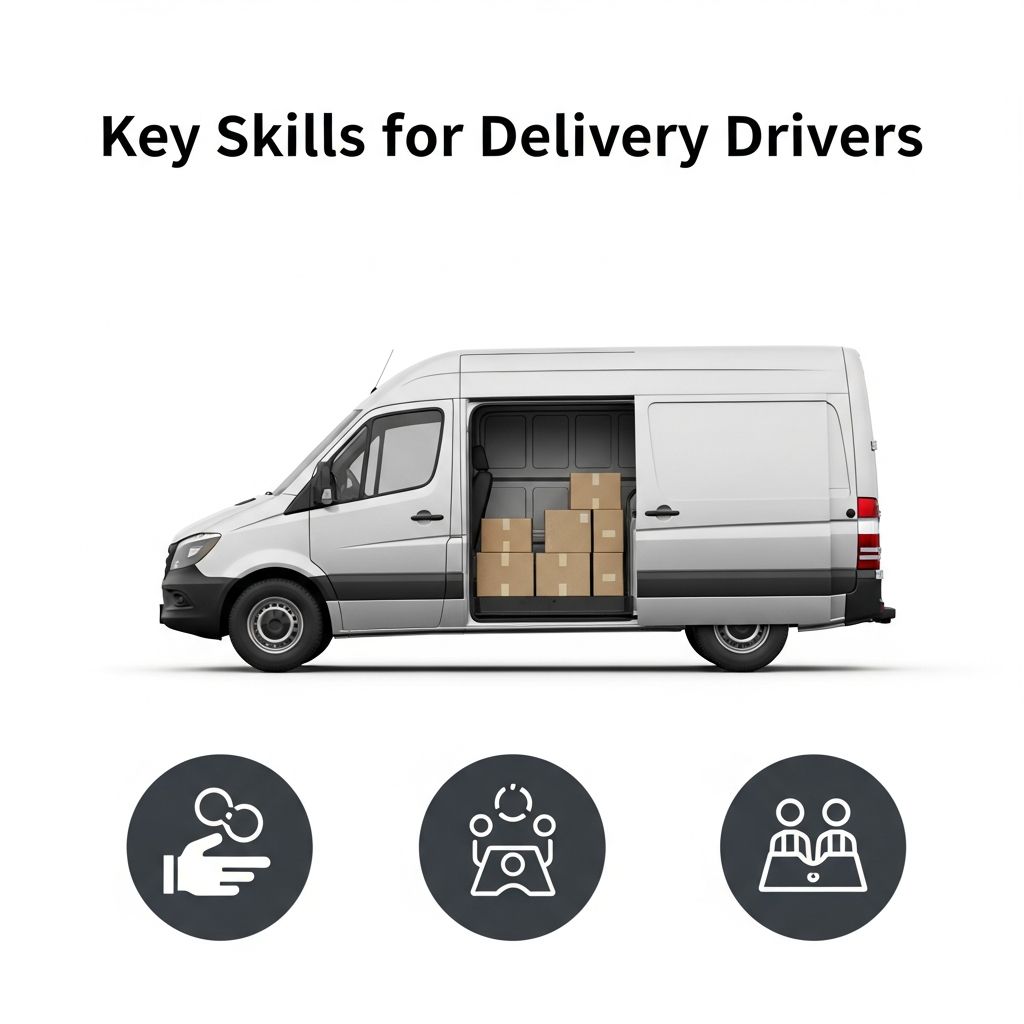
Delivery driving demands a unique blend of technical prowess, interpersonal abilities, and personal resilience. Professionals in this field transport goods efficiently while navigating challenges like traffic, weather, and customer expectations. Success hinges on mastering core competencies that ensure safety, punctuality, and satisfaction.
Mastering Road Safety and Driving Proficiency
Safe and skilled driving forms the foundation of delivery work. Drivers spend extended periods behind the wheel, often in congested urban areas or unfamiliar routes, making defensive driving techniques essential. This involves constant vigilance, adherence to speed limits, and proper use of signals to prevent accidents.
Proficient drivers anticipate hazards such as sudden lane changes or pedestrians, maintaining a clean record that builds employer trust. Regular vehicle checks, including tires, brakes, and lights, further enhance safety and reliability.
- Scan mirrors every 5-8 seconds for surrounding traffic.
- Maintain a 3-second following distance, increasing in adverse conditions.
- Avoid handheld devices; use hands-free options for navigation.
Optimizing Routes and Navigation Expertise
Effective route planning minimizes fuel costs and delivery times. Drivers leverage GPS apps and real-time traffic data to select paths avoiding delays. Geographical familiarity with local streets, shortcuts, and construction zones proves invaluable.
Beyond basic mapping, understanding peak traffic patterns—such as rush hours in commercial districts—allows for proactive adjustments. Tools like route optimization software integrate variables like package volume and deadlines for streamlined operations.
| Route Factor | Impact on Efficiency | Optimization Tip |
|---|---|---|
| Traffic Patterns | Increases travel time by 20-30% | Depart early or use alternative roads |
| Weather Conditions | Reduces speed by 15% | Check forecasts and adjust schedules |
| Package Sequence | Affects access time | Organize by proximity and drop-off order |
Exceptional Customer Interaction Strategies
Delivery drivers serve as the face of their company, requiring polished communication to foster positive experiences. Polite greetings, clear explanations of delays, and empathetic handling of complaints build loyalty.
Verbal skills shine when confirming addresses or obtaining signatures, while written notes via apps update customers on ETAs. Cultural sensitivity aids in diverse neighborhoods, ensuring respectful and efficient exchanges.
- Greet with a smile and confirm recipient details.
- Provide proof-of-delivery photos when requested.
- Apologize sincerely for minor issues and offer solutions.
Problem-Solving Under Pressure
Unexpected obstacles like road closures or incorrect addresses demand quick thinking. Drivers assess situations rapidly, devising alternatives such as rerouting or contacting dispatch.
Critical thinking involves weighing options: Is a detour faster than waiting? Can a neighbor accept the package? Practice hones this ability, turning potential failures into on-time successes.
Leveraging Technology for Seamless Operations
Modern delivery relies on digital tools. Proficiency with apps for tracking, invoicing, and communication streamlines workflows. Drivers input data accurately for real-time updates, reducing errors.
Familiarity with RFID scanners, billing systems, and navigation software boosts productivity. Ongoing training keeps pace with updates, like AI-driven predictive routing.
Maintaining Physical and Mental Resilience
The job’s physical demands—lifting packages up to 50 lbs repeatedly—require stamina and proper techniques to avoid injury. Core-strengthening exercises and hydration sustain performance during long shifts.
Mentally, stress from deadlines or difficult interactions necessitates composure. Techniques like deep breathing manage pressure, preserving focus and motivation.
- Lift with legs, not back, keeping loads close to body.
- Take micro-breaks for stretching during stops.
- Practice mindfulness to handle irate customers calmly.
Precision in Organization and Documentation
Organized vehicles enable swift package retrieval, with manifests sorted by sequence. Accurate logging of timestamps, signatures, and conditions prevents disputes.
Mathematical skills aid in calculating change, fuel estimates, or inventory counts, ensuring financial accuracy.
Navigating Regulations and Compliance
Knowledge of traffic laws, weight limits, and parking rules is mandatory. For larger vehicles, a CDL may be required, alongside hazmat training for certain goods.
Compliance fosters insurance eligibility and avoids fines, prioritizing public safety.
Building Teamwork and Multitasking Prowess
Drivers coordinate with warehouse staff, dispatchers, and support teams. Clear reporting on issues like damages strengthens collaboration.
Multitasking—monitoring GPS while noting deliveries and scanning for hazards—demands divided attention without compromise.
Cultivating Adaptability and Resourcefulness
Weather shifts, schedule changes, or vehicle issues test flexibility. Resourceful drivers scout alternatives, maintaining momentum.
Situational awareness spots risks early, like erratic drivers, enabling evasive actions.
Essential Qualifications and Training Pathways
Entry typically requires a valid driver’s license, clean record, and high school diploma or GED. Specialized training in defensive driving or customer protocols differentiates candidates.
Ongoing certification in first aid or forklift operation enhances prospects for advancement.
| Qualification | Requirement Level | Benefit |
|---|---|---|
| Driver’s License | Mandatory | Legal operation |
| CDL (if applicable) | For trucks | Handle larger loads |
| Safety Training | Recommended | Reduce accident risk |
Frequently Asked Questions
What qualifications are needed to start as a delivery driver?
A valid driver’s license, clean driving record, and often a high school diploma or GED. CDL for heavy vehicles and safety courses boost employability.
How can I improve my route planning skills?
Use GPS with traffic integration, study local maps, and track past routes to identify patterns.
Is physical fitness crucial for delivery driving?
Yes, for handling packages and enduring long hours. Strength training and ergonomics prevent injuries.
What tech tools should delivery drivers master?
Navigation apps, delivery trackers, and billing software for efficient, paperless operations.
How do I handle difficult customers?
Stay calm, listen actively, apologize if needed, and resolve issues professionally.
Advancing Your Delivery Driver Career
Hone these skills through practice, feedback, and certification. Reliability and positivity lead to promotions into supervisory or fleet management roles, capitalizing on logistics growth.
References
- 20 Essential Skills Every Delivery Driver Should Acquire — FarEye. 2023. https://fareye.com/resources/blogs/delivery-driver-skills-must-have
- Essential Skills Every Delivery Driver Needs — SkillsYouNeed. 2023. https://www.skillsyouneed.com/rhubarb/skills-delivery-driver.html
- Working as a Delivery Driver — Randstad USA. 2024. https://www.randstadusa.com/job-seeker/career-advice/job-profiles/delivery-driver/
- Delivery Driver Skills: Definition and Examples — Indeed.com. 2024. https://www.indeed.com/career-advice/resumes-cover-letters/delivery-driver-skills
- Delivery Driver Job Description Template — Monster. 2023. https://hiring.monster.com/resources/job-descriptions/transportation/delivery-driver/

- Integrated M.A. in Applied Linguistics, University of Hyderabad
- 5+ years in editorial, instructional, SEO, and research-based writing
Sneha is a relationships and lifestyle writer with a strong foundation in applied linguistics and certified training in relationship coaching. She brings over five years of writing experience to theskillvault, crafting thoughtful, research-driven content that empowers readers to build healthier relationships, boost emotional well-being, and embrace holistic living. Her writing and insights reflect the belief that beauty, happiness, and wellness…