
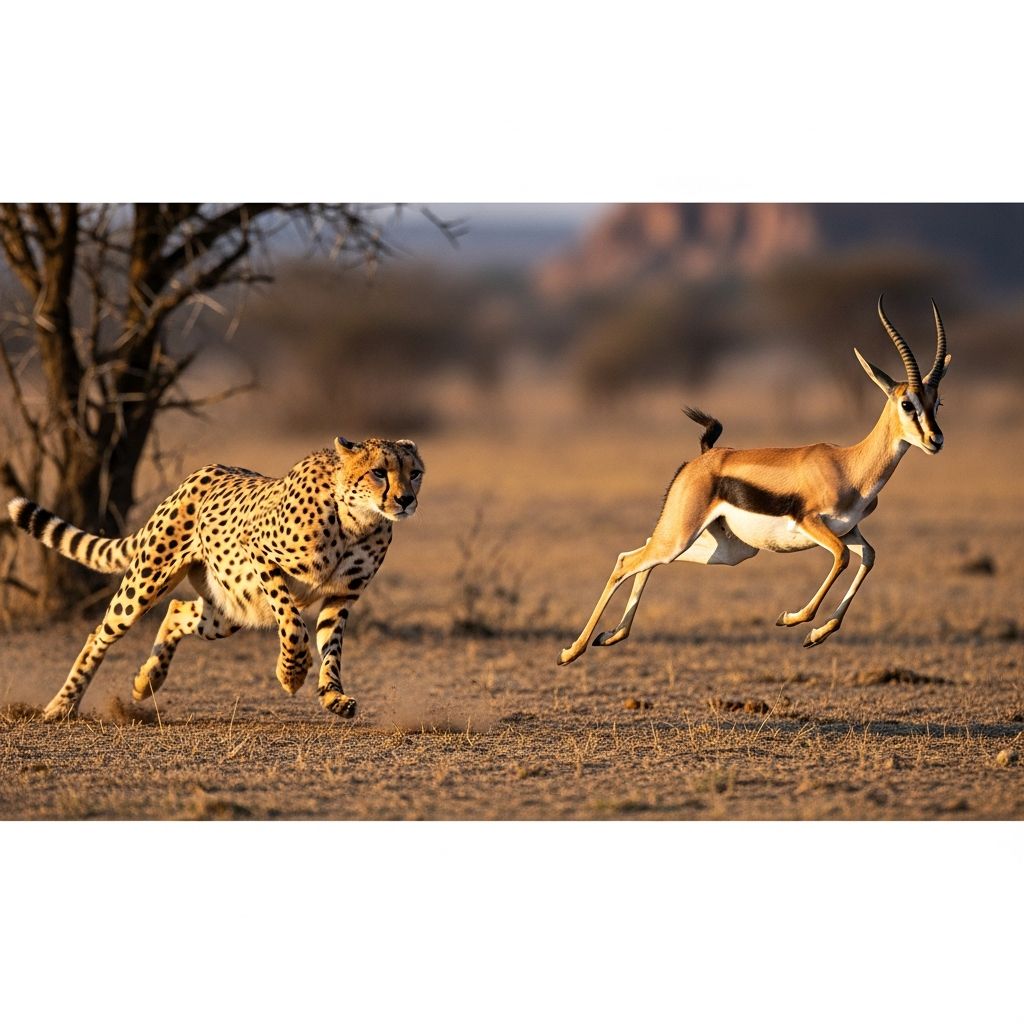
In the natural world, survival often hinges on a delicate balance of offense and defense. Evolutionary arms races represent a fascinating phenomenon where species engage in a perpetual cycle of adaptation, each pushing the other to evolve new traits just to stay alive. This process, driven by coevolution, results in extraordinary biological innovations that have shaped life on Earth for millions of years.
Defining the Core Concept
An **evolutionary arms race** occurs when two or more species exert selective pressure on each other, leading to rapid and reciprocal changes in their traits over generations. Unlike simple adaptation to a static environment, this is a dynamic interplay where improvements in one species’ abilities prompt countermeasures in the other. Predators develop sharper claws or faster speeds, while prey evolve thicker hides or superior evasion tactics. This back-and-forth escalates defenses and offenses without a clear victor, mirroring human military buildups but played out across geological timescales.
The term draws from human history, specifically the pre-World War I arms buildup among European nations, but in biology, it’s a metaphor for natural selection’s relentless drive. Genes favoring superior survival tools accumulate in populations, ensuring that only the most adept individuals reproduce. This isn’t a conscious strategy; it’s the blind force of evolution at work.
Mechanisms Driving the Escalation
At its heart, an evolutionary arms race is a form of **coevolution**, where the genetic changes in one lineage directly influence selection in another. Consider a predator honing its hunting skills: successful hunters pass on genes for better senses or strength, shifting the survival odds for prey. Prey populations then favor genes for camouflage, speed, or toxins, restarting the cycle.
Key mechanisms include:
- Red Queen Hypothesis: Named after the Red Queen’s advice in Through the Looking-Glass to run just to stay in place, it posits that species must continually evolve to maintain fitness against evolving antagonists.
- Escalation vs. Progress: Escalation means defenses and offenses improve in tandem, so neither side gains a net advantage over time. True progress would mean one side dominates absolutely.
- Genetic Feedback Loops: Mutations providing even slight edges spread rapidly under intense selection, amplifying the race.
These races unfold in evolutionary time—thousands to millions of years—not individual lifetimes, building arsenals for real-time encounters like chases or duels.
Predator-Prey Showdowns: Classic Examples
No discussion of arms races is complete without predator-prey dynamics, the poster child of coevolution. Take the rough-skinned newt and common garter snake in the Pacific Northwest. Newts produce tetrodotoxin (TTX), a potent neurotoxin deadly to most predators. Yet some snake populations have evolved mutations allowing them to tolerate and even sequester TTX, turning it into a defense against their own predators. Newts respond by ramping up toxin production, perpetuating the cycle.
Another striking case: Northern Pacific rattlesnakes and California ground squirrels. Snakes evolve more potent venom; squirrels counter with higher resistance, including venom-neutralizing proteins in their blood. This tit-for-tat has led to regionally varying toxin potency and resistance levels, direct evidence of an ongoing arms race.
| Species Pair | Offense Trait | Defense Trait | Outcome |
|---|---|---|---|
| Newt vs. Garter Snake | TTX toxin in newt | TTX resistance in snake | Escalating toxin levels |
| Rattlesnake vs. Ground Squirrel | Stronger venom | Venom resistance proteins | Regional co-adaptation |
| Cheetah vs. Gazelle | Extreme speed | Agility and endurance | Balanced high-performance |
These examples illustrate asymmetric races: predators attack, prey defend. Over time, both invest heavily in these traits at the expense of other functions like reproduction or growth.
Beyond Animals: Plants in the Fray
Plants, often dismissed as passive, are fierce combatants in arms races, particularly against insect herbivores and their predators. Tortoise beetles, for instance, showcase the “escape and radiation” strategy. When a plant evolves chemical defenses, beetles develop detoxification enzymes. A breakthrough adaptation allows a beetle lineage to evade these, leading to population booms and speciation—radiating into new species.
Plants counter with structural defenses like thorns or silica-rich leaves, while insects evolve mandibles to chew through them. This extends to third parties: predatory insects that eat herbivores are selected for better hunting, indirectly pressuring plants to bolster defenses. Such multi-level races contribute to rainforests’ staggering diversity, where chemical warfare dominates.
Invisible Wars: Hosts vs. Parasites
Perhaps the most pervasive arms races pit hosts against parasites. Parasites evolve to breach immune systems, prompting hosts to refine defenses like fever or antibodies. This Red Queen dynamic explains why immunity genes evolve so quickly in mammals.
Symmetric races occur intraspecifically, too—think male-male competition for mates, where bigger antlers or brighter plumage escalate until physiological limits are hit. Female choice can drive this further, as choosier females select ever-more extravagant males. Parent-offspring conflicts over resource allocation represent another internal race, with offspring demanding more than parents “want” to give.
Forest Canopies: Competition Among Equals
Not all arms races involve combat; symmetric ones arise in resource competition. Towering forest trees engage in a height race for sunlight. Taller ancestors shade shorter rivals, selecting for growth genes that propel descendants skyward. All trees chase the same canopy goal, investing energy in height over roots or seeds.
Unlike predator-prey asymmetry, this levels the field: everyone aims identically, but only the tallest thrive. Fossil records show ancient trees far shorter than modern redwoods, testament to eons of escalation.
Consequences for Biodiversity and Evolution
Arms races profoundly impact life’s trajectory. They drive **innovation**, yielding marvels like venom, flight, or bioluminescence. Escalation explains Cope’s Rule—lineages trending larger over time via male competition.
Yet futility looms: like trees in a “Forest of Friendship,” mutual disarmament would free resources, but defection (e.g., a slower prey) spells doom. Races end variably: extinction of one side, equilibrium at adaptive peaks, cycling traits, or mutual optima like pollinator-plant specificity.
Insects-plants-predators form tripartite races, where defenses spawn new species via escape and radiation, fueling biodiversity hotspots. Brain size increases in carnivores and herbivores over the Cenozoic may reflect cognitive arms races for smarter hunting/evasion.
Human Parallels and Implications
These natural races inform antibiotic resistance (bacteria vs. drugs) and pesticide battles (insects vs. chemicals)—manmade arms races accelerating evolution. Understanding them aids conservation, predicting how climate change might intensify competitions.
Frequently Asked Questions
What is the difference between coevolution and an arms race?
Coevolution is broad reciprocal evolution; an arms race is its escalatory subset, often antagonistic, leading to heightened traits without net fitness gains.
Can arms races ever end?
Yes, via extinction, stable equilibria, or cycling; mutual optima like bee-flower coevolution stabilize both sides.
Do plants really participate in arms races?
Absolutely—chemical and structural defenses against herbivores drive insect evolution, creating diverse ecosystems.
How does the Red Queen Hypothesis relate?
It describes the need to evolve continuously against antagonists, core to many arms races.
Are there arms races within species?
Yes, like sexual selection or parent-offspring tugs-of-war over resources.
References
- Arms Races and ‘Evolutionary Theodicy’ — Richard Dawkins. 2023-10-15. https://richarddawkins.substack.com/p/arms-races-and-evolutionary-theodicy
- Coevolution – What is an evolutionary ‘arms race’ — Matt Ridley, Blackwell Publishing. 2000-01-01. https://www.blackwellpublishing.com/ridley/tutorials/Coevolution18.asp
- Arms races between and within species — A. Dawkins & J. R. Krebs. 1979-04-21. https://pubmed.ncbi.nlm.nih.gov/42057/
- Biologists parse evolutionary ‘arms race’ between insects, predators and plants — University of Kansas News. 2015-09-11. https://news.ku.edu/news/article/2015/09/11/biologists-parse-evolutionary-arms-race-between-insects-predators-and-plants
- Evolutionary arms races — Ask A Biologist, Arizona State University. 2023-01-01. https://askabiologist.asu.edu/evolutionary-arms-races
- The arms race — UC Berkeley Understanding Evolution. 2022-05-15. https://evolution.berkeley.edu/the-arms-race/

Medha Deb is an editor with a master's degree in Applied Linguistics from the University of Hyderabad. She believes that her qualification has helped her develop a deep understanding of language and its application in various contexts. Medha specializes in the areas of beauty, health, sports, and wellness and is committed to ensuring that the content on the website is…