
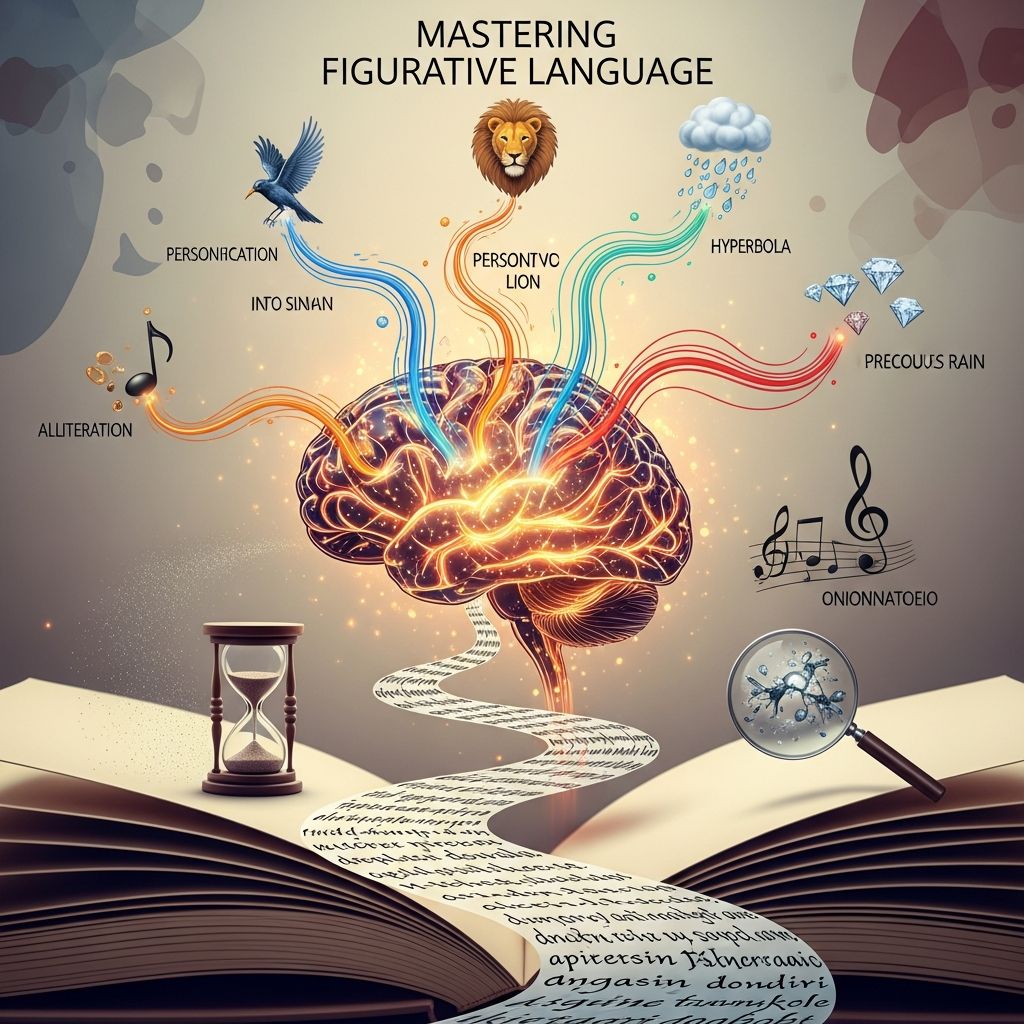
Figurative language transforms ordinary words into powerful tools that evoke emotions, paint vivid pictures, and convey complex ideas with precision and flair. Unlike literal expressions, which state facts directly, figurative language relies on imagination to create deeper connections with readers or listeners. This guide delves into its core elements, offering fresh insights, practical examples, and strategies to integrate it seamlessly into your writing and speech.
Why Figurative Language Matters in Communication
At its essence, figurative language enriches expression by going beyond the surface meaning of words. It helps writers and speakers stand out in a sea of plain prose, making messages more memorable and persuasive. In literature, it builds immersive worlds; in business, it clarifies abstract concepts; in daily conversation, it adds color and relatability. Research from educational resources highlights how mastering these devices boosts comprehension and retention, especially in poetry, novels, and persuasive rhetoric.
Consider how a simple statement like “It’s raining” pales against “It’s raining cats and dogs.” The latter not only describes intensity but also injects humor and vividness, drawing the audience into the scene.
Core Building Blocks of Figurative Expression
Figurative language encompasses a variety of techniques, each serving unique purposes. Below, we break down the most impactful types, complete with definitions, real-world examples, and tips for effective use.
Similes: Drawing Comparisons with Clarity
Similes explicitly link two dissimilar ideas using “like” or “as,” highlighting shared qualities to illuminate the unfamiliar through the known. They are straightforward yet evocative, ideal for beginners in creative writing.
- Her smile was as bright as the morning sun, warming the room instantly.
- The athlete moved like a cheetah across the field, swift and unstoppable.
- Time slipped away like sand through fingers, leaving regrets in its wake.
To craft strong similes, choose comparisons your audience instantly recognizes. Avoid clichés by twisting familiar ones, such as “as busy as a one-armed paperhanger with hives” for added originality.
Metaphors: Direct and Immersive Equivalents
Metaphors assert that one thing is another, forging an immediate, bold connection without linking words. They demand active imagination from the reader, creating profound impact in concise forms like poetry or slogans.
- Life is a rollercoaster, full of thrilling highs and stomach-dropping lows.
- His mind was a steel trap, snapping shut on every detail.
- The city is a concrete jungle, teeming with untamed energy.
Metaphors shine when extended into full analogies, but overuse can confuse. Balance them with literal anchors for clarity.
Personification: Breathing Life into the Inanimate
This technique attributes human traits, emotions, or actions to non-human entities, making abstract or lifeless subjects relatable and dynamic. It’s particularly effective in storytelling to build empathy.
- The wind whispered secrets through the ancient oaks.
- Opportunity knocked at the door, but he ignored it.
- The old clock ticked angrily, protesting its endless duty.
Use personification sparingly in technical writing to avoid anthropomorphism pitfalls, but embrace it in narratives for emotional depth.
Hyperbole: Amplifying for Emphasis
Hyperbole employs deliberate exaggeration to heighten drama, humor, or urgency, underscoring a point without literal intent. It’s a staple in advertising and comedy.
- I’m so hungry, I could eat a horse.
- This bag weighs a ton; help me lift it!
- I’ve told you a million times to clean your room.
The key to hyperbole is recognizability—exaggerations must feel plausible in their absurdity to resonate.
Sound and Rhythm Devices for Memorable Phrasing
Beyond comparisons, auditory figures add musicality, enhancing rhythm and recall. These are invaluable for speeches, branding, and poetry.
Onomatopoeia: Words That Echo Reality
Onomatopoeia mimics natural sounds through word formation, immersing readers in sensory experiences. Common in comics and children’s books.
- The buzz of bees filled the garden.
- Thunder crashed overhead, shaking the windows.
- Leaves rustled softly in the breeze.
Experiment with invented onomatopoeias for unique voices, like “splish-splash” for playful water sounds.
Alliteration: Consonant Harmony
Alliteration repeats initial consonant sounds in nearby words, creating catchy, emphatic phrases. Brands love it for logos and taglines.
- Silken, sad, uncertain rustling of each purple curtain.
- Peter Piper picked a peck of pickled peppers.
- Fierce flames flickered in the fireplace.
Limit to 3-4 words per cluster to avoid tongue-twisters.
Contrasts and Subtleties for Depth
Oxymorons: Juxtaposing Opposites
Oxymorons combine contradictory terms for paradoxical effect, revealing nuanced truths. They add intrigue and wit.
- Deafening silence enveloped the room.
- Jumbo shrimp delighted the diners.
- Bittersweet victory left a complex taste.
Ideal for headlines or dialogue to provoke thought.
Idioms: Cultural Shortcuts
Idioms are fixed phrases with non-literal meanings, rooted in culture. They foster informality but risk confusion across languages.
- “Break a leg” for good luck.
- “Spill the beans” means reveal secrets.
- “It’s not rocket science” for simplicity.
| Idiom | Meaning | Example Sentence |
|---|---|---|
| Piece of cake | Very easy | The test was a piece of cake. |
| Hit the nail on the head | Exactly right | You hit the nail on the head with that idea. |
| Kick the bucket | To die | My old car finally kicked the bucket. |
Advanced Techniques for Seasoned Writers
Allusions: Tapping Cultural Knowledge
Allusions reference myths, history, or literature indirectly, layering meaning for informed audiences.
- He’s a real Romeo with the ladies.
- Don’t open that Pandora’s box.
Synecdoche: Part for the Whole
Synecdoche uses a part to represent the entirety, adding conciseness and symbolism.
- All hands on deck (all crew members).
- Wheels for a car.
Practical Strategies to Incorporate Figurative Language
To wield these tools masterfully:
- Know your audience: Tailor complexity—simples for casual talk, metaphors for experts.
- Balance with literal text: 20-30% figurative prevents overload.
- Practice revision: Read aloud to check rhythm and clarity.
- Contextual fit: Hyperbole suits humor; personification, description.
In professional settings, figurative language persuades: “Our team is the engine driving innovation.”
Frequently Asked Questions (FAQs)
What is the difference between a simile and a metaphor?
Similes use “like” or “as”; metaphors equate directly.
Can figurative language be used in business writing?
Yes, sparingly for engagement without ambiguity.
How do I avoid overusing figurative language?
Vary types and intersperse with straightforward prose.
Is hyperbole always humorous?
No, it can emphasize seriousness too.
Why teach figurative language in schools?
It enhances vocabulary, creativity, and interpretive skills.
References
References
- 11 Common Types of Figurative Language (With Examples) — Indeed. 2025-12-16. https://www.indeed.com/career-advice/career-development/figurative-language-examples
- 40 Figurative Language Examples for Upper Elementary — Fun in 5th Grade. N/A. https://funin5thgrade.com/40-figurative-language-examples-for-upper-elementary/
- Figurative Language: 12 Types, Examples, & Writing Tips — Novel Software. N/A. https://www.novel-software.com/figurative-language/
- 12 Figurative Language Tools to Boost Your English — IDC.edu. N/A. https://idc.edu/blog/types-of-figurative-language-examples/
- Figurative language (video) — Khan Academy. N/A. https://www.khanacademy.org/ela/cc-3rd-reading-vocab/xaf0c1b5d7010608e:cc-3rd-extreme-environments/xaf0c1b5d7010608e:extreme-environments-vocabulary/v/figurative-language-reading
(Word count: 1678)

Medha Deb is an editor with a master's degree in Applied Linguistics from the University of Hyderabad. She believes that her qualification has helped her develop a deep understanding of language and its application in various contexts. Medha specializes in the areas of beauty, health, sports, and wellness and is committed to ensuring that the content on the website is…