
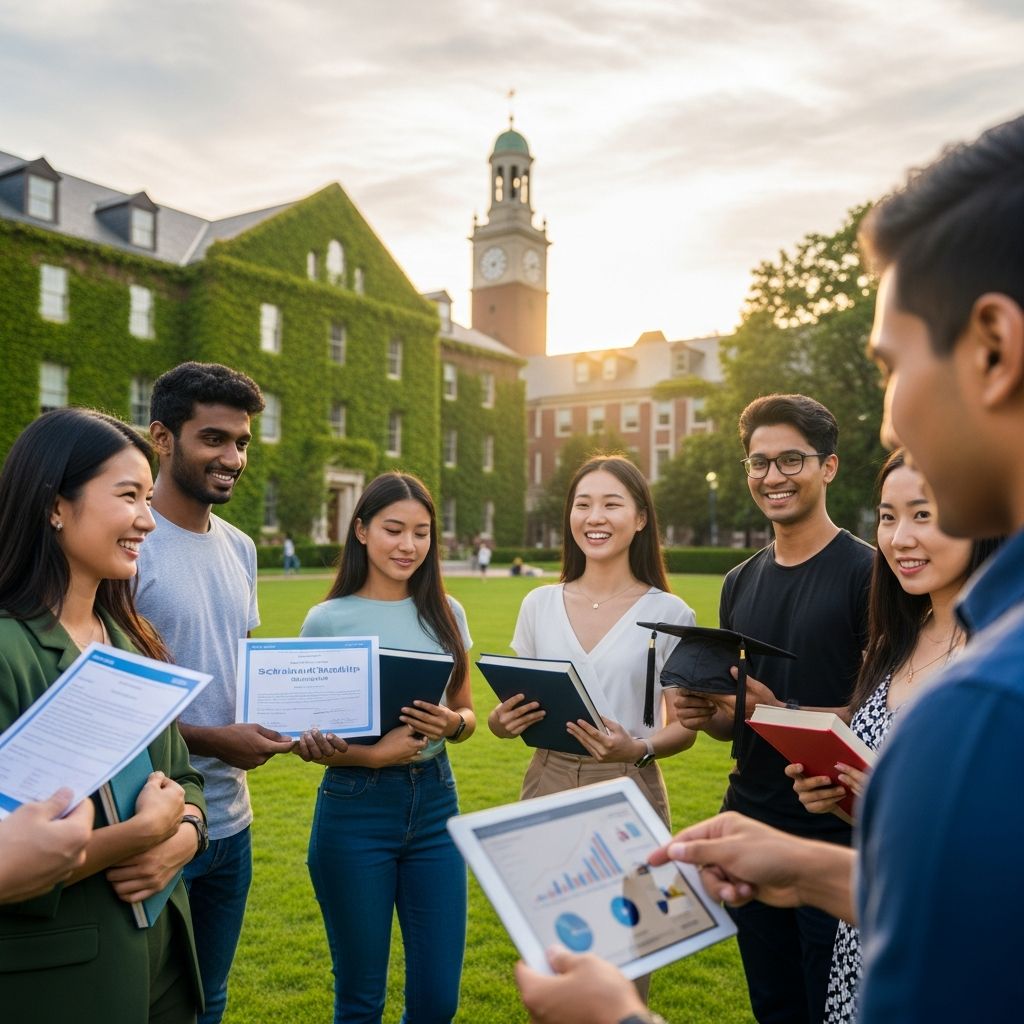
International students eyeing U.S. universities face steep tuition and living expenses, often totaling tens of thousands annually. While federal aid like Pell Grants remains off-limits, diverse alternatives exist through institutional programs, private scholarships, country-specific initiatives, and loans. This guide outlines actionable pathways to bridge financial gaps, drawing from official educational resources.
Understanding Costs and Eligibility Barriers
Typical expenses for international undergraduates include tuition averaging $30,000-$50,000 per year at public institutions (out-of-state rates) and up to $60,000 at privates, plus $15,000+ for housing, meals, insurance, and travel. According to NAFSA, nearly 60% of these costs are covered by personal/family funds, underscoring limited institutional discounts for undergrads.
Federal aid via FAFSA requires U.S. citizenship or permanent residency; F-1 visa holders are ineligible for loans, grants, or work-study. Some schools request CSS Profile submissions to evaluate institutional aid potential, but expectations remain high for self-funding proof during visa applications.
Institutional Financial Support Opportunities
U.S. colleges vary widely in aid for internationals. Elite privates like Harvard or Yale practice need-blind admissions, meeting demonstrated need fully for admitted students regardless of nationality. Others offer merit-based awards for academic excellence or talents in arts/sports.
- Need-Based Aid: Assessed via CSS Profile; covers partial tuition after family contributions.
- Merit Scholarships: Automatic consideration for high GPA/SAT scores; e.g., some publics waive fees.
- Athletic/Art Awards: Full or partial rides for recruited talents.
Research via admissions sites; apply early as funds are competitive. Pepperdine notes F-1 students must prove full funding upfront, even with aid plans.
External Scholarships and Grants
Beyond campuses, nonprofits, corporations, and governments fund internationals. Databases like InternationalStudentScholarship.com list options by country/field; key programs include:
| Program | Eligibility | Coverage |
|---|---|---|
| Fulbright Foreign Student Program | Graduate focus, select countries | Tuition, airfare, stipend |
| Rotary Peace Fellowships | Experienced professionals | Full master’s funding |
| Civil Society Leadership Awards | Master’s applicants from targeted nations | Full tuition/living |
| AAUW International Fellowships | Women in graduate study | $20,000-$50,000 |
Country-specific gems abound: Saudi Arabia’s KASP covers all costs plus insurance/stipend; Brazil’s BSMP targets STEM for one-year exchanges. Search free aggregators, but verify legitimacy to avoid scams.
Government and Regional Funding Initiatives
Home governments often sponsor top performers. Examples: China’s CSC scholarships, India’s National Overseas Scholarship. Regionally, the Organization of American States’ Rowe Fund provides interest-free loans for Latin American/Caribbean undergrad finals years at U.S. schools—up to $12,000, repayable post-graduation.
U.S.-funded options like Hubert Humphrey Fellowships suit mid-career pros for non-degree study, enhancing networks without degree pursuit.
Private Loans: A Safety Net with Caveats
When grants fall short, private lenders fill gaps. Providers like Sallie Mae or MPOWER offer internationals up to full cost of attendance (COA), no cosigner needed for some (credit-based approval). Rates: 10-15% variable, terms 10-15 years.
| Lender Type | Cosigner Req. | Max Amount | Key Perk |
|---|---|---|---|
| Cosigner Loans (e.g., Sallie) | U.S. citizen required | COA | Lower rates (5-12%) |
| No-Cosigner (e.g., MPOWER) | None | $100K lifetime | Visa/grad support |
Apply anytime; compare APRs via credible sites. Borrow conservatively—repayment burdens post-grad can hinder OPT/CPT transitions.
On-Campus and Part-Time Earning Strategies
F-1 rules cap work: 20 hours/week on-campus (no prior approval needed). Roles: library aides, lab assistants ($10-15/hour). Post-enrollment, CPT/OPT allow paid internships, easing burdens without loans.
Some schools offer emergency funds or spouse work authorization for F-2 holders in high-need fields.
Application Strategies for Maximum Aid
- Start Early: Deadlines precede admissions by months.
- Portfolio Building: Essays highlighting need/merit; secure recommenders.
- Multiple Streams: Combine institutional + external + loans.
- Appeal Awards: Post-admit, submit updated finances for adjustments.
- Visa Prep: I-20 shows aid; demonstrate ties home for return intent.
Track via spreadsheets; use EducationUSA centers for free advising.
FAQs: Common Queries Answered
Can F-1 students access any U.S. federal aid?
No, but permanent residents qualify via FAFSA for grants/loans/work-study.
Do all U.S. colleges offer international aid?
No—community colleges rarely do; research 100+ need-aware privates/publics via College Board.
What if my family can’t cover costs?
Prioritize full-scholarship schools; defer or consider Canada/Australia alternatives with more aid.
Are scholarships taxable in the U.S.?
Generally not for degree candidates, but consult IRS Publication 970.
How to avoid aid scams?
Never pay upfront fees; stick to .edu/.gov/org sites.
Long-Term Planning: Beyond Year One
Renewals demand GPA maintenance (3.0+ typical). Build U.S. credit for better loans; network for TA/RA gigs at grad level where aid expands. Post-OPT, H-1B paths may enable repayment via high salaries.
Ultimately, persistence pays: IIE data shows 1M+ internationals thrive annually, many aid-supported. Tailor searches to your profile—nationality, field, level—for optimal fits.
References
- Financial Aid for Undergraduate International Students — NAFSA. 2023. https://www.nafsa.org/about/about-international-education/financial-aid-undergraduate-international-students
- Financial Aid for International Students in the USA — International Student Loan. 2024. https://www.internationalstudentloan.com/resources/financial-aid-for-international-students-usa.php
- Financial Aid for International Students — Pepperdine University GSEP. 2025. https://gsep.pepperdine.edu/admission/financial-aid/international-students/
- Types of Financial Aid for International Students — Sallie Mae. 2024. https://www.sallie.com/resources/financial-aid/financial-aid-for-international-students
- Sources of Financial Aid — InternationalStudent.com. 2024. https://www.internationalstudent.com/study_usa/financing/sources/
- Federal Student Aid for International Study — StudentAid.gov. 2025. https://studentaid.gov/understand-aid/types/international

- Integrated M.A. in Applied Linguistics, University of Hyderabad
- 5+ years in editorial, instructional, SEO, and research-based writing
Sneha is a relationships and lifestyle writer with a strong foundation in applied linguistics and certified training in relationship coaching. She brings over five years of writing experience to theskillvault, crafting thoughtful, research-driven content that empowers readers to build healthier relationships, boost emotional well-being, and embrace holistic living. Her writing and insights reflect the belief that beauty, happiness, and wellness…