
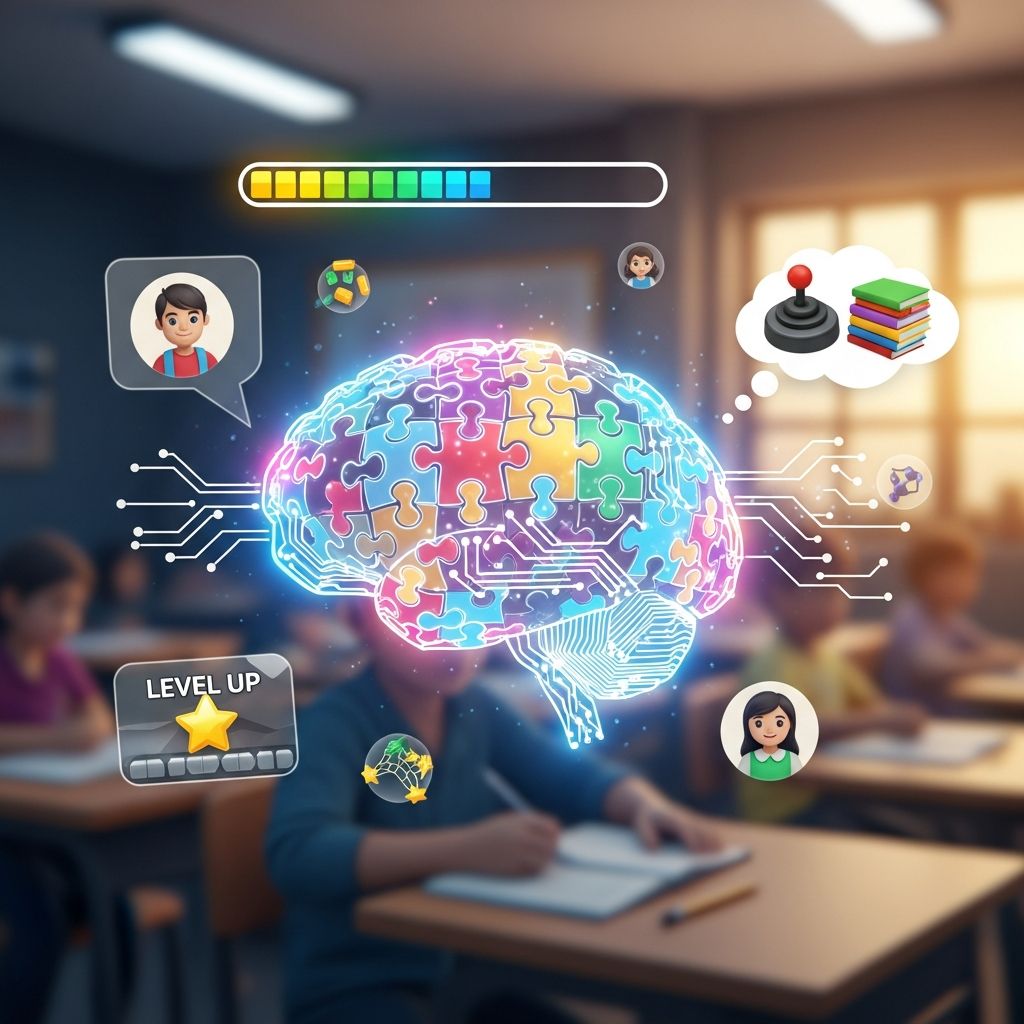
Gamification applies game design elements to non-game contexts like education to enhance motivation and engagement. This approach integrates points, badges, leaderboards, and challenges into learning environments, fostering active participation and deeper understanding.
Why Gamification Matters in Modern Classrooms
In today’s digital age, students are accustomed to interactive experiences from video games and apps. Traditional lectures often fail to capture attention, leading to disengagement. Gamification bridges this gap by making learning feel rewarding and fun, aligning with psychological needs for competence, autonomy, and relatedness.
Educators report that gamified lessons increase time on task and voluntary participation. By turning abstract concepts into quests or levels, students experience immediate feedback, which accelerates skill development and builds resilience against failure.
Core Benefits of Introducing Game Elements to Learning
Gamification yields measurable improvements across cognitive, emotional, and social domains. Key advantages include:
- Increased Engagement: Interactive elements like challenges keep learners focused longer than passive methods.
- Enhanced Retention: Active practice through quizzes and repetitions boosts memory by 36% compared to standard instruction.
- Motivation Surge: Rewards trigger dopamine responses, sustaining effort over time.
- Skill Development: Problem-solving in game-like scenarios hones critical thinking and collaboration.
- Personalized Progress: Adaptive paths allow students to advance at their pace, reducing frustration.
These benefits extend to diverse learners, including those with attention challenges, by providing varied entry points to content.
Essential Game Mechanics for Educational Success
Effective gamification relies on carefully selected mechanics tied to learning goals. Here’s a breakdown:
| Mechanic | Purpose | Educational Example |
|---|---|---|
| Points & XP | Immediate feedback on actions | Award points for quiz answers to track daily progress |
| Badges | Celebrate milestones | Badge for completing a unit’s peer review task |
| Leaderboards | Foster healthy competition | Class rankings updated weekly for top contributors |
| Levels | Show progression | Advance from ‘Novice’ to ‘Expert’ after modules |
| Challenges/Quests | Encourage problem-solving | Team quest to solve real-world math problems |
These elements must align with objectives: points reinforce completion, while badges highlight mastery.
Step-by-Step Guide to Implementing Gamification
Successful rollout requires planning. Follow these steps:
- Define Objectives: Identify skills or knowledge targets, e.g., improving math fluency.
- Select Mechanics: Choose 2-3 that match goals, avoiding overload.
- Design Feedback Loops: Provide instant responses, like score updates post-quiz.
- Integrate into Platforms: Use LMS tools for dashboards showing levels and achievements.
- Test and Iterate: Pilot with a small group, gather feedback, and refine.
- Monitor Outcomes: Track engagement metrics and adjust for equity.
Start small—gamify one lesson—to build momentum without overwhelming resources.
Real-World Examples of Gamification Transforming Education
Case studies demonstrate impact:
- Challenge-Based Math Class: A middle school introduced quests and leaderboards, raising test scores by 25% through sustained practice.
- University Continuing Ed: Custom badges and progress trackers in video courses doubled participation rates and motivation scores.
- Vocabulary Building: Badges for language tasks ignited enthusiasm, improving retention via extra practice.
- Team Collaborations: Shared goals in group challenges enhanced social learning and problem-solving.
These examples show gamification’s versatility across grade levels and subjects.
Potential Challenges and Solutions in Gamified Learning
While powerful, gamification has pitfalls:
- Over-Competition: Leaderboards may discourage low performers. Solution: Emphasize personal bests and collaborative modes.
- Superficial Focus: Students chase rewards over learning. Solution: Tie mechanics tightly to deep outcomes.
- Equity Issues: Tech access varies. Solution: Offer low-tech alternatives like paper badges.
- Burnout: Constant rewards lose appeal. Solution: Vary mechanics and include rest periods.
Balanced design ensures inclusivity and longevity.
Advanced Strategies for Long-Term Engagement
Beyond basics, incorporate narratives: Frame lessons as epic stories where students are heroes unlocking knowledge. Use avatars for personalization, fulfilling autonomy needs. Integrate peer feedback as ‘power-ups’ to build community. For higher ed, link rewards to real-world applications, like resume badges.
Analytics from gamified systems reveal patterns, enabling targeted interventions.
Frequently Asked Questions
What is the main goal of gamification in education?
It aims to boost engagement and retention by applying game elements to learning activities.
Does gamification work for all age groups?
Yes, from K-12 to higher education, with adaptations for developmental stages.
How do I start gamifying my classroom with no budget?
Use free tools like Google Classroom for points and manual badges on paper.
Can gamification replace traditional teaching?
No, it complements core instruction by enhancing motivation and practice.
What metrics show gamification success?
Track completion rates, quiz scores, and student feedback surveys.
Future Trends in Educational Gamification
AI-driven personalization and VR integrations promise hyper-adaptive experiences. Expect more hybrid models blending physical and digital games for holistic learning.
References
- Gamification in Education: Benefits & Classroom Examples (2026) — Raccoon Gang. 2026-01-01. https://raccoongang.com/blog/gamification-education-and-its-examples/
- The power of gamification in education — Southern Methodist University Learning Sciences. 2023-10-15. https://learningsciences.smu.edu/blog/power-gamification-education
- Comprehensive Guide to Gamification in Education — ALBI Marketing. 2024-05-20. https://albimarketing.com/blog/comprehensive-guide-to-gamification-in-education-benefits-strategies-and-examples/
- Gamification in Education: A Step-by-Step Guide — CHISW. 2024-08-12. https://chisw.com/blog/gamification-in-education-a-step-by-step-guide-to-engaging-students/
- Gamification in Education: Pros, Cons, and Practical Insights — Petersons. 2023-11-05. https://www.petersons.com/blog/gamification-in-education-pros-cons-and-practical-insights/
- Using Gamification to Ignite Student Learning — Edutopia. 2022-09-18. https://www.edutopia.org/article/using-gamification-ignite-student-learning/
- Introduction to the Use of Gamification in Higher Education: Part 1 — University of Chicago Academic Technology. 2021-11-23. https://academictech.uchicago.edu/2021/11/23/introduction-to-the-use-of-gamification-in-higher-education-part-1/

- Integrated M.A. in Applied Linguistics, University of Hyderabad
- 5+ years in editorial, instructional, SEO, and research-based writing
Sneha is a relationships and lifestyle writer with a strong foundation in applied linguistics and certified training in relationship coaching. She brings over five years of writing experience to theskillvault, crafting thoughtful, research-driven content that empowers readers to build healthier relationships, boost emotional well-being, and embrace holistic living. Her writing and insights reflect the belief that beauty, happiness, and wellness…