
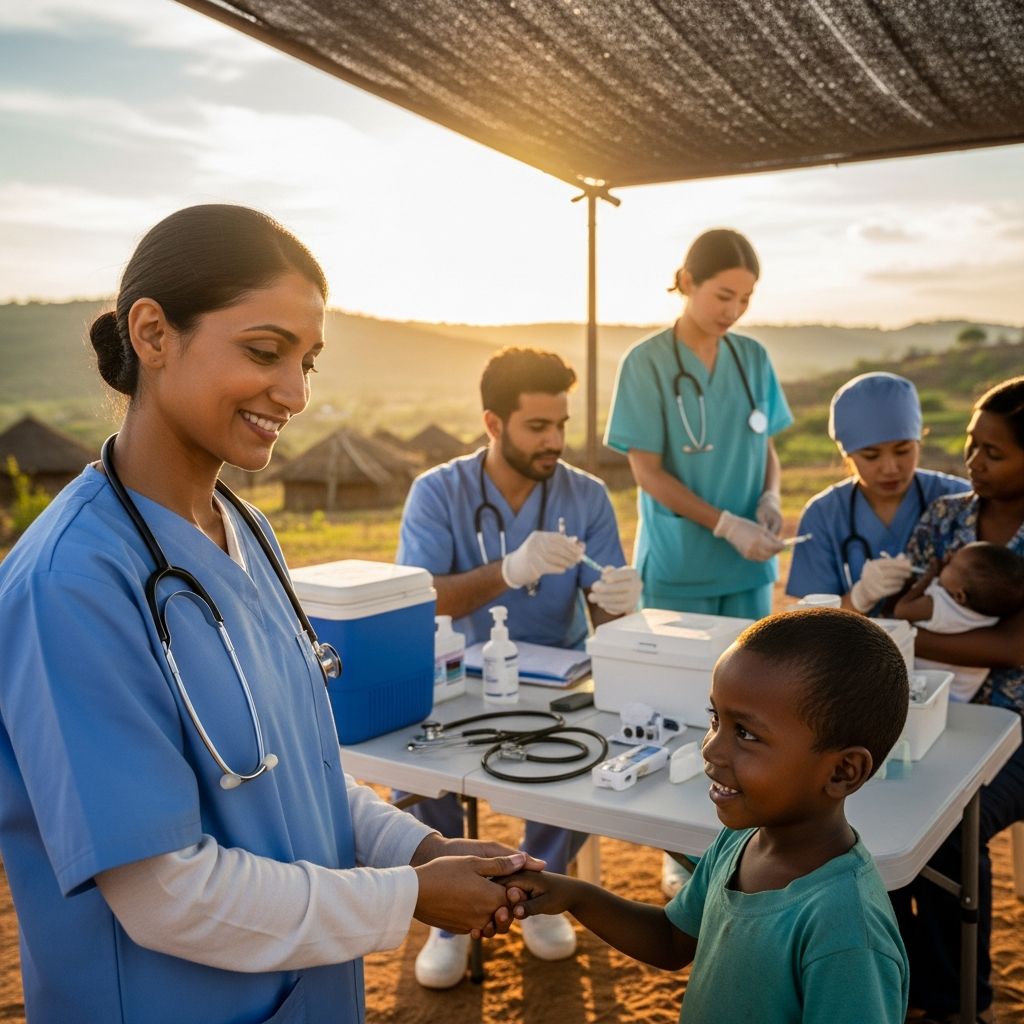
In many low-income countries, a child’s chances of surviving to their fifth birthday or a mother’s chances of surviving childbirth are still dramatically worse than in rich countries, even when the medical solutions are cheap and well-known. This gap in avoidable suffering is one of the clearest opportunities to make a large, measurable difference with your time, skills, and money.
This article explains why health in poor countries is so unequal, which problems matter most, and how you can contribute effectively through your career, advocacy, or donations.
1. The Scale of the Health Gap Between Rich and Poor Countries
Global statistics reveal just how stark the divide is between people born in rich and poor settings. Where you are born still shapes how long you live and how healthy those years will be.
1.1 Lifespan and Early Deaths
- Children born in poorer countries are about 13 times more likely to die before age 5 than those born in wealthier countries.
- Average life expectancy in the countries with the lowest figures is about 33 years shorter than in the countries with the highest life expectancy.
- In many low-income countries, average life expectancy remains around 60, compared with around 80 in high-income nations.
These are not just statistics; they represent millions of preventable deaths from causes such as pneumonia, diarrhea, malaria, complications of childbirth, and other conditions that are now rare in rich countries.
1.2 Maternal Mortality and Women’s Health
Women in poor countries carry a particularly heavy share of this burden.
- Roughly 94% of maternal deaths occur in low- and lower-middle-income countries.
- In developing countries, maternal mortality ratios can exceed 200 deaths per 100,000 live births, compared with about 16 per 100,000 in developed regions.
- Most of these deaths are linked to causes that are treatable or preventable through basic antenatal care, skilled birth attendance, and emergency obstetric care.
Maternal death rates also show huge inequalities within countries: poorer, rural, or marginalized women are far more likely to die in childbirth than wealthier urban women.
2. Why Health Inequities in Poor Countries Persist
The disparities are not simply a matter of bad luck or genetics. They are shaped by what global health experts call the social determinants of health — the conditions in which people are born, grow, work, and age.
2.1 Poverty and Weak Health Systems
Low-income countries often face chronic underinvestment in health infrastructure and workforce, leading to systemic inequities in access to basic services.
- Too few trained health workers, especially in rural and remote areas.
- Clinics lacking essential medicines, oxygen, diagnostic tests, or basic equipment.
- High out-of-pocket costs for even simple services, deterring people from seeking care.
In some countries, the poorest households are less than half as likely to receive skilled care when ill or during childbirth compared with the richest households.
2.2 Discrimination, Gender Inequality, and Social Exclusion
Health follows a social gradient: the more disadvantaged people are in income, education, or social status, the worse their health outcomes tend to be.
- Groups facing structural discrimination (such as Indigenous peoples or certain ethnic minorities) often have shorter life expectancy than majority populations in the same country.
- Gender inequality, including child marriage and low bargaining power within households, is strongly linked to higher maternal mortality and worse health outcomes for women and girls.
- Stigma and exclusion (for example, around HIV, disability, or mental illness) can prevent people from seeking or receiving appropriate care.
2.3 Climate Change, Conflict, and Debt
New global pressures are adding stress to already fragile systems.
- Climate change is projected to push tens of millions more people into extreme poverty in the coming years, with direct effects on nutrition, disease patterns, and health system capacity.
- Extreme weather events and shifting disease vectors (such as mosquitoes) disrupt water supplies, food security, and increase the spread of infectious diseases.
- Heavy debt burdens limit how much governments in poor countries can invest in health, education, and social protection; interest payments for the 75 poorest countries have increased multiple-fold in the past decade.
3. Which Global Health Problems Offer Especially High Impact?
Because resources are limited, it is important to focus on problems where improvements save many lives or greatly reduce suffering per dollar, hour, or policy reform. Research in health economics and effective altruism highlights several broad categories.
3.1 Preventing Deaths in Early Childhood
Reducing under-five mortality is one of the most cost-effective ways to improve global health. Many leading causes of death in young children are preventable with low-cost interventions.
- Immunization against diseases such as measles, pneumococcal disease, and rotavirus.
- Vitamin and micronutrient supplementation, such as vitamin A, to reduce mortality and improve development.
- Oral rehydration therapy and zinc to treat diarrhea.
- Insecticide-treated bed nets and preventive treatments to reduce malaria infections.
Because these tools are proven and relatively cheap to deliver at scale, the number of healthy life-years gained per dollar can be very high, especially when targeted at the poorest populations.
3.2 Maternal and Newborn Health
Safeguarding pregnancy and childbirth addresses both mortality and long-term disability.
- Ensuring skilled birth attendants at delivery and access to emergency obstetric care.
- Providing high-quality antenatal visits, screening for complications, and timely referrals.
- Improving access to family planning, safe abortion where legal, and postpartum care.
Because the baseline risk is so high in many low-income settings, relatively modest health system improvements can avert large numbers of deaths among mothers and newborns.
3.3 Infectious Diseases and Emerging Health Threats
Many poor countries now face a double burden of disease: longstanding infectious threats and rapidly growing noncommunicable diseases such as heart disease, diabetes, and cancer.
- Persistent infections like malaria, tuberculosis, and HIV continue to cause illness and death, especially among the poor.
- Noncommunicable diseases are rising as populations age and lifestyles change, adding pressure to already strained health services.
- New pathogens and pandemics — as seen with COVID-19 — can hit low- and middle-income countries hardest when they lack the diagnostic tools, vaccines, and resilient systems that richer countries rely on.
Supporting research and development tailored to diseases and conditions that primarily affect low-income countries, and building local manufacturing and regulatory capacity, can significantly reduce global vulnerability.
4. Approaches That Tend to Work Best
Different strategies to improve health in poor countries vary dramatically in their effectiveness. Evidence from global health research highlights several principles that can guide individuals and institutions who want to have a large impact.
4.1 Target the Poorest and Most Marginalized First
Because health follows a social gradient, the greatest gains often come from focusing directly on the people being left furthest behind.
- Prioritize communities with the highest child and maternal mortality rates, not just national averages.
- Identify and address barriers faced by disadvantaged groups, such as distance to facilities, language, or discrimination.
- Use data disaggregated by income, gender, ethnicity, or region to monitor progress and adjust programs.
4.2 Combine Medical Interventions with Social and Economic Reforms
Health systems alone cannot fully close the gap. Policies that reduce poverty, improve education, and strengthen social protection can have powerful, long-term health benefits.
- Extending social protection (such as maternity benefits, sick leave, and income support) reduces vulnerability to health shocks.
- Investing in girls’ education and gender equality consistently improves maternal and child health.
- Reforming legal and financial barriers that limit access to affordable medicines and diagnostics helps ensure that innovation benefits the poor.
4.3 Use Data and Evidence to Guide Priorities
Health inequalities have changed over time; globally, some measures of health inequality have improved, while others have stagnated or worsened. Evidence-based approaches help focus effort where it matters most.
| Approach | Strength | Typical Limitations |
|---|---|---|
| Targeted health programs (e.g., malaria nets) | Highly cost-effective; measurable outcomes | May not fix deeper system weaknesses |
| Health system strengthening | Broad, long-term impact across diseases | Slower to show results; complex to implement |
| Social and economic policies | Address root causes of inequality | Politically challenging; benefits indirect and long-term |
5. Pathways for Making a Difference
If you care about closing these gaps, you can contribute in multiple ways: through your career, your voice, or your financial resources. Different paths suit different skills and constraints.
5.1 Career Paths with Large Potential Impact
Certain roles can be especially influential in improving health in poor countries:
- Public health and epidemiology — designing and evaluating interventions, running disease surveillance, and shaping evidence-based policy.
- Health policy and governance — working in governments or multilateral organizations to direct resources toward high-impact health programs.
- Medical and nursing roles — strengthening clinical care, training local staff, and supporting quality improvement in under-resourced settings.
- Global health research and product development — designing vaccines, diagnostics, or delivery tools suited to low-income environments.
- Data science and digital health — building information systems, predictive models, and tools that make scarce health resources go further.
5.2 Effective Philanthropy and Personal Giving
Even modest donations from people in rich countries can translate into large changes in health outcomes in poorer settings, because of differences in prices and incomes. Independent evaluators have identified several organizations that focus on cost-effective, evidence-backed health interventions, often in sub-Saharan Africa and South Asia.
When choosing where to give, look for:
- Clear evidence of effectiveness from high-quality studies.
- Transparent reporting and openness to independent evaluation.
- An explicit focus on the poorest populations and on filling major funding gaps.
5.3 Advocacy, Policy Change, and Public Engagement
System-level changes can unlock resources and attention far beyond what any individual could provide on their own.
- Advocating for increased, well-targeted global health funding through your professional networks, media, or civic channels.
- Supporting reforms that improve access to affordable medicines, strengthen health systems, or expand social protection for vulnerable groups.
- Elevating the voices and leadership of people from affected communities in policy discussions.
6. Weighing Global Health Against Other Cause Areas
Some people interested in doing good compare global health with other priorities such as climate change, global poverty, or reducing catastrophic risks. Each area addresses different kinds of harms and timescales.
- Global health and development typically offer highly measurable, near-term improvements in lives saved and suffering reduced.
- Climate action and long-term risk reduction may affect many more people over centuries but with higher uncertainty.
- Health investments can also support long-term progress by improving education, productivity, and political stability through a healthier population.
Frequently Asked Questions (FAQs)
Q1: Isn’t global health mostly a problem of money — can’t richer countries just fund it?
Funding is essential, but it is not sufficient on its own. Health inequities are driven by structural factors like discrimination, weak governance, debt burdens, and climate risks. Additional resources must be paired with better policies, accountability, and local leadership to ensure that money actually reaches the communities most in need.
Q2: Is it still important to combat infectious diseases when noncommunicable diseases are rising?
Yes. Many low-income countries now face both infectious and noncommunicable diseases at once. Neglecting either category leaves large avoidable burdens of death and disability. The most effective strategies often strengthen core health system functions so that they can handle malaria, tuberculosis, heart disease, and diabetes together.
Q3: How can someone without a medical background work on health in poor countries?
Many impactful roles do not require medical training. Skills in data analysis, policy, economics, management, software engineering, logistics, or communications are all valuable for organizations that design, fund, and deliver health programs. You can also contribute through targeted donations and by advocating for evidence-based global health policies.
Q4: Do improvements in health make countries dependent on aid?
Evidence suggests the opposite: healthier populations are more able to learn, work, and participate in society, which can strengthen economic growth and institutions over time. Well-designed programs also invest in local capacity, leadership, and systems rather than creating parallel structures.
Q5: How can I learn more before committing my career to this area?
You can start by reading introductory materials on global health, development economics, and health equity from leading organizations such as the World Health Organization, major global health journals, and reputable research institutes. Speaking with practitioners, volunteering, or pursuing short courses in global health or public policy can also clarify whether this path fits your strengths and values.
References
- Health inequities are shortening lives by decades — World Health Organization. 2025-05-06. https://www.who.int/news/item/06-05-2025-health-inequities-are-shortening-lives-by-decades
- 5 steps towards health equity in low- and middle-income countries — World Economic Forum. 2024-05-17. https://www.weforum.org/stories/2024/05/health-equity-low-middle-income-countries/
- Global Public Health: The importance of tackling inequality — United Nations Committee for Development Policy. 2009-03-23. https://www.un.org/en/development/desa/policy/cdp/cdp_statements/cdp_plen09_gph.pdf
- Global Health Inequalities: More Challenges, Some Solutions — Kawachi I., et al., Global Health Action (via PMC). 2023-11-09. https://pmc.ncbi.nlm.nih.gov/articles/PMC10835631/
- Understanding Global Health Inequality and Inequity: Causes and Solutions — Brolan C.E., et al., International Journal of Health Policy and Management (via PMC). 2024-02-01. https://pmc.ncbi.nlm.nih.gov/articles/PMC12553980/
- A Global Analysis of Within-Country Health Inequalities — JAMA Health Forum. 2023-06-09. https://jamanetwork.com/journals/jama-health-forum/fullarticle/2840027
- Global Health Unequal Distribution: The Need for Active Moral Imagination — Saint Joseph’s University Institute of Clinical Bioethics. 2014-03-28. https://www.sju.edu/centers/icb/blog/global-health-unequal-distribution-the-need-for-active-moral-imagination-part-1

Medha Deb is an editor with a master's degree in Applied Linguistics from the University of Hyderabad. She believes that her qualification has helped her develop a deep understanding of language and its application in various contexts. Medha specializes in the areas of beauty, health, sports, and wellness and is committed to ensuring that the content on the website is…