
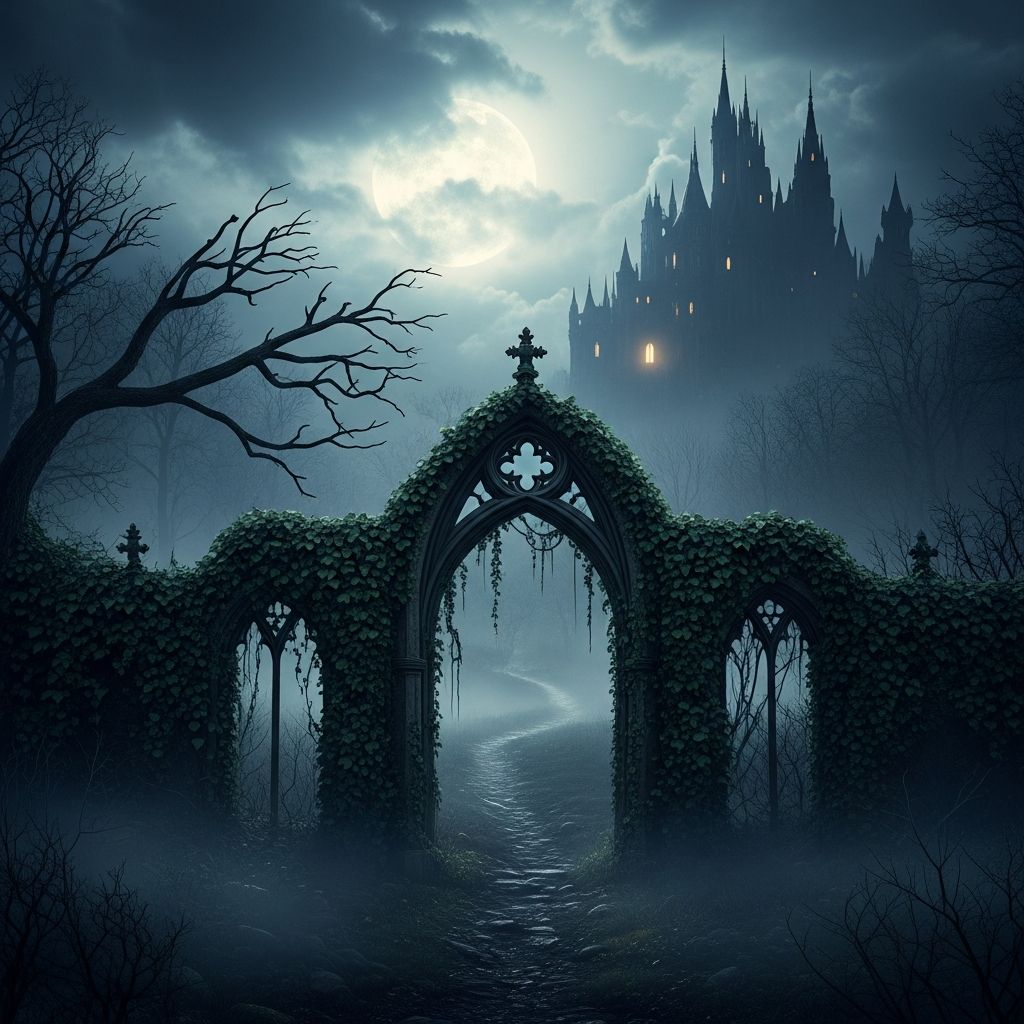
Gothic literature emerged as a captivating genre in the late 18th century, blending elements of horror, romance, and the supernatural to evoke deep emotional responses. Characterized by ominous atmospheres, decayed grandeur, and explorations of the human psyche, it continues to influence contemporary storytelling across books, films, and media.
Birth of a Genre: Origins in the Enlightenment Era
The roots of Gothic literature trace back to 1764 with Horace Walpole’s The Castle of Otranto, widely recognized as the first Gothic novel. Published amid the Enlightenment’s emphasis on reason and science, this work rebelled by embracing irrationality, medieval barbarism, and supernatural intrusions. Walpole subtitled it “A Gothic Story,” drawing from the term ‘Gothic’ used pejoratively for medieval architecture—think towering cathedrals with intricate arches and shadowy vaults.
This novel introduced core motifs like ancient castles plagued by ghosts and curses, setting a template for future writers. It challenged the era’s rationalism by delving into forbidden desires, psychological turmoil, and the fragility of human constructs against otherworldly forces.
Core Elements That Define the Gothic
Gothic fiction thrives on specific hallmarks that create an immersive sense of dread and wonder. These elements intertwine to heighten tension and mirror inner conflicts.
- Haunting Settings: Decrepit castles, remote abbeys, foggy moors, and labyrinthine mansions symbolize the past’s inescapable grip. These locations often feature secret passages, trapdoors, and crumbling ruins, amplifying isolation and vulnerability.
- Supernatural Phenomena: Ghosts, vampires, curses, and omens blur reality and nightmare, representing repressed fears or societal taboos.
- Psychological Depth: Protagonists grapple with madness, guilt, and duality—beautiful innocence contrasted with grotesque villainy. Themes of live burials, doppelgangers, and family secrets explore the subconscious.
- Emotional Extremes: Romance intertwined with terror; love stories shattered by betrayal, revenge, or the uncanny. This juxtaposition of pleasure and pain creates melodrama.
- Atmospheric Tension: Claustrophobic spaces, stormy nights, and unnatural silences build unrelenting suspense.
These tropes often serve as metaphors for broader issues like class oppression, gender constraints, or colonial anxieties.
Key Figures and Masterpieces of the Golden Age
The late 18th and 19th centuries marked Gothic literature’s peak, with authors refining its conventions into sophisticated narratives.
| Author | Key Work | Signature Elements |
|---|---|---|
| Horace Walpole | The Castle of Otranto (1764) | Giant helmets falling from the sky, prophetic portraits, tyrannical lords. |
| Ann Radcliffe | The Mysteries of Udolpho (1794) | Veiled terrors, sublime landscapes, rational explanations for the supernatural. |
| Matthew Gregory Lewis | The Monk (1796) | Incest, demonic pacts, graphic violence. |
| Mary Shelley | Frankenstein (1818) | Hubris of science, monstrous creation, isolation. |
| Bram Stoker | Dracula (1897) | Vampiric seduction, foreign invasion fears, epistolary format. |
Radcliffe’s “explained supernatural” tempered horror with reason, while Lewis embraced unbridled excess. Shelley’s novel elevated the genre philosophically, questioning creation and monstrosity. Stoker’s epistolary Dracula fused Victorian anxieties about sexuality and empire.
Regional Variations: Southern Gothic and Beyond
Gothic evolved distinctly in different locales. In the American South, post-Civil War decay birthed Southern Gothic, swapping European castles for dilapidated plantations overgrown with Spanish moss.
- Flawed anti-heroes burdened by sin, poverty, and grotesquerie.
- Influenced by Edgar Allan Poe, with works by William Faulkner (Absalom, Absalom!) and Flannery O’Connor (Wise Blood).
- Explores racism, religious fanaticism, and moral decay in humid, Bible Belt settings.
Other branches include Urban Gothic (modern cities as nightmarish labyrinths) and Eco-Gothic (nature as vengeful force).
Themes and Symbolism: Probing the Human Soul
Beneath the surface thrills, Gothic literature dissects profound themes:
- The Past Intruding on the Present: Ancestral curses and hidden lineages underscore history’s inescapability.
- Gender and Power: Persecuted heroines navigate patriarchal tyranny, embodying emerging feminist critiques.
- Science vs. Superstition: From Frankenstein to modern eco-horrors, it warns of overreaching ambition.
- The Grotesque and Sublime: Beauty in decay reflects life’s dualities—love amid horror.
Nonlinear narratives, like framed tales or discovered diaries, mimic fragmented psyches and unreliable memory.
Gothic’s Enduring Legacy in Modern Culture
Though its heyday waned by the 19th century’s end—parodied in Jane Austen’s Northanger Abbey—Gothic permeates today. Stephen King’s horror, Tim Burton’s films (Edward Scissorhands), and series like The Addams Family echo its tropes. Contemporary authors like Silvia Moreno-Garcia (Mexican Gothic) revive it with diverse voices.
In video games (Resident Evil) and TV (Pennsylvania), Gothic atmospheres persist, proving its adaptability.
Frequently Asked Questions About Gothic Literature
What distinguishes Gothic from horror?
Gothic emphasizes romance, psychological complexity, and atmospheric settings over pure scares, blending beauty with terror.
Is Dracula a Gothic novel?
Yes, its castle setting, vampire supernaturalism, and themes of desire and decay firmly place it in the genre.
How has Gothic influenced other genres?
It birthed horror, inspired fantasy (e.g., Tolkien’s shadows), and shaped mystery thrillers with its suspense techniques.
Why are castles central to Gothic stories?
They symbolize feudal oppression, hidden secrets, and the sublime—vast, awe-inspiring yet terrifying spaces.
Can Gothic be non-European?
Absolutely; Southern Gothic, Asian Gothic, and postcolonial variants adapt tropes to local histories and fears.
Why Gothic Literature Still Captivates
In an age of digital distractions, Gothic offers catharsis through its embrace of darkness. It reminds us that fear, when confronted, reveals truths about desire, mortality, and the unknown. As society grapples with AI anxieties and climate dread, Gothic’s metaphors feel prescient.
From Walpole’s blueprint to today’s hybrids, the genre endures by tapping universal shadows. Aspiring writers can draw from its toolkit: build dread slowly, contrast light and dark, and let settings breathe like characters.
References
- Gothic fiction – Wikipedia — Wikipedia contributors. 2023-10-15. https://en.wikipedia.org/wiki/Gothic_fiction
- Gothic Literature in Special Collections — University of Maryland Libraries. 2023. https://lib.guides.umd.edu/gothicliterature
- Gothic Literature | Definition, Elements, and Examples — YouTube (Transcript). N/A. https://www.youtube.com/watch?v=tnfR29G0YYg
- Gothic novel — Encyclopædia Britannica. 2024-01-20. https://www.britannica.com/art/Gothic-novel
- What Is Gothic Fiction? — Annie Neugebauer. 2013-11-18. https://annieneugebauer.com/2013/11/18/what-is-gothic-fiction/
- The Gothic (Sort Of) Explained — Lawrence Public Library. N/A. https://lplks.org/blogs/post/a-gothic-history-and-revival/
- A Brief History of Gothic Horror — New York Public Library. 2018-10-18. https://www.nypl.org/blog/2018/10/18/brief-history-gothic-horror

- Integrated M.A. in Applied Linguistics, University of Hyderabad
- 5+ years in editorial, instructional, SEO, and research-based writing
Sneha is a relationships and lifestyle writer with a strong foundation in applied linguistics and certified training in relationship coaching. She brings over five years of writing experience to theskillvault, crafting thoughtful, research-driven content that empowers readers to build healthier relationships, boost emotional well-being, and embrace holistic living. Her writing and insights reflect the belief that beauty, happiness, and wellness…