
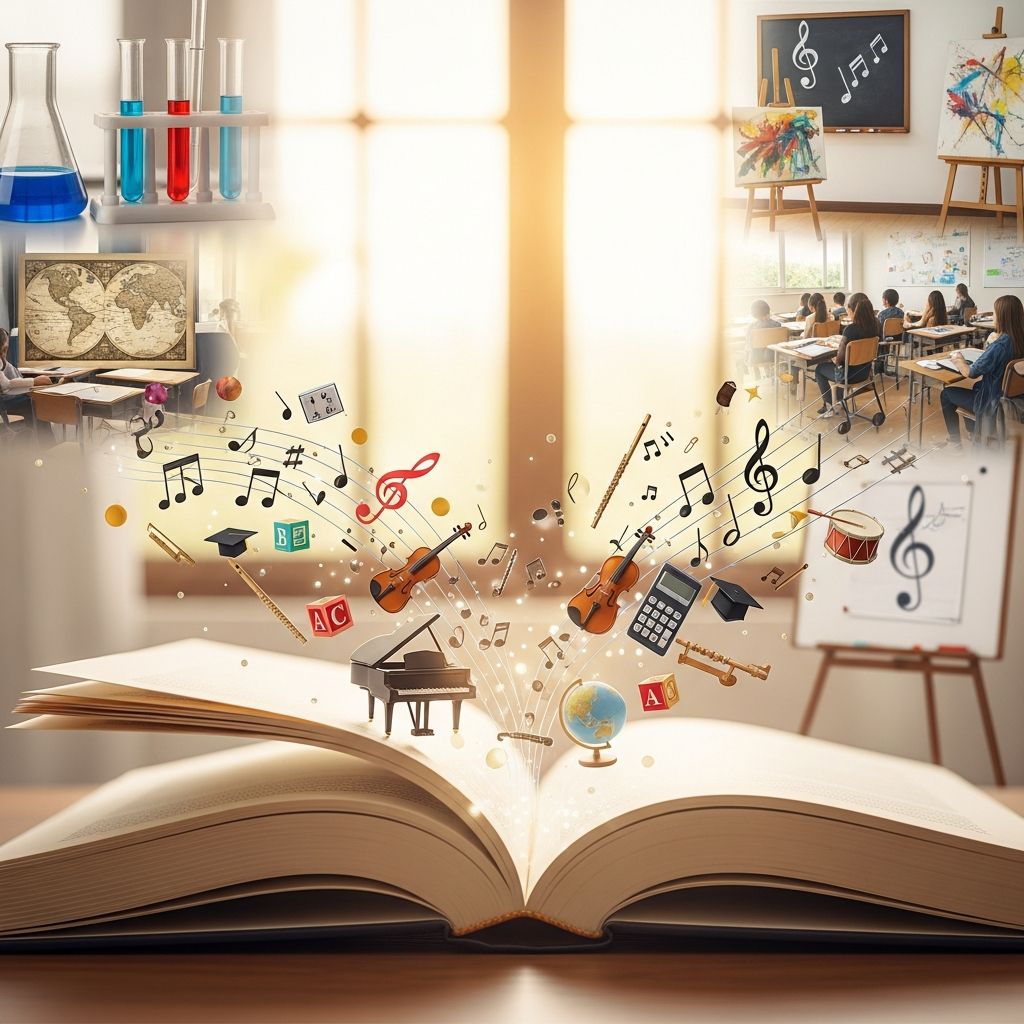
Music serves as a powerful catalyst in education, transforming routine lessons into vibrant experiences that captivate students’ attention and deepen understanding. By embedding melodies, rhythms, and lyrics into daily instruction, educators can foster cognitive growth, emotional resilience, and collaborative skills essential for modern learning.
The Science Behind Music’s Educational Magic
Research highlights music’s profound impact on brain function. It activates multiple neural pathways, enhancing memory formation through repetition and rhythm. For instance, rhythmic patterns mimic natural speech cadences, making abstract concepts like fractions or vocabulary more intuitive. Studies show that students exposed to musical elements during lessons exhibit improved recall rates, particularly in STEM subjects where sequential learning is key.
Emotionally, music regulates mood and reduces anxiety. Instrumental tracks during transitions lower cortisol levels, preparing students for focused work. This multisensory approach engages auditory, visual, and kinesthetic learners, promoting inclusivity for diverse classrooms, including those with ADHD, where music aids concentration.
- Memory Boost: Songs encode information via melody, outperforming rote memorization.
- Emotional Regulation: Calming tunes ease test anxiety and build community.
- Cognitive Flexibility: Improvising lyrics sparks creativity and problem-solving.
Building Routines with Rhythmic Signals
Establishing classroom routines through music creates predictability, minimizing disruptions. Select short, upbeat chants or familiar tunes to signal shifts, such as cleanup or group work. Over time, these auditory cues prompt automatic responses, freeing teachers to focus on instruction.
For example, adapt nursery rhymes into transition songs: “Line up neat, on your feet, shoulders back, that’s a treat!” Practice collectively until mastery, then deploy as needed. This method not only streamlines management but reinforces social norms like patience and order.
| Routine Type | Suggested Music Style | Benefit |
|---|---|---|
| Entry/Exit | Upbeat pop instrumental | Sets positive tone |
| Transitions | Rhythmic chant | Quick compliance |
| Brain Breaks | Energetic dance track | Re-energizes focus |
| Test Prep | Soft classical | Calms nerves |
Infusing Core Subjects with Melodic Lessons
Math Through Beats and Measures
Rhythms naturally align with mathematical concepts. Use drum patterns to represent addition: clap four beats for 2+2. Note durations teach fractions—quarter notes as 1/4, half notes as 1/2—while students tap along. This kinesthetic method solidifies number sense.
Challenge groups to compose beats matching equations, performing for peers. Such activities make algebra approachable, turning symbols into sounds.
History Alive with Era-Specific Sounds
Transport students to past eras via period-appropriate tracks. Pair Jazz Age tunes with 1920s literature or protest songs with civil rights units. Analyze lyrics for cultural context, debating how music shaped events.
Assign playlist curation: students select five tracks reflecting a decade, justifying choices with historical evidence. This builds research skills and empathy.
Language Arts via Lyric Dissection
Songs mirror poetry’s structure. Examine rhyme schemes in rap for meter, metaphors in ballads for imagery. Compare artist intent with listener interpretation to explore tone and theme.
Writing prompts: rewrite fairy tales as verses or craft original stanzas using class vocabulary. Performances celebrate voice and build confidence.
Science Harmonized with Sound Waves
Explore acoustics through simple experiments—instruments demonstrate vibration and pitch. Songs about ecosystems reinforce biology, with choruses listing food chains.
Instrument-building projects tie physics to creativity: straw flutes reveal frequency principles.
Motivating Minds with Interactive Music Moments
Incorporate song breaks post-task to reward effort. Class votes on tracks, or individuals share cultural favorites, fostering belonging. Theme songs for units—like ocean anthems for marine biology—unify groups.
Co-create class anthems summarizing rules or goals. Record and playback during reflections, reinforcing values musically.
Encouraging Student-Led Musical Creations
Empower students as composers. Scaffold by co-writing to known melodies, inserting content terms. Advance to original lyrics over instrumentals, culminating in showcases.
Benefits include ownership and retention; former students recall songs years later. Tools like free beat-makers lower barriers, accommodating all skill levels.
- Beginner: Fill-in-blanks to pop hits.
- Intermediate: Adapt folk tunes for history facts.
- Advanced: Produce full tracks with apps.
Addressing Challenges and Best Practices
Start small to gauge responses. Curate age-appropriate, diverse playlists avoiding distractions. Address sensitivities by previewing lyrics and offering alternatives.
Leverage free resources: public domain classics, educational platforms. Track impact via pre/post quizzes on musical vs. traditional lessons.
For inclusivity, include global genres and native-language options for multilingual learners.
Frequently Asked Questions
What age groups benefit most from music integration?
All K-12 levels thrive, with elementary gaining routines and highs schoolers appreciating analytical depth.
Do I need musical talent to use these strategies?
No—focus on selection and facilitation; enthusiasm trumps expertise.
How does music help students with special needs?
It enhances focus for ADHD, aids language acquisition for ELLs, and supports emotional regulation universally.
Can music fit tight schedules?
Yes—short 2-5 minute segments yield big gains without overhauling plans.
What if students dislike certain genres?
Rotate options and involve them in choices for buy-in.
Real-World Impact: Teacher Testimonials
Educators report lasting effects. One principal notes alumni requesting old math-rap recordings, evidencing retention. English teachers observe deeper poetry insights via lyrics. Music breaks correlate with higher on-task behavior.
Implement gradually: one strategy weekly, scaling with feedback. Soon, classrooms pulse with energy and achievement.
References
- 6 Smart Ways to Bring the Power of Music Into Your Classroom — Edutopia. 2023. https://www.edutopia.org/article/6-smart-ways-bring-power-music-your-classroom/
- Incorporating Music Into the General Education Classroom — TeachBeyond. 2023. https://teachbeyond.org/article/incorporating-music-into-the-general-education-classroom
- The Incredible Benefits Of Incorporating Music In Your Classroom — Everway. 2023. https://www.everway.com/blog/the-incredible-benefits-of-incorporating-music-in-yourclassroom/
- Effective Integration of Music in the Elementary School Classroom — ERIC (U.S. Department of Education). 2018-01-01. https://files.eric.ed.gov/fulltext/EJ1171782.pdf
- 8 Engaging Ways to Incorporate Music in Your Classroom — Flocabulary Blog. 2023. https://blog.flocabulary.com/8-engaging-ways-to-incorporate-music-in-your-classroom/

Medha Deb is an editor with a master's degree in Applied Linguistics from the University of Hyderabad. She believes that her qualification has helped her develop a deep understanding of language and its application in various contexts. Medha specializes in the areas of beauty, health, sports, and wellness and is committed to ensuring that the content on the website is…