
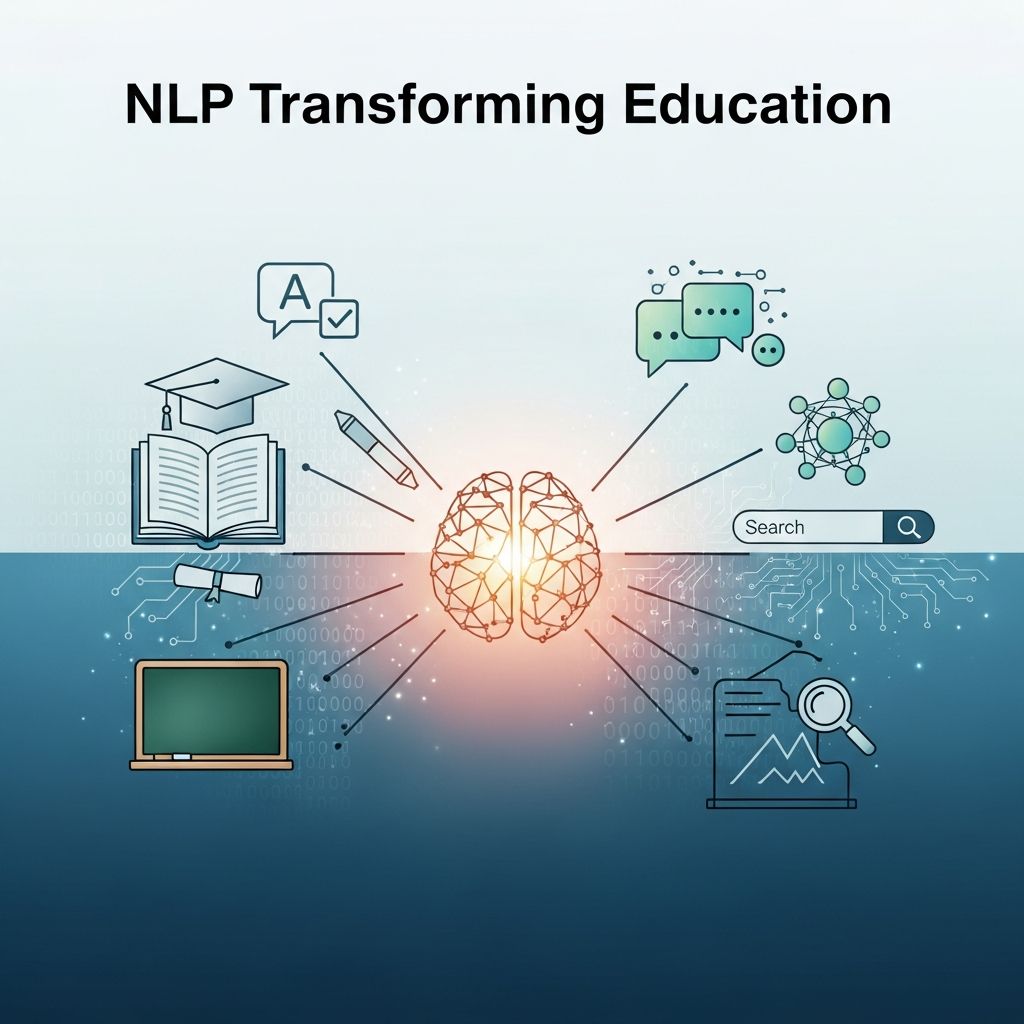
Natural Language Processing (NLP), a branch of artificial intelligence focused on enabling computers to understand and generate human language, is fundamentally altering the educational landscape. By analyzing text, speech, and sentiment, NLP tools provide personalized support, automate tedious tasks, and foster inclusive learning environments. This article delves into key applications, real-world examples, and future possibilities of NLP in classrooms and beyond.
Understanding the Foundations of NLP in Learning Environments
At its core, NLP combines machine learning, linguistics, and computational algorithms to process vast amounts of textual and spoken data. In education, this translates to tools that can summarize complex texts, detect plagiarism, or even gauge student engagement through sentiment analysis. Unlike traditional software, NLP systems adapt to nuanced language patterns, making them ideal for diverse educational needs.
For instance, speech recognition converts lectures into searchable text, aiding students with note-taking challenges. Similarly, natural language understanding allows chatbots to respond to queries in real-time, extending teacher availability 24/7. These capabilities stem from advanced models trained on massive datasets, enabling precise interpretation of context, idioms, and even cultural nuances.
Personalized Learning Paths Powered by Intelligent Algorithms
One of the most transformative uses of NLP is in crafting individualized learning experiences. Adaptive platforms use NLP to assess a student’s comprehension in real-time, adjusting content difficulty accordingly. This ensures learners neither feel overwhelmed nor bored, optimizing retention and motivation.
- Dynamic Content Adjustment: NLP analyzes reading levels, vocabulary usage, and comprehension quizzes to recommend materials at the perfect challenge level.
- Feedback Loops: Immediate, actionable insights on writing or problem-solving help students iterate quickly.
- Inclusive Pacing: Supports diverse learners, including those with learning differences, by simplifying explanations or providing multilingual options.
Research shows these systems outperform static curricula, with studies indicating up to 30% improvement in skill acquisition for personalized cohorts.
Revolutionizing Assessment and Feedback Mechanisms
Automated grading has long been a goal in education, and NLP makes it viable beyond multiple-choice tests. Tools now evaluate essays for structure, coherence, grammar, and originality, providing holistic scores faster than human graders.
| Traditional Grading | NLP-Powered Grading |
|---|---|
| Time-intensive (hours per paper) | Instant results |
| Subjective bias | Consistent, data-driven metrics |
| Limited feedback | Detailed suggestions on style, content, and errors |
Beyond essays, NLP excels in oral assessments, using speech-to-text and pronunciation analysis to score fluency and accuracy. This is particularly beneficial for large classes or online courses where manual review is impractical.
Breaking Down Language Barriers for Global Learners
NLP’s machine translation and language practice tools democratize access to education. Real-time translation of lectures, textbooks, and assignments allows non-native speakers to engage fully without proficiency hurdles.
- Pronunciation Coaching: Apps provide instant feedback on accents and intonation, simulating native speaker interactions.
- Grammar and Syntax Correction: Identifies errors in context, offering explanations rather than rote fixes.
- Multilingual Content Generation: Automatically creates quizzes or summaries in the learner’s preferred language.
For English Language Learners (ELLs), these features track progress over time, benchmarking against native speakers and highlighting growth areas.
Enhancing Teacher Efficiency Through Administrative Automation
Educators spend significant time on non-teaching tasks like scheduling, report writing, and student monitoring. NLP automates these, freeing professionals for mentorship and creativity.
Chatbots handle routine inquiries, while sentiment analysis scans discussion forums to flag disengaged students or collaboration issues. Readability tools ensure assigned texts match class levels, using metrics like syntactic complexity and vocabulary density.
Promoting Inclusivity and Support for Special Needs
NLP shines in accommodating diverse learning styles. For students with dyslexia or reading difficulties, text-to-speech with comprehension checks provides auditory reinforcement. Sentiment analysis in journals detects emotional states, enabling early interventions.
In special education, NLP customizes interfaces—simplifying language for neurodiverse learners or generating visual aids from textual descriptions.
Real-World Success Stories and Implementations
Numerous platforms demonstrate NLP’s efficacy. Duolingo leverages it for adaptive language lessons, boosting retention through personalized streaks and feedback. Turnitin uses advanced NLP for plagiarism detection and essay scoring, trusted by millions of educators worldwide.
In higher education, virtual assistants manage enrollment queries, while MOOC platforms analyze forum discussions to enhance community building. Stanford researchers are pioneering teacher-focused NLP tools that analyze lesson plans for clarity and engagement.
Challenges and Ethical Considerations in NLP Adoption
Despite benefits, hurdles remain. Algorithmic bias can disadvantage certain dialects or cultures, necessitating diverse training data. Privacy concerns arise from analyzing student writing, requiring robust data protection.
Over-reliance on automation risks diminishing human interaction, so hybrid models—NLP augmented by teacher oversight—are ideal. Ongoing research addresses these, with frameworks for transparent AI ensuring fairness.
The Promising Horizon: NLP’s Future in Education
Looking ahead, advancements in large language models promise even more sophisticated tools, like virtual tutors that simulate Socratic dialogues or predictive analytics for dropout prevention. Integration with VR/AR could create immersive language immersion environments.
By 2026, expect widespread adoption in K-12 and universities, driven by falling costs and rising AI literacy. Policymakers must invest in teacher training to maximize impact.
Frequently Asked Questions (FAQs)
What is Natural Language Processing in simple terms?
NLP is AI technology that helps computers read, understand, and respond to human language like text or speech, making interactions more natural.
How does NLP improve personalized learning?
It analyzes student performance in real-time to tailor content, pacing, and feedback, ensuring optimal challenge and engagement.
Can NLP tools replace teachers?
No, they augment teachers by handling routine tasks, allowing more focus on mentorship and creative instruction.
Is NLP effective for language learning?
Yes, through translation, pronunciation feedback, and adaptive practice, it accelerates fluency for ELLs and beyond.
What are the privacy risks of NLP in schools?
Student data analysis requires strong safeguards; ethical implementations anonymize data and obtain consent.
References
- 7 Applications of NLP in the Education Sector — Analytics Steps. 2023-05-15. https://www.analyticssteps.com/blogs/7-applications-nlp-education-sector
- 6 Insane Applications Of NLP In Education For Growth In 2025 — Tezeract AI. 2024-11-20. https://tezeract.ai/applications-of-nlp-in-education/
- Natural Language Processing and its Use in Education — The Science and Information Organization (IJACSA). 2014-12-01. https://thesai.org/Downloads/Volume5No12/Paper_10-Natural_Language_Processing.pdf
- Designing Natural Language Processing Tools for Teachers — Stanford HAI. 2023-08-10. https://hai.stanford.edu/news/designing-natural-language-processing-tools-teachers
- The Role Of Natural Language Processing In eLearning — eLearning Industry. 2024-03-12. https://elearningindustry.com/the-role-of-natural-language-processing-in-elearning

- Integrated M.A. in Applied Linguistics, University of Hyderabad
- 5+ years in editorial, instructional, SEO, and research-based writing
Sneha is a relationships and lifestyle writer with a strong foundation in applied linguistics and certified training in relationship coaching. She brings over five years of writing experience to theskillvault, crafting thoughtful, research-driven content that empowers readers to build healthier relationships, boost emotional well-being, and embrace holistic living. Her writing and insights reflect the belief that beauty, happiness, and wellness…