
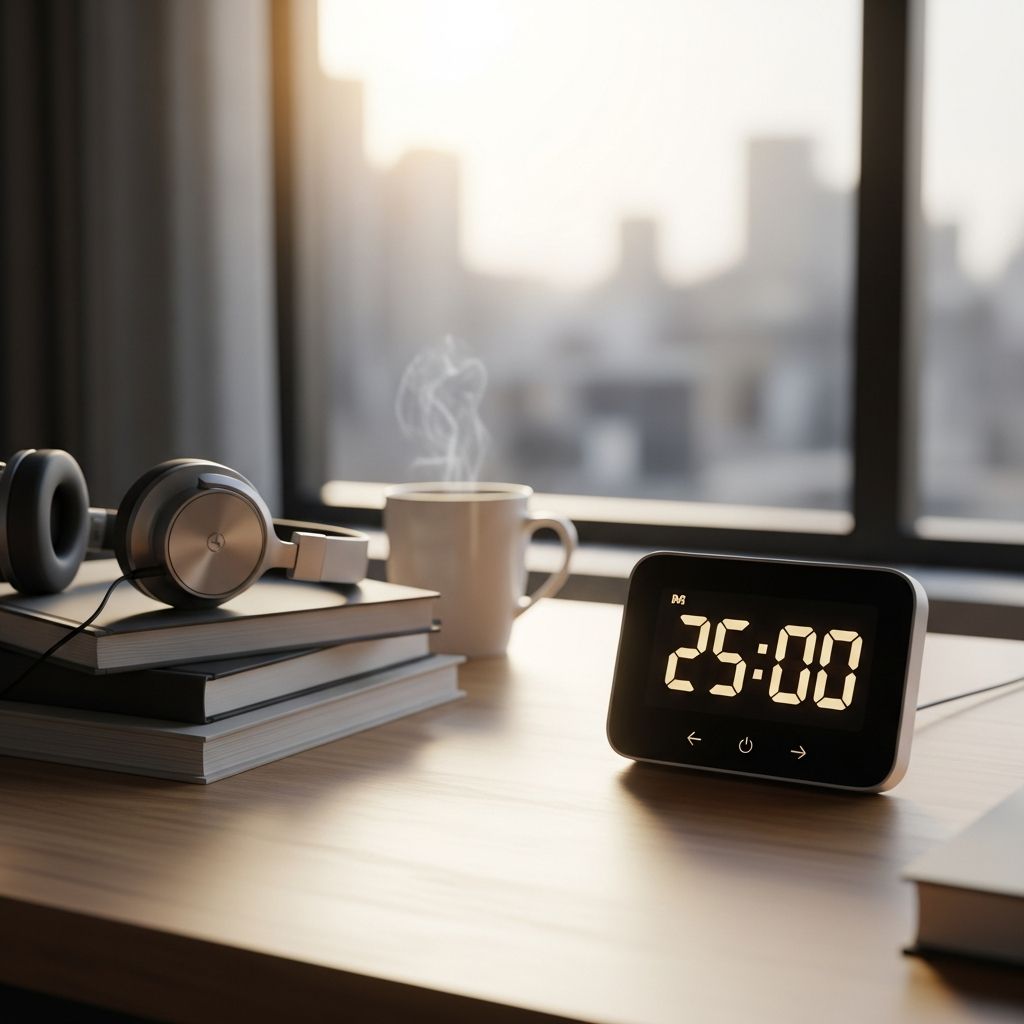
Timers serve as powerful allies in the quest for higher productivity, turning abstract time into tangible, manageable segments that propel tasks forward. By committing to short, focused bursts of work punctuated by brief rests, individuals can harness their brain’s natural rhythms to accomplish more without exhaustion.
Understanding the Core Principles of Timer-Based Work
The foundation of timer-driven productivity lies in recognizing how our minds thrive on structure amid chaos. Traditional work approaches often lead to endless sessions marred by distractions, resulting in diminished returns. Introducing a timer reframes this dynamic, creating urgency and boundaries that sharpen mental engagement.
At its heart, this method divides labor into discrete intervals, typically around 25 minutes, followed by restorative pauses. This cycle aligns with cognitive science principles, where sustained attention peaks briefly before waning. By design, it counters the brain’s drift toward diversion, fostering deeper immersion in single pursuits.
Psychological underpinnings reveal why timers excel: they exploit time perception biases. A visible countdown instills accountability, making idleness feel costly. This mechanism disrupts procrastination patterns, as the finite window lowers the barrier to starting even dreaded assignments.
Why Timers Revolutionize Task Completion
Implementing timed sessions yields multifaceted advantages. Foremost, they cultivate laser-like concentration by eliminating multitasking temptations. With a ticking clock, the mind resists stray thoughts, channeling energy into one objective.
- Heightened Concentration: Fixed durations train the brain to ignore interruptions, building resilience against digital lures.
- Urgency Boost: The impending buzzer accelerates pace, compressing efforts without sacrificing quality.
- Procrastination Buster: Short commitments make overwhelming projects approachable, sparking momentum.
Moreover, regular intervals prevent cognitive overload. Frequent respites allow neural recovery, sustaining performance across extended periods. Studies affirm that such rhythms enhance output while curbing fatigue.
Essential Techniques for Timer Success
Several established protocols guide timer usage, each tailored to varying needs. The most renowned involves 25-minute work phases succeeded by 5-minute interludes, repeating four times before a lengthier recess.
| Technique | Work Interval | Break Length | Best For |
|---|---|---|---|
| Standard Cycle | 25 minutes | 5 minutes | General tasks, writing, analysis |
| Extended Focus | 50 minutes | 10 minutes | Deep creative work, coding |
| Quick Wins | 15 minutes | 2 minutes | Administrative chores, emails |
Customization proves key; experiment to match personal ultradian rhythms—natural 90-120 minute productivity waves. Track sessions to refine durations, ensuring alignment with peak energy windows.
Selecting the Right Tools for Your Workflow
Choosing between physical devices and digital aids impacts effectiveness profoundly. Physical timers, like kitchen models, minimize distractions by demanding no screen interaction. Their tangible tick fosters presence, sidestepping notification pitfalls.
Digital options abound for versatility:
- Simple phone apps with customizable alarms.
- Desktop widgets displaying visual countdowns.
- Integrated platforms tracking Pomodoros alongside task logs.
Avoid phone reliance if prone to diversions; opt for standalone gadgets. Advanced software offers analytics, revealing time sinks and progress trends via charts.
Integrating Breaks to Sustain Momentum
Breaks constitute the technique’s linchpin, replenishing focus reserves. Short pauses—standing, hydrating, stretching—detach from screens, mitigating eye strain and posture woes. After four cycles, extend to 15-30 minutes for meals or walks, recalibrating fully.
Non-taxing activities rule: no emails or social media, preserving mental reset. This regimen combats burnout, as evidenced by sustained vigor reports from adherents.
Overcoming Common Hurdles in Timer Adoption
Initial resistance arises from unfamiliarity, yet persistence unlocks benefits. Interruptions challenge purity; employ signage or Do Not Disturb modes. If a cycle disrupts midway, note the diversion and recommence, preserving flow.
Perfectionists may undervalue partial sessions; celebrate completions regardless. Gradually scale from one daily cycle to full integration, building habit strength.
Advanced Applications Across Disciplines
Beyond desks, timers adapt to myriad scenarios. Students leverage them for study marathons, chunking material into digestible units. Creatives time ideation bursts, preventing blocks. Even household chores benefit, gamifying routines.
Pair with prioritization matrices: allocate cycles to vital quadrants first. Batch akin activities—emails in one block, calls in another—for efficiency amplification.
Measuring and Refining Your Progress
Quantify impact through logging: Pomodoros per task, completion rates, daily tallies. Spreadsheets or apps visualize patterns, spotlighting peak hours or drag factors.
- Weekly reviews adjust strategies.
- Set benchmarks, like 8 cycles daily.
- Compare pre- and post-adoption outputs.
This data empowers precise forecasting, banishing underestimation pitfalls.
Real-World Transformations from Timer Mastery
Professionals report doubled outputs, slashed procrastination, and elevated satisfaction. One practitioner conquered report backlogs via timed assaults; another revitalized stalled projects. Consistency breeds these shifts, compounding over weeks.
Frequently Asked Questions
What if 25 minutes feels too short or long?
Adjust intervals to suit your rhythm—test 15, 30, or 50 minutes. The goal is sustainable focus, not rigid adherence.
Can timers help with team collaborations?
Yes, synchronize cycles for shared sprints, ensuring balanced input during meetings or pair tasks.
How do I handle unexpected interruptions?
Pause the timer, address essentials swiftly, then resume. Log distractions to minimize recurrences.
Is this suitable for creative work?
Absolutely; short bursts fuel inspiration without pressure, with breaks nurturing fresh perspectives.
What if I finish early?
Use surplus time for review or advance next steps, then take the break to maintain rhythm.
References
- The Pomodoro Technique — Todoist. Accessed 2026. https://www.todoist.com/productivity-methods/pomodoro-technique
- Pomodoro Technique — Wikipedia. Accessed 2026. https://en.wikipedia.org/wiki/Pomodoro_Technique
- 9 Proven Time Management Techniques and Tools — University of St. Augustine for Health Sciences. Accessed 2026. https://www.usa.edu/blog/time-management-techniques/
- Using a timer to get more done — MCK Coaching. Accessed 2026. https://mckcoaching.com/using-timer-increase-productivity-get-things-done/
- The Power of the Tick-Tock: Use a Timer to Trick Your Brain and Boost Focus — You Ministries. 2024-10-15. https://www.youministries.com/blog/the-power-of-the-tick-tock-use-a-timer-to-trick-your-brain-and-boost-focus

- Integrated M.A. in Applied Linguistics, University of Hyderabad
- 5+ years in editorial, instructional, SEO, and research-based writing
Sneha is a relationships and lifestyle writer with a strong foundation in applied linguistics and certified training in relationship coaching. She brings over five years of writing experience to theskillvault, crafting thoughtful, research-driven content that empowers readers to build healthier relationships, boost emotional well-being, and embrace holistic living. Her writing and insights reflect the belief that beauty, happiness, and wellness…