
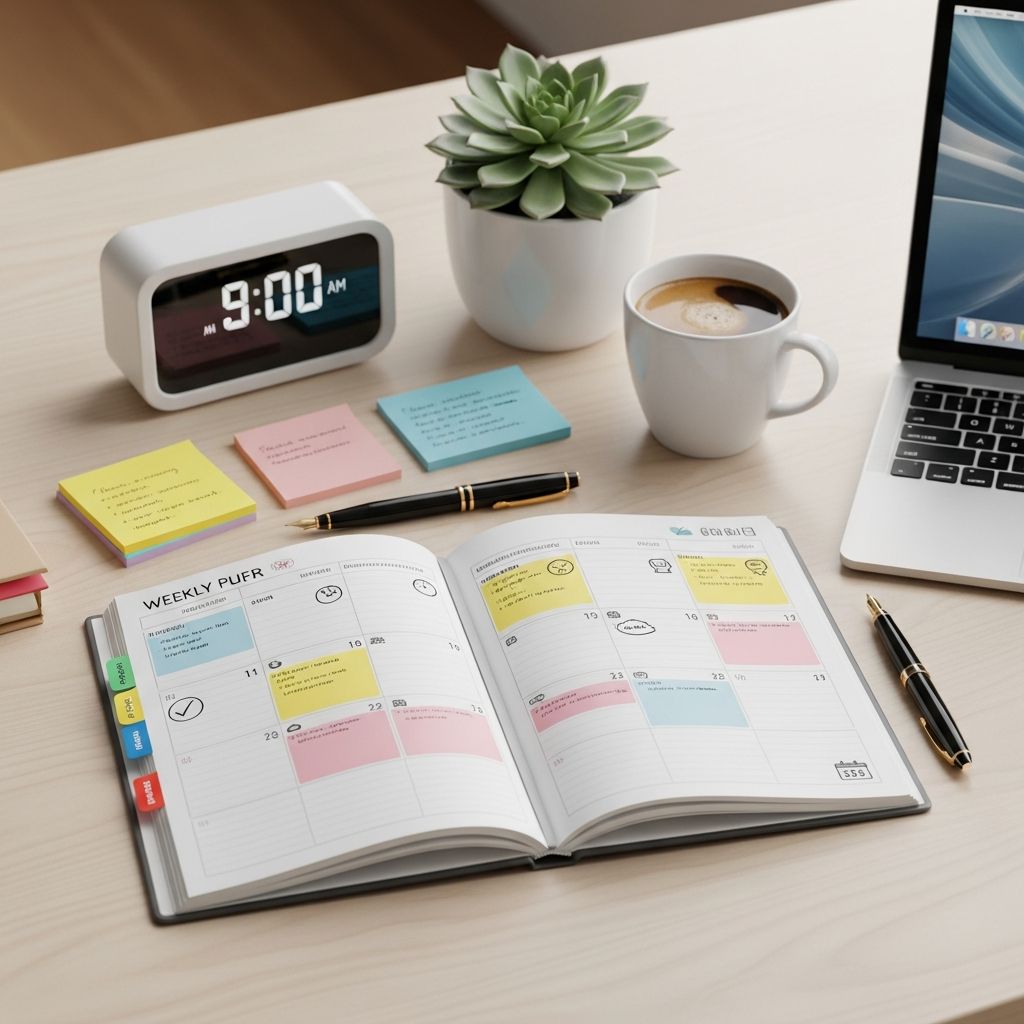
Effective time management starts with understanding how you currently spend your hours and then intentionally designing a structure that aligns with your goals. This guide provides a step-by-step approach to building a weekly schedule that maximizes productivity while ensuring room for rest and enjoyment. By tracking activities, prioritizing effectively, and using proven techniques, you can transform chaos into clarity.
Understanding Your Current Time Usage
The foundation of any solid scheduling system is awareness. Before planning ahead, conduct a thorough audit of your existing routines to reveal hidden time sinks and untapped opportunities.
Begin by logging every activity throughout a typical week. Note wake-up times, meals, work sessions, commutes, social media scrolling, and even short breaks. Use a simple notebook, app, or spreadsheet to record start and end times for precision. This exercise, often called a time journal, uncovers patterns like excessive screen time or fragmented focus periods.
After seven days, categorize your entries: fixed commitments (classes, jobs), flexible tasks (studying, errands), and leisure. Calculate total hours per category. For instance, if social media consumes 14 hours weekly, that’s two full workdays lost. This data baseline highlights imbalances and informs realistic adjustments.
Building the Framework: Fixed Activities First
Once audited, construct your schedule starting with non-negotiable elements. These anchors provide stability around which everything else fits.
- Sleep and Meals: Allocate 7-9 hours nightly for rest and three balanced meals plus snacks daily to sustain energy.
- Work or Classes: Block exact times for meetings, lectures, or shifts, including travel.
- Self-Care: Reserve slots for exercise (30-60 minutes, 4-5 days), hygiene, and short meditations.
- Admin Time: Dedicate 15-30 minutes weekly for reviewing and updating your schedule.
Visualize this in a weekly grid from Sunday to Saturday, divided into 30-minute or hourly increments. Tools like Google Calendar or printable templates work well. Fixed blocks prevent overcommitment and create boundaries.
Strategic Task Allocation and Study Planning
With fixed items placed, integrate variable responsibilities like studying or projects. Estimate needs realistically—double initial guesses for accuracy.
Distribute study hours evenly: if a subject requires 10 hours weekly, spread across 5 days (2 hours each) rather than cramming. Include pre- and post-session reviews (10-30 minutes) to reinforce learning. Factor in de-stress activities like walks to avoid burnout.
| Task Type | Weekly Hours Estimate | Suggested Distribution |
|---|---|---|
| Core Studying | 15-20 | 2-3 hours/day, 5 days |
| Exercise/De-Stress | 5-7 | 45 min, 4x/week |
| Household Errands | 4-6 | 1 hour, 2-3x/week |
| Fun/Leisure | 10-15 | Evenly spread |
This table illustrates balanced allocation, leaving buffers for surprises like overtime or events.
Advanced Techniques for Peak Efficiency
Elevate your schedule with methods that sharpen focus and momentum.
Pomodoro for Sustained Concentration
Work in 25-minute bursts followed by 5-minute breaks. After four cycles, take 15-30 minutes off. This builds focus endurance, combating distractions like notifications.
- Set timer strictly for one task.
- Break: stretch, hydrate, avoid screens.
- Scale to 90-minute cycles for deeper work, with 20-minute rests aligning with natural rhythms.
Two-Minute Momentum Builder
Handle quick tasks immediately if under two minutes—replying to emails or tidying desks. This clears mental clutter, creating a ripple of accomplishment.
Eisenhower Matrix for Prioritization
Sort tasks by urgency and importance:
- Do: Urgent + Important
- Schedule: Important, Not Urgent
- Delegate: Urgent, Not Important
- Delete: Neither
Apply this before slotting into your week, ensuring high-impact activities dominate prime hours.
Time Blocking Mastery
Assign specific blocks to tasks, treating them as appointments. Morning for deep work, afternoons for meetings. Protect blocks fiercely—silence phones, use ‘Do Not Disturb’.
Sample Weekly Schedule Template
Adapt this customizable example to your life:
| Time | Mon-Fri | Sat-Sun |
|---|---|---|
| 6:00-7:00 AM | Wakeup/Exercise | Sleep In |
| 7:00-8:00 AM | Breakfast/Prep | Breakfast |
| 8:00-12:00 PM | Classes/Work + Pomodoro | Errands/Projects |
| 12:00-1:00 PM | Lunch/Break | Lunch |
| 1:00-5:00 PM | Study Blocks | Leisure/Hobbies |
| 5:00-7:00 PM | Dinner/Family | Exercise/Social |
| 7:00-9:00 PM | Review/Light Tasks | Relax |
| 9:00 PM+ | Wind Down/Sleep | Wind Down |
Hours remaining after essentials reveal true flexibility—often more than expected.
Review and Refinement Rituals
End each day with a 10-minute reflection: What worked? What derailed? Adjust tomorrow’s blocks accordingly. Weekly, reassess the full schedule, celebrating wins and tweaking estimates.
Track progress over a month. If study blocks slip, shorten to 50 minutes or pair with accountability buddies. Consistency breeds habit.
Overcoming Common Scheduling Challenges
Procrastination hits everyone. Counter with micro-commitments: just 5 minutes to start. Unexpected events? Use buffer zones (10-20% of day open).
For perfectionists, embrace ‘good enough’ schedules—iterate weekly. Busy parents or workers: batch similar tasks (e.g., all emails in one block).
Frequently Asked Questions (FAQs)
What if my schedule doesn’t match reality after a week?
Revise based on your time audit. Be honest about estimates and build in flexibility for overflows.
How do I stay accountable to my blocks?
Share with a partner, set phone reminders, or use apps like Todoist. Review daily to reinforce commitment.
Can I use digital vs. paper planners?
Yes—experiment. Paper suits visual thinkers; apps offer reminders and sharing.
How much free time should I schedule?
Aim for 1-2 hours daily for spontaneity, hobbies, or rest to prevent resentment.
What about handling high-stress periods like exams?
Increase study blocks, trim leisure temporarily, but protect sleep. Use 90-minute cycles for endurance.
Long-Term Benefits of Structured Scheduling
Consistent practice yields reduced stress, higher output, and better work-life harmony. Students report improved grades; professionals gain promotions. Over time, this becomes intuitive, freeing mental energy for creativity.[10]
Start today: grab paper, audit this week, draft tomorrow’s blocks. Small steps compound into mastery.
References
- The Time Management Workout: Exercises to Strengthen Your Productivity Skills — Calendar.com. 2023. https://www.calendar.com/blog/the-time-management-workout-exercises-to-strengthen-your-productivity-skills/
- Time Management: Creating a Weekly Schedule — University of Alaska Anchorage. 2024. https://sas.uaa.uw.edu/husky-experience/know-yourself/time-management-creating-a-weekly-schedule/
- Connect to Success: Time Management — RRCC.edu. 2022. https://www.rrcc.edu/sites/default/files/connect-to-success-TimeManagement_0.pdf
- Time Management Exercises — Quantic Help Docs. 2023. https://support.quantic.edu/article/940-time-management-exercises
- How to Spend Your 168 Hours a Week Wisely — Genesee.edu. 2009. https://www.genesee.edu/wp-content/uploads/Time-Management-Worksheet.pdf
- Time Management Workshop — SFU.ca. N/A. https://www.lib.sfu.ca/system/files/28965/multi-time.pdf

- Integrated M.A. in Applied Linguistics, University of Hyderabad
- 5+ years in editorial, instructional, SEO, and research-based writing
Sneha is a relationships and lifestyle writer with a strong foundation in applied linguistics and certified training in relationship coaching. She brings over five years of writing experience to theskillvault, crafting thoughtful, research-driven content that empowers readers to build healthier relationships, boost emotional well-being, and embrace holistic living. Her writing and insights reflect the belief that beauty, happiness, and wellness…