
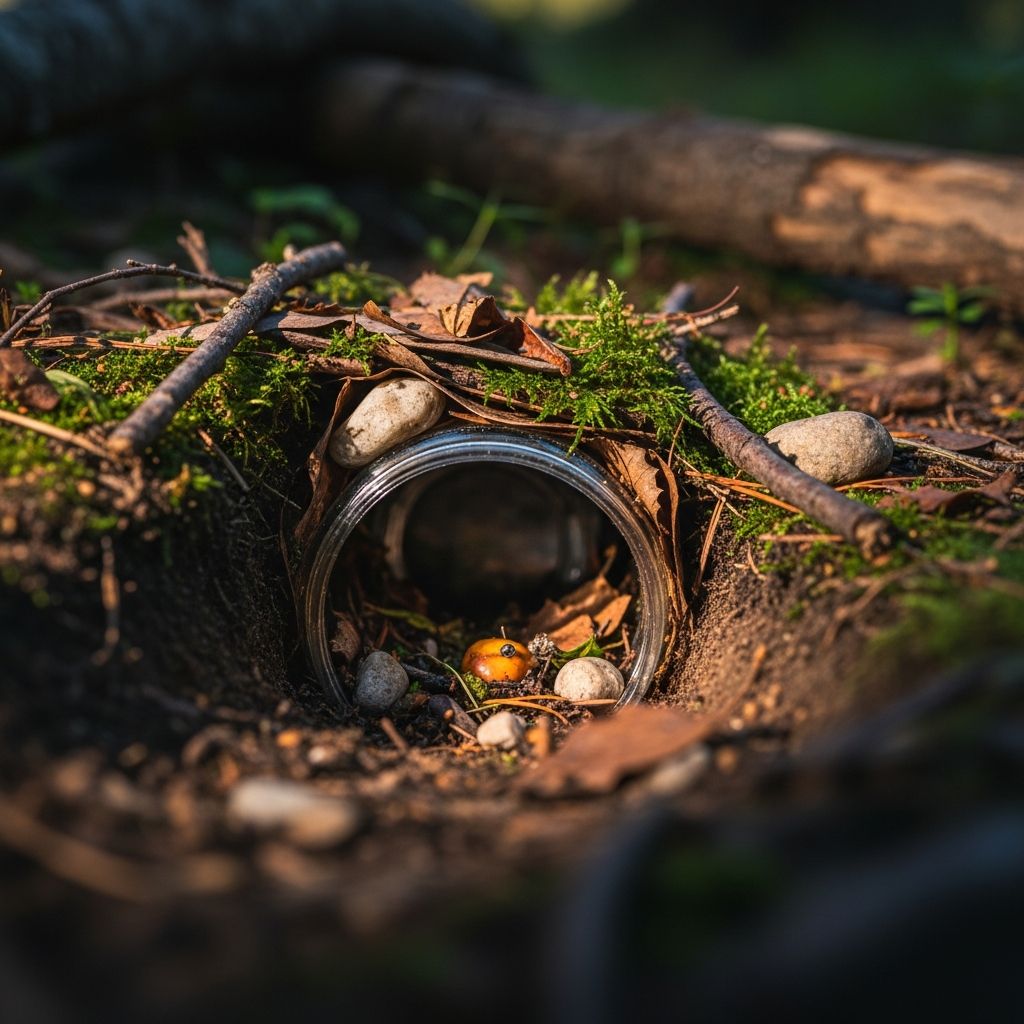
Exploring the hidden world of ground-dwelling creatures has never been easier or more engaging than with a simple pitfall trap. These ingenious devices, used by scientists and nature enthusiasts alike, passively capture small invertebrates like beetles, spiders, ants, and more, offering a window into local biodiversity without complex equipment. Ideal for gardens, forests, or schoolyards, pitfall traps turn curiosity into concrete discoveries.
Understanding Pitfall Traps and Their Role in Ecology
Pitfall traps mimic natural hazards that insects encounter in the wild, such as holes or depressions where they can tumble in. By placing a container flush with the soil surface, wandering arthropods fall inside and struggle to escape due to smooth walls. This method excels at sampling cursorial species—those that run or crawl on the ground rather than fly.
In ecological research, pitfall traps quantify invertebrate populations, monitor seasonal changes, and assess environmental health. For instance, a drop in beetle catches might signal pesticide impact or habitat degradation. Amateur naturalists can replicate professional surveys, contributing to citizen science projects that track invasive species or climate effects on wildlife.
Gathering Essential Materials for Success
Assembling a pitfall trap requires minimal, household items, making it accessible for all ages. Here’s a comprehensive list:
- Container: A sturdy plastic cup, yogurt pot, or jar (2-4 inches deep and wide mouth for better catches).
- Digging tool: Trowel, spoon, or small shovel for precise excavation.
- Preservative (optional): Soapy water, rubbing alcohol, or propylene glycol to drown specimens and prevent escape or decay.
- Rain cover: Piece of wood, tile, styrofoam plate, or cardboard elevated slightly above the rim.
- Supports: Small stones, sticks, or chopsticks to prop up the cover and create entry gaps.
- Bait (optional): Ripe fruit, pet food, or bread crumbs to lure specific species like ants or slugs.
- Observation tools: Magnifying glass, ID guide, notebook, camera, forceps, and strainer for handling.
Choose non-toxic materials for live capture if teaching children, or preservatives for long-term studies. Recyclables reduce environmental footprint.
Selecting Prime Locations for Maximum Catches
Location determines trap efficacy. Target moist, vegetated microhabitats where invertebrates thrive:
- Flower beds, leaf litter, or under bushes for beetles and millipedes.
- Forest edges or compost heaps for diverse arthropods.
- Avoid sunny lawns or barren soil, which yield few specimens.
Optimal spots include flat ground near decaying logs, tall grass, or trails. In urban gardens, place near hedges; in wild areas, cluster multiple traps (3-5) 3-6 feet apart for statistical reliability. Set up at dusk for nocturnal hunters and check during cooler morning hours.
Step-by-Step Construction and Deployment Guide
Follow these detailed steps for a reliable pitfall trap:
- Scout and prepare site: Clear debris from a 1-foot radius on level ground.
- Excavate precisely: Dig a hole matching your container’s dimensions, depth equal to container height minus 0.5 inch for rim flushness. Test fit frequently.
- Install container: Insert pot, backfill soil tightly to prevent tilting. Rim must align perfectly with soil—no lip or dip, as this deters or drowns entrants.
- Add liquid if using: Pour 1-2 inches of soapy water (dish soap breaks surface tension, ensuring drowning) or alcohol. For dry traps, add leaf litter for camouflage.
- Secure rain shield: Balance cover 0.25-0.5 inch above rim using pebbles or sticks. This excludes rain, vertebrates, and debris while permitting crawlers.
- Bait strategically: Place small bait piece in center if desired, avoiding overflow.
- Activate and monitor: Leave 4-24 hours. Check every 6-12 hours to minimize stress on captives.
| Step | Common Mistakes | Tips for Success |
|---|---|---|
| Digging | Hole too shallow/deep | Measure container first; use straight-edged tool. |
| Placement | Rim protrudes | Pack soil firmly; level with finger. |
| Cover | Too low/tight | Gap should allow pencil entry. |
| Timing | Left too long | Max 48 hours; refresh bait daily. |
Inspecting, Identifying, and Documenting Your Finds
Retrieve carefully: Lift cover, use strainer for liquid traps, or tweezers for dry. Expect ants, ground beetles (Carabidae), rove beetles, spiders, woodlice, centipedes, and springtails. Rarity depends on habitat—urban sites favor generalists, rural ones yield specialists.
Identify using apps (iNaturalist), field guides, or keys focusing on legs, body segments, antennae. Note:
- Beetles: Hard wing cases (elytra), 6 legs.
- Spiders: 8 legs, no antennae, fangs.
- Myriapods: Many legs (centipedes hunt, millipedes graze).
Record species, count, weather, time, GPS. Sketch or photograph for journals. Multiple traps enable abundance graphs or diversity indices like Shannon’s.
Preservation Techniques for Study or Collection
For short-term: Transfer to ventilated jars with moist paper. Long-term: Submerge in 70% ethanol or pin dry specimens following entomology protocols. Label with date, location, habitat. Youth groups prefer release after ID.
Safety Protocols and Ethical Considerations
Pitfall trapping is low-risk but requires care:
- Supervise children: Avoid toxic preservatives; teach gentle handling.
- Prevent bycatch: Frequent checks exclude amphibians, small mammals.
- Ethics: Release non-targets unharmed; minimize numbers; restore sites. Comply with local wildlife laws—some areas restrict trapping.
- Health: Wear gloves for unknown species; wash after handling.
Promote conservation: Use data to advocate habitat protection.
Advanced Variations and Scientific Experiments
Elevate your trapping:
- Sentinel traps: Soapy water for mass collection.
- Baited arrays: Compare fruit vs. meat attractants.
- Transects: Line traps across gradients (sun/shade) to study microclimates.
- Long-term monitoring: Weekly sets over seasons for phenology data.
Experiment: Test trap density effects or urbanization gradients. Share on platforms like iNaturalist for global contribution.
Frequently Asked Questions (FAQs)
Why isn’t my pitfall trap catching anything?
Common issues: Poor location (too dry/open), incorrect rim level, or short duration. Relocate to vegetation-rich spots and wait overnight.
Can I use pitfall traps in winter?
Limited success due to dormancy, but leaf litter traps may yield hibernating spiders or slugs in mild climates.
Is bait necessary?
Not always—passive trapping works well. Bait boosts specific taxa but risks ant swarms.
How do I release creatures safely?
Tip into sheltered vegetation away from predators. Avoid hot sun; mist if dry.
Are pitfall traps legal everywhere?
Generally yes for non-commercial use, but check protected areas or species regulations.
References
- How To Make Pitfall Traps: A Comprehensive Guide for Outdoor Enthusiasts — BattlBox. Accessed 2026. https://www.battlbox.com/blogs/outdoors/how-to-make-pitfall-traps-a-comprehensive-guide-for-outdoor-enthusiasts
- How to make a pitfall trap to catch insects and other minibeasts — Natural History Museum. Accessed 2026. https://www.nhm.ac.uk/discover/how-to-make-pitfall-trap-to-catch-insects.html
- How to make a pitfall trap — Discover Wildlife. Accessed 2026. https://www.discoverwildlife.com/how-to/make-things/how-to-make-a-pitfall-trap
- Make a pitfall trap — National Museums Scotland (.ac.uk domain, educational resource). Accessed 2026. https://www.nms.ac.uk/schools-resources/make-a-pitfall-trap
- DIY Pitfall Trap — Oklahoma State University Extension (.edu). Accessed 2026. https://extension.okstate.edu/programs/insect-adventure/site-files/docs/diy-pitfall-trap.pdf

Medha Deb is an editor with a master's degree in Applied Linguistics from the University of Hyderabad. She believes that her qualification has helped her develop a deep understanding of language and its application in various contexts. Medha specializes in the areas of beauty, health, sports, and wellness and is committed to ensuring that the content on the website is…