
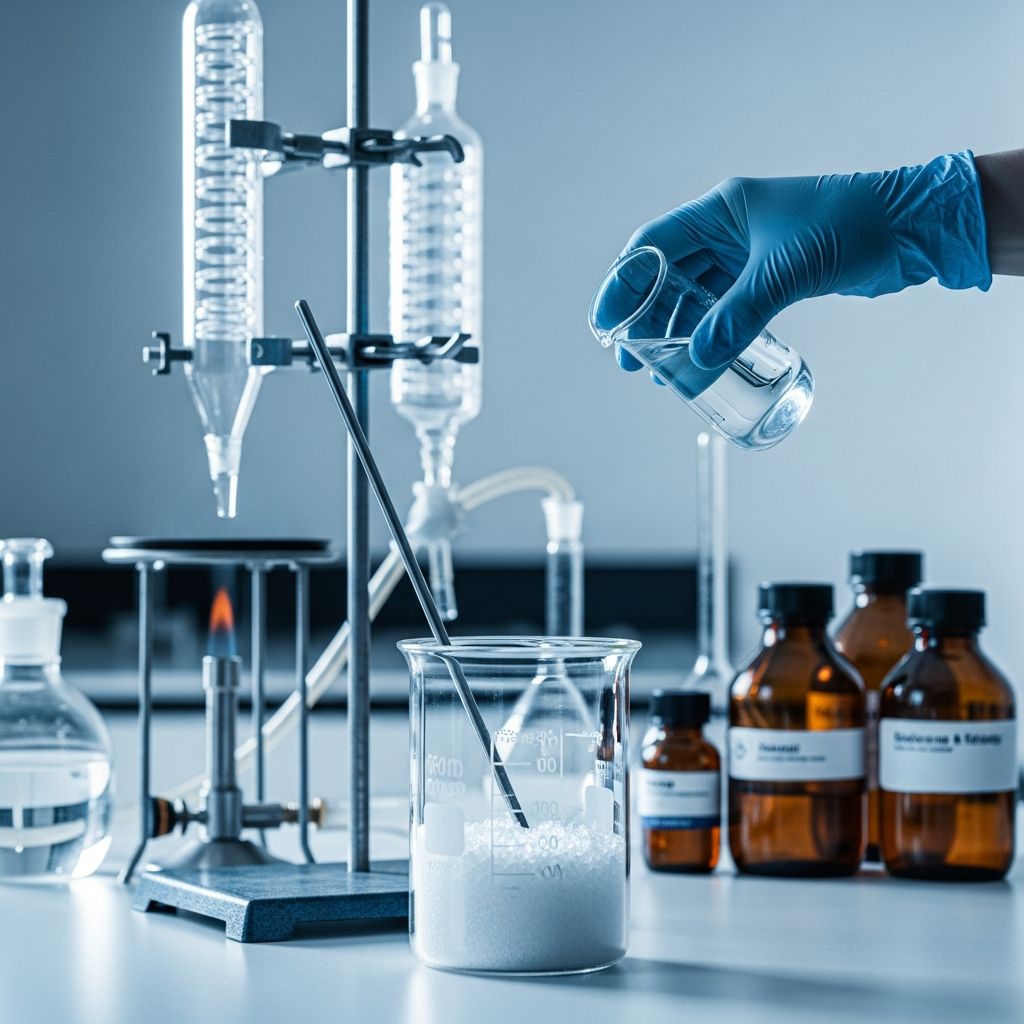
Understanding Potassium Nitrate and Its Significance
Potassium nitrate, commonly represented by the chemical formula KNO₃, stands as one of the most versatile inorganic compounds in both industrial and laboratory settings. This white crystalline solid has gained considerable attention due to its multiple applications across various scientific disciplines. Unlike its sodium counterpart, potassium nitrate demonstrates significantly lower hygroscopic properties, meaning it absorbs less moisture from the surrounding environment—a characteristic that makes it particularly valuable for numerous applications where moisture sensitivity poses a problem.
The compound serves numerous purposes ranging from fertilizer production to specialized laboratory applications. Understanding the various pathways through which potassium nitrate can be synthesized provides chemists and researchers with flexible options depending on their available materials and specific requirements. The synthesis of this compound demonstrates fundamental chemical principles including ionic displacement, precipitation reactions, and crystallization techniques that form the foundation of practical chemistry.
Double Displacement Reaction Using Calcium Nitrate
One of the most effective and commonly employed methods for synthesizing potassium nitrate involves a double displacement reaction between calcium nitrate and potassium carbonate. This approach proves particularly advantageous because both starting materials remain relatively accessible and the reaction proceeds with predictable efficiency.
The fundamental chemical principle underlying this method involves the exchange of cations between two ionic compounds. When calcium nitrate encounters potassium carbonate in aqueous solution, the potassium ions preferentially associate with nitrate ions while calcium combines with carbonate to form an insoluble precipitate. This differential solubility becomes the driving force for the reaction, pushing the equilibrium toward product formation.
To execute this synthesis, begin by determining the stoichiometric quantities needed based on molar calculations. Dissolve your calcium nitrate fertilizer in distilled water, ensuring complete dissolution through gentle stirring. In a separate container, prepare a potassium carbonate solution by dissolving the calculated quantity in water. The combination of these two solutions initiates the displacement reaction instantaneously.
Once combined, the reaction mixture should be gently heated to facilitate the precipitation of calcium carbonate, which appears as a fine white solid. The heating process also increases the reaction rate and helps drive the equilibrium toward completion. After reaching the desired temperature, remove the mixture from heat and allow it to cool gradually. As the solution cools, potassium nitrate begins crystallizing out of solution due to its decreased solubility at lower temperatures.
The cooling process can be accelerated by placing the beaker in an ice bath or refrigerator, which encourages more rapid crystallization and produces larger, purer crystals. Once crystallization appears complete, separate the solid crystals from the liquid using vacuum filtration or gravity filtration through filter paper. To enhance purity, wash the collected crystals with cold distilled water or isopropyl alcohol, which removes surface impurities and facilitates faster drying.
Alkali Precipitation Methodology
An alternative synthesis route employs the alkali precipitation method, which offers flexibility in reactant selection and represents a broadly applicable technique for producing multiple alkali nitrates. This method involves reacting calcium nitrate with alkaline compounds such as potassium hydroxide or sodium carbonate, depending on the desired final product.
The reaction mechanism centers on the formation of insoluble calcium hydroxide or calcium carbonate precipitate, which can be physically separated from the solution through filtration. The alkali nitrate product remains dissolved in the aqueous phase and can subsequently be recovered through evaporation or crystallization.
When employing potassium hydroxide as the alkali reagent, dissolve the calculated quantity in water to create a clear solution. In a parallel container, prepare your calcium nitrate solution. Prior to combining the solutions, it proves beneficial to heat both liquids gently, as elevated temperatures favor the precipitation reaction and facilitate subsequent crystallization steps.
Combine the potassium hydroxide solution with the calcium nitrate solution while maintaining gentle heating. The mixture will gradually become cloudy as calcium hydroxide precipitate forms. Continue heating the combined mixture until it reaches approximately half its original volume through evaporation. This concentration step serves dual purposes: it removes water that would otherwise interfere with crystallization, and it helps drive the reaction toward completion by continuously removing product ions from the liquid phase.
After reaching the target volume, filter the hot solution to remove the calcium hydroxide precipitate while the mixture remains warm. Transfer the filtrate to a clean container and allow it to cool undisturbed to room temperature. During this cooling process, potassium nitrate crystals progressively form and settle to the bottom of the container. For enhanced yields, consider placing the cooled solution in a freezer, which further decreases potassium nitrate solubility and encourages additional crystal formation.
Once crystallization appears complete, carefully decant the remaining liquid and collect the crystals through filtration. Washing with small portions of cold water removes surface contaminants. The product can be dried using gentle heating in an oven set to low temperature, or alternatively, allowed to air-dry in a dry environment.
Potassium Chloride Displacement Process
A distinctive methodology specific to potassium nitrate production involves the double displacement reaction between potassium chloride and calcium nitrate. This technique differs from other approaches by producing potassium nitrate that directly crystallizes from solution due to its lower solubility compared to the secondary byproduct calcium chloride.
Begin the synthesis by measuring appropriate quantities of both potassium chloride and calcium nitrate fertilizer. Place the potassium chloride in a container and add the calcium nitrate along with a measured volume of distilled water. The presence of water facilitates ionic dissociation and allows the displacement reaction to proceed efficiently.
Heat the mixture with continuous stirring to promote thorough mixing and accelerate the reaction. As heating progresses, the solution becomes increasingly concentrated as water evaporates. The potassium nitrate, possessing lower solubility than calcium chloride at elevated temperatures, begins to precipitate from solution. Continue heating until the desired level of concentration is achieved.
Upon removal from heat, allow the reaction vessel to cool naturally or accelerate cooling through ice bath immersion. As the temperature decreases, potassium nitrate crystallization becomes increasingly favorable, and distinctive crystals form throughout the cooling solution. Alternatively, the cooled solution can be transferred to a freezer to maximize crystallization yield.
After several hours of cooling, filter the solution to separate the crystalline product from the liquid phase containing dissolved calcium chloride and any remaining ammonium salts. This method typically yields approximately seventy to eighty percent of the theoretical maximum, though the crystals produced may contain some residual chloride contamination. Additional purification through recrystallization can enhance product purity if needed for specialized applications.
Synthesis from Ammonium Nitrate Precursors
An alternative synthetic pathway utilizes ammonium nitrate as a starting material, which can be sourced from commercial instant cold packs commonly available for emergency applications. This method combines ammonium nitrate with potassium hydroxide to produce potassium nitrate through an acid-base neutralization and ion exchange mechanism.
The reaction between potassium hydroxide and ammonium nitrate proceeds through simultaneous neutralization and displacement reactions. When these two compounds interact, potassium nitrate forms as the primary product while ammonia gas is released as a byproduct. The exothermic nature of this reaction generates substantial heat, necessitating careful temperature control throughout the procedure.
Measure sixty grams of potassium hydroxide and combine it with eighty grams of ammonium nitrate in a suitable reaction vessel. Add approximately thirty milliliters of distilled water to facilitate mixing and reactant dissolution. The mixture will immediately begin evolving ammonia gas, which produces a distinctive pungent odor. For safety reasons, all procedures involving this reaction must be conducted in well-ventilated environments or within properly functioning fume hoods, as ammonia vapors irritate respiratory tissues and eyes.
Apply gentle heating to the mixture while stirring continuously. The combination will first appear to bubble vigorously as ammonia gas is released, accompanied by visible steam formation. Continue heating and stirring until the mixture reaches a boiling state, then maintain this temperature for several minutes to ensure complete reaction. The potassium hydroxide buildups that form during the reaction can temporarily inhibit further progress; adding a small quantity of additional water helps overcome this limitation and drives the reaction toward completion.
After the reaction concludes, remove the vessel from heat and allow the contents to cool. For final product isolation, evaporate all remaining water through continued gentle heating until a dry solid remains. Alternatively, if heating is undesirable, both reactants can be predissolved in separate water portions before combination, though this approach requires extended ventilation time for ammonia removal and water evaporation in a well-ventilated location or fume hood.
Crystallization and Purification Techniques
Regardless of the synthesis method employed, the final recovery and purification of potassium nitrate depends critically on proper crystallization and purification procedures. These steps determine the purity and quality of the final product.
Controlled cooling represents one of the most effective crystallization strategies. Slow, gradual cooling allows ions to organize into properly formed crystal structures, producing larger crystals with fewer defects and incorporated impurities. Rapid cooling, by contrast, traps impurities within growing crystals and produces smaller, less pure crystals. For optimal results, cool solutions at room temperature initially, then transfer to refrigeration for final crystallization stages.
Recrystallization provides an effective purification method for removing residual impurities. Dissolve slightly impure potassium nitrate in hot distilled water, then allow the solution to cool and crystallize under controlled conditions. Most impurities remain dissolved in the mother liquor while pure potassium nitrate crystals preferentially form due to its solubility characteristics.
Washing crystals with small volumes of cold solvent removes surface impurities without significantly dissolving the desired product. Isopropyl alcohol proves particularly effective for this purpose, as it removes water-soluble contaminants while promoting rapid drying due to its volatility.
Safety Considerations and Laboratory Practices
Chemical synthesis requires strict adherence to safety protocols. Many potassium nitrate synthesis methods generate hazardous byproducts—particularly ammonia gas—that demand proper ventilation and respiratory protection. Always conduct reactions involving ammonia gas generation in properly functioning fume hoods or outdoor well-ventilated areas.
Wear appropriate personal protective equipment including chemical-resistant gloves, safety glasses, and lab coats. Keep spill kits nearby and know the location of emergency eyewash and shower facilities. Never attempt these procedures alone; maintain proper supervision and ensure that someone nearby is aware of activities being conducted.
Store all chemical reagents in appropriate containers clearly labeled with contents and hazard information. Keep potassium hydroxide and other alkaline materials separated from acidic compounds. Properly dispose of chemical waste according to local regulations—never pour chemical solutions down standard drains.
Comparative Analysis of Synthesis Methods
| Method | Primary Reactants | Yield Percentage | Product Purity | Hazards |
|---|---|---|---|---|
| Double Displacement (Calcium Nitrate + Potassium Carbonate) | Calcium nitrate, Potassium carbonate | 70-85% | High | Minimal |
| Alkali Precipitation | Calcium nitrate, Potassium hydroxide | 75-90% | High | Low |
| Potassium Chloride Displacement | Potassium chloride, Calcium nitrate | 75-80% | Medium | Minimal |
| Ammonium Nitrate Method | Ammonium nitrate, Potassium hydroxide | 60-75% | Medium | Ammonia gas |
Frequently Asked Questions
Q: Why is potassium nitrate preferred over sodium nitrate for certain applications?
A: Potassium nitrate exhibits significantly lower hygroscopic properties compared to sodium nitrate, meaning it absorbs less moisture from air. This characteristic proves advantageous in applications where moisture sensitivity could compromise performance or shelf life.
Q: Can commercial fertilizers containing potassium nitrate be used directly?
A: While some fertilizers contain potassium nitrate, many contain mixed nitrates and other compounds. Direct use may introduce unwanted impurities. Synthesizing pure potassium nitrate through the methods described ensures greater purity for specialized applications.
Q: What is the typical yield when performing these syntheses?
A: Yields vary depending on the specific method employed, typically ranging from sixty to ninety percent of theoretical maximum. Factors affecting yield include reaction temperature control, evaporation efficiency, and completeness of crystallization.
Q: How can product purity be determined?
A: Melting point determination provides a practical field test—pure potassium nitrate melts at approximately 334°C. Crystal appearance and color also indicate purity; pure crystals appear clear and colorless.
Q: Are these synthesis methods suitable for home laboratory environments?
A: Most methods can be performed in home laboratories with proper ventilation and safety precautions. The ammonium nitrate method requires particular caution due to ammonia gas production and should only be attempted in well-ventilated spaces or equipped with appropriate fume extraction.
Q: How should synthesized potassium nitrate be stored?
A: Store potassium nitrate in airtight containers in cool, dry locations away from light. Despite its lower hygroscopic properties compared to sodium nitrate, it remains sensitive to moisture and degradation when exposed to direct sunlight over extended periods.
References
- Make Potassium Nitrate and Sodium Nitrate at Home — NurdRage (YouTube). 2024. https://www.youtube.com/watch?v=RlonW4iJYrw
- Make Potassium Nitrate (Reuploaded/Remastered) — NurdRage (YouTube). 2024. https://www.youtube.com/watch?v=XxhZkDAOeQ8
- Easy Potassium Nitrate Synthesis — Chemistry YouTube Channel. 2024. https://www.youtube.com/watch?v=X6hO5U_R03c
- How do I make potassium nitrate from wood ash? — ECHEMI Community. 2024. https://www.echemi.com/community/how-do-i-make-potassium-nitrate-from-wood-ash_mjart22040915371_687.html
- Chemical Properties of Potassium Nitrate — CRC Handbook of Chemistry and Physics. 2023. Official reference for melting point and physical properties data.

- Integrated M.A. in Applied Linguistics, University of Hyderabad
- 5+ years in editorial, instructional, SEO, and research-based writing
Sneha is a relationships and lifestyle writer with a strong foundation in applied linguistics and certified training in relationship coaching. She brings over five years of writing experience to theskillvault, crafting thoughtful, research-driven content that empowers readers to build healthier relationships, boost emotional well-being, and embrace holistic living. Her writing and insights reflect the belief that beauty, happiness, and wellness…