
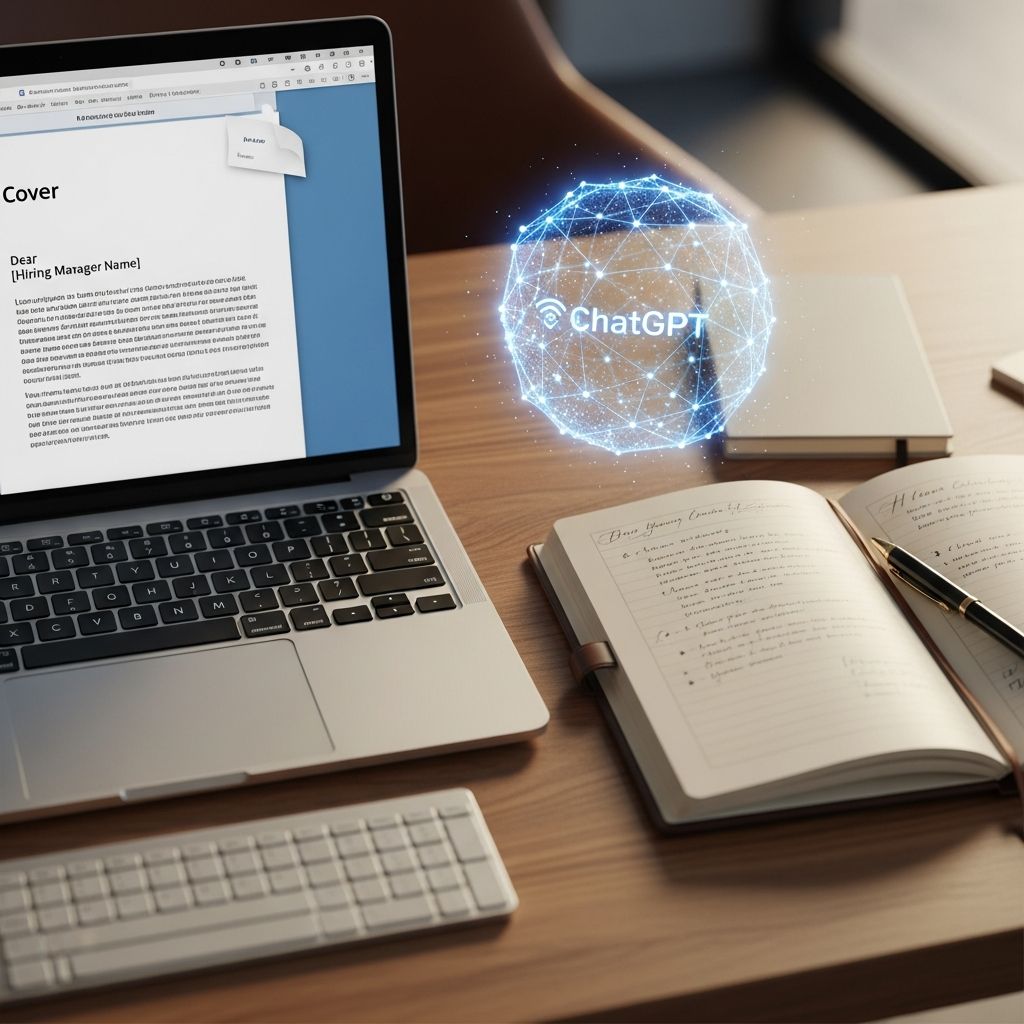
Why Your Cover Letter Can’t Be Just Another AI Draft
Applying for jobs in today’s market means standing out in a sea of applications, many of which are now written or heavily assisted by AI tools like ChatGPT. While these tools can dramatically speed up the writing process, a generic, robotic cover letter will rarely get you past the first screening. Hiring managers and applicant tracking systems (ATS) are increasingly tuned to detect impersonal, formulaic content. The real advantage of using ChatGPT isn’t in generating a finished letter with one click—it’s in using it as a smart collaborator to help you articulate your unique story, skills, and fit for a specific role.
The goal isn’t to let AI write your cover letter for you, but to use it to draft, refine, and structure content that still sounds unmistakably like you. This approach saves time while preserving authenticity, which is exactly what modern recruiters are looking for.
How ChatGPT Can Actually Help (and Where It Falls Short)
ChatGPT excels at organizing information, suggesting phrasing, and aligning your background with job requirements. When given enough context, it can produce a well-structured draft that hits the right points: your relevant experience, key achievements, and interest in the role. However, it has clear limitations:
- It doesn’t know your personal voice, quirks, or the subtle nuances that make your communication style unique.
- It can hallucinate details, inventing qualifications, dates, or projects that don’t exist.
- It tends to default to formal, generic language that lacks the warmth and specificity of human writing.
Used wisely, ChatGPT becomes a powerful drafting assistant. Used carelessly, it produces content that hiring managers can spot as AI-generated and often dismiss as low-effort. The key is to treat it as a tool, not an author.
Building a Foundation: What to Feed ChatGPT
Before asking ChatGPT to write anything, you need to give it the raw materials it needs to create something useful. Think of this as preparing a brief for a professional writer. The more precise and detailed your input, the better the output will be.
Here’s what to include in your initial prompt or follow-up messages:
- Your current or most recent job title and company
- 2–3 key responsibilities or achievements in that role (preferably with metrics)
- Any relevant education, certifications, or technical skills
- The specific job title and company you’re applying to
- Key requirements or responsibilities from the job description
- Your genuine reason for being interested in this role or company
- The tone you want: professional, enthusiastic, conversational, etc.
For example, instead of saying, “Write a cover letter for a marketing job,” you’d say something like:
“I’m a marketing specialist with three years of experience at a SaaS startup, where I managed email campaigns that increased open rates by 35% and led a rebranding project that boosted website conversions by 22%. I’m applying for the Senior Marketing Associate role at TechFlow Inc. The job description emphasizes content strategy, campaign analytics, and cross-functional collaboration. I’m particularly interested in this role because of TechFlow’s focus on sustainable tech and their recent product launch in the green energy space. Write a 250–300 word cover letter in a confident but approachable tone.”
This level of detail gives ChatGPT enough to work with to produce something tailored, not generic.
Structuring Your Prompt for Maximum Impact
A well-structured prompt is the difference between a generic template and a compelling, role-specific draft. Instead of asking for a full cover letter in one go, consider breaking the request into focused, manageable pieces.
Here are several prompt strategies you can use:
1. The Story-Driven Opening
Instead of starting with “I’m excited to apply,” begin with a brief, engaging story that ties directly to the role. Ask ChatGPT to help craft this:
“Help me write a 3–4 sentence opening for a cover letter applying to the UX Designer role at Nova Labs. I once redesigned a checkout flow for an e-commerce app that reduced cart abandonment by 40%. Make this opening engaging and relevant to the role, then connect it to why I’m interested in Nova Labs.”
This approach creates an immediate hook and shows that you’re not just reciting a template.
2. Matching Experience to Requirements
Use ChatGPT to align your background with the job’s top requirements. A strong prompt might look like:
“Based on this job description and my resume, write two body paragraphs that directly match my experience to the top three requirements: project management, stakeholder communication, and data-driven decision making. For each, include a specific example with measurable results, using a clear and professional tone.”
This ensures the letter speaks directly to what the employer cares about, not just what you think is impressive.
3. The Enthusiastic Closing
The closing paragraph should express genuine interest and a clear call to action. You can prompt:
“Write a strong closing paragraph for a cover letter for the Customer Success Manager role at CloudPath. I want to express enthusiasm for the role, mention my experience improving customer retention by 25%, and invite the hiring manager to discuss how I can contribute to their team.”
By building the letter section by section, you maintain control over the narrative and can more easily inject your authentic voice.
From Draft to Final Letter: The Human Touch
Once ChatGPT has produced a draft, your real work begins. This is where you transform a good AI-generated draft into a great, human-written cover letter. Here’s how:
1. Replace Generic Phrases with Specifics
AI often defaults to phrases like “I am passionate about,” “I have strong skills in,” or “I am a team player.” Replace these with concrete examples:
- Instead of: “I’m passionate about customer service.”
- Write: “In my last role, I reduced average response time by 30% and improved CSAT scores from 82% to 94% over six months.”
Specifics build credibility and make your impact tangible.
2. Add Personal Anecdotes Only You Can Tell
Include a brief story or detail that only you would know:
- A specific project name
- A unique challenge you faced
- A moment that sparked your interest in the field
These details make the letter feel personal and memorable, not like a mass-produced template.
3. Adjust Tone and Flow
Read the draft aloud. Does it sound like something you’d actually say in a conversation with a hiring manager? If it feels stiff, overly formal, or robotic, revise it to sound more natural. Use contractions, vary sentence length, and adjust the tone to match the company culture.
For example:
- Too formal: “I am eager to contribute my expertise in digital marketing to your organization.”
- More natural: “I’m excited to bring my digital marketing experience to your team and help grow your online presence.”
4. Verify Every Fact
Double-check all dates, job titles, company names, metrics, and project details. ChatGPT can invent plausible-sounding but false information, and even a small inaccuracy can damage your credibility.
5. Ensure ATS Compatibility
Many companies use applicant tracking systems to filter applications. To increase your chances of passing through:
- Naturally incorporate keywords from the job description (e.g., “project management,” “cross-functional collaboration,” “data analysis”).
- Avoid excessive formatting, tables, or unusual fonts that might confuse the system.
- Keep the letter to one page, ideally 250–400 words.
Creating a Reusable Template Strategy
If you’re applying to multiple similar roles, it’s efficient to create a flexible cover letter template that you can quickly customize. ChatGPT can help you build this:
“Create a cover letter template for a mid-level software engineer with 5 years of experience. Include placeholders for [Job Title], [Company Name], [Specific Achievement], and [Reason for Interest]. Make it easy to customize for different applications while maintaining a professional and confident tone.”
Once you have this template, you can:
- Fill in the placeholders with role-specific details
- Add a unique opening story for each application
- Tweak the tone slightly to match each company’s culture
This approach saves time without sacrificing personalization.
Common Pitfalls to Avoid
Even with a strong prompt and careful editing, it’s easy to fall into traps that undermine your cover letter. Watch out for these:
- Over-reliance on AI: Never submit the first draft without significant revision. Your voice and judgment are what make the letter authentic.
- Generic language: Avoid vague statements like “I’m a hard worker” or “I love learning new things.” Replace them with specific examples.
- Ignoring the company: A cover letter that could be sent to any company in the industry feels impersonal. Mention the company’s mission, recent projects, or values to show genuine interest.
- Length and structure issues: Keep it concise. A typical cover letter should be three to four short paragraphs: an engaging opening, 1–2 body paragraphs, and a strong closing.
How to Make Your Letter Feel Uniquely You
The best cover letters don’t just list qualifications—they tell a mini-story about who you are and why you’re the right fit. To make yours feel uniquely yours:
- Start with a moment that sparked your interest in the field or a problem you solved that relates to the role.
- Explain why this specific company and role excite you, not just any job in the industry.
- Use language that reflects how you actually speak in professional settings—slightly polished, but still natural.
- Include a small, human detail: a brief mention of a relevant hobby, a volunteer experience, or a personal value that aligns with the company’s culture.
These elements transform a competent cover letter into one that feels memorable and authentic.
Final Checklist Before Sending
Before hitting send, run through this checklist to ensure your cover letter is polished and effective:
| Check | Action |
|---|---|
| Personalization | Is the letter tailored to this specific role and company? |
| Specific examples | Are achievements backed by metrics and concrete details? |
| Tone and voice | Does it sound like you, not a robot? |
| Company connection | Does it mention why you’re interested in this company specifically? |
| Length | Is it concise (ideally one page, 250–400 words)? |
| Proofreading | Have you checked for grammar, spelling, and clarity? |
| ATS compatibility | Are relevant keywords included naturally? |
Frequently Asked Questions
Can I use ChatGPT to write my entire cover letter?
You can, but it’s risky. A fully AI-written letter often lacks the personal voice and specific details that hiring managers look for. It’s better to use ChatGPT to draft sections, then heavily edit and personalize the content to sound like you.
How do I make sure my cover letter doesn’t sound like AI?
Focus on specificity, personal anecdotes, and natural language. Use contractions, vary sentence length, and include details only you would know. Always read the letter aloud—if it sounds stiff or generic, revise it to sound more conversational and authentic.
Should I mention that I used ChatGPT?
No. Hiring managers care about the quality and authenticity of your application, not the tools you used to create it. As long as the final letter sounds like you and accurately represents your experience, there’s no need to disclose the use of AI.
How many times should I revise the AI-generated draft?
Revise until the letter feels like something you’d proudly send to a hiring manager. This usually means at least two or three rounds: one to fix structure and content, one to refine tone and flow, and a final pass to proofread and polish.
Can ChatGPT help with different types of cover letters?
Absolutely. Whether you’re writing a cold outreach letter, a referral-based application, or a letter for a career change, you can adapt your prompts to get relevant drafts. Just be sure to provide enough context about your background and the specific situation.
References
- How to Use ChatGPT to Write a Cover Letter That Sounds Like You — The Muse. 2024. https://www.themuse.com/advice/chatgpt-cover-letter
- ChatGPT Cover Letter: How to Write One That Actually Gets You Hired — The Interview Guys. 2024. https://blog.theinterviewguys.com/chatgpt-cover-letter/
- Cover Letter Writing: Get Started with ChatGPT — University of Redlands Office of Career & Professional Development. 2024. https://ocpd.redlands.edu/resources/cover-letter-writing-get-started-with-chatgpt/

- Integrated M.A. in Applied Linguistics, University of Hyderabad
- 5+ years in editorial, instructional, SEO, and research-based writing
Sneha is a relationships and lifestyle writer with a strong foundation in applied linguistics and certified training in relationship coaching. She brings over five years of writing experience to theskillvault, crafting thoughtful, research-driven content that empowers readers to build healthier relationships, boost emotional well-being, and embrace holistic living. Her writing and insights reflect the belief that beauty, happiness, and wellness…