
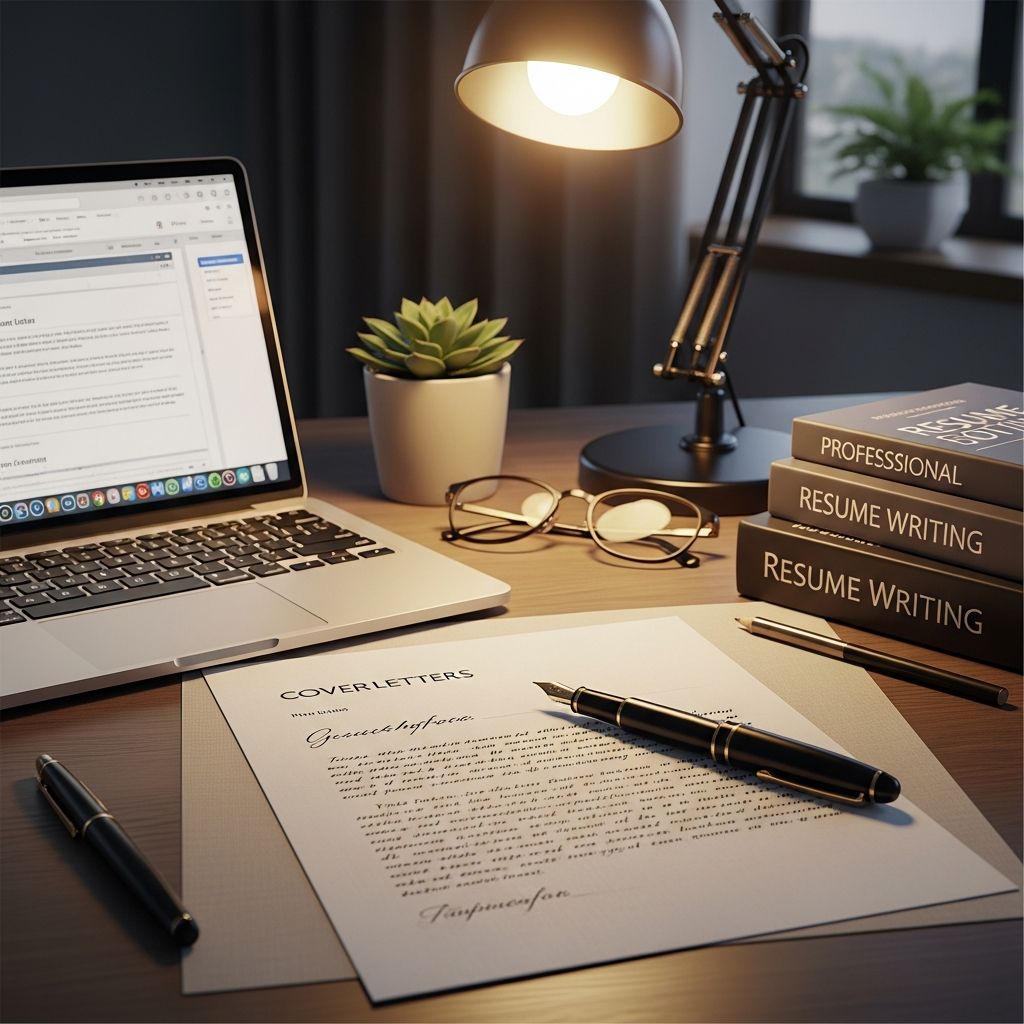
The Strategic Importance of a Well-Crafted Cover Letter
In today’s competitive job market, a cover letter serves as your first opportunity to make a lasting impression on hiring managers. While many candidates view cover letters as obligatory attachments to their applications, those who recognize them as powerful marketing tools gain a distinct advantage. A thoughtfully written cover letter bridges the gap between your resume and the hiring decision, allowing you to tell your professional story in a way that resonates with the specific employer and position.
Unlike a resume, which presents facts and dates in a structured format, a cover letter enables you to demonstrate personality, communication ability, and strategic thinking. It shows that you’ve invested time in understanding the organization and that you’re genuinely interested in contributing to its mission. This distinction can be the deciding factor when employers are comparing similarly qualified candidates.
Foundation: Research and Preparation
Investigating the Organization’s Identity
Before typing a single word, successful job applicants invest considerable time understanding their target employer. This investigation should extend far beyond a quick skim of the company website. Dig into the organization’s recent announcements, leadership changes, product launches, and strategic initiatives. Review their social media presence to gauge the company’s tone, values, and how they interact with their audience. This preparation transforms your cover letter from a generic application into a thoughtful conversation starter that demonstrates genuine interest.
Pay particular attention to the specific department or team you’re joining. If possible, identify the hiring manager by name and research their professional background. This personalization signals that you’ve done your homework and view this as a meaningful opportunity rather than a mass application effort.
Deconstructing the Job Description
The job posting itself contains invaluable clues about what the employer values most. Extract the core responsibilities and required qualifications, but go deeper by identifying the underlying skills and competencies the role demands. Look for recurring themes or emphasized requirements—these often signal the organization’s top priorities for the position. Understanding this hierarchy allows you to prioritize which of your experiences and achievements merit inclusion in your cover letter.
Architecture of an Effective Cover Letter
Header and Contact Elements
While these details may seem purely administrative, they establish professionalism from the outset. Your contact section should include your full name, phone number, professional email address, and optionally your LinkedIn profile URL or portfolio website. Include the date of submission and the recipient’s complete information: hiring manager’s name, title, company name, and address. This structure demonstrates attention to detail and makes it easy for hiring managers to contact you.
The Opening That Commands Attention
Your first paragraph requires strategic finesse. Rather than opening with a generic statement about your enthusiasm, begin by connecting your professional identity to something meaningful about the role or organization. This could be a specific project the company undertook that aligns with your expertise, a value the organization champions that resonates with your career philosophy, or a particular challenge in the industry that you’re passionate about addressing.
For example, instead of “I am writing to express my interest in the Marketing Manager position,” consider an opening that demonstrates deeper engagement: “Your company’s recent expansion into sustainability-focused product lines caught my attention because it mirrors my own commitment to environmentally conscious business practices. I’m excited about the opportunity to bring my eight years of green marketing experience to this role.” This approach immediately differentiates you by showing authentic alignment rather than generic enthusiasm.
Building Your Value Proposition
The middle section of your cover letter should construct a compelling argument for why you’re an exceptional fit for this specific position. Rather than simply listing qualifications, weave your experience into narratives that illustrate problem-solving ability, impact, and professional growth. Select two to three concrete examples that directly address the job requirements, but frame them around the outcomes you achieved rather than the tasks you completed.
For instance, rather than “I managed customer relationships and improved retention,” craft a more specific narrative: “In my role at XYZ Corporation, I identified that customer churn was concentrated among enterprise clients. I implemented a personalized account management strategy that increased retention by 34% within eighteen months and expanded the average account value by $120,000.” This approach demonstrates not just capability but measurable impact.
Demonstrating Company Alignment
Dedicate a portion of your cover letter to explaining why this particular organization appeals to you beyond merely stating you want the job. Reference specific aspects of the company culture, strategic direction, or products that genuinely excite you. Explain how your professional values and working style align with what you understand about the organization. This section should reflect authentic research rather than flattery—hiring managers can quickly detect insincere praise.
Content Strategy and Execution
Quantifying Your Achievements
Abstract claims about being a “hard worker” or “detail-oriented” hold minimal persuasive power. Instead, ground your qualifications in concrete metrics that hiring managers can evaluate. If you improved efficiency, specify the percentage improvement. If you increased revenue, provide the dollar amount. If you managed a team, clarify the size. These specifics make your accomplishments memorable and credible.
Addressing Experience Gaps Strategically
Rather than apologizing for missing experience or trying to hide gaps, reframe them as opportunities to highlight transferable skills and learning agility. If you’re transitioning from a different industry or career path, your cover letter is the ideal venue to explain this pivot logically. Connect skills you’ve developed in previous roles to the requirements of this new position. Emphasize what you bring that other candidates from traditional backgrounds might not: a unique perspective, diverse problem-solving approaches, or specialized knowledge from another sector that could benefit the organization.
Tone and Voice Calibration
Your cover letter should sound professional yet authentically like you. Research the company’s communication style by examining their website, social media, and job postings. A creative agency might appreciate a more conversational, engaging tone, while a law firm or financial institution would expect formal propriety. Match the organization’s tone while maintaining professionalism—never sacrifice clarity or professionalism for perceived casualness.
Technical Excellence and Polish
Formatting Best Practices
Present your cover letter in a clean, readable format using a standard professional font such as Arial or Times New Roman in 10-12 point size. Maintain margins between 0.5 and 1 inch on all sides and left-align your text. Break your content into distinct paragraphs, with clear spacing between each section. Limit your letter to one page—hiring managers typically spend seconds scanning documents, so conciseness matters significantly. Ensure consistent spacing and formatting throughout to convey professionalism and attention to detail.
Accuracy and Verification
Before submitting, meticulously verify every detail. Confirm the hiring manager’s name, company name, job title, and any specific achievements or figures you mention. A single misspelled name or incorrect company detail can undermine your entire application, suggesting carelessness or lack of genuine interest. Read your letter aloud to catch awkward phrasing or unclear sentences. Consider asking a trusted colleague to review it for clarity, tone consistency, and grammatical accuracy.
Customization Discipline
The importance of tailoring your cover letter to each position cannot be overstated. Generic, template-style letters are easily detected and often trigger rejection before the hiring manager finishes the first paragraph. Even if you’re applying to similar roles at different organizations, adjust your letter to reflect each company’s unique characteristics, recent achievements, and specific role requirements. This customization effort demonstrates respect for the organization and genuine interest in the opportunity.
Common Pitfalls to Avoid
Many candidates undermine otherwise strong applications through preventable mistakes. Avoid sharing irrelevant personal information such as political views, family status, or unrelated hobbies unless directly pertinent to the role. Don’t repeat verbatim content from your resume—your cover letter should complement your resume by providing context and narrative depth. Refrain from using clichés like “I’m a team player” or “I think outside the box” without concrete examples supporting these claims. Never include unsolicited salary expectations or demands, and avoid negativity about previous employers regardless of your experience.
The Closing: Action-Oriented Conclusion
Your final paragraph should reiterate your interest while expressing confidence in your fit for the role. Include a specific call to action, such as expressing your eagerness to discuss how you can contribute to the organization’s goals. Thank the reader for their consideration and provide your contact information. Use a professional closing such as “Sincerely” or “Best regards” followed by your name. This conclusion should feel natural and genuine rather than forced—you’re essentially saying you’re looking forward to the next conversation with this organization.
Leveraging Your Cover Letter as Strategic Communication
Exceptionally strong cover letters accomplish something beyond simply responding to job postings—they shape how hiring managers perceive your candidacy. When your cover letter demonstrates that you understand the organization’s challenges, that you possess relevant experience aligned with the role, and that you’re genuinely excited about contributing to the team, it creates a compelling narrative that motivates hiring managers to move your application forward.
Remember that your cover letter operates in concert with your resume, portfolio, and eventual interview performance. While your resume documents your qualifications, your cover letter tells the story of why you matter for this specific opportunity. By investing time in research, crafting thoughtful narratives about your impact, and meticulously polishing your presentation, you create a comprehensive application that stands apart in a crowded field.
Frequently Asked Questions
Q: How long should my cover letter be?
A: Your cover letter should be concise and fit on a single page. Aim for three to four well-developed paragraphs that communicate your qualifications and interest without unnecessary repetition or excessive detail. Quality trumps quantity—hiring managers appreciate respect for their time.
Q: Should I submit my cover letter as a PDF or text file?
A: Follow the submission guidelines provided in the job posting precisely. If the employer specifies a format preference, adhere to it. When no preference is stated, a PDF generally preserves your formatting better than plain text, ensuring your document appears exactly as intended on the recipient’s device.
Q: What should I do if I can’t identify the hiring manager’s name?
A: If you cannot discover the specific hiring manager’s name despite thorough research, use a general but respectful salutation such as “Dear Hiring Team” or “Dear [Department Name] Team.” Avoid outdated closings like “To Whom It May Concern” as these suggest minimal effort to personalize your application.
Q: Can I use the same cover letter for multiple applications?
A: While you can use a strong cover letter as a template, you should customize each version to address the specific company, position, and role requirements. Generic cover letters are typically identifiable and less persuasive than tailored versions that demonstrate genuine interest in each particular opportunity.
Q: How should I address a career change in my cover letter?
A: Rather than apologizing for your unconventional path, use your cover letter to explain the logical progression of your career and highlight transferable skills. Connect your previous experience to the requirements of your new field, emphasizing any specialized knowledge or unique perspectives that strengthen your candidacy for this specific role.
References
- How to Write a Cover Letter That Gets You Hired (Examples & Tips) — My Perfect Resume. 2025. https://www.myperfectresume.com/career-center/cover-letters/how-to/write
- How to write a standout cover letter (step-by-step guide for students) — University of Cincinnati Career Services. 2024. https://www.uc.edu/news/articles/2024/11/standout-cover-letter-guide.html
- Best Cover Letters of 2025 (10 Good Examples) — Resume Genius. 2025. https://resumegenius.com/blog/cover-letter-help/best-cover-letters
- How To Write a Cover Letter (With Examples and Tips) — Indeed Career Guide. 2025. https://www.indeed.com/career-advice/resumes-cover-letters/how-to-write-a-cover-letter
- How to Write a Cover Letter That Sounds Like You (and Gets Noticed) — Harvard Business Review. 2022. https://hbr.org/2022/05/how-to-write-a-cover-letter-that-sounds-like-you-and-gets-noticed
- Cover Letter Resources — University of Michigan Career Center. 2025. https://careercenter.umich.edu/content/cover-letter-resources

- Integrated M.A. in Applied Linguistics, University of Hyderabad
- 5+ years in editorial, instructional, SEO, and research-based writing
Sneha is a relationships and lifestyle writer with a strong foundation in applied linguistics and certified training in relationship coaching. She brings over five years of writing experience to theskillvault, crafting thoughtful, research-driven content that empowers readers to build healthier relationships, boost emotional well-being, and embrace holistic living. Her writing and insights reflect the belief that beauty, happiness, and wellness…