
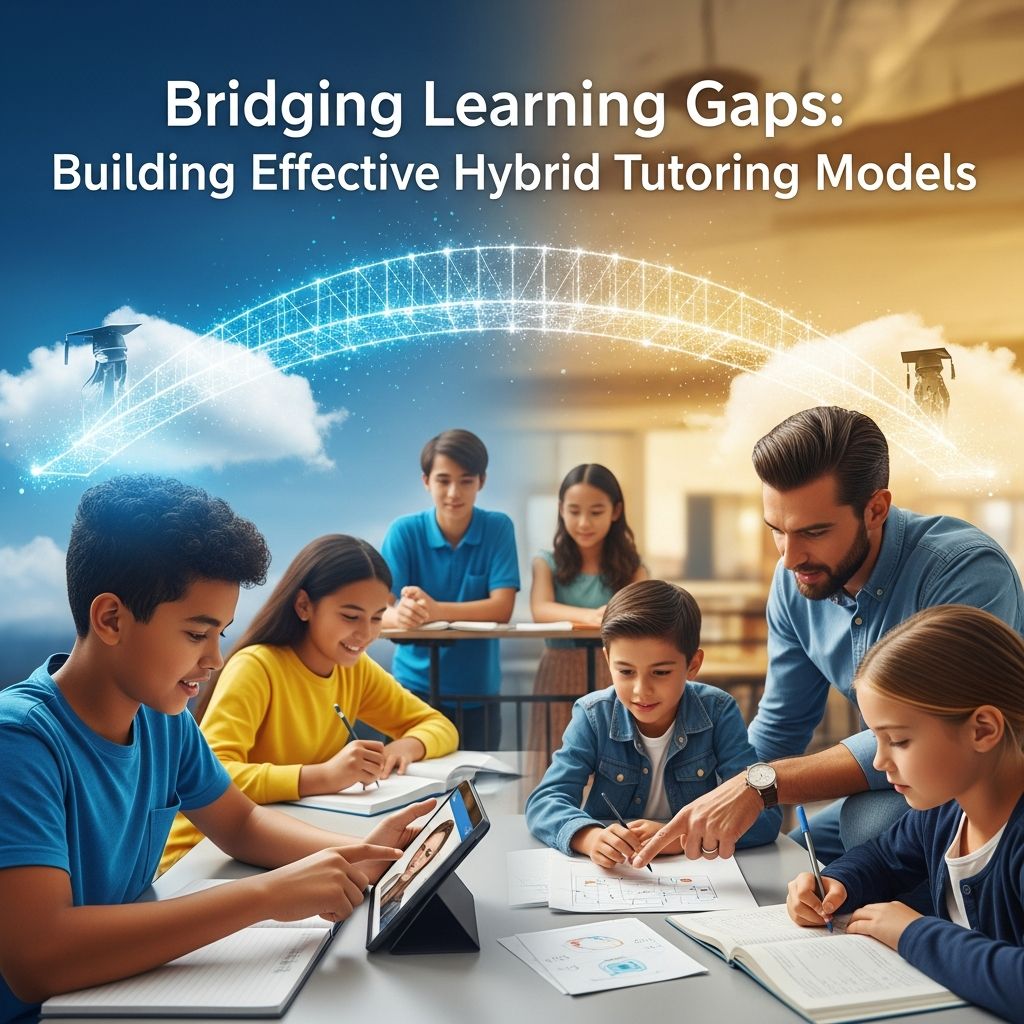
The Evolution of Modern Tutoring: Embracing Hybrid Approaches
The landscape of education has undergone a remarkable transformation over the past several years. Traditional tutoring—where a student and tutor meet at a fixed location with printed materials—has evolved into a more dynamic, flexible model that leverages technology while maintaining the irreplaceable value of human interaction. Hybrid tutoring represents this evolution, creating an integrated learning environment that draws on the strengths of both digital and in-person instruction.
The shift toward hybrid tutoring wasn’t merely a response to circumstance; it reflects a deeper understanding of how students learn most effectively. By combining the immediacy of face-to-face connection with the flexibility and data-driven insights of digital platforms, educators can now offer learning experiences that are more responsive, personalized, and ultimately more successful than either approach alone.
Establishing a Unified Framework Across Learning Modalities
The foundation of effective hybrid tutoring rests on creating alignment between your virtual and in-person sessions. Rather than treating these as separate components, successful tutors view them as interconnected elements of a single learning journey. When a student completes an in-person session focused on foundational concepts, their virtual session should logically extend that learning through reinforcement activities, practice problems, or deeper exploration of related topics.
This unified approach requires deliberate planning and intentional design. Consider how topics flow from one session type to another. If a student masters a concept during an in-person meeting, the virtual follow-up might involve applying that knowledge to novel problems or exploring real-world applications. Conversely, if preliminary digital learning reveals knowledge gaps, in-person sessions can provide the immediate clarification and dialogue necessary for understanding.
When sessions are disconnected, students experience what researchers call “cognitive fragmentation”—they struggle to see how different learning experiences relate to each other, ultimately requiring more effort to consolidate knowledge. By contrast, when both modalities work in concert, learning becomes more efficient and retention improves significantly.
Mastering the Technical Infrastructure
Running a hybrid tutoring program demands more than enthusiasm; it requires genuine competence with educational technology. The technical tools you select—whether Zoom, Microsoft Teams, Google Classroom, or other platforms—become the backbone of your virtual instruction. Superficial familiarity with these tools is insufficient; you need operational mastery.
This proficiency encompasses several critical competencies:
- Screen sharing and real-time document annotation capabilities that allow you to illustrate concepts dynamically
- Breakout room functionality for creating smaller group discussions or individualized work within a larger session
- Interactive features such as polls and quizzes that enable real-time assessment and engagement
- Recording and playback functions for students who need to review content or miss sessions
- Chat management and notification settings that keep communication organized without becoming overwhelming
When you operate with confidence and fluency in these technical domains, your cognitive resources shift from problem-solving technical difficulties to focusing entirely on pedagogy. This distinction matters enormously; students notice immediately whether their tutor is comfortable with the technology or struggling with it, and that comfort directly impacts the quality of instruction delivered.
Tailoring Learning Experiences to Individual Student Profiles
Perhaps the most significant advantage hybrid tutoring offers is the capacity for genuine personalization. Unlike classroom instruction designed for thirty students or online platforms following predetermined algorithms, hybrid tutoring allows you to observe each student closely and adjust accordingly.
In-person sessions provide invaluable diagnostic information. You can observe whether a student understands through their facial expressions, body language, and the quality of their questions. When you notice hesitation or confusion, you can pivot immediately, asking probing questions to identify the specific source of difficulty. This real-time feedback becomes the basis for designing targeted virtual sessions.
For example, consider a student struggling with academic writing. Rather than generic writing instruction, you might dedicate in-person sessions to understanding their thinking process and discussing how to structure arguments effectively. Virtual sessions could then focus on specific writing tasks—drafting an essay, editing for clarity, or practicing particular writing conventions—where the student can work independently with your guidance available asynchronously or during scheduled virtual meetings.
This personalization extends to learning modality preferences. Some students thrive in the structured environment of in-person instruction, while others experience greater focus and comfort learning online. By observing where each student performs best, you can adjust the balance of virtual versus in-person work to optimize their engagement and progress.
Creating Compelling Virtual Learning Environments
Screen fatigue is a genuine pedagogical challenge. Extended periods of passive screen engagement reduce attention, diminish retention, and create psychological resistance to online learning. Effective hybrid tutors recognize this reality and respond by designing virtual sessions that are deliberately interactive and multisensory.
Rather than lecturing through video, incorporate active learning strategies that require students to participate continuously. Polling tools can transform passive listening into active decision-making. Interactive whiteboards enable students to contribute directly to problem-solving rather than watching from the sidelines. Breakout discussions allow students to talk through concepts with peers, creating social engagement even in virtual contexts.
Multimedia integration also significantly enhances virtual learning. Strategic use of videos, audio recordings, animations, and visual simulations can explain complex concepts more effectively than words alone. Virtual field trips or immersive digital environments can provide experiential learning opportunities impossible in traditional tutoring settings. The key is purposefulness—each multimedia element should serve a clear instructional objective rather than serving as mere decoration.
The pacing of virtual sessions matters equally to their content. Building in strategic breaks, varying between different activity types, and maintaining appropriate session lengths prevents the cognitive overload that often accompanies online learning.
Balancing Structure with Responsiveness
Hybrid tutoring operates most effectively when you establish clear structures and expectations while maintaining flexibility to adapt as circumstances demand. This might seem paradoxical, but these elements actually reinforce each other.
Structure provides students with predictability and security. Knowing that Monday sessions always cover new material while Wednesday sessions focus on practice creates a framework students can mentally organize around. Similarly, establishing clear expectations about homework, participation requirements, and preparation needed before each session reduces confusion and increases accountability.
However, rigid adherence to predetermined plans can undermine learning when circumstances change. If a virtual session experiences persistent connectivity problems, flexibility means having contingency plans rather than forcing students through a broken experience. If in-person observation reveals that a student needs more foundational work than anticipated, responsiveness means adjusting pacing rather than charging forward with material the student isn’t ready for.
The most effective hybrid tutors develop what might be called “structured flexibility”—they maintain clear frameworks and expectations while building in explicit mechanisms for adaptation. This might involve regular check-ins with students about what’s working, willingness to modify session formats based on what you observe, and creative problem-solving when obstacles emerge.
Facilitating Transparent and Ongoing Communication
In hybrid environments, communication gaps emerge more easily than in traditional tutoring where you meet face-to-face regularly. Establishing robust communication systems prevents misunderstandings and keeps all stakeholders aligned.
Communication channels should be multiple and purposeful. Email works well for detailed messages about progress or upcoming changes. Messaging apps provide quick, informal communication. Shared online calendars reduce scheduling confusion. For parents or guardians, regular progress reports—even brief ones—build confidence and engagement.
The content of communication matters as much as its frequency. Students should understand specifically what will happen in upcoming sessions, what preparation they should complete, and what success looks like for their learning goals. Parents deserve transparent updates about progress, areas where improvement is needed, and how they can support learning at home. Clear communication transforms potential frustration into collaborative partnership.
Key Communication Elements
| Communication Type | Best Medium | Frequency | Purpose |
|---|---|---|---|
| Session Logistics | Email or Calendar | Weekly or as needed | Confirm times, materials, topics |
| Progress Updates | Email or messaging | Bi-weekly or monthly | Share achievements and areas for growth |
| Quick Questions | Messaging app | As they arise | Clarify assignments or logistics |
| Strategic Planning | In-person or video call | Quarterly | Discuss long-term goals and adjustments |
Leveraging Data and Assessment for Continuous Improvement
Digital platforms provide unprecedented opportunities to track student learning with granularity impossible in traditional tutoring. This data becomes invaluable when you use it purposefully to enhance instruction.
Digital learning systems can reveal exactly where knowledge gaps exist. If a student completes practice problems through an online platform, you receive immediate data about which types of problems they struggle with most. This precision allows you to dedicate in-person time specifically to these challenge areas rather than reteaching material the student has already mastered. Consequently, sessions become more efficient, students experience less frustration from unnecessary repetition, and progress accelerates.
Assessment in hybrid models shouldn’t rely exclusively on formal tests. Observational data during in-person sessions, completion rates and accuracy on digital assignments, quality of verbal explanations, and student self-assessments all contribute to a comprehensive picture of learning. This multi-faceted assessment approach is more reliable and more humane than summative testing alone.
Addressing the Emotional and Social Dimensions of Learning
Hybrid tutoring models risk overlooking the emotional safety that allows learning to flourish. Students who feel embarrassed about knowledge gaps or anxious about asking questions become defensive learners who hide struggles rather than working through them. In-person relationships provide crucial ground for building psychological safety.
When you meet face-to-face, you build human connection that transcends the instructional transaction. A student hears not just your expertise but your voice, sees your facial expressions, and experiences your genuine care. This foundation of trust allows students to be vulnerable about what they don’t understand. Virtual sessions, while valuable for their efficiency and flexibility, cannot fully replicate this relational grounding.
Effective hybrid tutors intentionally protect these relational elements. This might mean reserving in-person time for the most challenging concepts where emotional support matters most, using virtual sessions for lower-stakes practice. It might involve sharing brief personal anecdotes about your own learning challenges to normalize struggle. It definitely means communicating genuine confidence in each student’s capacity to improve, grounded in observed evidence of their progress.
Frequently Asked Questions
Q: How should I divide time between virtual and in-person sessions?
A: There’s no universal formula—it depends on your student’s needs, learning objectives, and circumstances. Some students benefit from a 50-50 split, while others thrive with more in-person time initially, gradually shifting toward independence with virtual support. Regular reflection on what’s working best allows you to adjust the balance.
Q: What platforms are most effective for hybrid tutoring?
A: The “best” platform depends on your specific needs and preferences. Zoom, Microsoft Teams, and Google Classroom are industry standards with robust features. The more important factor is that you develop genuine mastery with whichever platform you choose, rather than switching constantly.
Q: How do I maintain student engagement during virtual sessions?
A: Build sessions around interactive activities—polls, breakout discussions, real-time problem-solving where students contribute actively rather than passively watching. Vary activities every 10-15 minutes, incorporate multimedia strategically, and keep virtual sessions somewhat shorter than in-person sessions to accommodate the cognitive demands of screen-based learning.
Q: What should I do when technical problems interrupt a session?
A: Develop contingency plans before problems arise. These might include having a phone number for voice-only backup, scheduling alternative times for important content, or transitioning to asynchronous assignments when live sessions become impossible. Clear communication about what happens next helps students feel secure rather than frustrated.
Q: How can I ensure remote students feel as included as in-person students?
A: Actively structure sessions so that both in-person and online participants contribute equally. Assign tasks that require input from both groups, use technology that allows all students to interact with the same materials simultaneously, and consciously alternate your attention so remote students receive adequate engagement.
References
- How to Master Hybrid Tutoring: Expert Tips and Techniques — Greenhouse Learning. 2024. https://greenhouselearning.co.uk/how-to-master-hybrid-tutoring-expert-tips-and-techniques/
- How To Run Hybrid Classes Effectively — Live Webinar. 2025. https://www.livewebinar.com/blog/education/how-to-run-hybrid-classes-effectively
- 5 Reasons Hybrid Tutoring is the Future of Academic Success in 2026 — WebGrade Tutors. 2026. https://webgradetutors.com/hybrid-tutoring-success-2026-guide/
- Effective Practices for Online Tutoring — Academic Senate for California Community Colleges. https://asccc.org/sites/default/files/Online%20Tutoring.pdf
- Testing New Approaches to Math Tutoring: Lessons from Eight Evaluations — Mathematica Policy Research. https://www.mathematica.org/publications/testing-new-approaches-to-math-tutoring-lessons-from-eight-evaluations

- Integrated M.A. in Applied Linguistics, University of Hyderabad
- 5+ years in editorial, instructional, SEO, and research-based writing
Sneha is a relationships and lifestyle writer with a strong foundation in applied linguistics and certified training in relationship coaching. She brings over five years of writing experience to theskillvault, crafting thoughtful, research-driven content that empowers readers to build healthier relationships, boost emotional well-being, and embrace holistic living. Her writing and insights reflect the belief that beauty, happiness, and wellness…