
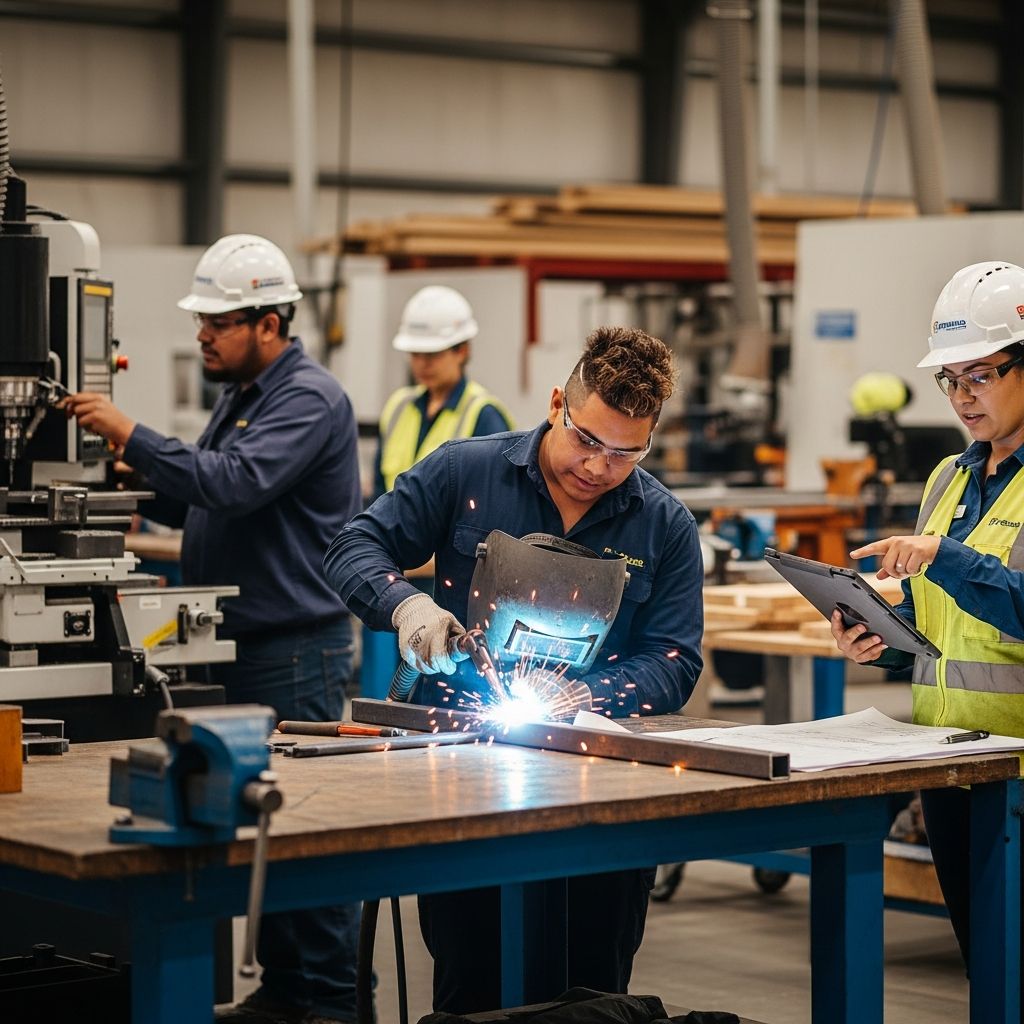
Canada’s trades sector offers robust economic potential for Indigenous individuals seeking stable, well-paying jobs. With demand for skilled workers in construction, manufacturing, and service industries, specialized programs bridge gaps in access, providing culturally relevant training and employment support. These initiatives recognize existing community skills while equipping participants with certifications for journeyperson status.
Why Pursue Trades as an Indigenous Professional?
Trades careers align with strengths like hands-on problem-solving and resilience often honed in Indigenous communities. They provide immediate income through paid apprenticeships, tool subsidies, and pathways to entrepreneurship. Physically active roles in carpentry, welding, or plumbing suit diverse preferences, from indoor culinary work to outdoor ironworking. Alberta and British Columbia lead with programs addressing rural-urban divides, fostering reconciliation through industry partnerships.
Key attractions include:
- Earn while learning: Apprenticeships combine paid work with training, minimizing financial barriers.
- Cultural integration: Programs incorporate land-based learning and Indigenous leadership.
- Long-term stability: Journeypersons enjoy median wages exceeding $80,000 annually in high-demand trades.
- Business ownership: Certification unlocks contracting opportunities in community projects.
Essential Steps to Launch Your Trades Journey
Entering the trades begins with self-assessment and targeted preparation. Evaluate physical fitness, math aptitude, and interest via online quizzes from provincial agencies. Network through community events, job boards like Indigenous Careers, or family connections to identify sponsors—employers committing to mentorship and paid hours.
| Step | Action | Resources |
|---|---|---|
| 1. Explore Trades | Research designations like electrician or millwright | Provincial apprenticeship sites |
| 2. Build Foundations | Complete pre-apprenticeship modules | Trade Winds to Success, PGNAETA |
| 3. Secure Sponsorship | Apply via job postings or networks | ALIS job search, First Nations Jobs |
| 4. Enroll in Apprenticeship | Register for technical training | SkilledTradesBC, Alberta Apprenticeship Board |
Spotlight on Key Training Programs
Trade Winds to Success: Alberta’s Gateway
This Alberta initiative targets Indigenous residents in Edmonton and Calgary, offering orientation and pre-apprenticeship for trades like boilermaker, carpenter, electrician, insulator, ironworker, millwright, plumber, steamfitter/pipefitter, and welder. Participants gain hands-on skills, safety certifications, and employer connections, paving the way to full apprenticeships.
SkilledTradesBC Initiatives in British Columbia
SkilledTradesBC funds community-based programs emphasizing reconciliation. The Indigenous Peoples in Trades Training (IPTT) features Trades Sampler for exploring construction and mechanical trades, plus certifications in safety and math. K5T’s Community-Led Apprenticeship Development introduces cultural competency and labor market insights in northern regions.
PGNAETA Programs: Northern Access Points
In Prince George, the Prince George Nechako Aboriginal Employment & Training Association (PGNAETA) delivers Tradetek Trades Access (16-20 weeks pre-apprenticeship) and Trades Link (customized work plans with employer matching). These prepare participants for foundation-level training, including culturally transferable skills.
Specialized Offerings: Culinary and Beyond
Pre-Trades Culinary Arts provides 13-week immersion for Indigenous learners, blending theory and techniques. I-FEAST in Chetwynd and Kitwanga offers land-based modules for employment readiness. Squamish Nation programs in Vancouver focus on foundational connections.
National Networks and Federal Support
Beyond provinces, the Indigenous Skills and Employment Training (ISET) Program funds local organizations for skills upgrading and job placement. BuildForce Canada’s directory highlights centres like Alberta Indigenous Construction Career Centres (AICCC), partnering with NorQuest College for construction pathways.
Other highlights:
- Aboriginal Apprenticeship Board of Ontario boosts First Nations, Métis, and Inuit participation.
- Saskatchewan Indian Institute of Technologies (SIIT) offers construction trades with career centre support.
- Native Women’s Association of Canada (NWAC) NAP connects women and Two-Spirit individuals to apprenticeships.
Overcoming Barriers: Tailored Supports
Programs address transportation, childcare, and cultural safety. Many include pre-employment coaching, job prep, and personal supports. Women-focused tracks like Trade Winds and Indigenous Leadership Development Institute emphasize mentorship. Rural delivery ensures accessibility in remote areas.
Success Metrics and Real Impacts
Participants report higher retention rates with culturally safe environments. Journeypersons contribute to community infrastructure, from housing to energy projects. Government investments align with reconciliation, targeting underrepresentation—Indigenous peoples comprise 5% of trades workers despite 5% population share.
Frequently Asked Questions
What qualifications do I need to start?
Most programs require Grade 10 equivalency, but pre-training builds essentials. No prior experience needed for entry levels.
Are these programs free?
Many cover tuition, tools, and stipends via funding; eligibility based on Indigenous status and residency.
How long until journeyperson status?
Typically 4 years: 80% on-job training, 20% classroom, varying by trade.
Can women and youth participate?
Yes, dedicated streams like NWAC NAP and youth strategies prioritize them.
Where to find local opportunities?
Check SkilledTradesBC, ALIS, or ISET providers; contact via listed phones/emails.
References
- Indigenous Peoples in Trades Training — WorkBC. 2023. https://www.workbc.ca/explore-training-and-education/trades-training/pre-apprenticeship-programs/indigenous-peoples
- Indigenous People in Trades — SkilledTradesBC. 2024. https://skilledtradesbc.ca/indigenous-people-in-trades
- Women in Trades — Trade Winds to Success. 2023. https://www.tradewindstosuccess.ca/for-students/women-in-trades/
- Opportunities for Indigenous Peoples in the Trades — ALIS (Government of Alberta). 2024-01-18. https://alis.alberta.ca/look-for-work/find-work/opportunities-for-indigenous-peoples-in-the-trades/
- Indigenous Opportunities — BuildForce Canada. 2023. https://www.buildforce.ca/en/indigenous-opportunities/
- Indigenous Skills and Employment Training — Government of Canada. 2024. https://www.canada.ca/en/employment-social-development/programs/indigenous-skills-employment-training/service-delivery-organizations.html
- Apprentices — Native Women’s Association of Canada. 2023. https://nwac-nap.ca/apprentices/

Medha Deb is an editor with a master's degree in Applied Linguistics from the University of Hyderabad. She believes that her qualification has helped her develop a deep understanding of language and its application in various contexts. Medha specializes in the areas of beauty, health, sports, and wellness and is committed to ensuring that the content on the website is…