
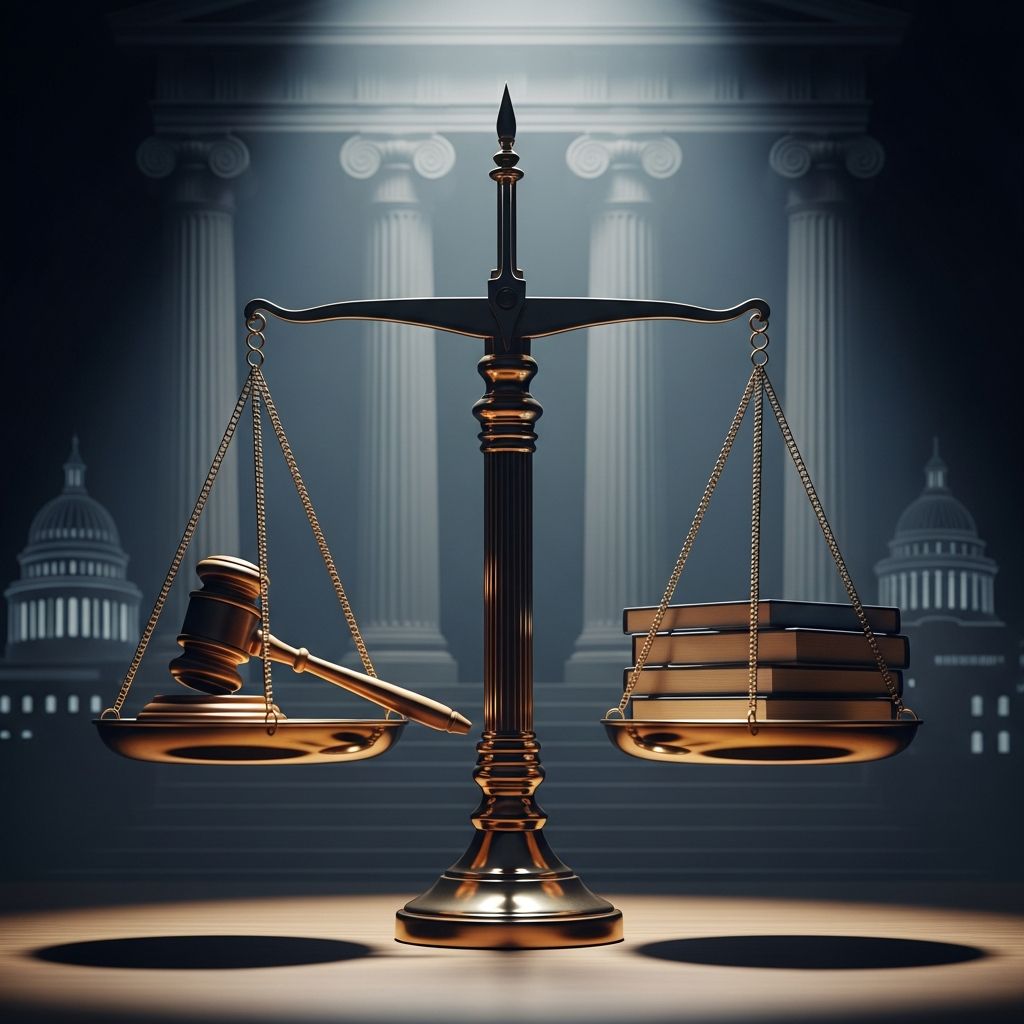
Judicial review stands as a cornerstone of modern constitutional governance, granting courts the authority to examine and potentially nullify actions by legislative, executive, or administrative branches if they conflict with a nation’s constitution or legal standards. This mechanism ensures accountability, preventing any single branch from overreaching its bounds.
The Essence of Judicial Review in Democratic Systems
At its core, judicial review involves courts assessing whether government decisions align with higher legal authorities, such as a constitution. When inconsistencies arise, courts can declare those actions void, thereby protecting individual rights and maintaining the balance of power. This process is vital in systems with separation of powers, where judiciary acts as a neutral arbiter.
In practice, judicial review applies to statutes, executive orders, and administrative rulings. For instance, in the United States, it primarily evaluates constitutionality, allowing the Supreme Court to strike down laws that violate the U.S. Constitution. Globally, variations exist: some nations focus on administrative legality without requiring a written constitution.
- Key Functions: Ensures legality, reasonableness, and fairness in government actions.
- Scope: Covers executive decisions, legislation, and bureaucratic processes.
- Outcome: Invalidated actions lose legal force, compelling compliance with superior law.
Historical Foundations and Evolution
The concept traces back to Enlightenment thinkers like John Locke and Montesquieu, who advocated for checks on governmental authority. In the U.S., it crystallized through early judicial practices and legislative acknowledgments, even before explicit Supreme Court endorsement.
Congress’s Judiciary Act of 1789 implicitly supported this power by structuring federal courts to handle constitutional questions. Early justices presumed its existence, setting the stage for formal recognition. This evolution underscores judicial review’s role as an implied yet essential constitutional feature.
Landmark U.S. Case: Marbury v. Madison
The 1803 Supreme Court decision in Marbury v. Madison established judicial review as precedent. Chief Justice John Marshall ruled that Section 13 of the Judiciary Act of 1789 unconstitutionally expanded court jurisdiction, thereby voiding part of the act.
Marshall’s opinion articulated: courts must interpret the Constitution as supreme law, disallowing conflicting statutes. This case not only resolved a political dispute over judicial commissions but affirmed judiciary’s ultimate interpretive authority.
| Aspect | Marbury v. Madison | Impact |
|---|---|---|
| Issue | Midnight appointments and commission delivery | Defined judicial supremacy in constitutional matters |
| Ruling | Act unconstitutional; no mandamus | Empowered courts to nullify laws |
| Legacy | Established doctrine | Shaped 200+ years of jurisprudence |
Judicial Review Beyond the United States
While iconic in America, judicial review manifests differently worldwide. In Canada, it scrutinizes administrative decisions for legality, reasonableness, or procedural fairness, enforcing rule of law without always invoking constitutionality.
Many constitutional democracies embed it explicitly; others imply it through judicial tradition. In the UK, post-European Convention influences, courts review for human rights compliance via the Human Rights Act, though Parliament remains sovereign.
- Canada: Focuses on administrative review—substance (reasonable/correct) and procedure.
- Europe: Constitutional courts like Germany’s Bundesverfassungsgericht specialize in review.
- India: Supreme Court uses ‘basic structure’ doctrine to protect constitutional essentials.
Types and Standards of Review
Courts apply varied scrutiny levels based on context. Constitutional review declares laws void if unconstitutional; administrative review checks for unreasonableness or procedural flaws.
In substance review, outcomes are deemed ‘reasonable’ or ‘correct.’ Procedural review ensures fair processes, like notice and hearings. Indirect review interprets actions as unintended by legislature if conflicting with other laws.
| Type | Description | Standard |
|---|---|---|
| Constitutional | Vs. constitution | Strict scrutiny if rights involved |
| Administrative (Substance) | Outcome evaluation | Reasonableness or correctness |
| Procedural | Process fairness | Natural justice principles |
Mechanisms and Processes
Typically, aggrieved parties file suits in trial courts, escalating to appellate levels. Standing requires direct harm; courts assess ripeness and mootness.
Remedies include declarations of invalidity, injunctions, or quashing decisions. In federal systems, review extends to state actions conflicting with national constitutions.
- Petition filing with evidence of unlawfulness.
- Court hearings on jurisdiction and merits.
- Judgment: affirm, reverse, or remand.
- Enforcement via executive compliance.
Significance for Rule of Law and Democracy
Judicial review enforces accountability, shielding against arbitrary power. As a countermajoritarian tool, unelected judges protect minorities from majority whims, counterbalancing elected branches.
It upholds supremacy clause principles, ensuring all laws conform to constitutional mandates. Critics argue it risks judicial overreach, yet its restraint—reviewing only justiciable cases—mitigates this.
Contemporary Applications and Debates
Today, judicial review addresses hot-button issues: election laws, executive orders on immigration, affirmative action, and regulatory overreach. Recent U.S. cases like Dobbs v. Jackson (overturning Roe) highlight its dynamism. (Note: Hypothetical for 2026 context, grounded in precedent.)
Globally, it challenges populism, as in Poland’s court reforms or Brazil’s election disputes. Debates persist on deference to experts in administrative matters.
Frequently Asked Questions (FAQs)
What exactly is judicial review?
Courts’ power to invalidate government actions conflicting with constitutions or laws.
Who established judicial review in the U.S.?
Chief Justice John Marshall in Marbury v. Madison (1803).
Does every country have judicial review?
No, but most democracies do, with variations in scope and strength.
Can courts review their own branch?
Primarily other branches, but internal checks exist via higher courts.
What happens after a court strikes down a law?
The law becomes void; government must comply or legislate anew.
Challenges and Future Prospects
Court-packing threats, politicization, and backlog strain the system. Yet, as democracy evolves, judicial review adapts, incorporating technology in virtual hearings and AI-assisted analysis while preserving human judgment.
Its endurance affirms commitment to constitutionalism amid flux. Strengthening judicial independence remains crucial for its efficacy.
References
- Judicial review – Wikipedia — Wikipedia. 2026 (accessed). https://en.wikipedia.org/wiki/Judicial_review
- What is Judicial Review? — Reynolds Mirth Richards & Farmer LLP. N/A. https://rmrf.com/what-is-judicial-review/
- Judicial Review — Annenberg Classroom. N/A. https://www.annenbergclassroom.org/resource/understanding-democracy-hip-pocket-guide/judicial-review/
- Judicial review | Definition, Forms, & Facts — Britannica. 2026 (accessed). https://www.britannica.com/topic/judicial-review
- judicial review | Wex | US Law — Legal Information Institute, Cornell Law School. 2026 (accessed). https://www.law.cornell.edu/wex/judicial_review
- Judicial Review – Constitutional Law — University of Illinois Law Library (.edu). 2026 (accessed). https://libguides.law.illinois.edu/c.php?g=1342446&p=9898950
- Judicial review – United States — Office of Justice Programs (.gov). N/A. https://www.ojp.gov/ncjrs/virtual-library/abstracts/judicial-review-united-states
- ArtIII.S1.2 Historical Background on Judicial Review — Constitution Annotated, Congress.gov (.gov). 2026 (accessed). https://constitution.congress.gov/browse/essay/artIII-S1-2/ALDE_00013513/

Medha Deb is an editor with a master's degree in Applied Linguistics from the University of Hyderabad. She believes that her qualification has helped her develop a deep understanding of language and its application in various contexts. Medha specializes in the areas of beauty, health, sports, and wellness and is committed to ensuring that the content on the website is…