
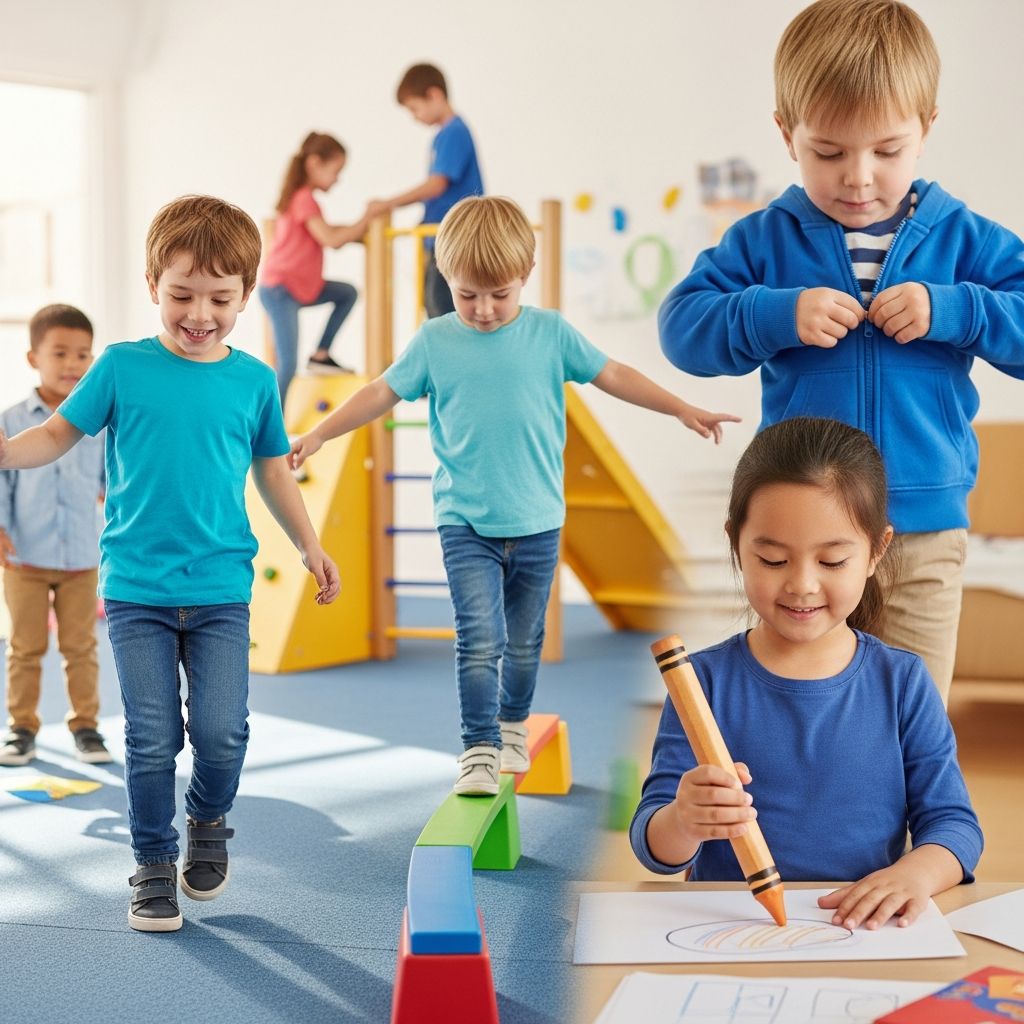
Entering kindergarten marks a pivotal stage in a child’s life, where physical abilities play a crucial role in daily learning, social interactions, and overall confidence. At this age, typically 4 to 6 years old, children refine their bodies’ control, enabling them to navigate classrooms, playgrounds, and group activities with ease. Strong physical foundations not only aid academic tasks like writing and cutting but also promote health, emotional regulation, and peer engagement. This guide delves into critical physical milestones, practical strategies for parents and educators, and fun ways to nurture these skills at home or school.
Building a Strong Gross Motor Foundation
Gross motor skills involve the large muscles in the arms, legs, and torso, essential for whole-body movements. By kindergarten, children should demonstrate proficiency in running, jumping, and climbing, which support physical education classes and recess play. These skills enhance endurance, spatial awareness, and coordination, allowing kids to participate fully in group games without fatigue.
Key indicators of readiness include the ability to hop on one foot, skip rhythmically, and climb stairs using alternating feet. Such movements build core strength, vital for maintaining posture during seated lessons. Research from the California Department of Education emphasizes that fundamental movement skills like these form the basis for lifelong physical health and activity.
- Hopping and Skipping: These actions develop unilateral balance and rhythmic timing, helping children sync movements with music or peers during circle time.
- Climbing and Balancing: Navigating playground equipment strengthens leg muscles and improves proprioception, or body position sense.
- Running with Agility: Quick directional changes, like zigzagging, prepare kids for sports and tag games.
Preschoolers advancing to kindergarten often show increased endurance, running longer without tiring, as noted in developmental overviews from early learning resources.
Mastering Fine Motor Precision
Fine motor skills target the smaller muscles in hands and fingers, crucial for self-care and academic tasks. Kindergarteners need dexterity to hold pencils correctly, use scissors, and manipulate small objects like beads or blocks. These abilities foster independence in dressing, eating, and hygiene routines.
Flexibility and strength in finger muscles enable precise actions, such as buttoning shirts or zipping jackets. Hand dominance—preferring one hand for tasks—solidifies around this age, aiding legible writing and tool use. The Spokane County Library District highlights how small muscle control supports writing readiness.
| Skill | Age Expectation (4-5 years) | Benefits |
|---|---|---|
| Pincer Grip | Pinch small items like cereal with thumb and finger | Improves drawing and self-feeding |
| Scissor Cutting | Cut along straight lines on paper | Enhances craft projects and focus |
| Bead Stringing | Thread 10+ beads independently | Boosts hand-eye coordination |
Activities like playdough squeezing or tweezers games refine these skills, turning practice into play.
Core Strength and Balance: The Stability Duo
Core strength underpins nearly all movements, from sitting still to explosive jumps. A stable core allows kindergarteners to balance on one foot for several seconds, walk beams, or recover from trips. Balance skills reduce falls and build confidence in dynamic environments like gyms or parks.
By 5 years, children hop proficiently, jump rope basics, and alternate feet on stairs, per Scholastic milestones. Virtual Lab School notes preschoolers’ climbing and jumping as precursors to these achievements.
- Practice standing on one leg during brush teeth time.
- Use balance beams made from tape on floors.
- Incorporate yoga poses like tree or warrior for fun strengthening.
Hand Dominance and Bilateral Coordination
Establishing a preferred hand—right or left—is foundational for tasks requiring precision. Most children show clear dominance by kindergarten, using it for throwing, cutting, and writing. Bilateral coordination, using both sides together, supports crossing midlines, like reaching across the body, vital for reading and sports.
Activities such as playing catch or wind-up toys encourage this integration. Without dominance, tasks like scissor use become frustrating, impacting participation.
Breath Control and Body Awareness
Regulating breathing during activity prevents quick exhaustion and supports focus. Kindergarteners learn to control inhales during exertion, aiding in games or dramatic play. Body awareness, or knowing personal space limits, helps in crowded classrooms.
Mimicry of motions—from dances to animal walks—enhances adaptability. Teachers often use songs for this, promoting multi-directional movement like sideways shuffles or backward walks.
Daily Activities to Boost Physical Growth
Incorporate movement into routines for natural development. Tummy time evolves into crawling races for babies, transitioning to obstacle courses for preschoolers. Outdoor play twice daily, per NAEYC guidelines, builds endurance.
- Morning Movement: Yoga or marching to music wakes muscles.
- Snack-Time Fine Motor: Pick up raisins with tongs.
- Recess Challenges: Hopscotch or tag for gross skills.
- Evening Wind-Down: Balance games or drawing.
California’s framework suggests tailored environments with climbing structures and open spaces.
Supporting Diverse Learners
Children develop at varied paces; some may need extra support. Observe for delays like persistent toe-walking or weak grip, consulting pediatricians if needed. Inclusive activities ensure all participate, adapting for motor challenges.
Frequently Asked Questions (FAQs)
What if my child hasn’t established hand dominance yet?
Most solidify by 5-6 years; encourage both hands in play without forcing. Consult specialists if unsure.
How much daily physical activity for kindergarten prep?
Aim for 60 minutes of varied movement, mixing structured and free play.
Can indoor activities replace outdoor play?
Indoor options like dancing work, but nature boosts sensory development.
Signs of strong core readiness?
Sitting criss-cross for 10+ minutes, hopping 5 times.
Best toys for fine motor skills?
Lacing cards, pegboards, small puzzles.
Long-Term Benefits of Early Physical Mastery
Investing in these skills yields healthier, happier kids. Strong motors correlate with better cognition, attention, and social bonds. Play-based approaches, as in Experience Early Learning curricula, integrate health choices too.
Parents climbing with kids or crawling together foster bonding and skills. By kindergarten, these culminate in agile, independent learners ready for challenges.
References
- Physical Skills for Kindergarten — Education Corner. 2023. https://www.educationcorner.com/physical-skills-for-kindergarten/
- Physical Movement – SCLD — Spokane County Library District. 2024. https://www.scld.org/getting-ready-for-kindergarten/physical-movement/
- CA PTKLF Physical Development — California Department of Education. 2023-10-01. https://www.cde.ca.gov/sp/cd/re/documents/ptklfphysicaldevelop.pdf
- Physical Developmental Milestones — Virtual Lab School. 2024. https://www.virtuallabschool.org/management/physical-development/lesson-2
- How Physical Skills Develop, Age by Age — Scholastic. 2023. https://www.scholastic.com/parents/family-life/social-emotional-learning/development-milestones/how-physical-skills-develop-age-age.html
- Physical Activity — NAEYC. 2022. https://www.naeyc.org/sites/default/files/globally-shared/downloads/PDFs/resources/pubs/healthy-young-children-sixth-edition-chap-5.pdf

- Integrated M.A. in Applied Linguistics, University of Hyderabad
- 5+ years in editorial, instructional, SEO, and research-based writing
Sneha is a relationships and lifestyle writer with a strong foundation in applied linguistics and certified training in relationship coaching. She brings over five years of writing experience to theskillvault, crafting thoughtful, research-driven content that empowers readers to build healthier relationships, boost emotional well-being, and embrace holistic living. Her writing and insights reflect the belief that beauty, happiness, and wellness…