
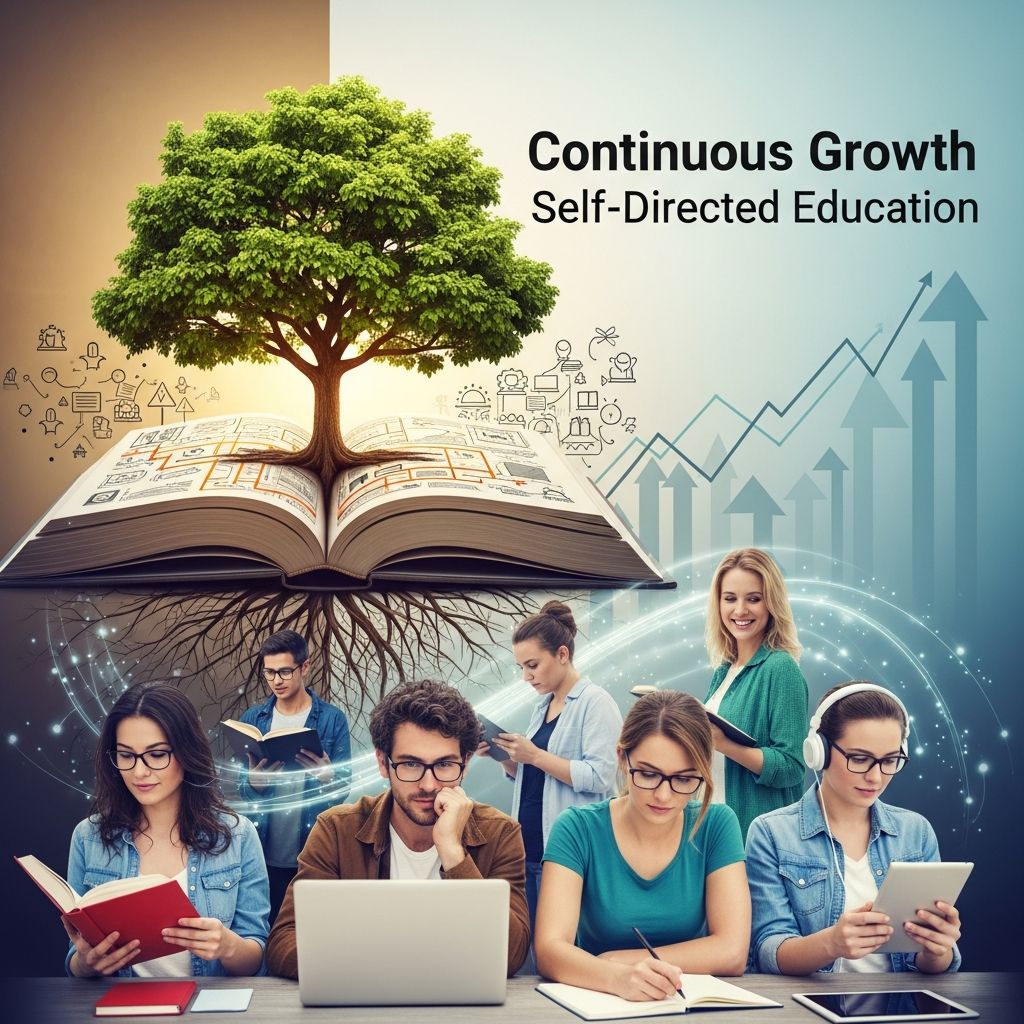
Building a Foundation for Perpetual Learning
The concept of continuous self-education has evolved significantly in our modern era. Rather than viewing learning as something that ends with formal schooling, a growing number of individuals recognize that acquiring new knowledge and skills is essential throughout every phase of life. This shift in perspective reflects the reality of rapid technological change, evolving career landscapes, and the human capacity for growth at any age.
Perpetual learning encompasses far more than simply reading books or attending classes. It represents a comprehensive approach to personal development that integrates curiosity, deliberate practice, and intentional skill-building into everyday routines. The foundation of this approach rests on understanding that your brain functions like a muscle—the more you exercise it through learning activities, the stronger and more adaptable it becomes.
The journey toward becoming a continuous learner requires shifting your mindset from viewing education as a destination to understanding it as an ongoing process. This philosophical change opens doors to unlimited possibilities for growth, regardless of your current age, career stage, or educational background.
Understanding Your Personal Learning Architecture
Before embarking on any learning initiative, it is crucial to conduct an honest assessment of yourself. This self-inventory should examine your existing strengths, identify areas for improvement, and recognize untapped potential. Consider the skills you already possess, the talents others have noticed in you, and the domains where you feel less confident.
A critical component of this self-assessment involves identifying your learning style preferences. People absorb information through different channels—some thrive with visual materials like diagrams and videos, others prefer auditory content such as lectures and podcasts, and still others learn best through hands-on experimentation and real-world application. Understanding which modality resonates most with you allows you to select learning resources that maximize your retention and engagement.
Additionally, reflect on your lifestyle and available time. Are you someone who prefers structured environments with scheduled classes, or do you thrive with self-paced, flexible learning? Do you have blocks of uninterrupted time available, or do you need to integrate learning into smaller pockets throughout your day? These practical considerations significantly influence which learning strategies will prove sustainable for you.
Establishing Clear and Measurable Learning Objectives
Vague aspirations to “learn more” rarely translate into concrete progress. Instead, establishing specific, measurable learning goals provides the clarity and motivation needed to sustain effort over time. Your objectives might target professional advancement, personal enrichment, health improvement, creative expression, or social contribution—or a combination of these.
Effective learning goals follow a clear structure: they define exactly what you want to accomplish, establish a realistic timeframe, and identify how you will measure success. For example, “I will complete an intermediate Python course within eight weeks” provides far more direction than “I want to learn programming.” Goals should also evolve over time as your interests shift, your skills advance, and life circumstances change.
The process of goal-setting connects directly to maintaining motivation. When you can see concrete progress toward defined objectives, you remain engaged and committed to your learning routine. Conversely, poorly defined or overly ambitious goals can lead to discouragement and abandonment of learning initiatives.
Designing Your Personalized Learning Portfolio
Rather than relying exclusively on a single learning method, diversifying your learning approaches creates a richer, more engaging educational experience. This portfolio approach prevents monotony while accommodating different learning situations and goals.
A comprehensive learning portfolio might include:
- Structured online courses through established platforms that provide curriculum, feedback, and credentials
- Asynchronous content consumption such as books, articles, blogs, and industry publications that deepen knowledge in specific areas
- Audio-based learning through podcasts and audiobooks that fit seamlessly into commutes, exercise routines, and household tasks
- Interactive experiences including webinars, workshops, conferences, and networking events that provide real-time engagement and relationship-building
- Mentorship relationships with experienced professionals who share insights and provide personalized guidance
- Applied practice through hands-on projects, volunteer work, or side initiatives that test knowledge in practical contexts
The combination of these modalities keeps learning fresh while ensuring you’re engaging with material in ways that match your learning style and available time.
Creating Sustainable Time Commitments
One of the greatest obstacles to lifelong learning is the belief that meaningful education requires large, uninterrupted blocks of time. In reality, consistent small investments in learning often prove more effective than sporadic intensive efforts. Research on habit formation suggests that dedicating 15 to 30 minutes daily to learning produces remarkable results over extended periods.
The key to sustaining these time commitments involves integrating learning into your existing routine rather than treating it as an additional burden. You might dedicate the first 30 minutes after waking to reading, transform your commute into learning time through audiobooks, use lunch breaks for online course modules, or wind down your evening with an educational podcast.
To institutionalize these commitments, block out specific time slots on your calendar just as you would for meetings or appointments. This strategy transforms learning from something you might do “when you have time” into a protected priority. Additionally, varying the time and context of your learning—sometimes in the morning, sometimes in the evening, sometimes at a café, sometimes at home—prevents the routine from becoming monotonous.
Leveraging Technological Resources and Platforms
The digital revolution has democratized access to world-class educational content. Comprehensive online platforms offer courses on virtually every conceivable subject, taught by recognized experts and accessible to anyone with internet connectivity. These platforms often include interactive components, progress tracking, and certificate options that add external validation to your learning journey.
Beyond formal course platforms, technology provides numerous resources for self-directed learning. Digital libraries grant access to millions of books and publications. Podcast networks deliver expert interviews and educational series on specialized topics. Educational YouTube channels cover everything from academic subjects to practical skills. Mobile applications gamify learning through spaced repetition, adaptive quizzes, and progress visualization.
The challenge of technological abundance is discernment—developing the ability to identify high-quality, credible sources amid a vast ocean of information. Critical evaluation skills, including verification of source credibility, cross-referencing of facts, and assessment of potential bias, become increasingly important as you navigate digital learning resources.
Life Stage Considerations in Your Learning Journey
While learning is lifelong, the focus and approach to learning naturally evolve across different life stages. Early career years often emphasize foundational skill development and career exploration. Mid-career phases frequently involve deepening expertise, developing leadership capabilities, and potentially transitioning into mentorship roles. Pre-retirement and retirement years might prioritize personal fulfillment, creative pursuits, and contributing wisdom to others.
Recognizing and adapting to these stage-specific priorities ensures that your learning remains relevant and meaningful throughout your life. A professional in their 40s might benefit from learning about emerging technologies to remain competitive, while someone in their 60s might prioritize learning activities that enhance quality of life and social connection.
Developing Resilience and Maintaining Momentum
Learning journeys inevitably encounter obstacles—plateaus where progress feels slow, topics that prove more challenging than anticipated, or life circumstances that temporarily disrupt your routine. Resilience involves recognizing that these periods are normal and expected rather than signals of failure.
Neurological research demonstrates that learning requires repetition and consolidation time. Your brain needs repeated exposure to new information before it becomes integrated into long-term memory and usable skill. When progress feels stalled, continuing to engage with material—even when advancement seems minimal—creates the neural pathways necessary for eventual breakthrough.
Tracking progress through learning journals, quizzes, or conversations with mentors provides tangible evidence of advancement even when progress feels subjective. Recording what you’ve learned, challenges you’ve overcome, and insights you’ve gained creates a documented record that reinforces your commitment and demonstrates real progress.
The Role of Curiosity and Openness
Curiosity functions as the engine of lifelong learning. Individuals who maintain genuine interest in understanding how things work, why people behave as they do, and what possibilities exist naturally gravitate toward learning opportunities. This quality goes beyond intellectual interest—it encompasses an emotional openness to new experiences and a willingness to venture into unfamiliar territory.
Cultivating curiosity involves regularly challenging your existing assumptions and beliefs. Rather than accepting information passively, ask critical questions: Why is this true? What evidence supports this perspective? What alternative viewpoints exist? This questioning stance transforms you from a passive recipient of information into an active participant in knowledge construction.
Maintaining openness means remaining willing to explore subjects outside your established expertise or interests. Often, the most transformative learning occurs when you venture beyond your comfort zone into entirely new domains.
Building Community and Seeking Mentorship
While self-directed learning emphasizes individual agency, the most resilient learning journeys often involve meaningful relationships. Mentors provide guidance, share accumulated wisdom, offer perspective during challenging phases, and help you avoid common mistakes. These relationships need not be formal—mentors can emerge from networking events, professional organizations, online communities, or existing personal connections.
Similarly, community involvement enriches learning. Whether through professional associations, volunteer organizations, hobby groups, or online forums, connecting with others pursuing similar learning goals creates accountability, provides motivation, and facilitates knowledge exchange. These communities normalize the ongoing learning journey and provide models of how others have overcome obstacles.
Measuring Success Beyond Credentials
While certifications and credentials provide valuable external markers of learning, the deeper measures of success are often internal and practical. Ask yourself: Have I developed capabilities I didn’t possess before? Can I apply this knowledge in meaningful ways? Do I feel more confident in this domain? Am I better equipped to contribute value in my profession or community? These questions capture the true impact of your learning journey.
Success also encompasses the habits and mindsets you’ve developed. Becoming someone who regularly seeks new information, approaches challenges with problem-solving orientation, and views obstacles as learning opportunities represents profound personal transformation that extends far beyond specific skills or credentials.
Frequently Asked Questions
Q: How much time should I dedicate to learning daily?
A: Research suggests that 15 to 30 minutes of daily learning produces meaningful results. Consistency matters more than duration—dedicating 20 minutes every day typically yields better outcomes than sporadic multi-hour sessions.
Q: What if I don’t know which learning path to pursue?
A: Start with self-assessment to identify your strengths, interests, and areas for development. Then explore broadly through diverse learning methods before narrowing your focus as patterns emerge.
Q: How do I stay motivated when progress feels slow?
A: Track progress through learning journals, seek feedback from mentors, celebrate small wins, and remember that the brain requires repetition to develop competence. Revisit your original goals to reconnect with your motivation.
Q: Are online courses as effective as in-person learning?
A: Effectiveness depends on your learning style and the course quality. Many people thrive with online learning, while others prefer interaction-rich environments. The best approach matches your preferences and circumstances.
Q: Can I balance learning with a full work schedule?
A: Yes, by integrating learning into existing daily activities—listening to podcasts during commutes, reading during lunch breaks, or dedicating 30 minutes in the evening to online courses.
Q: How do I know if I’m choosing quality learning resources?
A: Evaluate source credibility, check instructor credentials, read reviews from other learners, and verify that content aligns with current knowledge in the field. Cross-reference information from multiple sources.
References
- Mapping the Lifelong Learning Journey: Tips for Each Decade of Life — Association for Talent Development. 2024-09-18. https://www.td.org/content/atd-blog/mapping-the-lifelong-learning-journey-tips-for-each-decade-of-life
- 7 Steps to Building and Sustaining a Lifelong Learning Routine — Instructure. https://www.instructure.com/resources/blog/7-steps-building-and-sustaining-lifelong-learning-routine
- How to Develop a Lifelong Learning Mindset — University of Phoenix. https://www.phoenix.edu/blog/how-to-develop-a-lifelong-learning-mindset.html
- What Is Lifelong Learning? A Guide to Growth and Success — The Mind Company. 2025-05-27. https://themindcompany.com/blog/what-is-lifelong-learning
- The Ultimate Guide To Mastering 10 Lifelong Learning Habits — DIY Genius. https://www.diygenius.com/lifelong-learning-guide/
- Seven essential elements of a lifelong-learning mind-set — McKinsey & Company. https://www.mckinsey.com/capabilities/people-and-organizational-performance/our-insights/seven-essential-elements-of-a-lifelong-learning-mind-set
- Lifelong Learning: How to Continuously Learn and Grow — Mark Manson. https://markmanson.net/lifelong-learning
- How to Embrace Lifelong Learning After 60 — 12 Oaks Senior Living. https://12oaks.net/lifelong-learners/

Medha Deb is an editor with a master's degree in Applied Linguistics from the University of Hyderabad. She believes that her qualification has helped her develop a deep understanding of language and its application in various contexts. Medha specializes in the areas of beauty, health, sports, and wellness and is committed to ensuring that the content on the website is…