
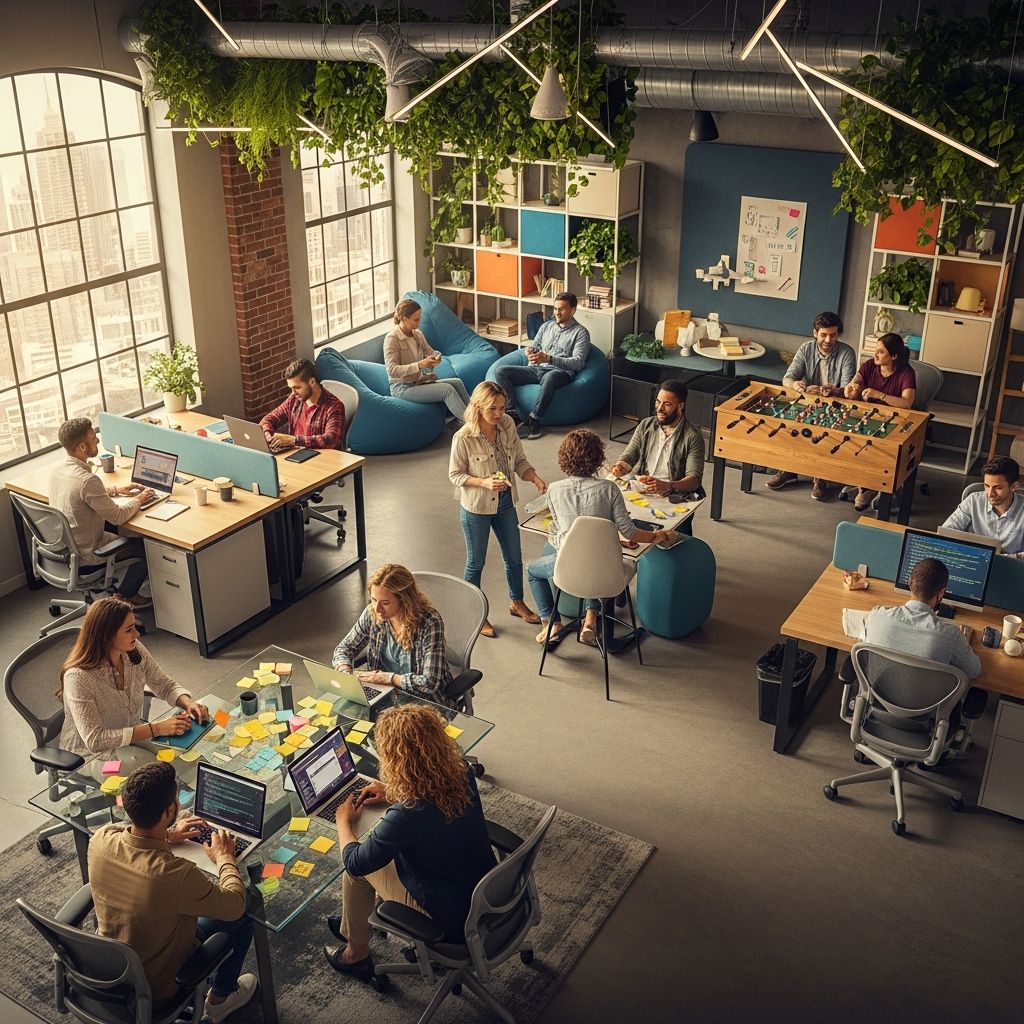
Modern workplaces are undergoing a profound transformation, largely influenced by the preferences and expectations of millennials, who now form a significant portion of the global workforce. These professionals prioritize flexibility, meaningful work, and technological integration over traditional structures, pushing organizations to adapt for competitiveness and retention.
The Shift Toward Purpose-Driven Cultures
At the heart of millennial workplaces lies a demand for deeper meaning beyond financial rewards. Millennials seek roles where their contributions align with broader organizational goals and societal impact. This emphasis on purpose fosters higher engagement and loyalty.
Organizations responding to this trend invest in transparent communication about company missions. Performance management systems centralize feedback, helping employees see their role in the ‘bigger picture.’ Such tools enhance productivity by personalizing employee experiences and building trust.
- Regular check-ins to align individual tasks with company vision.
- Recognition programs highlighting impactful contributions.
- Diversity initiatives that reflect inclusive values.
This cultural pivot marks a departure from salary-focused retention, emphasizing emotional investment in work.
Hybrid Work as the New Standard
Hybrid models blending remote and in-office days have become the norm, offering structured flexibility that suits millennial lifestyles. Unlike chaotic ‘work from anywhere’ approaches, successful hybrids define core hours for collaboration and accountability.
Data shows nearly 40% of employees engage in some remote work, with 27% in hybrid setups. Leaders must design these environments with clear expectations and robust tech support to maintain alignment across distributed teams.
| Aspect | Traditional Office | Hybrid Model |
|---|---|---|
| Schedule | Fixed 9-5 | Core hours + flexible |
| Collaboration | In-person only | Digital tools + scheduled syncs |
| Productivity | Location-bound | Outcome-focused |
Implementing hybrid success involves investing in contract management software and change management plans to ensure seamless transitions.
Technology and AI: Enhancing Human Potential
Millennials, digital natives, expect workplaces infused with cutting-edge technology. AI acts as a ‘true teammate,’ automating routine tasks like chatbots handling HR queries, freeing employees for creative pursuits.
Phygital experiences integrate physical spaces with digital tools seamlessly, using sensors and platforms that anticipate needs without overwhelming users. Blunt force automation redesigns jobs by assigning tasks to humans or AI based on skills data.
- AI for personalized learning paths.
- Chatbots for instant support.
- Unified platforms reducing app fatigue.
However, leaders must prioritize responsible AI with data privacy guardrails to build trust.
Prioritizing Learning and Career Growth
Continuous development is non-negotiable for millennials. Surveys reveal 70% of Gen Z and 59% of millennials seek weekly skill advancement, often self-funding professional growth.
Organizations counter this by offering formal mentoring, micro-credentials, and dedicated learning time. Linking skills to career paths boosts engagement, as per LinkedIn reports. Job redesign in 2026 will break roles into tasks, pairing humans with AI for optimal upskilling.
Partnerships with educational institutions and internal knowledge-sharing rewards amplify these efforts, ensuring workforce adaptability in a dynamic market.
Fostering Wellbeing and Human Connections
Beyond productivity, millennial workplaces emphasize holistic wellbeing. Structured wellness practices, like mental health days and ergonomic designs, treat wellbeing as a performance driver.
Human connection trumps occupancy metrics; offices become hubs for teamwork and socializing, especially for mid-career professionals. In a 24/7 global ecosystem, mixed-use spaces with amenities keep energy high around the clock.
- Wellness budgets for fitness and mindfulness.
- Social events bridging hybrid gaps.
- Flexible policies supporting work-life integration.
Diversity, Equity, and Innovation
With five generations colliding, workplaces embrace cultural fluidity and DEI as innovation engines. Moving beyond generational stereotypes, designs cater to career stages: early-career for coaching, late-career for leadership huddles.
This inclusivity drives diverse perspectives, enhancing problem-solving and adaptability in global networks.
Leadership in the Millennial Era
Effective leaders orchestrate these trends, from hybrid playbooks to AI pilots. They normalize wellbeing, fund DEI, and allocate learning time, turning workplaces into thriving ecosystems.
Dynamic orchestration replaces static plans, focusing on human-machine collaboration for value creation. Culture alignment prevents dissonance, ensuring performance goals are met.
Frequently Asked Questions
What defines a millennial workplace?
A millennial workplace features flexibility, purpose, tech integration, and growth opportunities tailored to digital-native professionals seeking meaningful careers.
How does hybrid work benefit millennials?
It offers work-life balance through structured remote options, boosting productivity via clear collaboration protocols and tech support.
Why is AI crucial in these environments?
AI automates mundane tasks, enables personalized learning, and creates phygital experiences, allowing focus on high-value work.
What role does learning play in retention?
Millennials prioritize upskilling; programs like mentoring and micro-credentials directly address this, reducing turnover.
How can companies measure success?
Track engagement via performance systems, retention rates, and feedback on purpose alignment and wellbeing.
Navigating Challenges in Millennial Workplaces
Despite benefits, challenges like AI-driven layoffs and culture dissonance persist. Leaders must balance automation with human roles, ensuring upskilling precedes job redesign. Reputational risks from poor implementation demand transparent communication.
Energy concerns in always-on global setups require sustainable designs, aligning with millennial values on environmental impact.
Future Outlook for 2026 and Beyond
By 2026, workplaces will fully integrate these elements: hybrid norms, AI partnerships, wellbeing priorities, DEI innovation, daily learning, and adaptive leadership. Organizations ignoring these risk talent loss, as 51% of employees remain open to leaving.
Proactive adaptation positions companies for a multi-generational, tech-savvy future where employee experience drives success.
References
- The Top 2026 Trends Are driven by Millennials — Synergita. 2026. https://www.synergita.com/blog/top-trends-are-driven-by-millennials/
- Workplace Trends for 2026: Preparing for the New Labor Market — Leadership Circle. 2026. https://leadershipcircle.com/blog/workplace-trends-2026/
- 10 must-know workforce trends for 2026 — Dayforce. 2026. https://www.dayforce.com/blog/10-workforce-trends-for-2026
- Workplace trends 2026: The future of workplace experience — ezCater. 2026. https://www.ezcater.com/lunchrush/office/workplace-trends-2025/
- 10 Workplace Trends for 2026: What’s In and What’s Out? — Gensler. 2026. https://www.gensler.com/blog/10-workplace-trends-for-2026-whats-in-and-whats-out
- 2026 Employee Retention Trends Affecting Your Workforce — York Development Company. 2026. https://www.yorkdevco.com/news-and-media/p/item/66455/2026-employee-retention-trends-affecting-your-workforce
- 2026 Global Human Capital Trends — Deloitte Insights. 2026. https://www.deloitte.com/us/en/insights/topics/talent/human-capital-trends.html

Medha Deb is an editor with a master's degree in Applied Linguistics from the University of Hyderabad. She believes that her qualification has helped her develop a deep understanding of language and its application in various contexts. Medha specializes in the areas of beauty, health, sports, and wellness and is committed to ensuring that the content on the website is…