
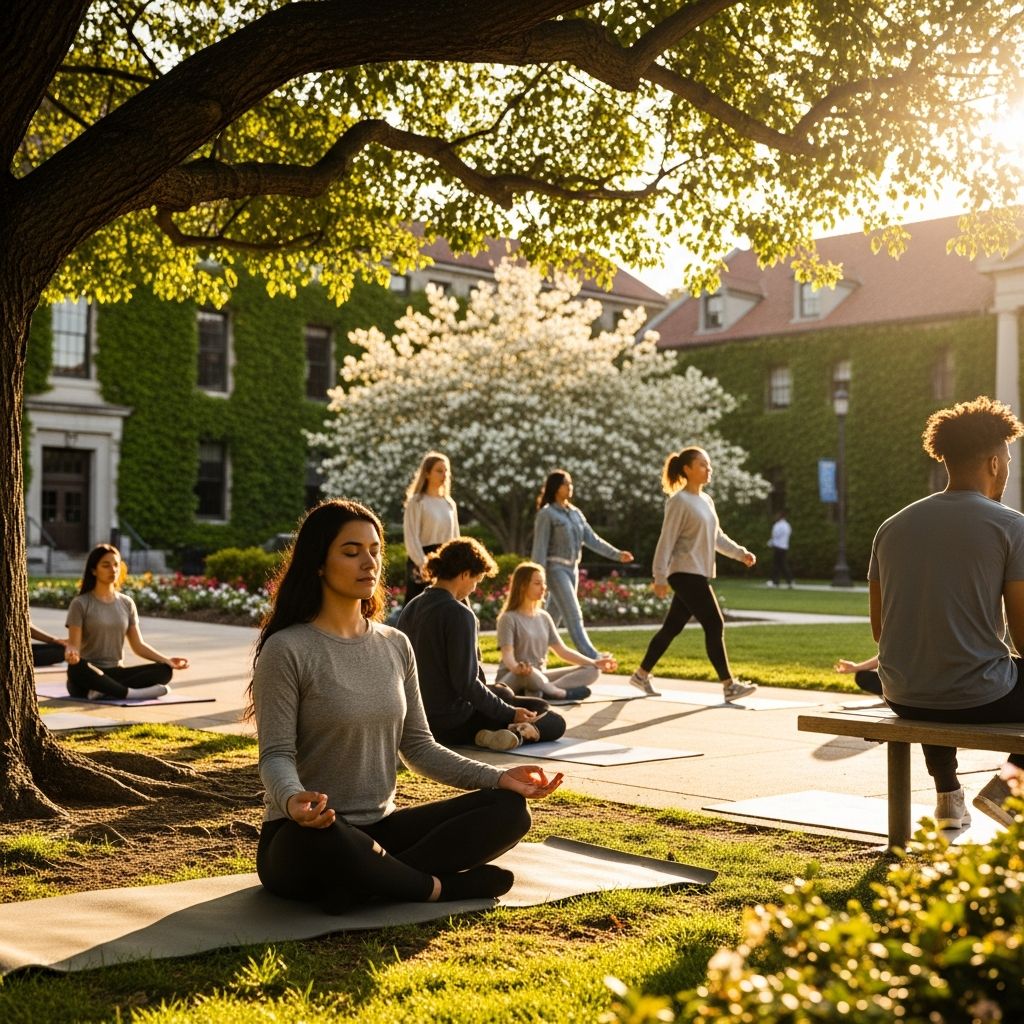
Mindfulness practices offer a powerful tool for promoting student wellness by helping young learners manage stress, improve emotional regulation, and build resilience. Research demonstrates that school-based mindfulness programs lead to significant improvements in mental health, reducing symptoms of depression, anxiety, and attention issues while enhancing focus and self-awareness.
Understanding Mindfulness in Educational Contexts
Mindfulness involves cultivating present-moment awareness through non-judgmental attention to thoughts, feelings, and sensations. In schools, it shifts students from reactive stress responses to intentional calm, activating the parasympathetic nervous system for relaxation. Studies show these practices decrease physiological stress markers and strengthen protective factors against mental health challenges.
For educators, mindfulness bridges the gap between academic demands and emotional needs. A Harvard study on sixth-graders found that eight weeks of mindfulness training reduced stress sensitivity in the brain’s amygdala, improving focus and self-control compared to non-participants. This makes it particularly valuable for students facing trauma or high-pressure environments.
Key Benefits of Mindfulness for Student Development
Mindfulness yields measurable gains across cognitive, emotional, and behavioral domains. Here’s a breakdown of primary advantages supported by evidence:
- Emotional Regulation: Programs like Mindfulness-Based Stress Reduction (MBSR) teach breathing awareness and non-judgmental attitudes, lowering depressive symptoms and rumination.
- Stress Reduction: Regular practice decreases attention problems and cortisol levels, with brain scans showing reduced reactivity to negative stimuli.
- Resilience Building: Interventions foster empathy, gratitude, and self-compassion, buffering against anxiety and promoting long-term mental health.
- Academic Enhancement: Improved concentration and self-awareness boost learning capacity and task management.
A meta-analysis of university students confirmed mindfulness significantly alleviates stress, anxiety, and depression, with effects persisting post-program. Similar outcomes apply to K-12 settings, where consistent practice prevents risky behaviors like substance use.
Proven Mindfulness Programs for Schools
Several evidence-based programs stand out for their efficacy. The table below compares key interventions:
| Program | Target Age | Key Components | Evidence Level |
|---|---|---|---|
| .b (Mindfulness in Schools Project) | Teens | Breathing, body scans, meditation | High |
| MindUP | Elementary | Empathy, gratitude activities | Moderate |
| Gaia Program | Elementary | Kindness, compassion exercises | Moderate |
| MBSR Blend | All ages | Stress reduction, cognitive therapy | Moderate |
These programs integrate seamlessly into curricula, with high-evidence ones showing broad mental health gains. For higher education, mindfulness courses prevent illness and enhance well-being over eight weeks.
Practical Techniques to Introduce in Classrooms
Educators can start with simple, actionable exercises requiring minimal time. Focus on demonstration over explanation to engage students effectively.
- Mindful Breathing: Guide students to notice breath for 1-2 minutes, shifting from fight-or-flight to rest mode. Practice during transitions or high-stress moments.
- Body Scan: Direct attention to sensations from toes to head, promoting relaxation and awareness.
- Five Senses Exercise: Name one thing seen, heard, felt, smelled, and tasted to anchor in the present.
- Mindful Pause: A 30-second reset to ease anxiety before tests or tasks.
- Three-Minute Breathing Space: Observe mind, body, and behavior with curiosity, reducing chronic stress.
Incorporate these into daily routines: warm-ups, advisories, or assemblies. Modeling by teachers builds trust and efficacy, especially in trauma-responsive environments.
Implementing Mindfulness School-Wide
Successful integration requires buy-in, consistency, and flexibility. Key strategies include:
- Staff training on mindfulness science to foster understanding and empathy.
- Scheduled sessions, like daily guided meditations, to embed in culture.
- Student-led practices, empowering them to self-initiate during stressful times.
- Remote adaptations, such as virtual guided meditations or breathing boards for counseling.
Begin small—end classes with a mindful moment—to build presence without overwhelming schedules. Track progress via simple surveys on stress levels to refine approaches.
Addressing Challenges and Best Practices
Not all students engage immediately; avoid forcing participation to preserve benefits. Tailor to age: action-oriented for younger learners, reflective for teens. For college students, link to campus life stressors like exams or transitions.
Combine with community elements, like relationship-building, for deeper impact. Evidence supports voluntary, repeated practice for habit formation and sustained stress management.[10]
Frequently Asked Questions (FAQs)
How often should students practice mindfulness?
Daily short sessions (1-5 minutes) yield best results, integrated into routines for automatic stress response shifts.
Is mindfulness suitable for young children?
Yes, elementary programs like MindUP show moderate-to-high evidence for emotional gains when action-based.
Can mindfulness replace counseling?
No, it complements professional support, especially for trauma, by building coping skills.
What if a student resists mindfulness?
Respect boundaries; demonstrate gently and offer alternatives to avoid counterproductive pressure.
Does mindfulness improve academic performance?
Indirectly yes, via better focus, resilience, and reduced anxiety, as seen in brain and behavioral studies.
Long-Term Impact on Student Success
Beyond immediate relief, mindfulness cultivates lifelong skills. Teens practicing breathing exercises manage stress more effectively, reducing substance risks.[10] University meta-analyses confirm enduring mental health improvements, enhancing resilience and concentration.
In K-12, school-wide adoption creates empathetic cultures, supporting vulnerable students. As programs expand, they promise to mitigate mental health epidemics proactively.
References
- Supporting Student Mental Well-Being with Mindfulness Programs — American Psychiatric Association. 2023. https://www.psychiatry.org/news-room/apa-blogs/student-well-being-and-mindfulness-programs
- Helping College Students Manage Stress Through A Mindfulness Program — Innovative Educators. 2023. https://www.innovativeeducators.org/products/helping-college-students-manage-stress-through-a-mindfulness-program-123
- Mindfulness Activities for Students — Hazelden Betty Ford Foundation. 2023. https://www.hazeldenbettyford.org/articles/student-mindfulness
- Mindfulness A Focus on Students — TREP Educator. 2023. https://www.trepeducator.org/mindfulness-students
- Making Time for Mindfulness — Harvard Graduate School of Education. 2019-01-07. https://www.gse.harvard.edu/ideas/usable-knowledge/19/01/making-time-mindfulness
- Practicing Mindfulness Can Help Reduce Stress in College Students — Delaware Valley University. 2023. https://delval.edu/blog/practicing-mindfulness-can-help-reduce-stress-in-college-students
- Mindfulness Initiatives for Students, Teachers, and Parents — PMC (National Library of Medicine). 2023. https://pmc.ncbi.nlm.nih.gov/articles/PMC9885932/

Medha Deb is an editor with a master's degree in Applied Linguistics from the University of Hyderabad. She believes that her qualification has helped her develop a deep understanding of language and its application in various contexts. Medha specializes in the areas of beauty, health, sports, and wellness and is committed to ensuring that the content on the website is…