
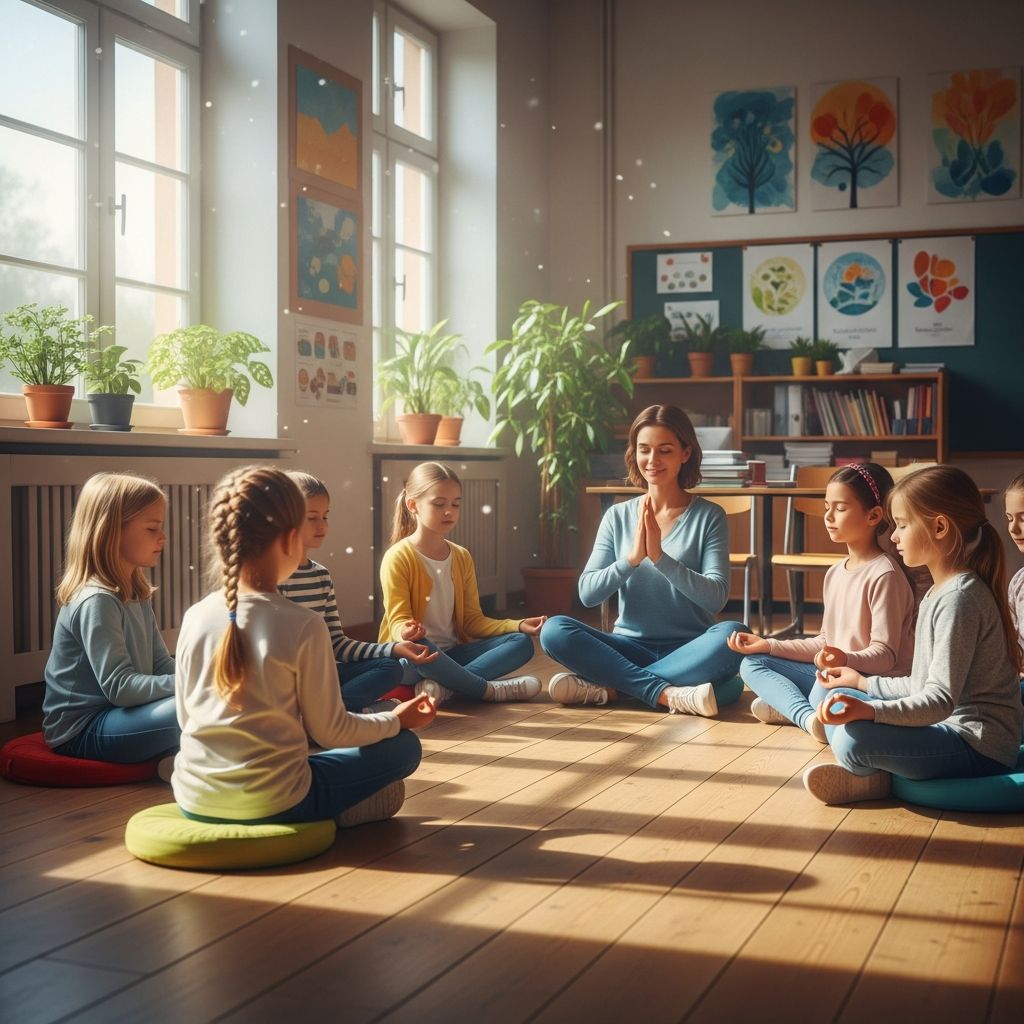
Understanding Mindfulness as an Educational Tool
Mindfulness in educational settings refers to the deliberate integration of awareness and present-moment attention practices into the daily learning experience. Rather than treating mindfulness as an optional enrichment activity, forward-thinking educators recognize it as a foundational component of comprehensive student development. The practice helps learners develop critical self-awareness skills, cultivate empathy toward peers, and build sustainable techniques for managing stress and maintaining focus throughout their academic careers. When implemented consistently, mindfulness transforms classrooms from spaces where students passively receive information into environments where learners actively engage with their own cognitive and emotional processes.
The educational landscape has shifted dramatically in recent years, with increasing recognition that academic success depends on more than subject mastery. Students face unprecedented levels of anxiety, distraction, and emotional turbulence. Teachers, simultaneously, experience burnout at alarming rates. Mindfulness addresses both student and educator needs by providing accessible, evidence-based practices that strengthen mental resilience and classroom dynamics.
The Demonstrated Impact on Student Learning and Behavior
Research consistently demonstrates that mindfulness practices produce measurable improvements in student outcomes across multiple dimensions. Students who participate in regular mindfulness activities show enhanced ability to concentrate during lessons, reduced impulsive behavior, and improved emotional regulation. Perhaps most significantly, mindfulness transforms how educators and students respond to behavioral challenges. Rather than viewing disruptions as discipline problems requiring punishment, mindfulness-trained classrooms reframe these moments as opportunities for teaching self-awareness and decision-making skills.
The emotional benefits extend beyond the classroom walls. Students struggling with anxiety report that mindfulness practices anchor them to the present moment, preventing their minds from spiraling into worries about future events or past failures. This grounding effect proves particularly valuable during transitions between subjects, standardized testing periods, or any situation where student stress levels spike. Teachers trained in mindfulness themselves demonstrate lower blood pressure, reduced depressive symptoms, and enhanced compassion for struggling learners. This creates a positive feedback loop where teacher wellbeing directly correlates with improved classroom climate and student success.
Preparing the Foundation: Teacher Readiness and Self-Practice
The most critical step before introducing mindfulness to students involves the educator’s personal commitment to the practice. Teachers cannot authentically guide students through mindfulness experiences without first developing their own foundational skills and comfort level. This preliminary work requires dedicating time to practice chosen techniques independently, allowing educators to understand the subtle shifts in awareness, the challenges that arise, and the genuine benefits that emerge over time.
When teachers personally engage with mindfulness, they gain several essential advantages. They develop authentic language for discussing the practice, understand realistic timelines for student adaptation, and can troubleshoot implementation obstacles from experiential knowledge rather than theoretical understanding. Additionally, teachers who regularly practice mindfulness model the behavior they wish to cultivate in their students, demonstrating that presence and self-awareness are priorities worthy of classroom time.
Self-practice also helps educators identify which techniques resonate most strongly with their own learning style and temperament. Some teachers gravitate toward guided meditation, while others prefer movement-based practices or sensory awareness exercises. This personal discovery process becomes invaluable when adapting practices to meet diverse student needs and preferences.
Initiating Student Engagement: Building Understanding and Buy-In
Before implementing any mindfulness activities, educators must invest time in explicitly teaching students what mindfulness actually is and why it matters. Many students arrive with misconceptions about meditation, associating it with religious practices, passivity, or sitting motionless for extended periods. Clear, age-appropriate explanations help students understand that mindfulness is simply the practice of paying deliberate attention to present-moment experiences without judgment.
The introduction phase might include discussions about how the brain works, why distractions occur, and how attention functions like a muscle that strengthens with practice. Students benefit from understanding that mindfulness is not about emptying the mind or achieving a perfect meditative state, but rather about noticing where attention goes and gently redirecting it. This realistic framing reduces performance anxiety and creates psychological safety for experimentation.
Progressive Implementation: From Informal to Structured Practices
Successful mindfulness integration follows a deliberate progression from simple, informal awareness exercises to more complex, structured practices. The journey begins with converting ordinary classroom transitions into mindfulness moments. When students move between subjects or prepare for lunch, teachers can briefly prompt awareness of sensory experiences: “Notice the feeling of your feet on the floor. Listen to the sounds around you. Feel your breath moving in and out.” These spontaneous moments require no special materials or scheduling adjustments, yet they systematically train the brain’s attention capacity.
As students demonstrate comfort with informal mindfulness, educators can introduce brief, structured activities at predictable times. Many educators find success scheduling one or two short mindfulness exercises throughout the day, perhaps during morning arrival or as transitions between demanding academic tasks. Starting with 2-5 minute sessions respects students’ developing attention spans and prevents mindfulness from feeling burdensome rather than beneficial. As familiarity increases and students experience genuine benefits, educators can gradually extend duration and complexity.
Core Mindfulness Techniques for Classroom Application
Guided Breathing Exercises
Breathing serves as the foundation for most mindfulness practices because it remains accessible, immediate, and powerful. Guided breathing exercises teach students to use their breath as an anchor for attention. One effective technique, square breathing, involves tracing a four-sided shape while following a specific breath pattern: inhale for four counts, hold for four counts, exhale for four counts, hold for four counts, then repeat. This structured approach gives the mind a clear task and helps students experience the calming effects of deliberate breathing. After 2-5 minutes of practice, students can discuss how their bodies felt before and after, solidifying the connection between breathing practices and emotional regulation.
Sensory Awareness Activities
Mindfulness extends beyond internal experience to encompass deliberate sensory attention. Listening exercises build focus while simultaneously strengthening peer communication skills. Students can practice active listening by taking turns speaking while partners listen fully without planning their response, then summarizing what they heard. This simultaneously develops mindfulness and important social-emotional competencies. Sensory jar activities engage the olfactory system, with students smelling familiar scents like cinnamon or flowers and guessing the source, training their ability to concentrate on subtle sensory information.
Body Scan and Relaxation Practices
Body scan meditation teaches students to move their awareness systematically through different body regions, noticing sensations without attempting to change them. This practice develops interoceptive awareness—the ability to perceive internal bodily states—which supports emotional recognition and regulation. Teachers can guide students through relaxation imagery, describing calming scenarios that engage multiple senses and transport students’ minds to peaceful mental spaces.
Mindful Movement and Yoga
Physical movement aligned with breath creates powerful mindfulness experiences. Gentle yoga poses, stretching sequences, and intentional movement breaks scheduled every 30-45 minutes help students release accumulated tension while maintaining present-moment awareness. These activities prove particularly valuable for kinesthetic learners and students who struggle with stillness-based meditation. Combining movement with breath focus creates a holistic practice that engages body and mind simultaneously.
Creating an Optimal Physical Environment
The classroom physical space significantly influences students’ ability to access mindful awareness. Cluttered, visually overwhelming environments create cognitive load that competes with mindfulness practice. Thoughtfully organized classrooms with minimal visual distractions, ample natural light when possible, and calming elements like plants or nature imagery support the mental shift toward present-moment awareness. Playing soft background music or nature sounds during mindfulness activities further enhances the atmosphere, signaling to students that this designated time operates differently from typical instruction.
Some educators establish dedicated “mindfulness corners” where calming visual elements, comfortable seating, and sensory objects remain available for student self-regulation. This tangible space helps students understand that mindfulness has legitimate classroom importance and provides accessible tools for emotional management throughout the day.
Addressing Emotions and Building Emotional Intelligence
A critical component of mindfulness education involves helping students develop sophisticated emotional awareness and healthy coping strategies. Creating safe spaces where students can openly discuss feelings, without judgment or expectation of change, normalizes the full spectrum of human emotion. Visual emotion charts or feelings corners give students vocabulary and frameworks for identifying and naming emotional states. Teachers who explicitly teach coping mechanisms—taking deep breaths, counting to ten, progressive muscle relaxation—equip students with portable strategies for managing intense emotions when they arise.
This emotional literacy component transforms mindfulness from an academic skill into life preparation, teaching students that emotions are information rather than problems requiring suppression. Students learn to notice emotional patterns, understand triggers, and access strategies for regulation—competencies that serve them far beyond school.
Establishing Consistency and Building Student Ownership
Mindfulness practices generate cumulative benefits that depend on consistent, repeated engagement rather than occasional experiences. Establishing predictable mindfulness routines—perhaps a calming ritual at the start of each class period—creates neural pathways that strengthen over time. Students who initially approach mindfulness with skepticism often become enthusiastic practitioners once they experience genuine benefits. Research indicates that significant percentages of students develop independent mindfulness practices and express openness to expanding their engagement with these techniques.
Encouraging students to share reflections after mindfulness activities deepens their engagement and creates community around the practice. Peer discussions about how different students experience the same activity validate individual differences and help learners recognize that mindfulness affects everyone uniquely. Some students immediately feel calm, while others notice their minds wandering—both experiences provide valuable information and both are acceptable.
Overcoming Implementation Challenges
Educators often worry about skepticism from students, parents, or administrators unfamiliar with mindfulness. Framing mindfulness in secular, educational language emphasizing focus, emotional regulation, and stress reduction addresses these concerns. Clearly communicating the research evidence demonstrating benefits for student achievement and behavior helps stakeholders understand that mindfulness serves academic and behavioral goals, not spiritual or religious purposes.
Some students struggle with stillness or find guided meditation anxiety-inducing rather than calming. Offering multiple modalities—breathing exercises, movement practices, sensory activities—ensures all learners find accessible entry points into mindfulness. Similarly, recognizing that some students need briefer practice sessions respects neurodevelopmental differences while still providing benefits.
Integration with Curriculum and Academic Content
Rather than treating mindfulness as supplementary, innovative educators weave it throughout their existing curriculum. Mindfulness principles can enhance any subject area, from using focused attention practices before complex math problems to incorporating breathing exercises during writing activities. This integration normalizes mindfulness as an integral academic tool rather than a special program.
Frequently Asked Questions
Q: How long should mindfulness sessions last for elementary students?
A: Begin with 2-5 minute sessions and gradually increase duration as students develop comfort and familiarity with the practice. Consistency matters more than length; brief daily practices prove more effective than longer occasional sessions.
Q: What if students resist or feel uncomfortable during mindfulness?
A: Resistance often reflects unfamiliarity rather than genuine dislike. Offering multiple modalities, starting with informal practices, and allowing students to observe before participating helps accommodate varied comfort levels. Some students need movement-based rather than stillness-based practices.
Q: Do I need special training or certification to teach mindfulness?
A: While formal training enhances implementation, educators can begin with personal practice and high-quality resources. Many educators successfully introduce basic mindfulness techniques through self-study and experimentation, expanding their expertise over time.
Q: How does mindfulness address behavior problems?
A: Mindfulness teaches students self-awareness and provides tools for emotional regulation, helping them make conscious choices rather than reacting impulsively. This creates teachable moments where students learn from behavior rather than simply receiving punishment.
Q: Can mindfulness be incorporated without disrupting academic time?
A: Yes. Brief practices during transitions, as brain breaks, or as opening rituals integrate seamlessly into existing schedules. The focus and emotional regulation that result actually enhance academic productivity.
References
- Mindfulness in the Classroom: Tips & Tricks for Teachers — University of Iowa, School of Community and Social Work Mental Health. February 2023. https://scsmh.education.uiowa.edu/news/2023/02/mindfulness-classroom-tips-tricks-teachers
- Mindful Teaching: 7 Easy Techniques for Classroom Calm and Focus — Acacia Education. https://acacia.edu/blog/mindful-teaching-7-easy-techniques-for-classroom-calm-and-focus/
- Integrating Mindfulness in the Classroom: Benefits and Seven Practical Approaches — University of San Diego, Professional and Continuing Education. https://pce.sandiego.edu/mindfulness-in-the-classroom/
- Integrating Mindfulness in Your Classroom Curriculum — Edutopia. November 18, 2015. https://www.edutopia.org/blog/integrating-mindfulness-in-classroom-curriculum-giselle-shardlow
- Mindfulness in the Classroom — Child Mind Institute. https://childmind.org/article/mindfulness-in-the-classroom/
- Mindfulness in the Classroom — Northwestern University, School of Education and Social Policy. https://sesp.northwestern.edu/graduate-professional/teaching-learning-and-education/theory-practice-one-feed/mindfulness-in-the-classroom.html

- Integrated M.A. in Applied Linguistics, University of Hyderabad
- 5+ years in editorial, instructional, SEO, and research-based writing
Sneha is a relationships and lifestyle writer with a strong foundation in applied linguistics and certified training in relationship coaching. She brings over five years of writing experience to theskillvault, crafting thoughtful, research-driven content that empowers readers to build healthier relationships, boost emotional well-being, and embrace holistic living. Her writing and insights reflect the belief that beauty, happiness, and wellness…