
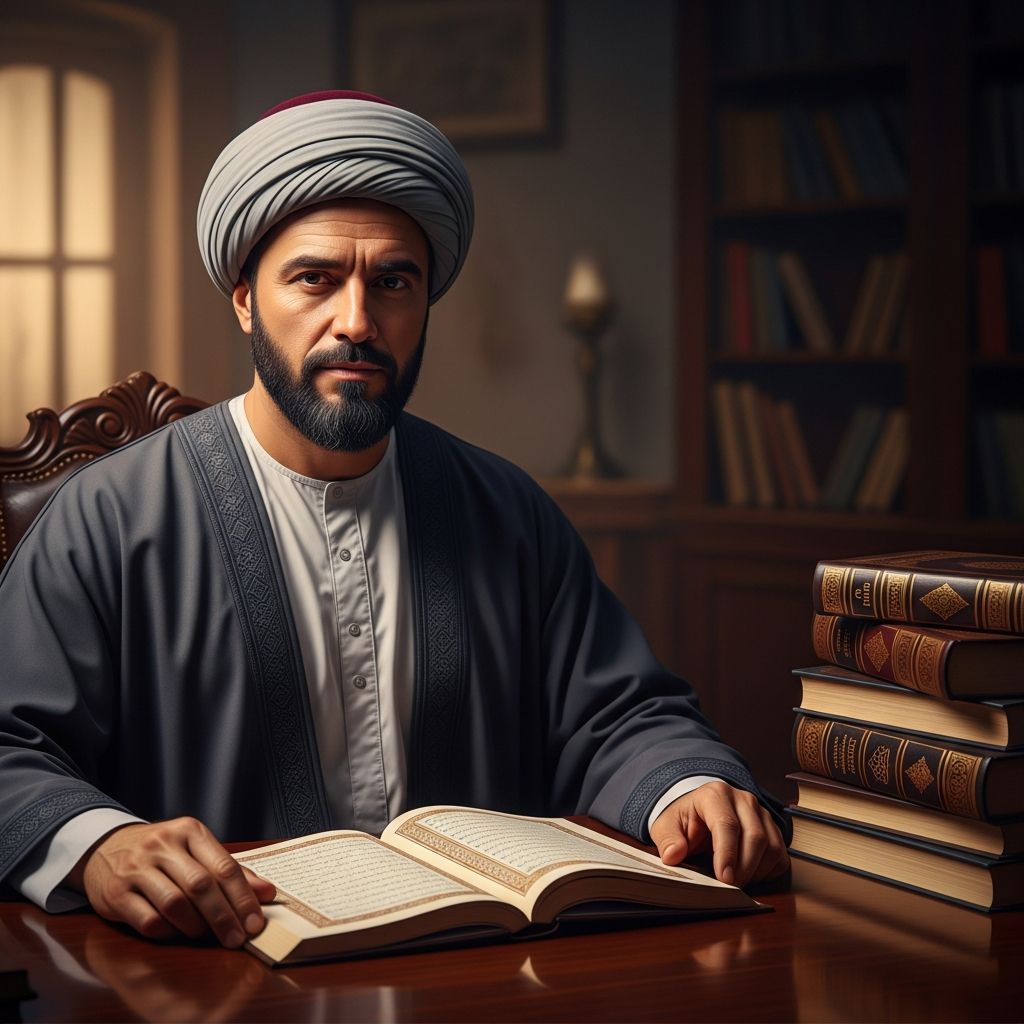
The Essence of Mullah: Defining a Sacred Title
The term “mullah” represents one of the most significant honorific titles within Islamic civilization, carrying deep historical roots and profound spiritual significance. Derived from the Arabic word “mawla,” which translates to “master” or “lord,” the mullah designation emerged as a way to recognize individuals who possessed specialized knowledge of Islamic theology, law, and religious practice. This title transcends mere nomenclature; it embodies a comprehensive understanding of Islamic principles and represents a commitment to guiding communities through religious and spiritual matters. The concept of mullah has evolved substantially over centuries, adapting to diverse cultural contexts while maintaining its core association with Islamic learning and leadership.
The mullah designation appears throughout Islamic history as a marker of scholarly achievement and spiritual authority. Unlike some religious titles that come with strictly formalized requirements, the acquisition of the mullah title traditionally reflects community recognition of an individual’s religious knowledge and pedagogical abilities. This flexible yet respectful approach allowed the title to spread across vast geographical regions, from the Middle East through Central Asia, South Asia, and into the Caucasus and Balkans. The adaptability of the mullah concept has enabled it to persist and flourish across different Islamic cultures, each adding its own interpretative nuances while respecting the fundamental meaning embedded in the term.
Historical Development and Evolution
The genealogy of the mullah title extends back to the formative centuries of Islam, emerging during a period when Muslim communities required qualified individuals to interpret religious texts and guide believers through complex spiritual and legal matters. As Islamic civilization expanded across continents, the need for trained religious scholars became increasingly urgent. Communities established formal structures for religious education, developing the madrasah system as the primary institution for transmitting Islamic knowledge to successive generations. Within this educational framework, individuals who completed rigorous training and demonstrated mastery of Quranic interpretation, Hadith scholarship, and Islamic jurisprudence gradually earned recognition as mullahs.
The consolidation of the mullah title into widespread usage occurred gradually during the medieval Islamic period, gaining particular prominence by the eleventh century. As Islamic empires consolidated their power and religious institutions matured, the mullah became recognized as a distinct class of religious functionaries who fulfilled essential roles within Muslim societies. The title’s adoption across diverse regions reflected both the universality of Islamic teachings and the particular cultural adaptations that occurred as Islam encountered different civilizations. Medieval Islamic texts document the mullah’s evolving responsibilities, from simple prayer leadership to complex roles in legal adjudication and scholarly disputation.
Educational Prerequisites and Training Pathways
Becoming a mullah typically requires substantial investment in religious education, though the specific pathways and durations vary across different Islamic traditions and geographical regions. The traditional route involves enrollment in a madrasah, an Islamic educational institution dedicated to studying the Quran, Hadith, Islamic jurisprudence (Fiqh), Islamic theology (Kalam), and related disciplines. These institutions provide systematic instruction in religious sciences, with curricula designed to ensure students develop comprehensive understanding of Islamic principles and their practical applications. The duration of madrasah education can span many years, with advanced students pursuing increasingly specialized fields of study.
The educational progression within madrasahs follows a graduated model where students move from foundational texts to more advanced and interpretative works. Beginners, sometimes referred to as “talibeen” or students, focus initially on memorizing the Quran and learning Arabic language skills essential for religious scholarship. Intermediate students progress to studying jurisprudential methodologies and engaging with classical interpretations of religious law. Advanced scholars undertake specialized research, sometimes focusing on particular schools of Islamic thought such as the Hanafi, Maliki, Shafi’i, or Hanbali traditions in Sunni Islam, or the Twelver or Ismaili traditions in Shia Islam. Upon completing their studies and demonstrating adequate knowledge, graduates earn recognition as mullahs within their communities.
It is important to note that formal certification processes differ substantially across regions. In some contexts, community recognition and demonstrated scholarly ability suffice for earning the mullah title, while in others, specific institutions may grant formal recognition. Afghanistan and Pakistan exemplify regions where madrasa graduation directly leads to mullah status, with graduates qualifying for positions as mosque leaders, religious school teachers, or local judges. This decentralized approach to credential recognition reflects Islam’s historical emphasis on knowledge and wisdom rather than institutional bureaucracy.
Primary Roles and Community Functions
Mullahs serve multifaceted roles within their communities, extending far beyond the common Western perception of religious leaders limited to prayer leadership. Their responsibilities encompass teaching, preaching, adjudication, ritual performance, and spiritual guidance. Understanding the breadth of mullah functions requires appreciating how Islamic religious life integrates spiritual, legal, educational, and social dimensions that Western secular societies often compartmentalize.
Prayer Leadership and Mosque Administration
One of the most visible functions of a mullah involves leading congregational prayers in mosques. As Imams, mullahs stand at the front of prayer spaces, reciting Quranic verses and guiding believers through the prescribed ritual movements and recitations. Beyond leading daily prayers, mullahs often organize mosque activities, maintain facilities, and coordinate community religious observances. During significant Islamic holidays such as Eid al-Fitr and Eid al-Adha, mullahs deliver special sermons and lead extended prayer sessions that can attract large congregations. This leadership role positions the mullah as a central figure in the religious life of mosque communities.
Religious Instruction and Theological Guidance
Mullahs frequently teach Islamic principles to community members of varying educational backgrounds. Some conduct formal classes in mosques or religious schools, instructing students in Quranic interpretation, Islamic history, and jurisprudence. Others engage in informal mentoring relationships, answering individual questions about religious practice and providing spiritual counsel. This educational function extends to all age groups, from children learning basic Islamic practices to adults seeking deeper theological understanding. Mullahs must translate complex theological concepts into accessible language appropriate for diverse audiences while maintaining theological precision and doctrinal consistency.
Ceremonial and Ritual Performance
Islamic life transitions—birth, marriage, and death—typically involve mullah participation. During naming ceremonies for newborns, mullahs recite prayers and provide spiritual blessings. Marriage contracts (Nikah) require mullah witnesses or facilitation to ensure Islamic compliance. Funeral rites and burial procedures involve mullah-led prayers and guidance, providing spiritual comfort to grieving families while ensuring proper Islamic observance. These ceremonial functions position mullahs as essential participants in life’s most significant moments, deepening their integration into community fabric.
Legal and Judicial Functions
In many Muslim-majority societies, mullahs serve judicial roles applying Islamic law to community disputes. Operating as local judges or arbiters, they resolve conflicts involving commercial disputes, family matters, inheritance questions, and property disagreements. Their decisions rest on Islamic jurisprudential principles and their interpretation of Sharia law. In some contexts, mullah judgments carry official governmental recognition, while in others they represent customary or community-accepted arbitration. This judicial function demonstrates how the mullah title encompasses both spiritual and legal authority within Islamic frameworks.
Variations Across Islamic Traditions and Regions
While the mullah concept maintains core meanings across Islamic civilization, significant variations emerge across different traditions, denominations, and geographical regions. These variations reflect how universal Islamic principles adapt to particular cultural contexts and theological frameworks.
Sunni and Shia Distinctions
Sunni and Shia Islam approach mullah roles somewhat differently, reflecting their distinct theological and organizational structures. In Shia Islam, particularly among Twelver Shias, the mullah occupies a more formalized clerical position within hierarchical religious structures. Shia mullahs often undertake additional training beyond basic religious education, pursuing advanced studies that may lead to higher clerical ranks such as Ayatollah or Hojatoleslam. The Shia tradition emphasizes jurisprudential expertise more explicitly, with senior mullahs expected to engage in independent legal reasoning (Ijtihad) to formulate religious opinions. This more structured approach reflects Shia emphasis on qualified religious authority and guidance through knowledgeable scholars.
Sunni communities generally employ less hierarchical mullah structures, with mullahs serving primarily as community teachers and prayer leaders rather than within formal clerical hierarchies. Sunni Islam’s traditional resistance to organized priesthood means that mullah authority derives more directly from community recognition and acknowledged scholarly ability than from institutional appointment. However, this generalization contains important exceptions; some Sunni communities, particularly in Ottoman and modern Turkish contexts, developed more formalized structures for religious functionaries.
Geographic and Cultural Variations
The term “mullah” enjoys particular prevalence in Iran, Afghanistan, Pakistan, India, Central Asia, the Caucasus, and parts of the Balkans. In these regions, mullah represents the standard designation for religious leaders and teachers. Interestingly, other Muslim-majority regions employ different terminology for analogous roles. In North African countries including Morocco, Algeria, and Tunisia, the term “imam” more commonly designates religious leaders, though mullah usage appears in some contexts. Turkish traditions sometimes employ the Ottoman-era term “mufti” or regional variations in religious functionary titles. These nomenclatural differences reflect historical developments and cultural-linguistic preferences rather than fundamental theological distinctions.
Social Status and Community Privileges
Throughout Islamic history, the mullah title conferred specific social status and particular privileges within Muslim communities. These advantages varied considerably based on time period, geographical location, and political system, but generally reflected society’s recognition of mullah contributions to religious and social welfare.
In many traditional Islamic societies, mullahs received exemptions from military service, recognizing their essential community functions. Certain occupations and positions were reserved exclusively for mullahs in civil and religious administration, creating protected career pathways. Tax exemptions, land grants, and other economic privileges often accompanied mullah status, providing material security that enabled full-time devotion to religious and scholarly pursuits. Communities frequently provided housing, food, and other necessities for mullahs, viewing this support as a communal religious obligation.
These privileges reflected broader Islamic civilizational values emphasizing knowledge, religious scholarship, and spiritual guidance as vital social goods deserving communal support. By creating material conditions enabling mullah dedication to religious functions, societies ensured that religious instruction, legal guidance, and spiritual leadership remained accessible regardless of individual financial circumstances. This approach contrasted with systems where religious services became commodified or where religious authority depended primarily on personal wealth.
Contemporary Significance and Modern Challenges
In contemporary Muslim societies, mullahs continue playing essential roles while navigating substantial challenges posed by modernization, secularization, and political change. The twentieth and twenty-first centuries witnessed significant transformations in mullah roles and social positioning.
During transformative historical moments such as Iran’s Constitutional Revolution in 1905 and the Islamic Revolution of 1978-1979, the term “mullah” sometimes acquired pejorative connotations when applied to religious conservatives opposing modernization through secular reforms. This usage reflected modernist critiques of traditional religious authority, portraying mullahs as obstacles to progress. However, these same revolutionary periods demonstrated mullah capacity for social and political engagement, with religious leaders mobilizing communities around Islamic principles and nationalist aspirations. Mullahs in Iran, Iraq, and Lebanon have continued shaping social and political developments throughout contemporary history.
Modern mullahs face the challenge of maintaining religious authority while engaging with contemporary issues including technology, education, economics, and social change. Many contemporary mullahs pursue advanced secular education alongside traditional religious training, developing expertise in fields like medicine, engineering, or law alongside Islamic scholarship. This intellectual pluralism enables mullahs to address modern questions through informed Islamic frameworks rather than relying solely on classical jurisprudential precedents.
Training Variations and Qualification Levels
The contemporary mullah landscape encompasses considerable diversity in training, expertise, and qualification levels. Not all individuals designated as mullahs possess identical educational credentials or knowledge levels, reflecting the absence of unified international certification systems. In some rural or village contexts, individuals with minimal formal religious training may be called “mullah” if they demonstrate greater Islamic knowledge than their neighbors and possess basic literacy. These village mullahs might lead prayers and provide elementary religious instruction without having completed comprehensive madrasah education.
Conversely, advanced scholars who have invested decades in religious study, mastered multiple jurisprudential traditions, and authored influential religious commentaries may also carry the mullah title alongside more prestigious designations. This spectrum reflects how the mullah concept functions as a broad category encompassing individuals with varying expertise levels. Understanding individual mullah background requires considering their specific training history, educational institution, and demonstrated scholarly achievements rather than assuming uniform qualifications across the title.
Frequently Asked Questions
Q: What distinguishes a mullah from an imam?
A: While these terms often overlap, they carry different emphases. “Imam” technically refers to anyone who leads prayers, while “mullah” emphasizes religious scholarship and teaching expertise. In some regions, the terms function interchangeably, while in others they denote different specializations or status levels within religious hierarchies.
Q: Can women be mullahs?
A: The traditional mullah concept technically applies to both men and women who undertake teaching and preaching functions, though historically and in many contemporary contexts, the role has been predominantly male. Some modern Islamic communities have begun recognizing female religious scholars and teachers with comparable titles, though this remains contentious in certain conservative circles.
Q: How long does it take to become a mullah?
A: Madrasah training typically requires several years, often ranging from 5 to 10 or more years depending on the institution and desired specialization. Advanced scholars may pursue studies extending 15+ years to reach senior mullah status in traditions emphasizing advanced jurisprudential training.
Q: Do all Muslim countries use the mullah title?
A: No, the mullah designation predominates in Iran, Afghanistan, Pakistan, Central Asia, and the Caucasus, while other Muslim regions employ alternative titles like “imam,” “mufti,” or “faqih.” Regional and linguistic preferences shape terminology choices despite underlying conceptual similarities.
Q: What political influence do contemporary mullahs exercise?
A: Mullah political influence varies substantially across contexts. In some nations, mullahs maintain significant social authority influencing public discourse on religious issues. In others, secular governments limit religious leader political participation. In theocratic systems, senior mullahs may hold substantial political power alongside spiritual authority.
References
- Mullah | Religious Leader, Cleric, Islamic Law — Britannica. Accessed 2026. https://www.britannica.com/topic/mullah
- MULLAH Definition & Meaning — Merriam-Webster. Accessed 2026. https://www.merriam-webster.com/dictionary/mullah
- Mullah — Encyclopedia.com. Accessed 2026. https://www.encyclopedia.com/religion/legal-and-political-magazines/mullah
- MULLAH Definition & Meaning — Dictionary.com. Accessed 2026. https://www.dictionary.com/browse/mullah
- MULLAH — Cambridge English Dictionary. Accessed 2026. https://dictionary.cambridge.org/us/dictionary/english/mullah

- Integrated M.A. in Applied Linguistics, University of Hyderabad
- 5+ years in editorial, instructional, SEO, and research-based writing
Sneha is a relationships and lifestyle writer with a strong foundation in applied linguistics and certified training in relationship coaching. She brings over five years of writing experience to theskillvault, crafting thoughtful, research-driven content that empowers readers to build healthier relationships, boost emotional well-being, and embrace holistic living. Her writing and insights reflect the belief that beauty, happiness, and wellness…