
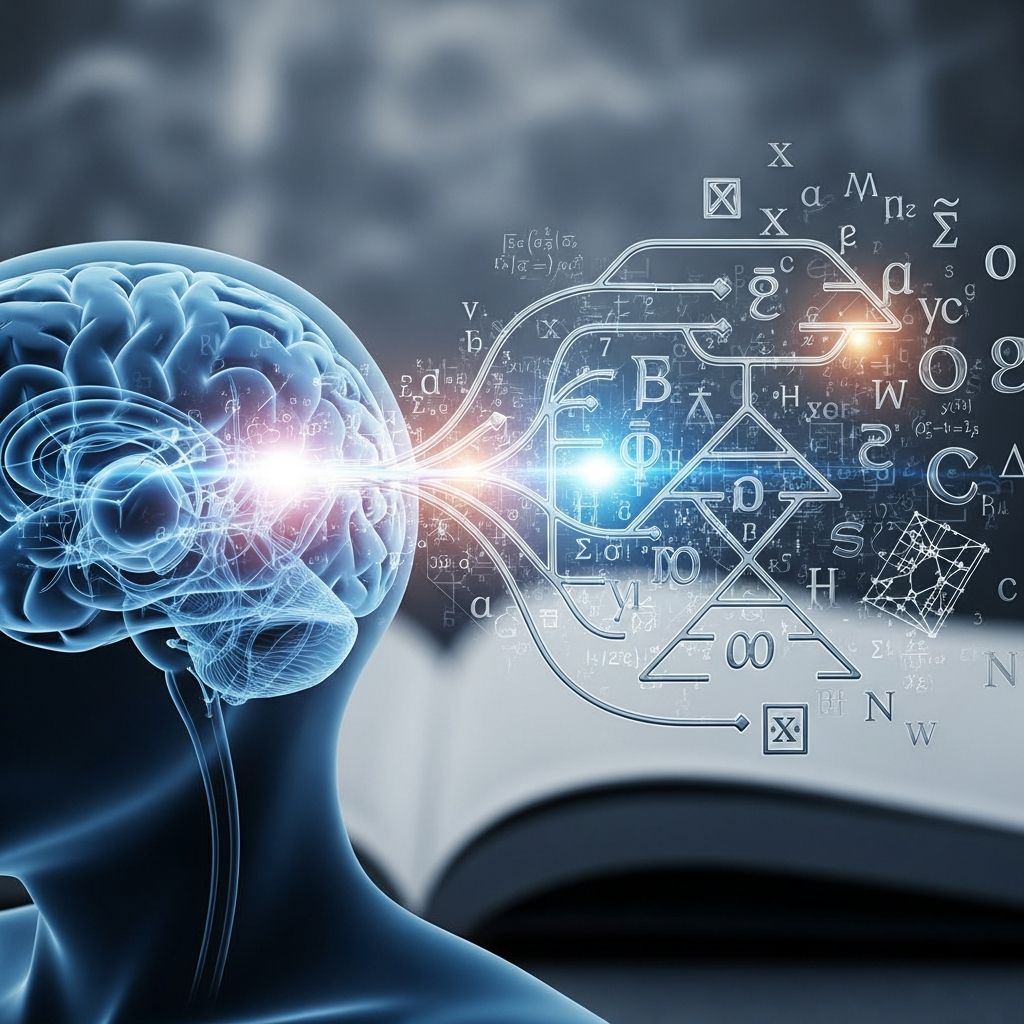
Noam Chomsky’s contributions have fundamentally altered how linguists understand human language, positing it as an innate biological faculty rather than a purely learned skill. His framework emphasizes internal cognitive mechanisms that enable rapid language mastery across diverse cultures.
The Birth of a Linguistic Revolution
In the mid-20th century, linguistics was dominated by structuralist and behaviorist paradigms, which treated language as a collection of observable patterns shaped entirely by environmental stimuli. Chomsky challenged this in his seminal 1957 work Syntactic Structures, introducing generative grammar as a formal system capable of producing infinite sentences from finite rules. This shift marked the cognitive turn in linguistics, viewing language as a window into the human mind’s innate capacities.
Chomsky’s early training under Zellig Harris exposed him to distributional analysis, but he soon diverged, arguing that empirical descriptions alone could not capture language’s creative essence. Instead, he proposed mathematical models akin to those in logic and computation, classifying grammars by their generative power in what became known as the Chomsky hierarchy.
Core Pillars of Chomskyan Theory
At the heart of Chomskyan linguistics lies the concept of **universal grammar (UG)**, a genetically encoded set of principles common to all human languages. This innate blueprint explains why children worldwide acquire complex syntax despite limited and imperfect input.
- Universal Grammar: Suggests deep structural similarities across languages, reducing apparent diversity to parameter variations.
- Language Acquisition Device (LAD): A hypothetical brain module that interprets environmental data to set language-specific parameters.
- Poverty of the Stimulus: Children master rules beyond what their exposure provides, implying innate knowledge.
These elements form a nativist perspective, contrasting sharply with empiricist views that prioritize nurture over nature.
Generative Grammar: From Deep to Surface Structures
Generative grammar aims to model a speaker’s linguistic competence—the subconscious knowledge enabling novel sentence production. Early models featured **phrase-structure rules** generating basic trees, followed by **transformational rules** converting deep structures (semantic cores) into surface structures (pronounceable forms).
Deep structure encodes meaning essentials, while transformations handle operations like passivization or question formation. For instance, “The cat chased the mouse” and “The mouse was chased by the cat” share a deep structure but differ superficially. Later evolutions introduced X-bar theory for hierarchical phrasing and the minimalist program, stripping grammar to bare essentials like Merge for combining elements.
| Grammar Component | Description | Example |
|---|---|---|
| Phrase-Structure | Builds initial syntactic trees | NP → Det N (The book) |
| Transformational | Modifies for surface form | Active to passive shift |
| Morphophonemic | Converts to sound | Plural: books → /bʊks/ |
This tripartite system, outlined in Syntactic Structures, provided a rigorous alternative to descriptive methods.
Chomsky vs. Behaviorism: A Paradigm Clash
Behaviorism, led by B.F. Skinner, viewed language as operant conditioning through imitation and reinforcement. Chomsky’s 1959 review of Skinner’s Verbal Behavior dismantled this, highlighting its failure to account for creativity and rapid acquisition.
| Aspect | Chomskyan Nativism | Behaviorist Model |
|---|---|---|
| Language Origin | Innate UG | Environmental learning |
| Acquisition Mechanism | LAD and parameters | Imitation/reinforcement |
| Novel Sentences | Generated by rules | Unexplained |
| Errors like Overgeneralization | Rule application evidence | Not predicted |
Chomsky argued that children’s overgeneralizations (e.g., “goed” for “went”) reveal internal rule-forming, not mere mimicry. This critique accelerated behaviorism’s decline in cognitive science.
Evolution of Chomskyan Models
Chomsky’s theories progressed through phases: early transformational grammar (1950s-60s), Standard Theory with deep/surface distinctions (1960s), Extended Standard Theory incorporating semantics (1970s), Government-Binding Theory with modular principles (1980s), and Minimalism (1990s onward).
Minimalism posits economy principles—I-language efficiency—where grammar emerges from general cognitive operations. Merge recursively builds phrases, explaining recursion’s universality, a key human language trait.
- Early Phase: Focus on syntax generation.
- Middle Phase: Integration of phonology, semantics.
- Late Phase: Biolinguistic minimalism, linking to evolution.
Implications for Language Learning
Chomsky’s ideas revolutionized education and psychology. The LAD concept suggests critical periods for acquisition, with milestones like two-word stages appearing cross-linguistically around 18-24 months. This uniformity supports innate timetables over cultural variance.
In classrooms, it advocates input-rich environments to trigger parameters, not rote drilling. Empirical studies confirm children ignore degenerate input, favoring grammatical forms.
Critiques and Ongoing Debates
Critics argue UG overstates innateness, citing creole genesis from pidgins without prior exposure. Usage-based theories emphasize frequency effects, challenging poverty of stimulus. Connectionist models simulate acquisition via neural networks, questioning symbolic rules.
Yet, Chomsky’s hierarchy endures in computational linguistics, powering parsers and AI language models. Natural languages exceed finite-state grammars, aligning with his classifications.
Chomsky’s Broader Legacy
Beyond linguistics, Chomsky influenced philosophy, psychology, and politics. His rationalist stance revives Cartesian innatism, positing language as evidence of mind-body union. In cognitive science, it bridges biology and computation, viewing I-language as an organ.
Today, biolinguistics explores genetic bases, with FOXP2 mutations linking to deficits, supporting heritability. Chomskyan tools underpin NLP, from machine translation to chatbots.
Frequently Asked Questions
What is Universal Grammar?
Universal Grammar is Chomsky’s hypothesis of innate linguistic principles shared by all humans, enabling language acquisition regardless of input quality.
How does generative grammar differ from structuralism?
Generative grammar predicts infinite novel sentences via rules, unlike structuralism’s focus on describing observed patterns.
Did Chomsky invent the Language Acquisition Device?
Yes, the LAD is a metaphorical device in Chomsky’s theory, housing UG to process input and set parameters.
Is Chomskyan linguistics still relevant?
Absolutely; minimalist principles inform modern syntax, acquisition research, and computational models.
What criticized Skinner’s behaviorism?
Chomsky’s 1959 review exposed its inability to explain syntactic creativity and innate capacities.
References
- Chomsky’s Theory of Language: A Teacher’s Guide — Structural Learning. 2023. https://www.structural-learning.com/post/chomskys-theory
- Noam Chomsky (1928-) — Internet Encyclopedia of Philosophy. 2023-10-12. https://iep.utm.edu/chomsky-philosophy/
- Noam Chomsky — Wikipedia (referencing primary works). 2026-04-04. https://en.wikipedia.org/wiki/Noam_Chomsky
- Chomsky’s Grammar — Encyclopædia Britannica. 2024. https://www.britannica.com/science/linguistics/Chomskys-grammar
- Noam Chomsky’s Approach to Linguistics — Literariness.org. 2017-05-14. https://literariness.org/2017/05/14/noam-chomskys-approach-to-linguistics/
- Analyticity and Chomskyan Linguistics — Stanford Encyclopedia of Philosophy. 2023. https://plato.stanford.edu/entries/analytic-synthetic/analyticity-chomsky.html
- Noam Chomsky — Oxford Research Encyclopedia of Linguistics. 2020. https://oxfordre.com/linguistics/display/10.1093/acrefore/9780199384655.001.0001/acrefore-9780199384655-e-356

Medha Deb is an editor with a master's degree in Applied Linguistics from the University of Hyderabad. She believes that her qualification has helped her develop a deep understanding of language and its application in various contexts. Medha specializes in the areas of beauty, health, sports, and wellness and is committed to ensuring that the content on the website is…