
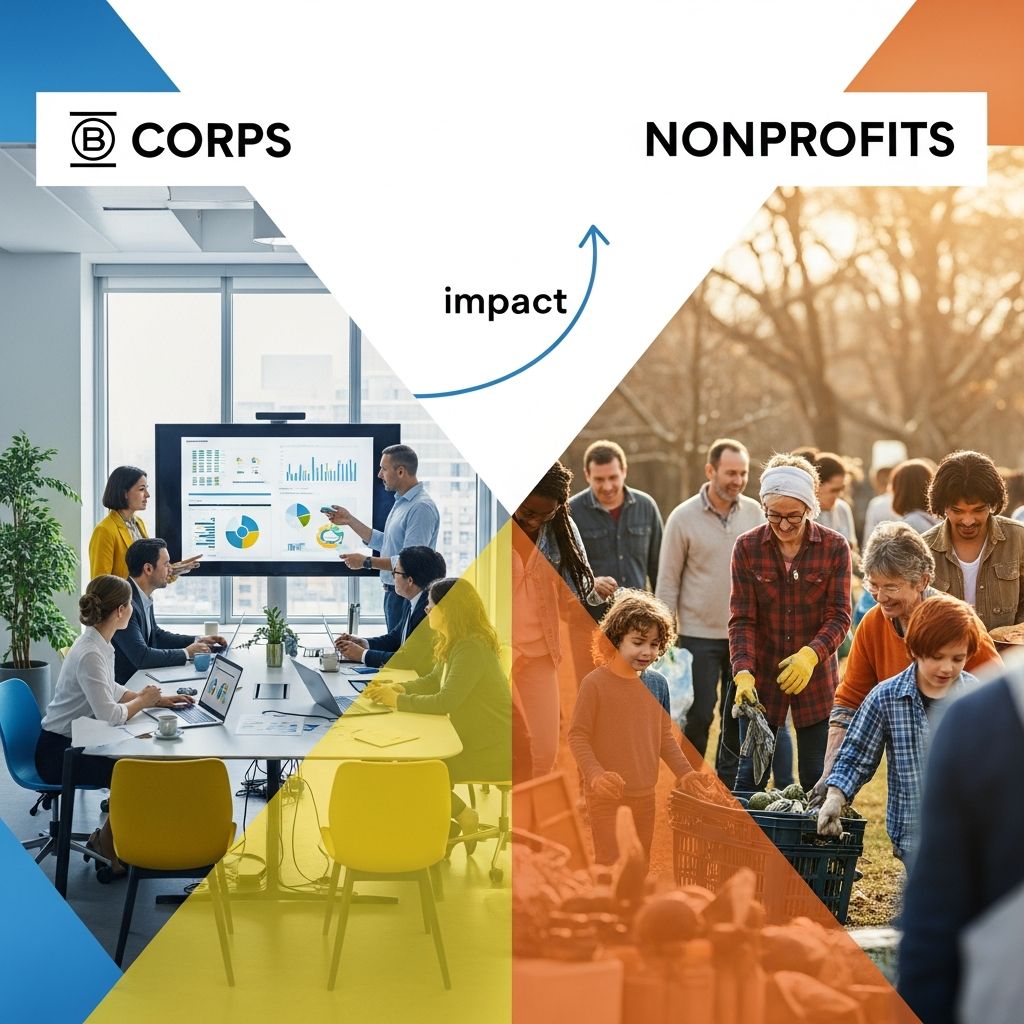
Understanding Mission-Driven Employment Models
The landscape of work has evolved considerably over the past two decades. Increasingly, professionals seek employment opportunities that align with their personal values and contribute meaningfully to society. Two primary organizational models have emerged as leaders in this space: nonprofit organizations and Benefit Corporations (B Corps). While both prioritize social or environmental impact alongside their operations, they differ fundamentally in structure, funding mechanisms, and operational philosophy. Understanding these distinctions is essential for professionals evaluating where to direct their career efforts and skills.
The choice between nonprofit and B Corp employment represents more than a simple job decision; it reflects broader career aspirations and personal commitment to specific types of impact work. Each model offers distinct advantages and presents unique challenges that merit careful consideration.
Structural Differences: Legal Frameworks and Organizational Design
The foundational differences between nonprofits and B Corps stem from their legal structures and how they are established. Nonprofits are primarily governed by a board of directors that oversees operations and ensures adherence to the organization’s mission. These boards typically consist of volunteers or paid members who represent community interests and stakeholder perspectives. The organizational structure emphasizes collective decision-making and accountability to the broader public rather than to shareholders.
B Corporations, conversely, operate as traditional for-profit businesses with a defined ownership structure. They maintain shareholders and investors who expect financial returns on their investment. However, B Corps distinguish themselves by pursuing a certified status that requires meeting rigorous social and environmental performance standards established by B Lab, an independent nonprofit organization.
This structural distinction has profound implications for how each organization operates, makes decisions, and allocates resources. Nonprofits exist in the legal framework of the charitable sector, whereas B Corps function within the commercial marketplace while maintaining social responsibility commitments.
Revenue Generation and Financial Sustainability
The methods by which nonprofits and B Corps generate revenue reflect their fundamental organizational purposes. Nonprofits depend heavily on philanthropic support, including donations, grants, and fundraising initiatives. While many nonprofits generate some revenue through service delivery or product sales, these commercial activities typically serve as supplementary income sources rather than primary revenue drivers. This funding model creates both opportunities and constraints for nonprofit staff, as available resources directly correlate with successful fundraising efforts.
B Corps employ traditional business revenue models, selling products or services to market customers. This approach provides greater financial predictability and reduces reliance on external funding sources. B Corps can reinvest profits into mission-aligned initiatives while also returning dividends to shareholders. This structure grants B Corps considerably more financial autonomy than their nonprofit counterparts, though it also introduces expectations for profitability and shareholder returns.
The funding differences profoundly affect workplace stability, resource allocation, and long-term strategic planning. Nonprofit employees often navigate environments where budgets fluctuate with grant cycles and donor commitments, while B Corp employees benefit from more stable, predictable financial environments driven by market demand.
Mission Flexibility and Operational Scope
A significant operational distinction emerges in how each model approaches mission definition and scope. Nonprofits typically maintain a focused, singular mission that guides all organizational activities. Legal requirements and tax-exempt status necessitate that nonprofits devote substantially all resources to achieving their designated mission. This focused approach creates organizational clarity but can limit flexibility in responding to emerging opportunities or evolving community needs.
B Corps benefit from considerably greater operational flexibility, allowing organizations to pursue multiple missions simultaneously. A B Corp might address environmental sustainability while also advancing social justice initiatives and supporting community development. This multifaceted approach enables B Corps to respond dynamically to market opportunities and stakeholder needs without the legal constraints facing nonprofits.
For career professionals, this distinction affects daily work experience significantly. Nonprofit employees engage in highly specialized, mission-focused work with deep expertise in particular areas. B Corp employees may encounter greater variety in their responsibilities, working across multiple initiatives and requiring adaptability to diverse project types.
Compensation, Benefits, and Career Development
| Aspect | Nonprofit Environment | B Corp Environment |
|---|---|---|
| Compensation Range | Often below market rates due to funding constraints | Typically competitive with traditional business sector |
| Benefits Packages | Variable; may include health insurance but often limited retirement plans | Comprehensive, comparable to for-profit companies |
| Career Advancement | Limited by organizational size and funding | Greater opportunities due to growth and profitability |
| Professional Development | Dependent on grant funding for training | Often includes allocated professional development budgets |
| Job Security | Subject to funding cycles and grant availability | Generally more stable based on market performance |
Compensation represents one of the most tangible differences between nonprofit and B Corp employment. Nonprofit positions typically offer lower salaries compared to equivalent roles in the for-profit sector or B Corporations. This disparity reflects funding limitations and the expectation that mission-driven professionals may accept reduced compensation in exchange for meaningful work. Benefits packages in nonprofits vary considerably based on organizational size and financial resources, with smaller nonprofits sometimes offering minimal health insurance or retirement contributions.
B Corps generally offer compensation packages comparable to traditional businesses, including competitive salaries, comprehensive health benefits, and retirement planning options. The financial stability inherent in B Corp models allows for more substantial employee investment. Additionally, growth-oriented B Corps frequently offer clearer advancement pathways and professional development opportunities funded through operational budgets rather than grant income.
Work Environment and Team Dynamics
The organizational cultures of nonprofits and B Corps reflect their different structural foundations. Nonprofit environments typically emphasize shared commitment to a specific cause, creating tight-knit teams united by dedication to mission achievement. Staff members often demonstrate exceptional passion for their work, accepting lower compensation as an expression of commitment to their cause. This intensity creates meaningful collegial relationships but can also lead to burnout when workloads exceed available resources.
B Corp work environments often blend corporate professionalism with social consciousness. Employees balance profit objectives with purpose-driven missions, creating dual-focused workplaces. While B Corps attract socially conscious professionals, the emphasis on financial performance and shareholder returns introduces commercial pressures less prominently present in nonprofits. This environment fosters innovation and business acumen while requiring employees to navigate the occasional tension between profit maximization and mission advancement.
Impact Measurement and Accountability Structures
Nonprofits implement accountability measures primarily through board oversight and donor reporting requirements. While nonprofits measure progress toward mission achievement, external reporting demands vary based on funding sources and regulatory requirements. Transparency standards exist but are less standardized across the nonprofit sector than in B Corps.
B Corps undergo rigorous third-party assessment through B Lab’s Impact Assessment, with certification requiring re-evaluation every three years. This mandatory accountability structure ensures consistent measurement of social and environmental performance against standardized metrics. B Corp employees operate within frameworks demanding documented impact evidence, creating organizational cultures of data-driven decision-making regarding social and environmental outcomes.
Tax Implications and Financial Incentives
Nonprofit organizations typically qualify for tax-exempt status, exempting them from federal income taxes and reducing operational costs. This tax advantage allows nonprofits to allocate more resources directly to mission achievement. However, securing and maintaining tax-exempt status requires navigating complex regulatory requirements and demonstrating ongoing public benefit.
B Corps do not automatically receive tax-exempt status and must pay standard federal income taxes applicable to their business structure. The tax burden represents a significant ongoing cost for B Corps, though the financial returns to shareholders and operational flexibility often justify this expense. Some jurisdictions offer incentives or recognition for benefit corporations, though these vary by location.
Advantages of Nonprofit Employment
- Deep mission alignment: Work directly on a focused cause with dedicated colleagues sharing identical values
- Community connection: Typically maintain stronger direct relationships with served communities and beneficiaries
- Specialization opportunities: Develop deep expertise within specific sectors or causes
- Meaningful relationships: Build strong professional connections through shared passion and commitment
- Rapid responsibility assumption: Smaller organizations often provide quicker pathways to significant responsibility and decision-making authority
Challenges in Nonprofit Career Paths
- Compensation limitations: Lower salaries and benefits compared to B Corps and traditional businesses
- Resource constraints: Limited access to professional development, technology, and operational tools
- Career ceiling limitations: Smaller organizational structures may restrict advancement opportunities
- Funding uncertainty: Staff reductions and program cuts may occur with grant cycles or donor decisions
- Burnout risk: Mission-driven intensity combined with resource limitations can create unsustainable workloads
Advantages of B Corp Employment
- Competitive compensation: Market-rate salaries and comprehensive benefits packages
- Financial stability: Predictable budgets and job security based on business performance
- Professional development: Adequate funding for training, certification, and skill advancement
- Career progression: Clear advancement pathways within growing organizations
- Operational resources: Access to modern technology and operational infrastructure supporting efficient work
- Impact scale: Ability to pursue multiple initiatives simultaneously, addressing broader social challenges
Challenges in B Corp Environments
- Profit-purpose tension: Navigating occasional conflicts between financial objectives and social mission
- Shareholder accountability: Operating with awareness of investor expectations for financial returns
- Mission diffusion: Multiple simultaneous missions may reduce focus intensity on any single cause
- Corporate culture dynamics: Potential for mission to become secondary to profitability as organizations scale
- Stakeholder complexity: Balancing interests of shareholders, employees, customers, and communities
Evaluating Organizational Fit and Career Priorities
Selecting between nonprofit and B Corp employment requires honest assessment of personal priorities and career objectives. Professionals prioritizing mission clarity and deep cause expertise often thrive in nonprofit environments despite compensation trade-offs. Those seeking financial stability, professional development investment, and career advancement opportunities typically find B Corps more aligned with their needs.
Consider evaluating specific organizations within each category rather than viewing nonprofits and B Corps as monolithic categories. Exceptional nonprofits offer competitive compensation and growth opportunities, while underperforming B Corps may struggle financially. Individual organizational culture, leadership quality, and resource availability matter significantly in shaping employment experience.
Frequently Asked Questions
Q: Can a nonprofit organization become a B Corp?
A: No, nonprofits cannot simultaneously hold B Corp certification. B Corps are legally defined as for-profit companies, while nonprofits maintain distinct tax-exempt status. An organization must choose one legal structure or the other, though some nonprofits create affiliated for-profit entities that pursue B Corp certification.
Q: Which offers better job security, nonprofits or B Corps?
A: B Corps generally offer greater job security due to revenue stability from market-based business models. Nonprofit employment security depends heavily on grant funding cycles and donor commitments, creating vulnerability to funding fluctuations that can necessitate staff reductions.
Q: Do B Corps contribute to nonprofits?
A: Many B Corps donate to nonprofits and support charitable causes, though they maintain discretion regarding timing and amounts. B Corps are not legally required to contribute to nonprofits but often do as part of their social mission commitments.
Q: What skills are most valuable in each environment?
A: Nonprofit roles value resourcefulness, adaptability, and strong interpersonal skills for cultivating donor relationships. B Corp positions emphasize business acumen, scalability thinking, and ability to balance competing priorities between profit and purpose objectives.
Q: How often must B Corps renew their certification?
A: B Corps must renew their certification every three years, undergoing reassessment through B Lab’s Impact Assessment. This requirement ensures ongoing accountability and commitment to social and environmental performance standards.
References
- B Corp vs Non-Profit: what’s the difference? — UK for Good. 2023. https://ukforgood.com/insights/b-corp-vs-non-profit/
- B Corp vs Nonprofit: Which Is Right For You? — Cultivating Capital. https://www.cultivatingcapital.com/b-corp-vs-nonprofit/
- What is a B-Corp and How Is It Different From a Non-Profit? — Uplift Capital. https://www.uplyftcapital.com/small-business-blog/what-is-a-b-corp-and-how-is-it-different-from-a-non-profit
- Know the Difference: B Corp vs. Nonprofit — Jitasa Group. https://www.jitasagroup.com/jitasa_nonprofit_blog/bcorp-vs-nonprofit/
- B Corps vs Public Benefit Corporations: What’s the Difference? — Sunrise Banks. https://sunrisebanks.com/stories/public-benefit-corporations-vs-b-corps-whats-the-difference/

- Integrated M.A. in Applied Linguistics, University of Hyderabad
- 5+ years in editorial, instructional, SEO, and research-based writing
Sneha is a relationships and lifestyle writer with a strong foundation in applied linguistics and certified training in relationship coaching. She brings over five years of writing experience to theskillvault, crafting thoughtful, research-driven content that empowers readers to build healthier relationships, boost emotional well-being, and embrace holistic living. Her writing and insights reflect the belief that beauty, happiness, and wellness…