
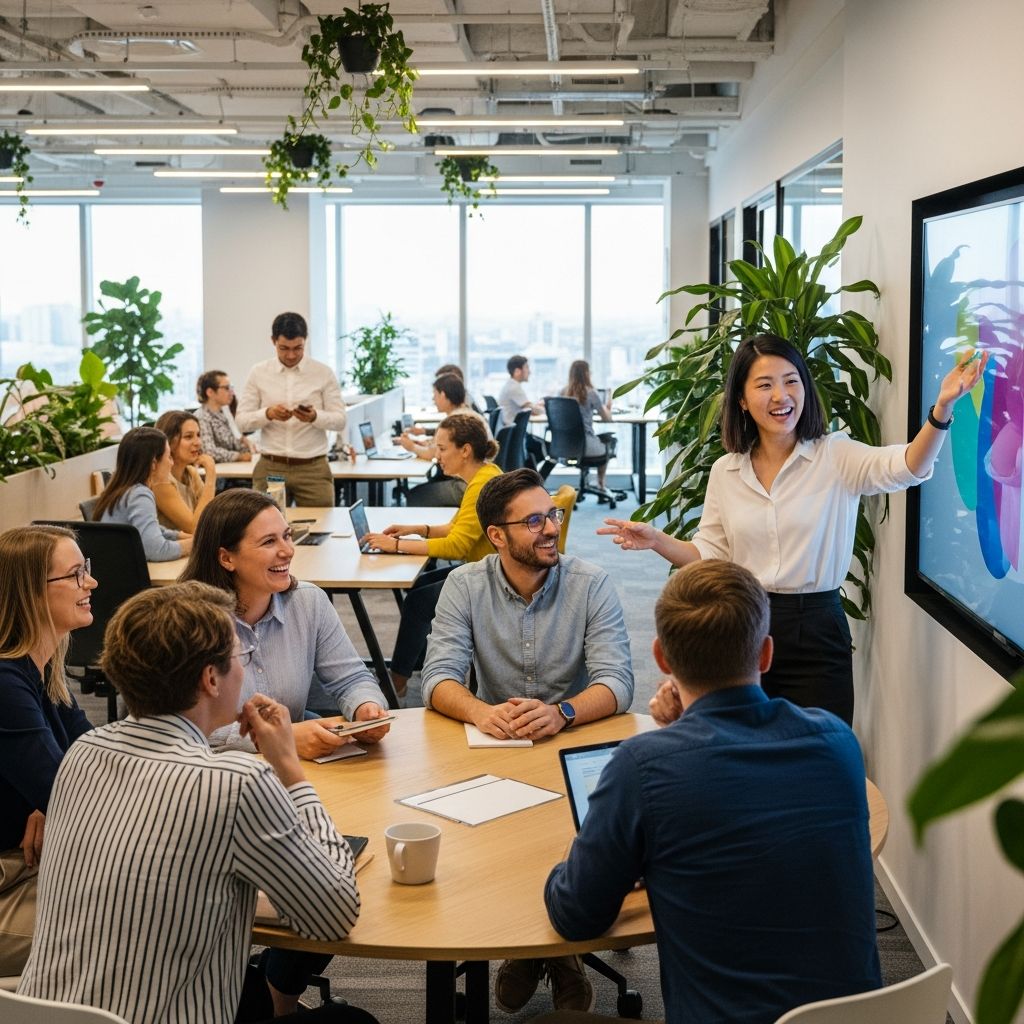
Organizational culture represents the foundational elements that define how a company operates daily, influencing everything from employee interactions to strategic decisions. It encompasses shared values, beliefs, and behaviors that create a unique workplace identity, driving performance and adaptability in competitive environments.
Defining Organizational Culture in Modern Workplaces
At its core, organizational culture is the collective set of values, beliefs, attitudes, and practices that shape employee behavior and interactions within a company. This invisible force determines how teams collaborate, make decisions, and pursue goals, often described as “the way things get done around here.”
Unlike formal policies, culture emerges from repeated practices influenced by leadership styles, founder personalities, and team dynamics. It manifests in decision-making processes, communication norms, and even office layouts or remote work protocols. For instance, a culture emphasizing innovation might encourage risk-taking, while one focused on stability prioritizes procedural adherence.
Research highlights that employees experience culture most vividly through alignment with company mission and values, recognition programs, and performance management approaches. Areas like onboarding and physical spaces have less impact, especially in hybrid or remote settings.
Key Components That Shape Workplace Culture
Several interconnected elements form the backbone of organizational culture:
- Shared Values and Beliefs: Core principles that guide priorities, such as integrity, innovation, or customer focus.
- Leadership Influence: Executives model behaviors that cascade through the organization, setting the tone for accountability and collaboration.
- Norms and Practices: Daily rituals, from team meetings to feedback loops, reinforce cultural expectations.
- Symbols and Artifacts: Visible elements like office design, dress codes, or perks that signal cultural priorities.
- Employee Experiences: How recognition, development opportunities, and work-life balance are handled daily.
These components create a psychological and social environment that either energizes or drains the workforce. Strong cultures align these elements to foster unity and purpose.
Common Types of Organizational Cultures
Organizations often adopt one of several dominant culture types, each suited to specific industries and goals. Understanding these helps leaders diagnose and evolve their workplace environment.
| Culture Type | Core Focus | Strengths | Challenges | Best Fit Examples |
|---|---|---|---|---|
| Clan | Collaboration, relationships, employee development | High loyalty, strong community, innovation through teamwork | Slower in competitive or fast-paced settings | Small businesses, family firms, flat hierarchies |
| Adhocracy | Innovation, agility, risk-taking | Rapid adaptation, creative problem-solving | Potential for chaos without structure | Tech startups, R&D teams |
| Market | Results, competition, goal achievement | High motivation, customer focus, performance-driven | May overlook employee well-being | Sales organizations, competitive markets |
| Hierarchy | Structure, efficiency, procedures | Consistency, regulatory compliance, stability | Rigidity, resistance to change | Government, manufacturing, healthcare |
Clan cultures mimic family structures with mentoring leaders, promoting openness and growth. Hierarchy cultures thrive on clear roles and processes for predictable outcomes. Adhocracy and market types prioritize speed and results, ideal for dynamic sectors.
Why Organizational Culture Drives Business Success
A robust workplace culture is a strategic asset, directly impacting retention, productivity, and innovation. Positive cultures boost employee engagement, reducing turnover and associated costs. Gallup data indicates only 22% of U.S. employees feel connected to their organization’s culture, underscoring a widespread opportunity for improvement.
Benefits include:
- Enhanced Engagement: Aligned values lead to higher job satisfaction and contributions to mission fulfillment.
- Improved Performance: Cultures supporting well-being and continuous improvement enable better products and services.
- Talent Attraction: Top performers seek environments matching their values, aiding recruitment.
- Adaptability: Flexible cultures navigate change effectively, maintaining competitive edges.
Conversely, toxic cultures breed low morale, high absenteeism, and stifled creativity, eroding long-term viability.
Assessing Your Organization’s Culture
To strengthen culture, first measure it. Use employee surveys focusing on mission alignment, value consistency, recognition, and work pace. Key questions include: “Does your work contribute to the organization’s mission?” and “Does the culture support your health and well-being?”
Observation methods reveal discrepancies between stated values and actual behaviors. Engagement metrics, turnover rates, and feedback sessions provide quantitative and qualitative insights. Tools like pulse surveys help track culture health over time.
Practical Strategies to Cultivate Positive Culture
Leaders play a pivotal role in shaping culture through intentional actions:
- Lead by Example: Demonstrate desired behaviors in communication and decisions to build trust.
- Embed Values in Processes: Integrate core values into hiring, onboarding, and performance reviews.
- Foster Recognition: Celebrate achievements to reinforce positive norms and boost morale.
- Promote Development: Offer mentoring and training to nurture growth-oriented environments.
- Encourage Feedback: Create safe channels for input, enabling continuous refinement.
- Align Structures with Goals: Adapt teams and rituals to support cultural evolution.
For clan cultures, emphasize team-building; for hierarchy, streamline processes without stifling input. Regular assessments ensure strategies remain effective.
Overcoming Common Culture Challenges
Many organizations face culture gaps due to rapid growth, mergers, or remote work shifts. Rigid hierarchies may resist innovation, while adhocracies risk burnout. Address these by clarifying expectations, investing in leadership training, and monitoring hybrid experiences where physical cues are absent.
Post-merger, blend cultures thoughtfully to retain talent. In remote settings, virtual rituals and digital recognition sustain connection.
Future Trends in Organizational Culture
Emerging trends include hybrid models prioritizing well-being, DEI integration, and AI-driven personalization in recognition. Cultures adapting to these will attract diverse talent and sustain resilience amid disruptions.
Frequently Asked Questions (FAQs)
What is the difference between organizational culture and climate?
Culture is the deep-rooted values and assumptions; climate is the short-term perception of the work environment.
How long does it take to change company culture?
Cultural shifts typically require 1-3 years of consistent leadership effort.
Can remote teams build strong cultures?
Yes, through virtual engagement, clear values, and recognition focused on mission alignment.
Why do some cultures fail despite good intentions?
Misalignment between leadership actions and stated values erodes trust.
How does culture impact profitability?
Strong cultures correlate with 4x higher engagement and revenue growth.
References
- What is organizational culture – BDC — BDC. 2023. https://www.bdc.ca/en/articles-tools/entrepreneur-toolkit/templates-business-guides/glossary/organizational-culture
- Organizational Culture: What It Means and How to Strengthen It — Extensis HR. 2024. https://extensishr.com/resource/blogs/organizational-culture/
- What is Organizational Culture? Understanding & Driving Strong … — Quantum Workplace. 2024. https://www.quantumworkplace.com/future-of-work/what-is-organizational-culture
- Organizational Culture: Definition and Why It’s Important — Indeed. 2024. https://www.indeed.com/career-advice/career-development/organizational-culture
- Organizational Culture – StatPearls — NCBI Bookshelf. 2023-10-01. https://www.ncbi.nlm.nih.gov/books/NBK560543/
- What is Organizational Culture? — ATD. 2024. https://www.td.org/talent-development-glossary-terms/what-is-organizational-culture
- Organizational culture — Wikipedia. 2026. https://en.wikipedia.org/wiki/Organizational_culture
- What Is Organizational Culture, and Why Does It Matter? — Gallup. 2023. https://www.gallup.com/workplace/327371/how-to-build-better-company-culture.aspx

- Integrated M.A. in Applied Linguistics, University of Hyderabad
- 5+ years in editorial, instructional, SEO, and research-based writing
Sneha is a relationships and lifestyle writer with a strong foundation in applied linguistics and certified training in relationship coaching. She brings over five years of writing experience to theskillvault, crafting thoughtful, research-driven content that empowers readers to build healthier relationships, boost emotional well-being, and embrace holistic living. Her writing and insights reflect the belief that beauty, happiness, and wellness…