
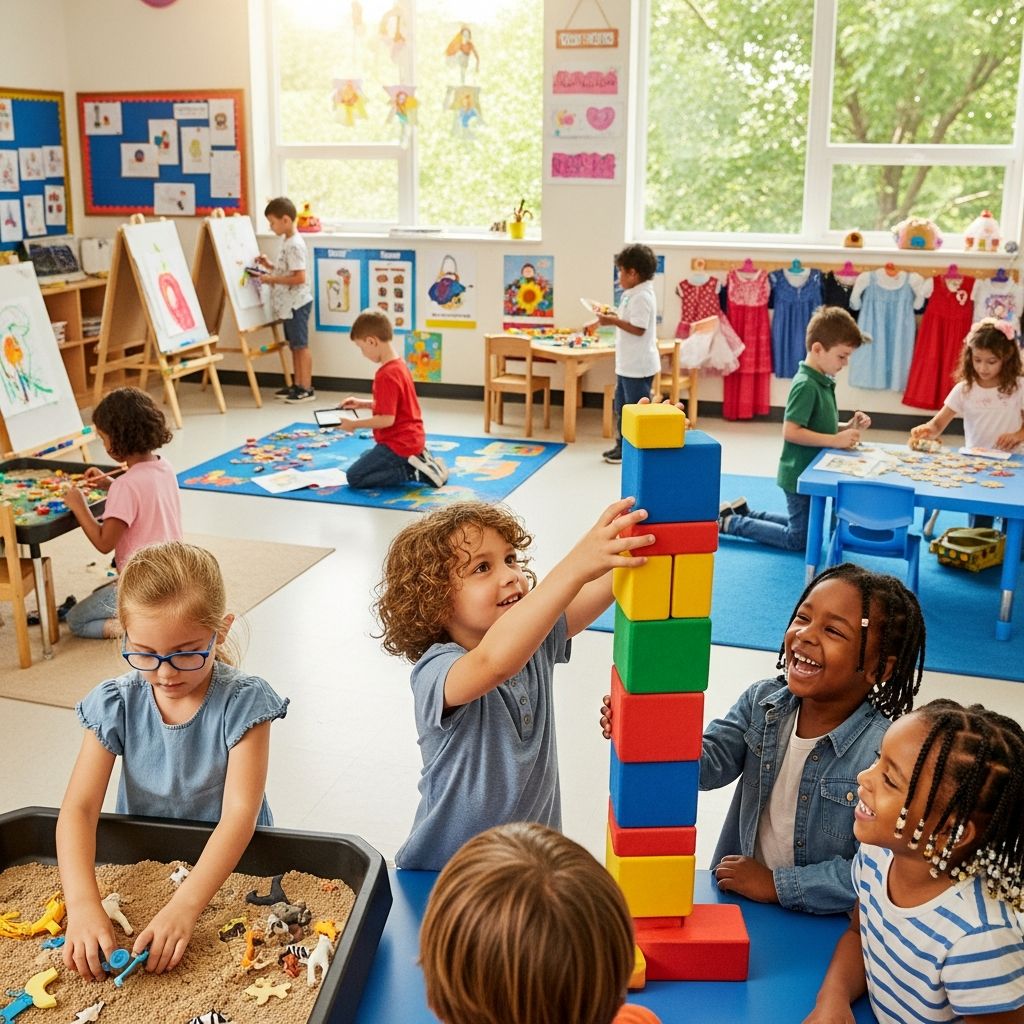
Understanding the Foundation of Playful Learning
Modern educational research increasingly demonstrates that children learn most effectively when their natural inclination toward play becomes the vehicle for academic instruction. Playful learning represents a pedagogical shift that honors both developmental appropriateness and rigorous curriculum standards. Unlike traditional classroom models that separate play from academics, this integrated approach recognizes that young learners construct knowledge through hands-on exploration, social interaction, and imaginative engagement with materials and concepts.
The essence of play-based instruction lies in creating learning environments where students become active participants rather than passive recipients of information. When children engage with content through play, they develop not only subject-specific knowledge but also critical thinking skills, problem-solving abilities, and emotional resilience. This approach aligns with contemporary understandings of how children’s brains develop and process new information most effectively.
Establishing the Right Environment for Discovery
The physical classroom space plays a crucial role in facilitating meaningful play-based learning experiences. Teachers must intentionally design environments that invite exploration and support multiple types of learning simultaneously. This begins with thoughtful organization and strategic placement of materials that encourage hands-on investigation.
Creating designated zones within your classroom allows students to transition between different types of learning activities throughout the day. These zones should feature accessible materials organized in ways that invite curiosity. For example, a literacy exploration area might include diverse writing materials, storytelling props, and books at various reading levels. Similarly, a scientific inquiry zone could contain recyclable materials, simple tools, and natural objects that spark investigation.
The setup of these spaces should communicate to students that exploration is valued and expected. Rather than displaying perfectly arranged materials behind glass, keep manipulatives, building supplies, and investigative tools within easy reach. Rotating materials periodically prevents learning environments from becoming stale and continuously sparks renewed interest and discovery among students.
Integrating Academic Content Through Playful Exploration
Subject-specific learning gains depth and retention when students encounter academic concepts through multisensory, playful experiences. This integration transforms traditional worksheet-based instruction into dynamic engagement with meaningful content.
Mathematics and Spatial Reasoning
Rather than completing computation worksheets, students can engage with mathematical concepts through building challenges, pattern creation, and spatial puzzles. When children construct three-dimensional structures, they develop understanding of geometry, balance, and structural design. Water tables and sand exploration naturally introduce concepts of volume, measurement, and comparison. Games involving dice, cards, or strategic thinking build number sense while maintaining the joy of competition and accomplishment.
Scientific Inquiry and Experimentation
Science instruction benefits tremendously from play-based approaches that prioritize exploration before explanation. Rather than demonstrating concepts and expecting students to observe passively, create opportunities for hands-on investigation. Provide diverse materials with varying properties—lightweight and heavy objects, materials with different textures, items that sink or float—and allow students to form predictions and test hypotheses through play.
Outdoor exploration extends scientific learning into natural settings where students observe insects, collect specimens, measure shadows, and investigate plant life. These direct encounters with natural phenomena create lasting understanding that textbook images cannot replicate. Teachers can scaffold this exploration by asking open-ended questions that guide inquiry without dictating conclusions.
Literacy Development Through Storytelling and Drama
Language arts instruction flourishes when play becomes central to reading and writing development. Dramatic play areas where students reenact scenarios—operating a grocery store, managing a restaurant, or running a veterinary clinic—create authentic contexts for using language functionally. Children naturally incorporate reading and writing into these scenarios, creating shopping lists, writing menus, or developing appointment books.
Encouraging students to create and perform their own stories develops both narrative understanding and public speaking confidence. When children transform their imaginative ideas into dramatic presentations, they internalize story structure, character development, and the power of communication.
Understanding the Spectrum of Play Types
Educational research identifies distinct categories of play, each serving particular developmental and academic purposes. Understanding these types helps teachers strategically design learning experiences that address diverse learning goals.
| Play Type | Characteristics | Classroom Application | Learning Outcomes |
|---|---|---|---|
| Free Play | Student-directed, minimal teacher intervention, open-ended exploration | Unstructured exploration periods with open-ended materials | Autonomy, creativity, self-directed learning |
| Guided Play | Teacher-designed opportunities with specific learning goals, student choice within parameters | Provocation-based exploration, teacher-posed questions | Intentional skill development, inquiry-based learning |
| Teacher-Directed Play | Structured games and activities with clear rules and objectives | Cooperative games, role-playing scenarios, structured investigations | Specific skill mastery, collaborative learning |
| Dramatic Play | Using symbols and props to reenact real or imaginary scenarios | Pretend stores, restaurants, offices, fantasy adventures | Social skills, perspective-taking, language development |
| Exploratory Play | Sensory investigation of objects and materials | Sensory bins, water tables, material investigation stations | Fine motor skills, sensory awareness, discovery learning |
Facilitating Purposeful Play in Your Classroom
Simply providing play opportunities does not guarantee meaningful learning occurs. Teachers must actively facilitate and guide play experiences to ensure they advance both academic and social-emotional development.
Strategic Observation and Documentation
Teachers become researchers within their own classrooms, carefully observing how students engage with materials and each other. This observation serves multiple purposes: it reveals individual student interests and learning styles, identifies misconceptions that need addressing, and documents growth over time. Taking notes on student interactions and learning moments creates a rich portfolio of evidence showing how play translates into academic achievement.
Posing Provocative Questions
Rather than providing answers or demonstrations, teachers can deepen play-based learning by asking questions that spark curiosity and extended thinking. Questions like “What do you notice about the patterns in these materials?” or “How might you solve this building challenge?” invite deeper investigation than direct instruction. These inquiries encourage students to observe carefully, make connections, and form their own conclusions.
Modeling and Joining Play
When teachers participate in student play, they model engagement, demonstrate problem-solving approaches, and subtly extend learning in desired directions. By occasionally joining dramatic play scenarios, investigating materials alongside students, or proposing new possibilities, teachers show that play is valued as legitimate learning. This participation also creates opportunities to assess understanding and provide scaffolding where needed.
Building Social and Emotional Development Through Collaboration
Play-based learning naturally creates contexts for developing crucial social and emotional competencies. When students engage in collaborative play, they practice negotiation, perspective-taking, conflict resolution, and teamwork.
Creating classroom structures that promote collaborative play strengthens relationships among students. Cooperative games where success depends on working together build community and mutual respect. Shared projects where different students contribute different skills demonstrate the value of diverse abilities and perspectives. When students regularly engage in role-playing scenarios involving empathy and problem-solving—such as acting out situations about kindness, sharing, or conflict resolution—they internalize these social skills through lived experience.
Teachers can support this development by establishing classroom norms that encourage respectful interaction during play. Teaching students to offer feedback using frameworks that emphasize being “kind, specific, and helpful” creates a culture where peer input strengthens rather than threatens.
Incorporating Sensory and Movement-Based Learning
Young learners benefit tremendously from instruction that engages their whole bodies and senses. Movement and music naturally integrate into play-based classrooms in ways that reinforce academic concepts while supporting physical development and emotional expression.
Music and rhythm can anchor learning across subject areas. Children learn letter sounds through songs, internalize mathematical patterns through rhythmic activities, and express understanding of stories through musical interpretation. Similarly, movement activities—whether dancing to demonstrate understanding of concepts, acting out historical events, or engaging in physical challenges that require problem-solving—create multisensory learning pathways that enhance retention and engagement.
Sensory exploration through water, sand, clay, and textured materials develops fine and gross motor skills while providing calming, therapeutic benefits. These sensory experiences create anchors for learning across disciplines and accommodate diverse sensory preferences and learning profiles.
Addressing Common Implementation Challenges
Balancing Structure with Flexibility
Teachers often worry that play-based learning lacks sufficient structure or rigor. However, carefully designed play experiences provide both freedom and purposeful learning objectives. The key lies in transparent planning that identifies learning goals while remaining flexible about the pathways students take to reach those goals.
Managing Materials and Classroom Organization
Effective play-based classrooms require thoughtful systems for organizing, storing, and rotating materials. Transparent containers, clear labeling, and consistent organizational systems help students locate materials independently and maintain classroom order. Regular rotation of available materials prevents overstimulation while sustaining interest in exploration.
Ensuring Equitable Participation
Teachers must intentionally structure play experiences to ensure all students participate and have access to diverse learning opportunities. Some students may need encouragement to engage in unfamiliar play types, while others benefit from gentle redirection toward specific learning areas. Regular observation reveals which students gravitate toward particular play types and which might benefit from teacher facilitation into new experiences.
Empowering Student Agency and Choice
Central to play-based learning is genuine student choice about what, how, and with whom they learn. This differs markedly from traditional classroom models where teachers dictate learning paths for all students uniformly.
When students understand their interests and strengths, teachers can make meaningful connections between student passions and curriculum standards. Allowing students to contribute ideas about classroom organization, suggesting topics for investigation, and choosing how to demonstrate understanding builds investment in learning. Students develop ownership of their educational experience when they see their ideas influence classroom life and learning activities.
Reflection time becomes crucial when students possess genuine choice. Asking students to consider what they discovered, what surprised them, what they want to explore further, and how their learning connects to their lives deepens the learning experience. This metacognitive process transforms play into deliberate, purposeful learning.
Creating a Culture of Curiosity and Wonder
Perhaps most importantly, play-based classrooms cultivate environments where curiosity is celebrated and wonder is sustained. When teachers ask questions that invite exploration rather than questions designed to check whether students remember taught information, they signal that discovery matters more than rote memorization.
Celebrating student questions, taking time to investigate unexpected directions, and following children’s curiosity creates cultures where learning feels exciting rather than mandatory. This shift has profound effects on student engagement, motivation, and long-term love of learning.
Frequently Asked Questions About Play-Based Learning
Q: Will play-based learning adequately prepare students for standardized assessments?
A: Research demonstrates that students in play-based classrooms develop deeper conceptual understanding and stronger problem-solving skills. When learning is grounded in meaningful exploration rather than test preparation, students develop the critical thinking capabilities that transfer to diverse assessment contexts, including standardized measures.
Q: How do I balance play-based learning with required curriculum standards?
A: Play-based learning and curriculum standards are not mutually exclusive. Rather than viewing them as competing priorities, use standards to identify essential learning goals, then design playful experiences that help students reach those objectives. This approach ensures academic rigor while maintaining the engagement and joy of play.
Q: Won’t play-based classrooms be too chaotic or loud?
A: Play-based learning requires intentional management and clear expectations, but it creates purposeful activity rather than chaos. When students understand routines, have designated spaces for different activities, and receive clear guidance about behavioral expectations, play-based classrooms operate smoothly while remaining vibrant and engaged.
Q: How much training do teachers need to implement play-based learning effectively?
A: While professional development supports implementation, teachers can begin integrating play-based strategies immediately by starting small—perhaps adding one play area or replacing one worksheet-based lesson with hands-on exploration. Gradual implementation allows teachers to refine practice and build confidence.
Q: Can play-based learning work in upper elementary and middle school classrooms?
A: Absolutely. While the form of play evolves as children mature, playful engagement, hands-on investigation, and imaginative problem-solving remain powerful learning approaches throughout elementary years and beyond. Older students may engage through more complex building challenges, sophisticated role-playing scenarios, or project-based learning that incorporates play elements.
References
- Play-Based Learning — Early Matters San Antonio. Accessed April 2026. https://earlymatterssa.org/play-based-learning/
- Combining PBL and Play in Early Childhood Classrooms — Edutopia. https://www.edutopia.org/article/combining-pbl-and-play-in-early-childhood-classrooms/
- Embracing Learning Through Play — Harvard Graduate School of Education, Usable Knowledge. 2023. https://www.gse.harvard.edu/ideas/usable-knowledge/23/05/embracing-learning-through-play
- How to Incorporate Play-Based Curriculums in the Classroom — Little Tikes Commercial. https://littletikescommercial.com/blog/how-to-incorporate-play-based-learning-in-the-classroom/
- The Power of Playful Learning in the Early Childhood Setting — National Association for the Education of Young Children (NAEYC), Young Children Journal, Summer 2022. https://www.naeyc.org/resources/pubs/yc/summer2022/power-playful-learning
- Try These 12 Play-Based Learning Activities — Studies Weekly. Accessed April 2026. https://www.studiesweekly.com/try-these-12-play-based-learning-activities/
- Integrating Play Into Literacy Instruction: Strategies for Your Classroom — U.S. Department of Education, Institute of Education Sciences, National Center for Education Evaluation and Regional Assistance. https://ies.ed.gov/ncee/rel/regions/midwest/pdf/videos/play-in-literacy-guide-508.pdf

Medha Deb is an editor with a master's degree in Applied Linguistics from the University of Hyderabad. She believes that her qualification has helped her develop a deep understanding of language and its application in various contexts. Medha specializes in the areas of beauty, health, sports, and wellness and is committed to ensuring that the content on the website is…