
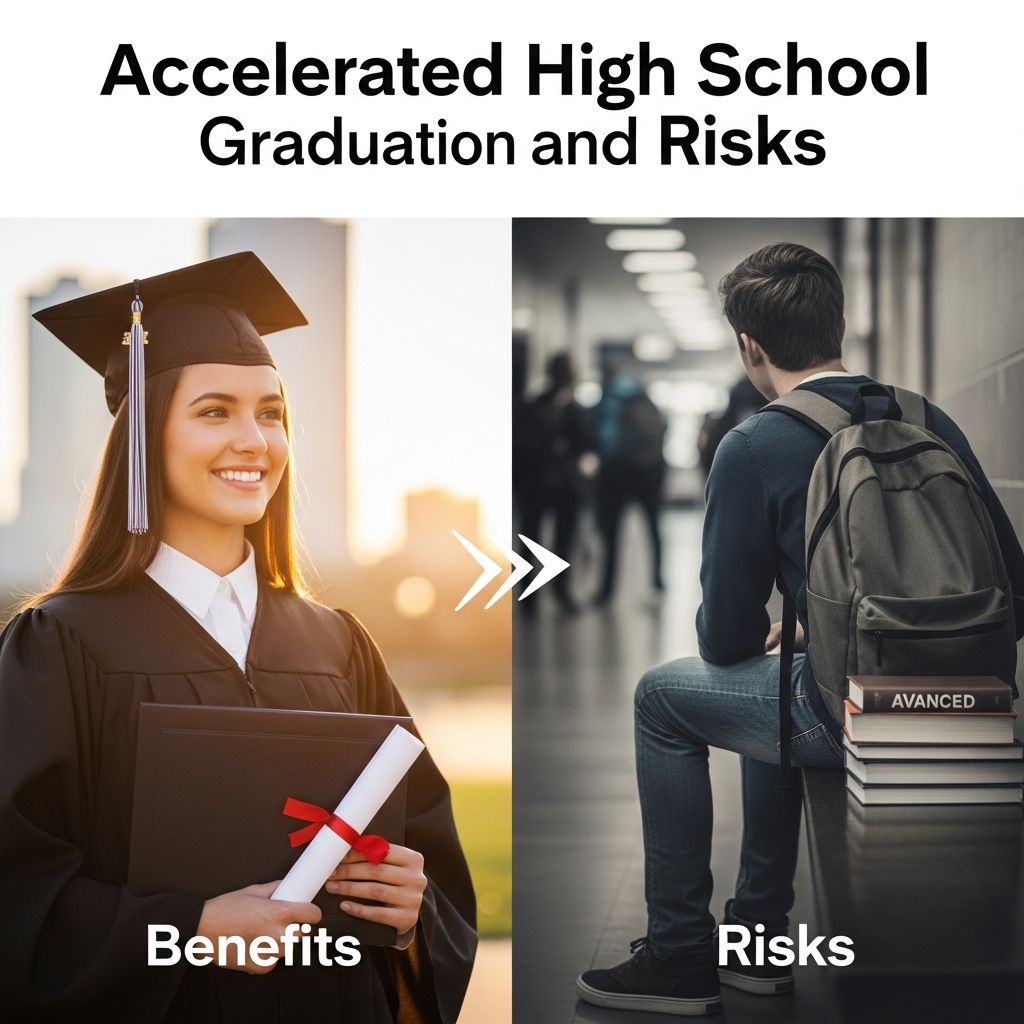
Finishing high school before the standard four years appeals to motivated students eager to advance their education or enter the workforce. This choice demands careful evaluation of personal readiness, academic capabilities, and long-term objectives to ensure it leads to success rather than setbacks.
Defining Accelerated Graduation Pathways
Accelerated high school graduation involves fulfilling all required credits and standards in under four years. Common methods include overloading class schedules, attending summer sessions, enrolling in online programs, or participating in dual-credit courses that count toward both high school and college requirements. Homeschooling or alternative schooling models also enable this flexibility, allowing students to customize their pace while adhering to state or district mandates.
Eligibility typically hinges on maintaining a solid grade point average and demonstrating proficiency in core subjects. School administrators often require approval to confirm the plan aligns with graduation criteria, preventing incomplete records that could hinder future opportunities.
Academic and Financial Upsides
One primary draw of early completion is the immediate entry into postsecondary education or employment. Students can enroll in community colleges or universities sooner, accumulating credits that shorten overall degree timelines. For instance, those pursuing fields with extended training, like medicine or law, gain a competitive edge by compressing their educational journey.
Financially, this approach yields substantial savings. Avoiding an extra year of high school tuition, fees, and supplies preserves resources. Transitioning directly to college reduces dormitory costs if living at home remains feasible, while early workforce entry enables income generation ahead of peers. Some graduates qualify for specialized scholarships rewarding accelerated achievement, further easing monetary burdens.
- Tuition reduction: Skip one year of high school expenses and potentially accelerate college completion.
- Income potential: Access full-time jobs or internships earlier, building savings and resume strength.
- Retirement contributions: Begin saving for long-term financial security years before traditional timelines.
Professional and Developmental Advantages
Beyond academics, early graduates often secure professional footholds faster. Entering the job market with a diploma positions individuals for roles inaccessible to current students, fostering skill development and networking. Promotions may arrive sooner due to tenure advantages over age-matched colleagues.
This path also cultivates personal maturity. Managing rigorous schedules instills discipline, time management, and self-reliance—qualities prized in higher education and careers. Freed time post-graduation supports internships, volunteer work, or travel, enriching resumes and clarifying passions.
| Advantage | Potential Impact |
|---|---|
| Early college enrollment | Shorter path to bachelor’s or advanced degrees |
| Workforce entry | Higher earning potential and experience accumulation |
| Skill building | Enhanced independence and adaptability |
Social and Emotional Hurdles
Despite attractions, accelerated paths present social challenges. Departing before senior year means forfeiting traditions like dances, trips, and ceremonies that forge lasting memories and bonds. Peers remaining behind may drift, leading to isolation during transitions.
Emotionally, younger entrants to college or jobs face maturity gaps. College demands self-directed learning and social navigation without high school safeguards, potentially overwhelming unprepared students. Workforce restrictions, such as age-based labor laws, limit options for those under 16 or 18, delaying full benefits.
- Missed milestones: No participation in cap-and-gown walks or class events.
- Peer separation: Reduced time for friendships and support networks.
- Maturity strain: Handling adult responsibilities at a younger age.
Academic Pressures and Readiness Concerns
Achieving early graduation requires intensified effort, often via summer classes or online supplements. This heavier load risks burnout, grade dips, or incomplete mastery of foundational skills. Colleges scrutinize transcripts; early exits might signal insufficient rigor if not paired with advanced courses.
Financial aid eligibility could falter if graduation alters dependency status or aid calculations. Counselors emphasize verifying how accelerated timelines affect applications, ensuring competitiveness through extracurriculars and test preparation.
Strategic Planning for Success
To mitigate risks, begin with academic audits. Review transcripts against requirements, projecting timelines with counselor input. Explore dual enrollment for credit efficiency without full acceleration.
Alternatives like advanced placement exams or flexible online schools offer acceleration minus total early exit. Gap years post-graduation provide reflection time, balancing haste with exploration.
- Consult educators and family for tailored advice.
- Investigate state-specific rules and credit transfers.
- Build a support system for emotional transitions.
- Test readiness via trial heavy semesters.
Real-World Examples and Data Insights
Statistics from educational bodies show varied outcomes. Programs like Early College High Schools report higher graduation rates and college persistence among participants, though self-selected for motivation. Surveys indicate early graduates earn diplomas at younger ages but must navigate unique stressors.
Success stories highlight interns landing roles or students shaving years off degrees. Conversely, some regret social voids, underscoring individualized fit.
Financial Aid and College Admissions Nuances
Admissions offices view early graduation neutrally if rigor is evident—pair it with AP/IB courses. Aid forms like FAFSA consider actual graduation dates, potentially qualifying for more semesters. Research institutional policies; some reward acceleration with credits.
| Factor | Early Graduation Effect | Mitigation |
|---|---|---|
| Admissions | May question depth | Strong ECs and tests |
| Aid Eligibility | Possible extension | Verify with FAFSA |
| Scholarships | Special awards available | Target merit-based |
Addressing Common Concerns
Many worry about regret over missed experiences. Balanced planning, like hybrid schedules, allows partial participation. Emotional readiness assessments via counseling help gauge preparedness.
Frequently Asked Questions
Does early graduation hurt college chances?
Not inherently; admissions prioritize holistic profiles. Bolster with challenging coursework and activities.
Can I work full-time right after?
Age-dependent; under 18 faces restrictions on hours and roles.
How much time can I save?
Semester to full year, varying by prior credits and pace.
What if I change my mind?
Flexible programs allow extensions without penalty.
Are there scholarships for this?
Yes, some honor accelerated paths; search merit databases.
Navigating Long-Term Implications
Ultimately, weigh personal drivers against trade-offs. Motivated, mature students thrive, gaining momentum toward ambitions. Others benefit from traditional pacing for holistic growth. Thorough preparation transforms potential pitfalls into launchpads.
References
- Pros and Cons of Graduating High School Early — ASU Prep Global Academy. 2023-05-15. https://www.asuprepglobalacademy.org/news/pros-and-cons-of-graduating-high-school-early/
- The Pros and Cons of Graduating High School Early — Tilting Futures. 2024-02-10. https://tiltingfutures.org/the-pros-and-cons-of-graduating-high-school-early/
- The Pros and Cons of Graduating High School Early — The American Academy. 2023-11-20. https://www.theamericanacademy.com/blogs/articles/the-pros-and-cons-of-graduating-high-school-early
- Graduating Early: Pros and Cons (Plus How-To Guide and Tips) — Indeed Career Guide. 2025-01-08. https://www.indeed.com/career-advice/career-development/graduating-early
- Early High School Graduation: Is it Right for You? — Career Prep School. 2024-07-12. https://careerprepschool.org/blog/early-high-school-graduation

- Integrated M.A. in Applied Linguistics, University of Hyderabad
- 5+ years in editorial, instructional, SEO, and research-based writing
Sneha is a relationships and lifestyle writer with a strong foundation in applied linguistics and certified training in relationship coaching. She brings over five years of writing experience to theskillvault, crafting thoughtful, research-driven content that empowers readers to build healthier relationships, boost emotional well-being, and embrace holistic living. Her writing and insights reflect the belief that beauty, happiness, and wellness…