
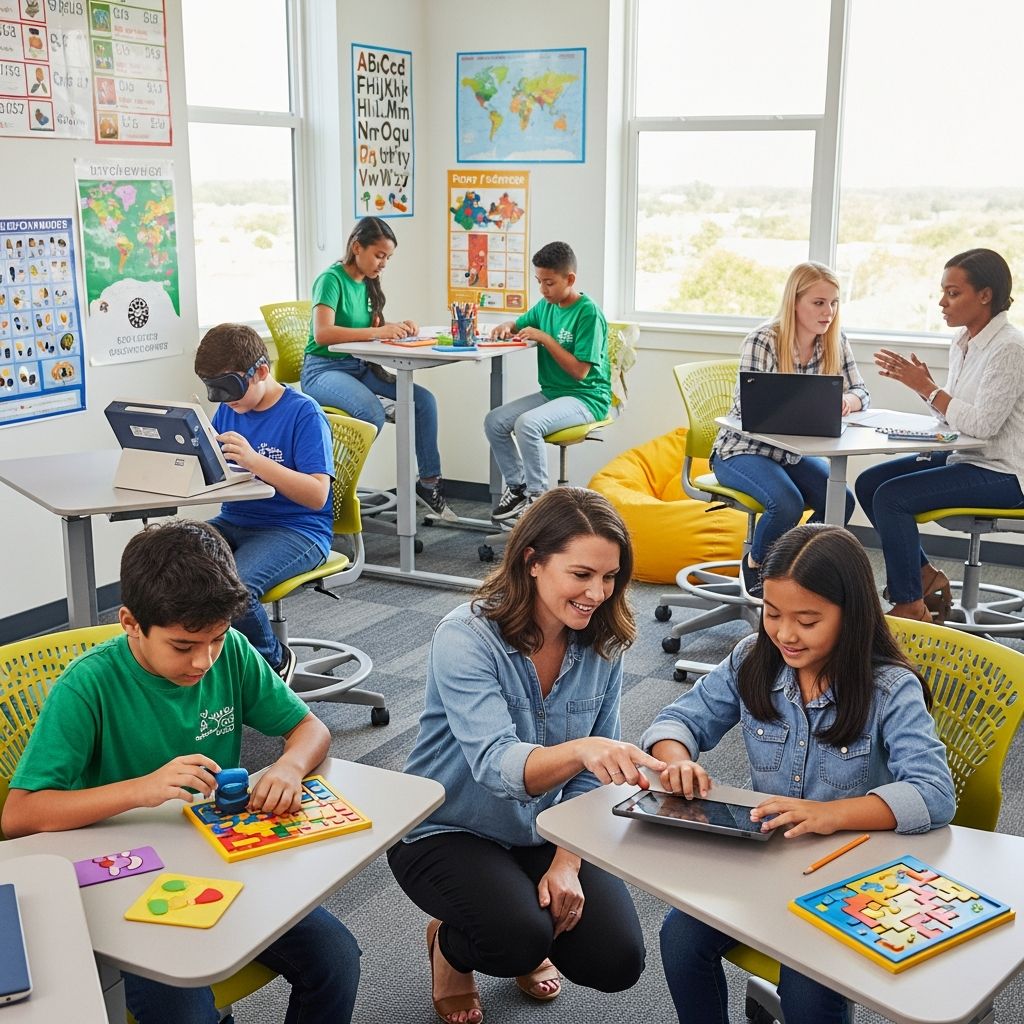
Understanding Responsive Teaching in Heterogeneous Learning Environments
Modern classrooms rarely contain students of uniform ability. Instead, educators regularly encounter rooms filled with learners operating at vastly different academic levels, possessing distinct learning preferences, and arriving with diverse prior knowledge. This reality requires a fundamental shift in instructional philosophy. Rather than teaching to an imaginary middle, educators must develop approaches that acknowledge and accommodate this variation. Responsive teaching, often called instructional adaptation, provides a framework for addressing this challenge systematically.
The core principle underlying responsive teaching is straightforward: all students deserve access to meaningful, appropriately challenging learning experiences. This does not mean providing identical instruction to every learner. Instead, it means thoughtfully adjusting what students learn, how they engage with material, and how teachers assess their understanding based on individual circumstances. This approach recognizes that students enter classrooms with different starting points and progress at different rates.
The Three Dimensions of Instructional Adaptation
Educators can adjust instruction across three primary dimensions, each offering distinct opportunities for meeting diverse learner needs.
What Students Learn: Adjusting Curricular Content
The first dimension involves modifying what content students encounter. Teachers can accomplish this by varying the complexity and depth of concepts presented to different learners. Some students may need foundational instruction on prerequisite skills before accessing grade-level standards, while others may benefit from extension activities that push their thinking into more sophisticated territory. This might involve providing reading materials at different lexical levels, offering research topics of varying complexity, or allowing students to explore related content that aligns with their specific interests.
How Students Engage: Varying the Process
The second dimension focuses on the processes through which students interact with material. Learners have different preferred modalities for processing information. Visual learners benefit from diagrams, charts, and demonstrations. Auditory learners thrive when information comes through discussion, lecture, or verbal explanation. Kinesthetic learners need hands-on activities and physical engagement with concepts. By incorporating multiple instructional methods—visual presentations, recorded materials, manipulatives, simulations, and interactive activities—teachers ensure that all students can engage meaningfully with the same content, regardless of their learning style preferences.
How Teachers Assess: Measuring Understanding Through Multiple Pathways
The third dimension involves how educators measure what students have learned. Rather than relying exclusively on traditional tests, responsive teachers employ varied assessment approaches. Students might demonstrate understanding through written examinations, oral presentations, creative projects, performance tasks, or portfolios. This variety ensures that assessment methods don’t artificially advantage students with particular testing skills while disadvantaging equally capable learners who struggle with test-taking formats.
Why Responsive Teaching Matters in Contemporary Schools
The rationale for implementing responsive teaching practices extends beyond simple fairness considerations, though equity remains central. Research and field experience reveal multiple compelling reasons educators should embrace instructional adaptation.
Ensuring Access for All Learners
Contemporary classrooms contain students with widely varying prior knowledge, cognitive abilities, and support systems. Without responsive approaches, students enter learning situations where material proves either inaccessible or insufficiently challenging. Some students lack prerequisite knowledge needed to engage with grade-level content, while others possess advanced understanding from enrichment opportunities outside school. Responsive teaching ensures all students can participate meaningfully in classroom learning.
Increasing Motivation and Engagement
Students demonstrate greater engagement when they perceive instruction as relevant to their lives and calibrated to their current abilities. When material consistently feels too difficult, frustration builds. When it feels too easy, boredom emerges. Both states reduce motivation. Responsive teaching maintains students in zones where material feels appropriately challenging—demanding enough to require genuine thinking but accessible enough to seem achievable. This calibration, combined with opportunities to pursue topics matching student interests, significantly enhances motivation and learning.
Building Positive Classroom Dynamics
When all students experience success and feel their needs are recognized, classroom relationships improve. Rather than being divided into visible ability groups that carry social stigma, students work flexibly with different peers across various contexts. This arrangement reduces the likelihood that students become locked into limiting peer identities based on academic ability.
Essential Assessment Practices for Guiding Responsive Instruction
Responsive teaching relies fundamentally on understanding where each student stands academically. This requires deliberate assessment practices that serve diagnostic and monitoring purposes.
Initial Assessment Before New Learning
Before introducing new topics, teachers should assess what students already know and can do. Pre-assessments reveal gaps in foundational understanding, identify students who already possess knowledge of upcoming content, and highlight areas of particular student interest. This information allows teachers to design entry points appropriate for their specific students rather than assuming uniform starting knowledge. Simple tools like brief questionnaires, diagnostic quizzes, or discussion can provide sufficient information without consuming excessive instructional time.
Ongoing Monitoring During Instruction
Once instruction begins, teachers should continuously monitor student understanding. Formative assessment—observation, questioning, quick write-ups, or brief checks—reveals which students are progressing, which are struggling, and which have mastered material and need extension. This real-time information allows teachers to adjust instruction immediately. A student appearing confused might receive additional explanation or different examples. A student demonstrating mastery might move to enrichment activities. Without ongoing monitoring, teachers continue with planned instruction regardless of actual student learning.
Practical Strategies for Implementation
Understanding the need for responsive teaching differs from actually implementing it effectively. Teachers seeking to operationalize these principles can employ several evidence-based strategies.
Strategic Grouping Practices
Rather than creating fixed ability groups that remain constant throughout the year, responsive teachers employ flexible grouping. Students work in different groupings depending on the instructional objective. For some activities, mixed-ability groups provide peer teaching and social interaction benefits. For others, grouping students by readiness level for targeted instruction proves more efficient. By varying group composition, teachers prevent students from being permanently labeled as advanced or struggling. Additionally, flexible grouping ensures that higher-ability students still experience appropriate challenge while lower-performing students receive targeted support without social stigma.
Offering Meaningful Choice
When students select from meaningful options within teacher-designed parameters, ownership of learning increases. Teachers might offer choices in how students demonstrate understanding (a written essay, oral presentation, or creative project), which topics to investigate within a curricular unit, or which instructional activities to pursue. These choices don’t require lowering standards or allowing students to avoid important learning. Instead, they ensure that students engage with essential content through modalities and topics aligned with their interests and strengths.
Leveraging Technology for Personalization
Digital platforms and educational software increasingly enable personalized learning paths. Students can work through content at individualized paces, accessing additional practice when needed or accelerating through material they master quickly. Adaptive software adjusts difficulty based on student performance, maintaining appropriate challenge levels. Online tools also help teachers track progress across multiple students simultaneously, identifying patterns and individuals requiring intervention. While technology cannot replace thoughtful teaching, it provides powerful support for managing responsive instruction in diverse classrooms.
Using Tiered Assignments
Tiered assignments ask all students to engage with the same essential learning objective but provide different versions varying in complexity, abstraction, or support level. For example, in a science unit on ecosystems, all students might investigate food chains. However, students working at an introductory level might work with simplified diagrams and teacher-provided organism cards. Students at an intermediate level might research specific ecosystems and create their own food chain diagrams. Advanced students might analyze how changes in one organism’s population cascade through the ecosystem. All students engage with core concepts but at appropriately calibrated depths.
Scaffolding Learning Systematically
Scaffolding provides temporary support that teachers gradually remove as students build competence. This might involve providing graphic organizers that help students organize information, step-by-step protocols that break complex tasks into manageable pieces, or sentence frames that support academic language use. As students internalize these structures and develop skills, teachers reduce scaffolding support. This approach differs from simply making material easier; it strategically supports students while maintaining cognitive demand and fostering independence.
Common Implementation Challenges and Solutions
Despite clear benefits, teachers frequently encounter obstacles when implementing responsive teaching at scale.
| Challenge | Potential Solution |
|---|---|
| Limited instructional time for planning differentiated activities | Build response systems gradually; collaborate with colleagues; create reusable resource libraries; prioritize critical skills requiring differentiation |
| Insufficient materials and resources for multiple instructional levels | Utilize free digital resources; modify existing materials; request administrative support; develop materials collaboratively with colleagues |
| Difficulty managing multiple simultaneous activities and groups | Develop clear routines and expectations; start with simpler grouping structures; invest in classroom management systems; teach student independence |
| Uncertainty about appropriate challenge levels for individual students | Rely on assessment data; seek colleague feedback; observe student behaviors indicating frustration or boredom; conduct student conferences about confidence |
| Concern that responding to diverse needs reduces rigor | Emphasize that appropriate challenge differs from uniform difficulty; ensure all students engage with essential standards; use advanced content for high-performing students |
Building Organizational Support for Responsive Teaching
Individual teachers can implement responsive practices, but schools strengthen these efforts through systemic support. Administrators can foster responsive teaching by providing ongoing professional development in differentiation strategies, allocating time for collaborative planning where teachers share ideas and resources, ensuring access to assessment tools and technology platforms that facilitate personalization, and modeling support for teachers managing the complexity responsive teaching entails. When school leaders communicate that responsive teaching represents an institutional priority, teachers receive permission to invest the time and energy implementation requires.
Frequently Asked Questions
Q: Doesn’t responsive teaching require creating entirely different lessons for each student?
A: No. Responsive teaching typically involves adjustments within a common lesson framework. All students usually engage with the same essential standards and core content, but teachers modify complexity, instructional methods, or assessment approaches. For instance, all students might study fractions, but some use manipulatives while others work with abstract representations.
Q: Won’t flexible grouping lead to students being labeled as advanced or struggling?
A: Flexible grouping actually reduces this risk compared to fixed ability groups. When students work with different peers across various activities based on readiness for specific skills, peer relationships aren’t determined by academic status. Additionally, all students sometimes work with advanced-level material and sometimes with foundational material, presenting a more balanced image of capability.
Q: How can teachers manage responsive instruction with large class sizes?
A: While challenging, large classes aren’t impossible to teach responsively. Strategies include using flexible grouping and peer teaching to reduce the number of simultaneous instructional groups, leveraging technology for independent and small-group learning, developing clear management systems and student routines, and prioritizing differentiation for essential rather than peripheral skills.
Q: What if parents object to their child being in a different instructional group than peers?
A: Clear communication helps. Explain that flexible grouping differs from permanent tracking. Students work in different groups for different skills and move based on demonstrated readiness. Emphasize that all students receive appropriately challenging instruction and that group placement indicates readiness for specific content, not overall ability. Share data showing responsive instruction benefits all learners.
Q: How do teachers ensure that responsive teaching doesn’t create significant achievement gaps?
A: Responsive teaching, when implemented well, actually reduces gaps. All students receive instruction calibrated to their needs rather than some struggling with inaccessible material or others marking time with unchallenging content. Regular assessment helps identify students falling behind and triggers intervention. Schools must ensure that students receiving foundational instruction still access high-quality teaching and opportunities to advance as they develop mastery.
References
- Teaching All Students to High Standards in Mixed-Ability Classrooms — Bill & Melinda Gates Foundation. 2004. https://docs.gatesfoundation.org/documents/diff_instruction_brief.pdf
- How To Differentiate Instruction in Mixed-Ability Classrooms — Carol Ann Tomlinson. ASCD. 2001. https://eric.ed.gov/?id=ED451902
- Differentiated Instruction in Mixed-Ability Classrooms: Experiences from Teachers — K-M and Publishers. 2023. https://journals.kmanpub.com/index.php/prien/article/view/3510
- What Is Differentiated Instruction? — Reading Rockets. National Center for Family Literacy. 2024. https://www.readingrockets.org/topics/differentiated-instruction/articles/what-differentiated-instruction

Medha Deb is an editor with a master's degree in Applied Linguistics from the University of Hyderabad. She believes that her qualification has helped her develop a deep understanding of language and its application in various contexts. Medha specializes in the areas of beauty, health, sports, and wellness and is committed to ensuring that the content on the website is…