
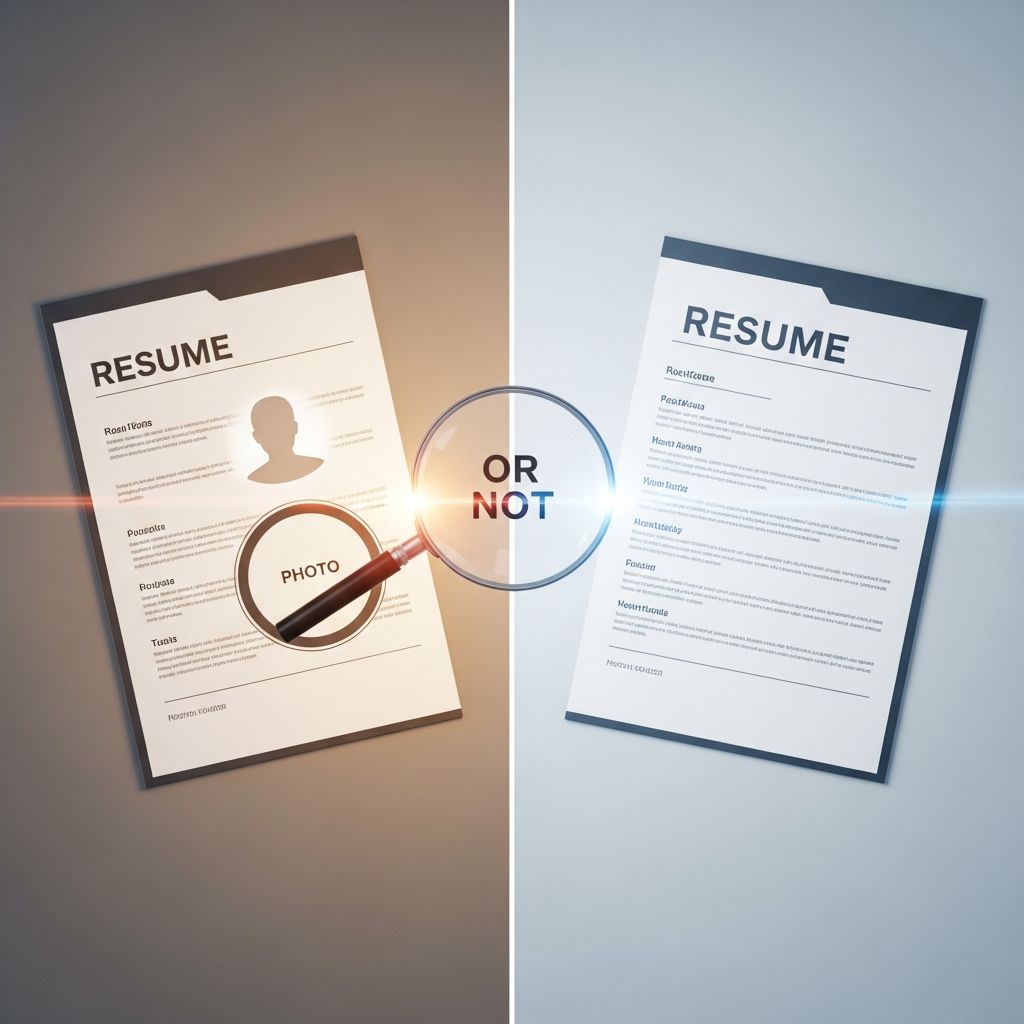
Understanding the Role of Photos in Modern Resumes
In today’s competitive job market, every detail on your resume matters. One of the most debated elements is whether to include a photograph. While some job seekers believe a photo adds personality and professionalism, others worry it could introduce bias or distract from qualifications. The decision isn’t universal—it depends on where you’re applying, what field you’re in, and the expectations of the hiring culture.
For many roles, especially in North America and parts of the UK, omitting a photo is standard practice. In contrast, in many European, Asian, and Latin American countries, a professional headshot is often expected and considered part of a complete application. Understanding this global and industry-specific context is the first step in deciding whether a photo belongs on your resume.
When a Photo Makes Sense on Your Resume
There are clear situations where including a photo is not only acceptable but expected. These typically revolve around geography, industry norms, and the nature of the role.
- Geographic expectations: In countries like Germany, France, Spain, Italy, Russia, China, and many others, a professional headshot is a standard part of the CV. Omitting it may make your application appear incomplete or unfamiliar with local conventions.
- Client-facing or image-conscious roles: If you’re applying for positions in hospitality, modeling, acting, public relations, sales, or customer experience, your appearance is part of the job. A photo can help employers visualize how you’ll represent the brand.
- Academic and research applications: In some European and Asian academic contexts, a photo is included in CVs submitted for fellowships, grants, or faculty positions, especially when the document is used for formal evaluations.
- Government and public sector roles: Certain government jobs, particularly in civil service or diplomatic tracks, may require a photo as part of the official application package.
If you’re applying in a region or industry where photos are standard, not including one can be a disadvantage. It signals that you may not be fully aligned with local expectations, which can subtly affect how your application is perceived.
When You Should Avoid a Photo
Conversely, there are strong reasons to leave a photo off your resume in many contexts, especially in the United States, Canada, the UK, and Australia.
- Anti-discrimination laws: In many Western countries, employers are legally required to avoid bias based on age, gender, race, religion, and other protected characteristics. Including a photo can inadvertently expose both the candidate and the employer to legal risk, so many organizations prefer to evaluate candidates based solely on qualifications.
- Focus on skills and experience: A resume’s primary purpose is to showcase your skills, achievements, and fit for the role. A photo can shift attention away from your accomplishments and toward subjective impressions of appearance.
- Industry norms in tech, finance, and academia: In fields like software development, engineering, finance, and many academic disciplines, the standard is to submit a clean, text-based resume. A photo can stand out in the wrong way and may be interpreted as unprofessional or out of step with industry culture.
- Remote and international applications: When applying to companies in regions where photos are not customary, including one can create confusion or even lead to your application being filtered out by automated systems or cautious recruiters.
If you’re unsure, a safe rule of thumb is: when in doubt, leave it out. You can always share a professional photo later in the process, such as in a LinkedIn profile, portfolio, or during an interview.
How a Photo Can Influence Hiring Decisions
Research and hiring practices show that photos can have both positive and negative effects on how candidates are perceived.
On the positive side, a well-chosen headshot can:
- Make your application more memorable in a stack of similar resumes.
- Convey professionalism, confidence, and attention to detail.
- Help recruiters connect a face to a name, especially in smaller organizations or when multiple people are involved in the hiring process.
On the negative side, a photo can:
- Trigger unconscious bias related to age, gender, race, or appearance.
- Lead to assumptions about personality, cultural fit, or competence that are not based on actual qualifications.
- Draw attention away from your skills and achievements, especially if the photo is distracting or poorly executed.
Because of these risks, many large organizations and tech companies have moved toward “blind” or anonymized hiring practices, where identifying information—including photos—is removed from initial screening. This is designed to promote fairness and reduce bias in the selection process.
Best Practices for a Professional Resume Photo
If you decide to include a photo, it should enhance—not detract from—your professional image. A resume photo is not the same as a social media profile picture; it should be treated as a formal part of your application.
1. Choose the Right Type of Photo
A professional headshot is ideal. This means:
- Shot from the shoulders up, with your face clearly visible.
- Taken in a controlled environment with good lighting and a neutral or blurred background.
- Free of filters, heavy editing, or artificial effects that distort your appearance.
Selfies, casual snapshots, and heavily edited images are generally not appropriate for a resume, even in regions where photos are common.
2. Dress for the Role and Industry
Your attire should match the expectations of the job you’re seeking:
- For corporate, legal, or financial roles: business professional (suit and tie, professional dress).
- For creative or tech roles: business casual or smart casual, depending on company culture.
- For hospitality, retail, or customer-facing roles: neat, clean, and aligned with the brand’s image.
When in doubt, it’s better to be slightly overdressed than underdressed.
3. Pay Attention to Grooming and Presentation
Small details matter:
- Ensure your hair is neat and out of your face.
- Keep facial hair well-groomed if applicable.
- Minimize flashy jewelry, accessories, or visible tattoos if they might be seen as distracting in your industry.
- Wear glasses only if you normally do; if you do, make sure there are no strong reflections.
4. Use a Recent, Accurate Photo
Your photo should reflect how you look now, not how you looked years ago. A significant mismatch between your photo and your current appearance can create confusion or even raise concerns about honesty.
- Update your resume photo every 2–3 years, or whenever there’s a major change in your appearance.
- Use the same or a very similar photo across professional platforms (LinkedIn, portfolio, company website) to maintain a consistent personal brand.
5. Size and Placement Matter
The photo should be small and unobtrusive:
- Typically 35mm x 45mm or similar passport-style dimensions.
- Placed in the top right or left corner of the first page, not in the center or taking up too much space.
- Integrated into a clean, professional template that doesn’t sacrifice readability for visual flair.
The goal is for the photo to be present but not dominant. Your work history, skills, and achievements should remain the focal point.
Alternatives to a Resume Photo
If you’re in a region or industry where photos are discouraged, there are still effective ways to make a strong visual and personal impression.
- LinkedIn profile: A professional headshot on LinkedIn is expected and widely accepted. Make sure it’s high-quality, recent, and consistent with how you present yourself in other professional contexts.
- Online portfolio or personal website: For creative, technical, or client-facing roles, a personal website with a professional photo, bio, and work samples can be a powerful supplement to your resume.
- Video introduction: Some applications now allow or encourage a short video introduction. This lets you convey your personality, communication style, and appearance in a controlled, professional way.
- Strong personal summary: A well-written opening statement on your resume can convey your professionalism, enthusiasm, and unique value proposition without relying on a photo.
Common Mistakes to Avoid
Even when a photo is appropriate, many candidates undermine its impact with avoidable errors.
- Using a low-quality or blurry image: A pixelated or out-of-focus photo suggests carelessness and can hurt your credibility.
- Choosing a distracting background: Busy patterns, cluttered rooms, or outdoor scenes with too much going on can draw attention away from your face.
- Wearing inappropriate clothing: Casual wear, logos, or overly trendy outfits can send the wrong message about your professionalism.
- Over-editing or using filters: Heavy retouching or filters can make you look unnatural and may be perceived as inauthentic.
- Using a group photo or cropped image: Only include a photo where you are clearly the sole subject, and avoid cropping from a larger group shot.
Quick Decision Guide: Should You Add a Photo?
To help you decide, here’s a simple checklist:
| Factor | Photo Recommended? |
|---|---|
| Applying in the US, Canada, UK, Australia | No (unless specifically requested) |
| Applying in Germany, France, Spain, Italy, Russia, China, etc. | Yes (usually expected) |
| Role is client-facing, hospitality, PR, sales, or modeling | Yes (often beneficial) |
| Role is in tech, engineering, finance, or academia (in Western countries) | No (standard practice) |
| Employer explicitly requests a photo | Yes (follow instructions) |
| You’re unsure about local norms | When in doubt, leave it out |
Frequently Asked Questions
Can a photo hurt my chances of getting hired?
Yes, in some contexts. In countries with strong anti-discrimination laws, a photo can introduce unconscious bias or legal risk, which may lead some employers to screen out applications with photos. In industries where photos are not standard, it can also be seen as unprofessional.
Should my resume photo match my LinkedIn photo?
Yes, ideally. Using a consistent, professional headshot across platforms helps build a cohesive personal brand and ensures recruiters see the same image whether they’re reviewing your resume or your LinkedIn profile.
Is a selfie ever acceptable on a resume?
In most professional contexts, no. Selfies are generally seen as informal and can appear unprofessional, even if the lighting and composition are good. A photo taken by someone else, or a professional headshot, is always the better choice.
How often should I update my resume photo?
Every 2–3 years, or whenever there’s a significant change in your appearance (e.g., major weight change, new hairstyle, facial hair, etc.). The photo should always reflect how you look today.
What if the job description doesn’t say whether to include a photo?
Research the company and country norms. If the company is based in a region where photos are standard (e.g., Germany), include one. If it’s in a region where they’re not (e.g., the US), it’s safer to omit it unless the role clearly benefits from a visual element.
Final Thoughts: Make the Right Choice for Your Situation
Whether or not to include a photo on your resume isn’t a one-size-fits-all decision. It depends on where you’re applying, what kind of job you want, and the expectations of the hiring culture. In some cases, a professional headshot strengthens your application; in others, it can do more harm than good.
The key is to make an informed, intentional choice. If you include a photo, make sure it’s high-quality, recent, and professionally presented. If you leave it out, focus on crafting a strong, achievement-oriented resume that speaks for itself. Either way, your goal is the same: to present yourself as a qualified, capable, and professional candidate who deserves a closer look.
References
- Guidance on Equal Treatment in Employment — European Commission. 2023. https://ec.europa.eu/info/policies/justice-and-fundamental-rights/equal-opportunities-and-access-equal-treatment/guidance-equal-treatment-employment_en
- CV and Cover Letter Guidelines — UK Government Civil Service Careers. 2024. https://www.civilservicejobs.service.gov.uk/civilservice/careers/apply-for-a-job/cv-and-cover-letter-guidelines
- Resume and CV Tips — Harvard University Office of Career Services. 2024. https://ocs.fas.harvard.edu/resumes-cvs-cover-letters

Medha Deb is an editor with a master's degree in Applied Linguistics from the University of Hyderabad. She believes that her qualification has helped her develop a deep understanding of language and its application in various contexts. Medha specializes in the areas of beauty, health, sports, and wellness and is committed to ensuring that the content on the website is…