
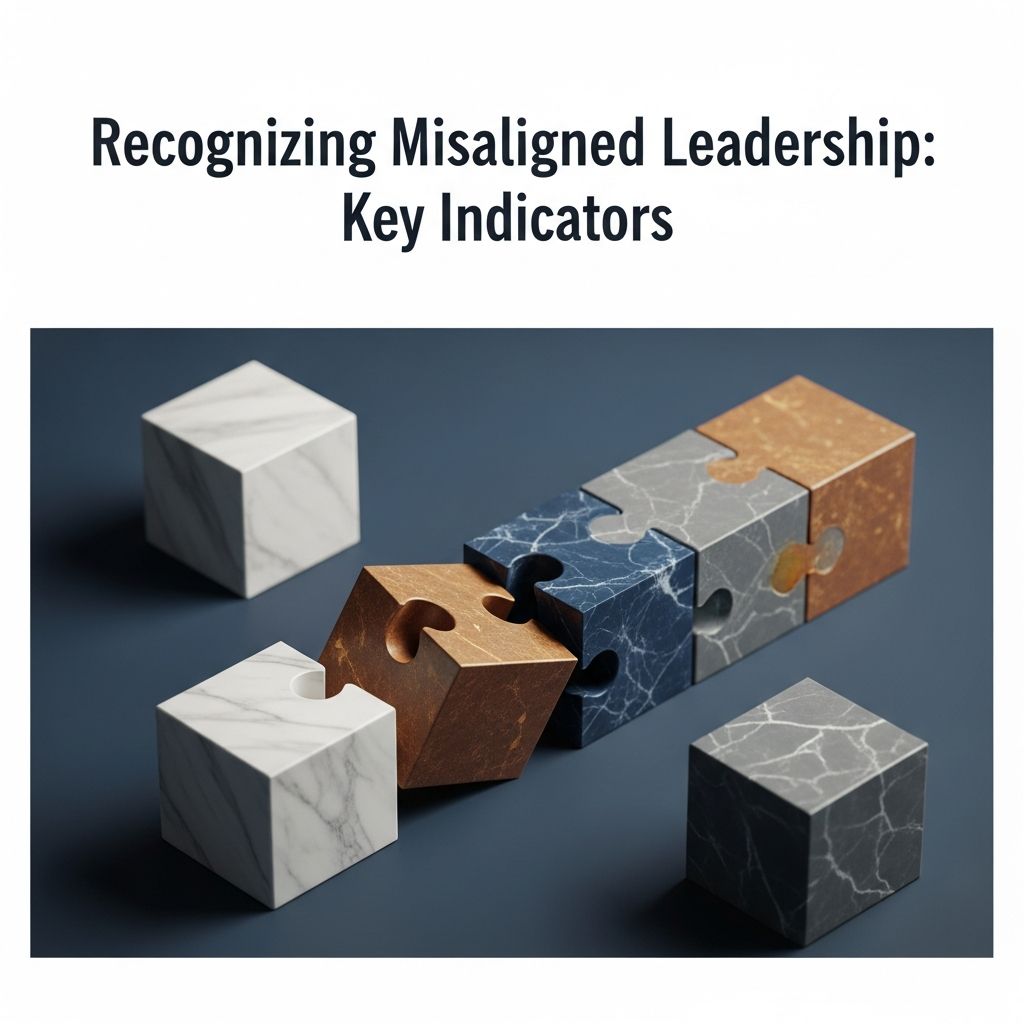
Understanding Leadership Misalignment in Your Workplace
The quality of your manager significantly influences your professional satisfaction, career development, and overall well-being at work. A leader who demonstrates integrity, clear communication, and genuine concern for their team creates an environment where employees thrive. Conversely, inadequate leadership can diminish engagement, stifle growth, and create unnecessary stress. Recognizing whether you’re working under misaligned leadership requires understanding the specific behaviors and patterns that distinguish effective managers from those who undermine their teams.
Leadership deficiencies manifest in various ways, from communication breakdowns to ethical compromises. By identifying these patterns early, you can make informed decisions about your career trajectory and take appropriate action to protect your professional interests.
Communication Breakdowns and Unclear Direction
One of the most fundamental responsibilities of any leader is to communicate clearly and transparently with their team. When a manager fails at this basic function, confusion and frustration inevitably follow. Poor communicators struggle to articulate expectations, provide constructive feedback, or explain the reasoning behind decisions.
Indicators of communication deficiency include:
- Vague or frequently changing directives that leave team members uncertain about priorities
- Limited availability for questions or clarification discussions
- Tendency to communicate primarily through email or delegation without face-to-face interaction
- Failure to actively listen when employees share concerns or ideas
- Inconsistency between stated goals and actual expectations
When communication fails, employees lose confidence in their manager’s ability to lead effectively. This uncertainty cascades through projects, resulting in rework, missed deadlines, and decreased quality. Teams working under poor communicators often experience higher stress levels due to constant ambiguity about performance standards and job security.
Absence of Genuine Accountability
Accountability represents a cornerstone of effective leadership. Leaders who lack accountability demonstrate a pattern of deflecting blame, avoiding responsibility for failures, and maintaining a self-serving narrative about outcomes. This behavior profoundly damages organizational trust and creates resentment among team members.
Red flags indicating an accountability gap include:
- Consistently blaming team members or external factors for project shortfalls
- Taking credit for successes while distancing themselves from failures
- Making promises they don’t keep without acknowledging the broken commitment
- Resisting feedback or suggestions for improvement
- Creating a culture where mistakes are punished rather than treated as learning opportunities
When managers avoid accountability, employees internalize the message that honesty and transparency are not valued. This erosion of trust fundamentally undermines team cohesion and psychological safety. Teams become focused on self-protection rather than collaborative problem-solving, reducing innovation and engagement.
Micromanagement and Lack of Autonomy
Trust forms the foundation of any healthy working relationship between manager and employee. Managers who micromanage demonstrate a fundamental lack of trust in their team’s capabilities and judgment. This controlling behavior extends beyond supervision into the realm of intrusive oversight that prevents employees from developing professional autonomy and confidence.
Micromanagement manifests as:
- Requiring approval for routine decisions that should rest with individual contributors
- Frequent check-ins that feel more like surveillance than support
- Dictating methodology and processes rather than focusing on outcomes
- Inability to delegate meaningful responsibilities without excessive monitoring
- Second-guessing decisions or redoing work without clear justification
This management style stifles creativity and innovation while increasing employee stress and reducing motivation. Talented individuals often seek opportunities elsewhere when working under micromanagers, leading to turnover of your organization’s best performers. Additionally, micromanagement prevents the professional development that comes from working with autonomy and accepting responsibility for outcomes.
Absence of Empathy and Emotional Disconnection
Leaders who lack empathy struggle to understand different perspectives, recognize diverse needs, and support employees as whole people rather than mere resources. This emotional disconnection manifests as indifference to employee challenges, inability to celebrate accomplishments, and insensitivity to individual circumstances.
Signs of empathy deficiency include:
- Dismissing personal circumstances or health concerns as distractions from work
- Failing to recognize or celebrate employee achievements and milestones
- Making decisions without considering their human impact
- Treating all team members identically without acknowledging individual strengths or development needs
- Displaying frustration or contempt when employees face challenges
Managers lacking empathy create workplaces where employees feel undervalued and unsupported. This emotional distance reduces engagement and increases the likelihood that talented individuals will seek positions where their contributions are genuinely appreciated. Research consistently demonstrates that employees working under empathetic leaders show higher retention rates and greater job satisfaction.
Absence of Conflict Resolution and Avoidance Patterns
Effective leaders address problems directly and promptly, creating opportunities for resolution and maintaining team trust. Managers who avoid conflict allow issues to fester, creating ambiguity about expectations and decisions. This avoidance pattern typically results in passive-aggressive communication, unresolved tensions, and team members uncertain about where they stand.
Conflict avoidance appears as:
- Postponing necessary difficult conversations indefinitely
- Allowing interpersonal conflicts to persist without intervention
- Making decisions behind closed doors rather than discussing them with affected parties
- Using indirect communication or third parties to address problems
- Creating an environment where issues are discussed informally but never formally resolved
When conflicts remain unaddressed, team members lose confidence in management’s ability to maintain a healthy work environment. Unresolved tensions can damage collaboration, create cliques, and undermine organizational culture. Employees working under conflict-avoidant leaders often experience anxiety about their job security and professional relationships.
Inconsistent Standards and Favoritism
Fair and consistent leadership builds trust by establishing clear, equitable expectations and consequences. Managers who apply different standards to different team members, show obvious favoritism, or make arbitrary decisions based on personal preferences create an environment of perceived injustice.
Indicators of inconsistent application of standards include:
- Rewarding or promoting certain employees while overlooking similar achievements from others
- Enforcing rules flexibly based on personal relationships rather than organizational policy
- Giving preferential assignments, flexible scheduling, or development opportunities to favored employees
- Critiquing the same behavior differently depending on who exhibits it
- Making exceptions to policies for certain individuals while rigidly enforcing them for others
Favoritism creates a demoralized workforce where employees feel their contributions are undervalued relative to their standing with the manager. This practice frequently triggers the departure of capable individuals who recognize they cannot compete based on merit alone. Beyond individual consequences, favoritism fragments team unity and reduces overall productivity as employees focus on building personal relationships with leadership rather than collaborative work.
Inability to Delegate and Unrealistic Workload Expectations
Effective delegation distributes work appropriately, develops employee capabilities, and prevents leader burnout. Managers unable or unwilling to delegate create bottlenecks, prevent their teams from developing new skills, and often establish unrealistic expectations about what individual contributors can accomplish.
Poor delegation manifests through:
- Insisting on handling critical tasks personally despite capacity constraints
- Assigning work loads that exceed reasonable completion timeframes
- Failing to provide necessary resources or support for assigned projects
- Creating competing priorities without clarifying which work takes precedence
- Expecting the same output from under-resourced teams as from properly equipped ones
When managers establish unrealistic expectations, employee stress increases while quality and retention decline. Team members working under unsustainable workloads experience burnout, reduced creativity, and decreased engagement. Additionally, the resulting failures are often blamed on employee performance rather than recognized as systemic issues stemming from poor planning and delegation.
Absence of Professional Development and Growth Opportunities
Effective leaders invest in their team’s development, recognizing that supporting employee growth strengthens organizational capabilities and demonstrates genuine care for their people’s careers. Managers who neglect professional development or actively prevent employees from acquiring new skills undermine long-term success and career progression.
Development deficiency indicators include:
- Refusing to approve training or educational opportunities
- Discouraging employees from pursuing advancement or lateral moves
- Failing to provide meaningful feedback or coaching
- Limiting exposure to challenging projects or skill-building opportunities
- Showing no interest in employees’ career aspirations or long-term goals
When managers underinvest in development, talented employees recognize they cannot advance within the organization and seek opportunities elsewhere. This pattern results in organizational brain drain as your best performers leave for companies that value their growth. Beyond individual consequences, teams become stagnant as fresh perspectives and new capabilities don’t enter the organization.
Ego-Driven Decision Making and Resistance to Input
Some managers approach leadership as a platform for validating their own opinions and establishing dominance rather than leveraging collective intelligence to solve problems. These ego-driven leaders dismiss alternative perspectives, resist input from team members, and make decisions unilaterally without genuine consultation.
Ego-based leadership appears as:
- Presenting a “my way or the highway” approach to decision-making
- Dismissing suggestions or ideas from team members without genuine consideration
- Becoming defensive when questioned or challenged
- Taking criticism personally rather than professionally
- Surrounding themselves with yes-people who don’t challenge their thinking
This leadership style prevents organizations from benefiting from diverse perspectives and collective problem-solving capabilities. Talented employees working under ego-driven managers quickly realize their contributions aren’t genuinely valued, leading them to disengage or depart. Additionally, the lack of diverse input often results in suboptimal decisions that don’t account for critical perspectives or potential unintended consequences.
Inconsistency Between Words and Actions
Leaders influence through both what they say and what they demonstrate through behavior. When managers communicate values like integrity, transparency, or collaboration but their actions contradict these statements, they lose credibility and create a culture of cynicism.
Word-action disconnects include:
- Emphasizing work-life balance while expecting employees to work excessive hours
- Praising innovation while punishing risk-taking and mistakes
- Advocating transparency while withholding important information
- Demanding accountability from teams while avoiding personal responsibility
- Speaking about team importance while making decisions without consultation
When leaders fail to model the behaviors they expect, employees receive mixed messages about organizational values. This inconsistency creates an environment where stated policies feel empty and employees focus on reading unstated expectations through observed behavior rather than explicit communication.
Limited Presence and Disengagement
Accessible, engaged leadership signals that managers value their team and are invested in organizational success. Conversely, managers who are chronically unavailable, uninvolved in team activities, or geographically/emotionally distant send a message that they don’t prioritize their people.
Disengagement patterns include:
- Rarely interacting with team members beyond formal meetings
- Showing little knowledge of individual roles, strengths, or challenges
- Being unavailable during critical projects or crises
- Delegating most direct supervision to other managers
- Demonstrating lack of interest in team activities or morale
When managers are disengaged, employees feel unsupported and undervalued. This absence signals that their work matters less than whatever occupies the manager’s time, reducing motivation and engagement. Teams led by absent managers often experience higher turnover and lower productivity as employees seek environments where leadership demonstrates genuine investment in their success.
Negative Attitude and Critical Culture
Leadership attitude significantly influences team culture and morale. Managers who consistently display negativity, cynicism, or critical judgment create toxic environments where employees become defensive and risk-averse. This negative atmosphere spreads throughout teams, affecting collaboration and innovation.
Negative leadership attitude manifests as:
- Focusing exclusively on problems and mistakes rather than accomplishments
- Displaying skepticism about team capabilities and project viability
- Making sarcastic or demeaning comments about work quality or effort
- Expressing frustration or contempt toward organizational processes
- Undermining company initiatives through visible doubt and resistance
A culture of constant criticism stifles innovation and encourages employees to minimize visibility rather than take initiative. Talented individuals typically avoid environments where their efforts are perpetually criticized, leading to turnover of your most creative and engaged performers.
Ethical Compromises and Values Misalignment
Leaders set the tone for organizational culture and ethical standards. Managers who demonstrate ethical lapses, encourage corner-cutting, or compromise values for short-term gains undermine trust and organizational integrity.
Ethical concerns include:
- Encouraging or overlooking dishonest practices toward customers or stakeholders
- Asking employees to misrepresent information or hide problems
- Making decisions that prioritize personal advancement over organizational welfare
- Demonstrating different standards for themselves versus their teams
- Creating environments where ethical shortcuts become normalized
Working under ethically compromised leadership creates psychological distress as employees conflict between job security and personal integrity. These environments typically experience higher turnover among ethical employees who cannot reconcile their values with organizational practices.
Frequently Asked Questions
Q: How can I assess whether my leadership concerns are significant enough to warrant action?
A: Consider the frequency and intensity of problematic behaviors. Occasional communication gaps differ significantly from systematic patterns. Document specific instances and evaluate whether the behaviors impact your job satisfaction, professional growth, and mental well-being. If multiple warning signs are present simultaneously, the situation warrants serious consideration.
Q: Should I attempt to address concerns directly with my manager before seeking other opportunities?
A: Direct communication can be effective if your manager is receptive and the issues are relatively isolated. Approach conversations with specific, non-accusatory language focused on impact rather than blame. However, if you’ve already attempted communication without improvement or if the situation feels unsafe, prioritize protecting your well-being by exploring external options.
Q: Can poor leadership be temporary or situational?
A: Yes, occasionally managers experience temporary challenges due to organizational pressure, personal circumstances, or transitional periods. The distinction lies in whether problematic behaviors represent consistent patterns or isolated incidents. True misalignment is typically demonstrated through repeated behaviors across various situations and timeframes.
Q: How does toxic leadership differ from simply being a bad manager?
A: Bad management typically involves ineffectiveness, poor communication, or skill gaps. Toxic leadership involves intentional harm through bullying, manipulation, intimidation, or exploitation. Toxic behaviors deliberately damage employee well-being and organizational culture, whereas bad management simply fails to create optimal conditions. Toxic leadership requires more urgent intervention or departure.
Q: What steps should I take if I decide my leadership situation is untenable?
A: Document problematic incidents carefully, explore internal transfer or HR options if available, seek support from mentors or professional networks, and begin proactively searching for positions aligned with your values. Update your portfolio and network during the job search. Prioritize roles where leadership values align with yours rather than simply accepting the next available position.
References
- How to Spot Toxic Leadership—and What to Do About It — Axonify. 2024. https://axonify.com/blog/toxic-leadership-warning-signs-solutions/
- 15 Signs You Are a Bad Leader — Top Workplaces. 2024. https://topworkplaces.com/signs-you-are-a-bad-leader/
- 10 Signs of Poor Leadership Qualities — Wellhub. 2024. https://wellhub.com/en-us/blog/employee-development/poor-leadership-qualities/

- Integrated M.A. in Applied Linguistics, University of Hyderabad
- 5+ years in editorial, instructional, SEO, and research-based writing
Sneha is a relationships and lifestyle writer with a strong foundation in applied linguistics and certified training in relationship coaching. She brings over five years of writing experience to theskillvault, crafting thoughtful, research-driven content that empowers readers to build healthier relationships, boost emotional well-being, and embrace holistic living. Her writing and insights reflect the belief that beauty, happiness, and wellness…